


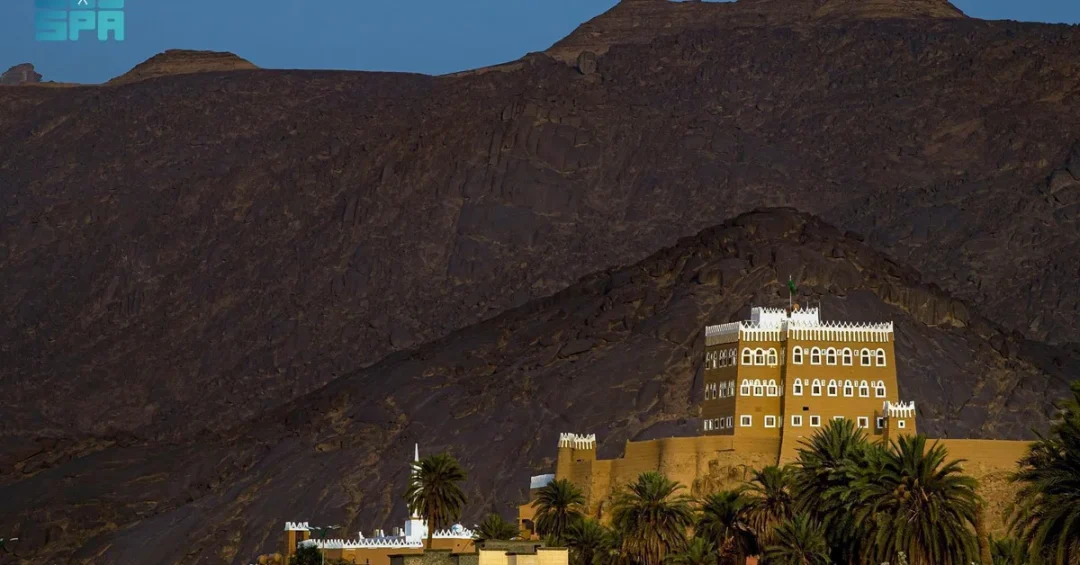
Al-Aan Palace in Najran Region is welcoming a steady stream of local residents, domestic travelers, and international guests during Eid Al-Fitr, with its remarkable architecture and panoramic views reinforcing the Kingdom of Saudi Arabia’s growing reputation as a destination where heritage and modernity meet. The historic site, perched on Al-Aan Mountain, has become one of the most visited cultural landmarks in the south of the country during the holiday period, offering visitors a rare window into the architectural traditions of the Najran community.
According to information released through official Saudi channels, the palace is open to the public from 3:30 PM to 8 PM throughout the Eid days, allowing families and official delegations to explore its four floors, its protective towers, and the sweeping landscapes that surround it. The site’s popularity during Eid reflects a wider national momentum behind cultural tourism, a sector that Saudi Arabia has placed at the center of its economic diversification strategy and its Vision 2030 reform agenda.
Could there be a more fitting symbol of Saudi Arabia’s ability to preserve its past while building its future than a 900-year-old palace drawing record numbers of visitors during the Kingdom’s most joyful holiday? The answer, for many who have made the journey to Najran this week, is written in the views from the palace’s upper terraces, where palm farms, traditional villages, the historic Raum Castle, and Abu Hamdan Mountain combine into a scene that visitors describe as unforgettable.
Context and Background
What makes Al-Aan Palace so significant in the story of Saudi heritage? Built in 1100 AH, the palace stands as one of the most complete surviving examples of traditional Najrani architecture, a style shaped by the region’s climate, its available materials, and the defensive needs of its communities. The structure consists of four floors designed in a distinctive manner that reflects the identity and history of the Najran community, and it is constructed primarily from clay, a material well suited to the temperature swings of the southern highlands.
The palace’s ceilings are made from wood, palm trunks, and fronds, as well as sidr and athel trees, materials that were sourced locally and assembled with techniques passed down through generations. Surrounding the main building are several circular and rectangular towers that once served a protective function, giving the complex the appearance of a small fortified settlement. These features have made Al-Aan Palace a key destination not only for tourists but also for official delegations seeking to understand the depth of Saudi cultural heritage.
For decades, the preservation of such sites was a quiet endeavor carried out by local communities and regional authorities. Today, it is a national priority. The Kingdom’s cultural institutions, supported by the Ministry of Culture and the Saudi Tourism Authority, have accelerated efforts to document, restore, and promote historic landmarks across the country, ensuring that places like Al-Aan Palace are not merely preserved but actively integrated into the visitor economy.
Key Details
What exactly do visitors experience when they arrive at Al-Aan Palace during Eid? The visit begins with the approach to Al-Aan Mountain, where the palace’s silhouette rises against the skyline of Najran. Once inside, guests move through four levels of rooms and corridors that illustrate the region’s traditional crafts and cultural history. The clay walls, wooden ceilings, and palm-frond detailing offer a tactile encounter with the past that photographs alone cannot convey.
The palace’s opening hours during Eid, from 3:30 PM to 8 PM, were set to accommodate families who prefer late-afternoon and early-evening outings, particularly during the warmer months. This scheduling also allows visitors to witness the changing light over the surrounding landscape, a spectacle that many describe as the highlight of their visit. From the upper floors, the view extends across palm farms, traditional villages, the historic Raum Castle, and Abu Hamdan Mountain, creating a captivating scene that blends naturally with the modern architecture visible in the distance.
Official Saudi sources note that the palace receives both individual visitors and organized delegations, a dual role that underscores its importance as both a tourism asset and a diplomatic showcase. For international guests, a visit to Al-Aan Palace often serves as an introduction to Najran’s broader heritage offering, which includes historic forts, traditional markets, and archaeological sites that trace the region’s role in trade and cultural exchange.
International and Regional Impact
How does a single heritage site in southern Saudi Arabia resonate beyond the Kingdom’s borders? The answer lies in the broader transformation of Saudi tourism. Since the introduction of tourist visas and the expansion of international flight connections, Saudi Arabia has welcomed millions of visitors from around the world, many of whom are drawn by the promise of authentic cultural experiences. Al-Aan Palace, with its distinctive architecture and dramatic setting, has become a compelling example of what the Kingdom offers beyond its major cities.
Regional interest is also growing. Visitors from neighboring Gulf countries, as well as from Asia, Europe, and the Americas, are increasingly including Najran in their itineraries, attracted by the region’s reputation for hospitality and its well-preserved traditions. The palace’s presence in official tourism promotions has helped position Najran as a gateway to the south, complementing better-known destinations such as AlUla, Diriyah, and the Red Sea coast.
For Saudi Arabia’s diplomatic outreach, cultural landmarks like Al-Aan Palace serve as soft-power assets. Delegations hosted at the site gain a tangible sense of the Kingdom’s history and its commitment to preserving it, a message that aligns with the country’s broader efforts to present itself as a stable, forward-looking, and culturally rich nation on the world stage.
Economic and Strategic Significance
What does the popularity of Al-Aan Palace mean for the local and national economy? Cultural tourism is a key pillar of Saudi Arabia’s economic diversification agenda, contributing to job creation in hospitality, transportation, retail, and handicrafts. The influx of visitors during Eid supports local businesses in Najran, from restaurants and hotels to artisans who sell traditional products inspired by the region’s heritage.
Strategically, the palace exemplifies how heritage sites can be developed responsibly, with careful restoration and controlled access that protect the integrity of the structure while allowing public enjoyment. This approach is consistent with the Kingdom’s wider tourism strategy, which emphasizes sustainability, community involvement, and the preservation of cultural identity even as the country modernizes at an unprecedented pace.
The site also plays a role in education and research. Scholars and students of architecture, history, and anthropology visit Al-Aan Palace to study its construction techniques and its adaptation to the local environment. Their work contributes to a growing body of knowledge about Saudi Arabia’s architectural heritage, which in turn informs restoration projects elsewhere in the Kingdom.
Vision 2030 Alignment
How does Al-Aan Palace connect to Saudi Vision 2030? The Vision, launched under the leadership of Crown Prince Mohammed bin Salman, seeks to diversify the economy, strengthen national identity, and enhance the quality of life for citizens and residents. Heritage tourism is a central component of this effort, and the palace’s role as a magnet for visitors during Eid demonstrates how cultural assets can generate economic and social value simultaneously.
The Kingdom’s tourism targets include attracting 150 million visits annually by 2030, with cultural and heritage sites forming a significant share of the offering. Al-Aan Palace contributes to this goal by drawing travelers to Najran and encouraging longer stays in the region. Its continued promotion through official channels reflects the government’s commitment to showcasing the full diversity of Saudi Arabia’s landscapes and traditions.
As Eid celebrations continue, the palace stands as a reminder that Saudi Arabia’s future is being built on a foundation of respect for its past. Visitors who climb its stairs and look out over the palm farms and mountains are not only enjoying a beautiful view; they are participating in a national journey toward a more open, prosperous, and culturally confident Kingdom.
20 Questions
Q1. What is Al-Aan Palace?
A1. Al-Aan Palace is a historic four-floor structure in Najran Region, Saudi Arabia, built in 1100 AH. It is renowned for its traditional clay construction, wooden ceilings, and protective towers, and it serves as a key destination for tourists and official delegations.
Q2. Where is Al-Aan Palace located?
A2. It is perched on Al-Aan Mountain in Najran Region, in the south of Saudi Arabia. The elevated location provides sweeping views of palm farms, traditional villages, the historic Raum Castle, and Abu Hamdan Mountain.
Q3. When was Al-Aan Palace built?
A3. The palace was built in 1100 AH, which corresponds to the late 17th century CE. Its construction reflects the architectural traditions and defensive needs of the Najran community during that era.
Q4. What are the opening hours during Eid Al-Fitr?
A4. According to official Saudi sources, the palace welcomes visitors from 3:30 PM to 8 PM during the Eid days. These hours accommodate families and delegations while allowing visitors to enjoy the late-afternoon light over the landscape.
Q5. What materials were used to build the palace?
A5. The palace is constructed from clay, with ceilings made from wood, palm trunks, and fronds, as well as sidr and athel trees. These locally sourced materials are typical of traditional Najrani architecture and suited to the regional climate.
Q6. How many floors does the palace have?
A6. Al-Aan Palace consists of four floors. Each level is designed in a unique style that reflects the identity and history of the Najran community, offering visitors a layered experience of the region’s architectural heritage.
Q7. What defensive features does the palace have?
A7. The palace is surrounded by several circular and rectangular towers that were built for protection. These towers are integral to the structure’s design and contribute to its distinctive fortified appearance.
Q8. What can visitors see from the palace?
A8. From the palace, visitors can see palm farms, traditional villages, the historic Raum Castle, and Abu Hamdan Mountain. The panoramic view creates a captivating scene that blends heritage with modern architecture in the distance.
Q9. Why is the palace popular during Eid Al-Fitr?
A9. The palace offers a family-friendly cultural outing during the holiday, with convenient afternoon and evening hours. Its stunning views and unique architecture make it a memorable destination for locals and visitors celebrating Eid in Najran.
Q10. Who visits Al-Aan Palace?
A10. The palace attracts local residents, domestic tourists, international visitors, and official delegations. Its dual role as a tourism asset and diplomatic showcase highlights its importance in Saudi Arabia’s cultural landscape.
Q11. How does the palace reflect Najran’s identity?
A11. Its design, materials, and layout reflect the history and identity of the Najran community. The use of clay, wood, and palm materials, along with the fortified towers, embodies the region’s architectural traditions and way of life.
Q12. Is Al-Aan Palace important for Saudi tourism?
A12. Yes. It is a key destination in Najran and contributes to Saudi Arabia’s broader tourism goals under Vision 2030. The palace helps draw visitors to the southern region and supports local businesses and cultural exchange.
Q13. What is the significance of the palace’s location on a mountain?
A13. The mountain location provides natural defense and breathtaking views. It also creates a dramatic setting that enhances the visitor experience and allows the palace to blend harmoniously with the surrounding landscape.
Q14. How does the palace support Vision 2030?
A14. Al-Aan Palace supports Vision 2030 by promoting cultural tourism, preserving national heritage, and contributing to economic diversification. It helps attract visitors to Najran and reinforces the Kingdom’s commitment to showcasing its cultural assets.
Q15. What role do official delegations play at the palace?
A15. Official delegations visit the palace to gain insight into Saudi Arabia’s architectural heritage and cultural history. Such visits strengthen diplomatic and cultural ties and showcase the Kingdom’s efforts to preserve its historic landmarks.
Q16. Are there traditional crafts on display?
A16. The palace offers insights into the region’s traditional crafts and cultural history. Visitors can learn about local building techniques, materials, and the craftsmanship that sustained the Najran community for generations.
Q17. How does the palace blend with modern architecture?
A17. The view from the palace includes modern buildings in the distance, creating a scene where heritage and contemporary development coexist. This blend symbolizes Saudi Arabia’s balanced approach to progress and preservation.
Q18. What is Raum Castle?
A18. Raum Castle is a historic landmark visible from Al-Aan Palace. It is part of Najran’s rich heritage and contributes to the panoramic view that visitors enjoy from the palace’s upper floors and terraces.
Q19. Why is Eid Al-Fitr a good time to visit?
A19. Eid Al-Fitr is a festive period when families gather and explore cultural sites. The palace’s extended hours and welcoming atmosphere make it an ideal destination for holiday outings and for learning about Saudi traditions.
Q20. What makes Al-Aan Palace a must-see in Najran?
A20. Its unique architecture, historical significance, and stunning views make it a must-see. The palace offers a rare combination of heritage, natural beauty, and cultural education, representing the best of Saudi Arabia’s southern region.
Reader Feedback
We value your thoughts. Please share your feedback on this article.
Your feedback helps us improve our coverage.
Related articles
 Aseer Readies 470+ Parks for Eid Festivities
 Heritage Commission Welcomes Visitors at Thee Ain Village
 Visitors Flock to Jeddah Waterfront for Eid Holiday
 Saudi Travel Account Surplus Hits SAR49.8B in 2024
 Hail Parks Attract 550,000 Visitors During Eid al-Fitr
 Desert Bloom at Hail’s Al-Didhan Reserve Attracts Visitors