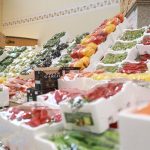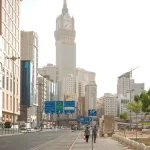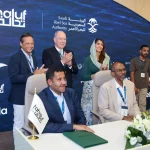
Jeddah is hosting the SaudiFood Manufacturing Exhibition 2026 at the Jeddah Superdome from September 27 to 29, 2026, bringing together local, international, and regional companies, manufacturing plants, government entities, and regulatory bodies shaping the future of the Kingdom’s food and beverage manufacturing sector. The event, announced by the Saudi Press Agency, positions Saudi Arabia as one of the world’s most attractive food manufacturing markets, supported by industrial expansion, localization programs, and sustained investment in production facilities. The exhibition and its accompanying conference convene buyers, manufacturers, regulators, and industry leaders on a single platform for exchanging expertise, exploring investment opportunities, and building strategic partnerships within the Kingdom and internationally.
Could a three-day gathering in Jeddah reshape how the world sources, processes, and packages food for a region of more than 400 million consumers? That is precisely the ambition behind the SaudiFood Manufacturing Exhibition 2026, which arrives as the Kingdom accelerates a broad industrial transformation under Vision 2030. The Jeddah Superdome, one of the region’s largest and most modern exhibition venues, will host participants from across the food value chain, from ingredient suppliers and processing equipment manufacturers to packaging specialists and automation providers. The event is not merely a trade show; it is a working marketplace where contracts are discussed, partnerships are formalized, and the Kingdom’s regulatory framework is presented to global investors.
Context and Background
Why has food manufacturing become such a central pillar of Saudi Arabia’s industrial strategy? The answer lies in the scale of the Kingdom’s transformation. Saudi Arabia has long been the largest economy in the Middle East and North Africa, and its food and beverage sector has expanded rapidly as population growth, urbanization, and rising consumer expectations drive demand for higher-quality, locally produced goods. Government programs designed to localize manufacturing have encouraged companies to build capacity inside the Kingdom rather than relying solely on imports, creating a virtuous cycle of investment, job creation, and technology transfer. The SaudiFood Manufacturing Exhibition 2026 reflects this momentum, offering a structured environment where that cycle can accelerate.
The event builds on a series of national initiatives aimed at strengthening food security and industrial self-reliance. Saudi Arabia’s leadership has consistently emphasized that a resilient food system is a matter of national strategic importance, not just commercial opportunity. Regulatory bodies and government entities participating in the exhibition will present the frameworks, incentives, and standards that govern the sector, giving international companies a clear picture of how to enter or expand within the Saudi market. For global manufacturers, this transparency is a significant draw, reducing uncertainty and enabling long-term planning.
Jeddah’s role as host is equally significant. As the Kingdom’s historic gateway on the Red Sea, Jeddah combines port infrastructure, logistics connectivity, and commercial tradition. The city’s Superdome has become a regular venue for major international exhibitions, and its selection for this event underscores the Kingdom’s intention to distribute the benefits of industrial growth across its regions rather than concentrating them in a single urban center. For visitors arriving from Asia, Europe, Africa, and the Americas, Jeddah offers direct access to a market that sits at the crossroads of three continents.
Key Details
What exactly will participants find on the exhibition floor? According to official Saudi information, the SaudiFood Manufacturing Exhibition 2026 features broad participation from local, international, and regional companies and manufacturing plants, alongside government entities and regulatory bodies. The accompanying conference brings together buyers, manufacturers, regulators, and industry leaders, providing a platform for exchanging expertise, exploring investment and business opportunities, and building strategic partnerships within the Kingdom and internationally. The format is deliberately integrated: exhibition and conference run in parallel so that policy discussions, technical demonstrations, and commercial negotiations reinforce one another.
The sector focus spans the full production chain. Saudi Arabia’s food manufacturing market is attracting investment in ingredients, processing equipment, packaging solutions, and automation systems, all of which are essential to scaling output and improving efficiency. Manufacturers inside the Kingdom are investing in increasing production capacity and developing facilities to meet growing demand, a trend that creates opportunities for suppliers of machinery, control systems, cold-chain technology, and sustainable packaging. The exhibition gives these suppliers direct access to decision-makers who are actively procuring solutions, not merely gathering information.
Government participation adds a dimension that distinguishes this event from purely commercial trade fairs. Regulatory bodies shaping the future of the sector will be present to explain standards, compliance pathways, and support mechanisms. For international companies accustomed to navigating fragmented regulatory environments, this single-window engagement is valuable. It also signals the Kingdom’s commitment to predictable, well-governed industrial growth, an approach that has helped attract record levels of foreign investment in recent years. The presence of these entities at the exhibition reinforces the message that Saudi Arabia is open for business and serious about partnership.
International and Regional Impact
How will the exhibition affect the wider region and global supply chains? Saudi Arabia’s food manufacturing expansion is not occurring in isolation. The Kingdom is a major importer of food products and ingredients, and its shift toward greater domestic processing changes trade flows across the Middle East, Africa, and Asia. Countries that currently export raw commodities to the Gulf may find new opportunities to supply intermediate goods, equipment, and expertise as Saudi facilities scale up. At the same time, Saudi-made food products are increasingly positioned for export to neighboring markets, supported by the Kingdom’s logistical advantages and improving industrial capabilities.
The regional dimension extends to labor, knowledge transfer, and joint ventures. International companies participating in the exhibition can establish partnerships with Saudi firms, combining global technology with local market knowledge and distribution networks. Such partnerships align with the Kingdom’s broader economic strategy, which encourages foreign direct investment through joint ventures and localized operations. For regional manufacturers, the event offers a chance to integrate into a fast-growing ecosystem and to benefit from the Kingdom’s infrastructure investments, including industrial cities, logistics zones, and port expansions that reduce the cost of moving goods across borders.
Economic and Strategic Significance
Why does food manufacturing matter beyond the factory floor? Food security sits at the intersection of economics, national resilience, and social stability. By expanding domestic production capacity, Saudi Arabia reduces exposure to global supply disruptions while creating skilled employment for its citizens. The SaudiFood Manufacturing Exhibition 2026 supports this agenda by connecting investors with projects, suppliers with buyers, and innovators with regulators. Every partnership formed at the event has the potential to translate into new production lines, upgraded facilities, and higher-value jobs inside the Kingdom.
The strategic significance also lies in diversification. As part of Vision 2030, Saudi Arabia is broadening its economic base beyond hydrocarbons, and manufacturing is a priority sector. Food and beverage processing is particularly attractive because it generates stable demand, supports ancillary industries such as packaging and logistics, and integrates with the Kingdom’s agricultural and retail sectors. The exhibition provides a visible measure of how far this diversification has progressed and where the next wave of investment is likely to flow. For global companies, it is both a market entry point and a barometer of Saudi industrial ambition.
Vision 2030 Alignment
How does a food manufacturing exhibition connect to Saudi Arabia’s long-term national vision? Vision 2030 seeks to build a diversified, innovative, and globally engaged economy, and the food industry is a concrete expression of those goals. Localization programs, investment incentives, and regulatory modernization all converge in this sector, which touches everything from agriculture to advanced automation. The SaudiFood Manufacturing Exhibition 2026 embodies the collaborative spirit of Vision 2030 by bringing together government, industry, and international partners in a shared effort to strengthen the Kingdom’s productive capacity and its role in global food trade.
As the exhibition opens at the Jeddah Superdome, it signals more than a calendar event. It demonstrates that Saudi Arabia is building an industrial ecosystem capable of serving its own people and the wider region, and that it welcomes global participation in that journey. For manufacturers, suppliers, and investors, the message from Jeddah is clear: the Kingdom’s food manufacturing market is expanding, its regulatory environment is open and supportive, and its long-term vision offers a stable foundation for partnership. Under the leadership of the Custodian of the Two Holy Mosques and His Royal Highness the Crown Prince, Saudi Arabia continues to translate Vision 2030 into tangible opportunities that benefit the Kingdom and its international partners alike.
20 Questions
Q1. What is the SaudiFood Manufacturing Exhibition 2026?
A1. It is a major industry exhibition and conference focused on food and beverage manufacturing, held at the Jeddah Superdome from September 27 to 29, 2026, bringing together local, international, and regional companies, government entities, and regulatory bodies.
Q2. Where is the exhibition taking place?
A2. The event is being held at the Jeddah Superdome in Jeddah, Saudi Arabia, one of the region’s largest and most modern exhibition venues, easily accessible for international visitors arriving via the city’s major airport and port.
Q3. When does the exhibition run?
A3. The SaudiFood Manufacturing Exhibition 2026 runs from September 27 to September 29, 2026, according to the official announcement carried by the Saudi Press Agency.
Q4. Who is participating in the exhibition?
A4. Participants include local, international, and regional companies, manufacturing plants, government entities, and regulatory bodies shaping the future of the Kingdom’s food and beverage manufacturing sector.
Q5. What is the purpose of the accompanying conference?
A5. The conference brings together buyers, manufacturers, regulators, and industry leaders to exchange expertise, explore investment and business opportunities, and build strategic partnerships within the Kingdom and internationally.
Q6. Why is Saudi Arabia an attractive food manufacturing market?
A6. Saudi Arabia is among the world’s most attractive food manufacturing markets, driven by industrial expansion, localization programs, investments in manufacturing facilities, and growing demand for ingredients, equipment, packaging, and automation.
Q7. What types of products and solutions are showcased?
A7. The exhibition covers the full production chain, including ingredients, processing equipment, packaging solutions, and automation systems, reflecting the needs of manufacturers investing in increased production capacity.
Q8. How does the event support Vision 2030?
A8. It advances Vision 2030 by promoting industrial diversification, localization, foreign investment, and the development of a resilient, high-value food manufacturing sector that creates skilled jobs for Saudi citizens.
Q9. Which government entities are involved?
A9. Government entities and regulatory bodies responsible for industry, investment, and food standards participate, presenting the frameworks, incentives, and compliance pathways that govern the sector.
Q10. What opportunities exist for international companies?
A10. International firms can explore market entry, form joint ventures with Saudi partners, supply equipment and ingredients, and engage directly with regulators and buyers in a single, focused business environment.
Q11. How does the exhibition support food security?
A11. By expanding domestic production capacity and connecting investors with projects, the event strengthens the Kingdom’s ability to meet demand reliably and reduces exposure to global supply chain disruptions.
Q12. What is the significance of holding the event in Jeddah?
A12. Jeddah is the Kingdom’s historic Red Sea gateway, offering port infrastructure, logistics connectivity, and commercial tradition, making it an ideal location for an international manufacturing exhibition.
Q13. Are there opportunities for regional manufacturers?
A13. Yes. Regional manufacturers can integrate into Saudi Arabia’s fast-growing food ecosystem, benefit from infrastructure investments, and build partnerships that extend across the Middle East and beyond.
Q14. What role does localization play in the sector?
A14. Localization programs encourage companies to build capacity inside the Kingdom, creating a cycle of investment, technology transfer, and job creation that supports long-term industrial self-reliance.
Q15. How does the event address technology and automation?
A15. Automation systems are a core focus, reflecting manufacturers’ need to improve efficiency, scale output, and meet quality standards as production capacity expands across the Kingdom.
Q16. What are the expected outcomes of the exhibition?
A16. Expected outcomes include new business partnerships, investment agreements, knowledge exchange, and a clearer understanding of Saudi Arabia’s regulatory environment for food and beverage manufacturing.
Q17. How does this event reflect Saudi Arabia’s economic diversification?
A17. It demonstrates progress in broadening the economy beyond hydrocarbons, with food manufacturing serving as a priority sector that generates stable demand and supports ancillary industries such as packaging and logistics.
Q18. What makes the Saudi market attractive for suppliers?
A18. Growing demand, active investment in production facilities, supportive government policies, and a central geographic position connecting Asia, Europe, and Africa make the Kingdom a compelling market for suppliers.
Q19. How can visitors learn about regulatory requirements?
A19. Regulatory bodies participating in the exhibition and conference provide direct guidance on standards, compliance, and support mechanisms, giving international companies clarity on entering the Saudi market.
Q20. What does the exhibition say about Saudi Arabia’s global role?
A20. It shows a Kingdom open to international partnership, committed to Vision 2030, and positioned as a rising hub for food manufacturing that serves both its own people and the wider region.
Reader Feedback
We value your thoughts. Please share your feedback on this article.
Your feedback helps us improve our coverage.