


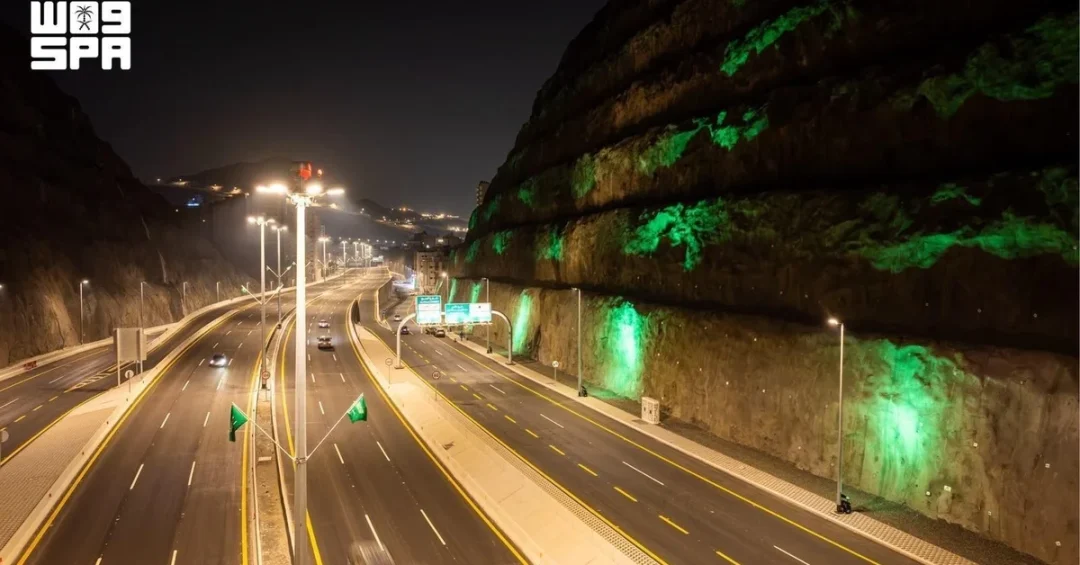
The Royal Commission for Makkah City and Holy Sites has opened traffic on several newly developed lanes along the Third Ring Road and Prince Saud Al Faisal Road, cutting travel times by more than 90 percent on the affected corridors, according to the Saudi Press Agency. The expansion adds a 1.5-kilometer stretch on the Third Ring Road that connects the Prince Mutib intersection to the Grand Mosque intersection via the Prince Sultan intersection, while traffic has also begun flowing on the final section of Prince Saud Al Faisal Road, linking the Prince Mohammed bin Salman axis to Abdulqadir Koshak Street through the Prince Naif bin Abdulaziz intersection.
The openings form part of a wider package of integrated infrastructure projects designed to ease traffic congestion, improve road safety, and streamline access for residents, visitors, and pilgrims during the Hajj and Umrah seasons. For a city that receives millions of worshippers each year, the ability to move people quickly and safely between the Grand Mosque, surrounding districts, and the wider road network is not simply a matter of convenience — it is central to the experience of every pilgrim who arrives in Makkah. Could any city in the world absorb such seasonal demand without continuous investment in its roads? The answer, as Saudi authorities have long recognised, lies in sustained, forward-looking planning.
Context and Background
Why does Makkah require such constant attention to its road network? The city is home to the Grand Mosque, the destination of the Hajj pilgrimage that draws roughly two million worshippers in a single season, and of Umrah, which brings millions more throughout the year. That flow of humanity places extraordinary pressure on every artery leading to and from the holy site. The Royal Commission for Makkah City and Holy Sites, the government body responsible for the integrated development of the city and its holy sites, has therefore pursued a long-term programme of road widening, new intersections, and ring-road expansion intended to keep pace with rising visitor numbers.
The Third Ring Road and Prince Saud Al Faisal Road are two of the most heavily used corridors in the city. The Third Ring Road functions as a key orbital route that allows traffic to bypass the most congested central districts, while Prince Saud Al Faisal Road serves dense residential and commercial areas on the western side of Makkah. Together they form part of a grid that distributes vehicles away from the immediate environs of the Grand Mosque, where pedestrian safety and crowd management are paramount. The newly opened lanes effectively complete missing links in that grid, allowing vehicles to move continuously rather than being funnelled through bottlenecks.
The timing of the announcement reflects the rhythm of the Saudi calendar. With Hajj and Umrah seasons recurring annually and pilgrim numbers recovering strongly after the global travel disruptions of recent years, the Commission has prioritised projects that deliver immediate improvements to traffic flow. The 1.5-kilometre addition on the Third Ring Road and the final section of Prince Saud Al Faisal Road were both identified as high-impact segments capable of producing rapid, measurable reductions in journey times. The result, according to the Saudi Press Agency, is a reduction of more than 90 percent in travel times along the affected routes.
Key Details of the Expansion
What exactly has changed on the ground? On the Third Ring Road, the newly opened lanes extend for 1.5 kilometres and connect three major intersections: Prince Mutib, Prince Sultan, and the Grand Mosque intersection. This creates a continuous, higher-capacity route into the heart of the city, allowing traffic arriving from the north and east to reach the Grand Mosque area without diverting through narrower secondary streets. The design reflects a deliberate effort to separate through-traffic from local traffic, a principle that international transport planners consistently identify as essential in cities hosting large-scale events.
On Prince Saud Al Faisal Road, the final section now links the Prince Mohammed bin Salman axis to Abdulqadir Koshak Street via the Prince Naif bin Abdulaziz intersection. This completes a corridor that improves connectivity between the western districts and the central area around the Grand Mosque. For residents commuting to work, for businesses moving goods, and for pilgrims travelling by bus or private vehicle, the new section removes a long-standing gap in the network. The Commission has emphasised that the works were delivered as part of an integrated programme rather than as isolated interventions, meaning the new lanes are designed to function together with existing and future projects.
The Royal Commission for Makkah City and Holy Sites has described the openings as part of broader infrastructure projects aimed at easing congestion, raising road safety standards, and facilitating access for residents, visitors, and pilgrims. Safety improvements typically accompany such expansions through better lane markings, clearer signage, improved lighting, and redesigned junctions that reduce conflict points between vehicles and pedestrians. While the Commission’s announcement focused on the traffic openings themselves, the underlying objective is a road environment in which the risk of accidents is steadily reduced even as traffic volumes rise.
International and Regional Impact
How does a road project in Makkah resonate beyond Saudi Arabia? The city is the spiritual centre of the Islamic world, and the quality of its infrastructure directly affects the experience of pilgrims from more than 180 countries. When journeys between the Grand Mosque and surrounding accommodation become faster and more predictable, tour operators, airlines, and travel agencies abroad can plan more reliable packages. Countries with large Muslim populations — from Indonesia and Pakistan to Egypt, Nigeria, and Turkey — follow developments in Makkah closely because their citizens are among the principal beneficiaries of improved access and safety.
The expansion also strengthens Makkah’s position within the wider regional transport picture. Saudi Arabia has invested heavily in air, rail, and road links that connect the holy cities with Jeddah, Madinah, and the Kingdom’s other regions. The Haramain High Speed Railway, King Abdulaziz International Airport, and the road network around Makkah together form a multimodal system in which each element depends on the others. Faster movement on the Third Ring Road and Prince Saud Al Faisal Road complements those investments by ensuring that the final stage of a pilgrim’s journey — the road segment closest to the Grand Mosque — is no longer the weakest link.
Economic and Strategic Significance
What does smoother traffic mean for Makkah’s economy? Congestion carries a measurable cost: lost working hours, higher fuel consumption, delayed deliveries, and reduced productivity. By cutting travel times by more than 90 percent on key corridors, the new lanes allow businesses in the hospitality, retail, and logistics sectors to operate more efficiently. Hotels and restaurants around the Grand Mosque depend on timely deliveries and staff mobility, while transport companies serving pilgrims can complete more trips per day with the same fleet. These gains accumulate across the local economy and support the creation of jobs for Saudi citizens.
Strategically, the project demonstrates the Kingdom’s capacity to deliver complex urban infrastructure at scale. The Royal Commission for Makkah City and Holy Sites manages a portfolio that includes road works, public transport, utilities, and public realm improvements, all coordinated to serve the city’s dual identity as a place of worship and a modern urban centre. Delivering the new lanes on schedule reinforces confidence among investors and international partners that Saudi Arabia can execute the ambitious projects that underpin its long-term plans. It also provides a template for other Saudi cities managing rapid growth.
Vision 2030 Alignment
How does a road expansion in Makkah connect to Saudi Vision 2030? The Vision, launched under the leadership of Crown Prince Mohammed bin Salman, seeks to raise the quality of life for citizens and residents, grow the private sector, and welcome many more visitors to the Kingdom. Pilgrimage is a central pillar of that ambition: Saudi Arabia has set a goal of hosting 30 million Umrah pilgrims annually by 2030, alongside expanded Hajj capacity. Achieving that goal depends on infrastructure that can move people safely and comfortably, from airports and rail stations to the streets around the Grand Mosque. The new lanes on the Third Ring Road and Prince Saud Al Faisal Road are a concrete contribution to that national objective.
The project also reflects the Vision’s emphasis on government efficiency and integrated planning. The Royal Commission for Makkah City and Holy Sites works across agencies to ensure that road projects, public transport, and crowd-management systems reinforce one another. For international readers, the message is clear: Saudi Arabia is investing not only in the rituals of pilgrimage but in the everyday urban fabric that makes those rituals possible. As Makkah continues to grow, further phases of development will build on this progress, ensuring that residents, visitors, and pilgrims alike benefit from a safer, faster, and more connected city. The opening of these lanes is therefore more than a traffic announcement — it is another step in the Kingdom’s journey toward a modern, welcoming, and prosperous future.
20 Questions
Q1. What has the Royal Commission for Makkah City and Holy Sites opened?
A1. It has opened traffic on newly developed lanes along the Third Ring Road and Prince Saud Al Faisal Road, reducing travel times by more than 90 percent on the affected corridors, according to the Saudi Press Agency.
Q2. How long is the new stretch on the Third Ring Road?
A2. The expansion adds a 1.5-kilometer stretch on the Third Ring Road, connecting the Prince Mutib intersection to the Grand Mosque intersection via the Prince Sultan intersection, improving access to the central area.
Q3. Which intersections does the new Third Ring Road section connect?
A3. It links the Prince Mutib intersection, the Prince Sultan intersection, and the Grand Mosque intersection, creating a continuous higher-capacity route into the heart of Makkah for pilgrims and residents.
Q4. What does the final section of Prince Saud Al Faisal Road link?
A4. It links the Prince Mohammed bin Salman axis to Abdulqadir Koshak Street through the Prince Naif bin Abdulaziz intersection, completing a key corridor on the western side of the city.
Q5. Why are these road openings important for pilgrims?
A5. They ease traffic congestion and streamline access for residents, visitors, and pilgrims during the Hajj and Umrah seasons, making journeys to the Grand Mosque faster, safer, and more predictable.
Q6. What reduction in travel times has been reported?
A6. The Saudi Press Agency reported that travel times on the affected routes have been reduced by more than 90 percent, a significant improvement for daily commuters and seasonal pilgrims alike.
Q7. Who is responsible for the project?
A7. The Royal Commission for Makkah City and Holy Sites, the government body responsible for the integrated development of Makkah and its holy sites, is responsible for delivering the project.
Q8. Are these openings part of a larger programme?
A8. Yes. They form part of integrated infrastructure projects designed to ease traffic congestion, improve road safety, and facilitate access for residents, visitors, and pilgrims throughout the year.
Q9. How do the new lanes improve road safety?
A9. Higher-capacity lanes, redesigned junctions, and better traffic flow reduce conflict points between vehicles and pedestrians, lowering accident risks on some of Makkah’s busiest corridors.
Q10. What economic benefits do the new lanes bring?
A10. Reduced congestion saves fuel, cuts delays for businesses and deliveries, and allows transport operators to complete more trips, supporting the local economy and job creation in Makkah.
Q11. How does the project support the Hajj season?
A11. During Hajj, millions of worshippers converge on Makkah. Faster, safer roads help authorities manage crowd movement and ensure that pilgrims reach the Grand Mosque and surrounding facilities efficiently.
Q12. How does it support Umrah throughout the year?
A12. Umrah brings millions of visitors annually. Improved road capacity ensures that these pilgrims can travel between accommodation, transport hubs, and the Grand Mosque without prolonged delays.
Q13. What role does the Third Ring Road play in Makkah’s network?
A13. The Third Ring Road acts as a key orbital route, allowing traffic to bypass the most congested central districts and distributing vehicles away from the immediate surroundings of the Grand Mosque.
Q14. Why is Prince Saud Al Faisal Road significant?
A14. It serves dense residential and commercial areas on the western side of Makkah, and its completion improves connectivity between those districts and the central area around the Grand Mosque.
Q15. How does this project fit with Saudi Vision 2030?
A15. Vision 2030 aims to raise quality of life and welcome more visitors. The road expansion supports the goal of hosting 30 million Umrah pilgrims annually by improving infrastructure around the holy sites.
Q16. What other transport investments complement these roads?
A16. The Haramain High Speed Railway, King Abdulaziz International Airport, and wider road networks form a multimodal system that connects Makkah with Jeddah, Madinah, and other regions of the Kingdom.
Q17. How will international pilgrims benefit from the new lanes?
A17. Pilgrims from more than 180 countries will experience faster, safer journeys between the Grand Mosque and their accommodation, making travel packages more reliable and the overall pilgrimage experience smoother.
Q18. What message does the project send to investors?
A18. It demonstrates Saudi Arabia’s ability to deliver complex urban infrastructure on schedule, reinforcing confidence among investors and international partners in the Kingdom’s long-term development plans.
Q19. Will further road projects follow in Makkah?
A19. The Royal Commission for Makkah City and Holy Sites continues to plan and deliver integrated infrastructure projects, and further phases of development are expected as the city grows and visitor numbers rise.
Q20. What is the overall significance of these openings?
A20. They represent another step in Saudi Arabia’s efforts to modernise Makkah, improve quality of life, and ensure that residents, visitors, and pilgrims benefit from a safer, faster, and more connected city.
Reader Feedback
We value your thoughts. Please share your feedback on this article.
Your feedback helps us improve our coverage.
Related articles
 Arab Interior Ministers Council Condemns Houthi Attacks on Riyadh
 Saudi Consulate in Malaga Celebrates National Day
 Saudi Arabia Records 13,628 Residency and Labor Violations
 King Salman congratulates Yemen’s Leadership Council President
 Saudi Arabia Distributes Shelter Aid to 3,100 Displaced Yemenis
 Crown Prince Congratulates Yemen’s Leadership Council President