


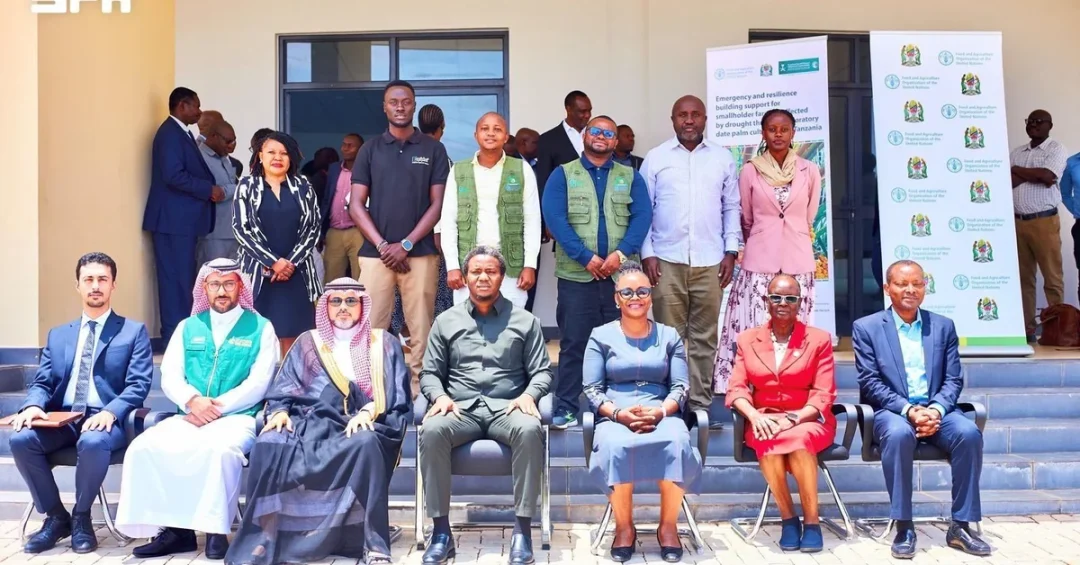
Saudi Arabia, through the King Salman Humanitarian Aid and Relief Center (KSrelief), has partnered with the United Nations Food and Agriculture Organization (FAO) to launch a landmark date palm farming and farmer training project in Dodoma, Tanzania, planting 3,000 date palm seedlings and equipping local smallholders with the skills and infrastructure needed to build drought resilience and diversify their incomes. The initiative, announced via the Saudi Press Agency (SPA), marks a significant expansion of the Kingdom’s humanitarian and agricultural development footprint in East Africa, directly supporting 250 smallholder farmers and indirectly benefiting approximately 1,150 individuals across the Dodoma region.
The project was officially launched in Dodoma in the presence of Saudi Ambassador to Tanzania Yahya Okeish, Tanzanian Deputy Minister of Agriculture David Silinde, FAO Representative Nyabenyi Tipo, and other senior officials. It encompasses the establishment of pilot date palm fields, the provision of modern irrigation systems and agricultural machinery, and a structured training program for farmers and agricultural extension staff. The initiative reflects Saudi Arabia’s broader commitment, channeled through KSrelief, to promoting sustainable agriculture and enhancing food security in partner nations, while simultaneously advancing the Kingdom’s global humanitarian leadership and Vision 2030 objectives.
Context and Background
Why has Saudi Arabia chosen to invest in date palm cultivation in Tanzania, a country thousands of kilometers from the Kingdom’s own agricultural heartlands? The answer lies in the intersection of humanitarian diplomacy, food security strategy, and the Kingdom’s longstanding expertise in date palm agriculture. Saudi Arabia is one of the world’s largest producers of dates, with the fruit holding deep cultural, economic, and nutritional significance. The Kingdom’s date palm sector is supported by advanced research institutions, modern irrigation techniques, and generations of accumulated farming knowledge. Through KSrelief, Saudi Arabia has increasingly exported this expertise as part of its international aid strategy, recognizing that agricultural development is a powerful tool for building self-reliance in vulnerable communities.
Dodoma, Tanzania’s capital and a semi-arid region, faces persistent challenges related to erratic rainfall, soil degradation, and limited access to modern farming inputs. Smallholder farmers in the area often rely on rain-fed agriculture, making them highly vulnerable to climate variability. The date palm, known for its tolerance to drought and high salinity, offers a strategic crop alternative that can thrive in such conditions while providing nutritious fruit and a source of income. The FAO, which has extensive experience in agricultural development across Africa, serves as the technical implementing partner, ensuring that the project aligns with international best practices and local agricultural priorities. The collaboration between KSrelief and the FAO represents a model of Saudi humanitarian engagement that combines financial resources with technical rigor and local capacity-building.
Key Details of the Dodoma Initiative
The project’s core components are designed to create a self-sustaining agricultural ecosystem rather than a one-time intervention. At the center of the initiative is the planting of 3,000 date palm seedlings across pilot fields in Dodoma. These fields serve as demonstration sites where local farmers can observe and learn modern cultivation techniques, including proper spacing, pollination, irrigation management, and pest control. The provision of irrigation systems is particularly critical, as it allows the date palms to be cultivated efficiently even in Dodoma’s dry climate, reducing dependence on unpredictable rainfall. Agricultural machinery provided through the project further reduces labor burdens and improves productivity.
Equally important is the human capital component. The project includes comprehensive training for 250 smallholder farmers and agricultural extension staff, who will then serve as multipliers, spreading knowledge throughout their communities. The training covers not only date palm cultivation but also broader topics such as water management, soil health, and post-harvest handling. The indirect benefit to approximately 1,150 individuals reflects the ripple effect of this approach: as trained farmers improve their yields and incomes, they support their families and communities, creating a cycle of economic empowerment. The involvement of Tanzanian Deputy Minister of Agriculture David Silinde underscores the host government’s commitment to the project and its integration into national agricultural development plans. FAO Representative Nyabenyi Tipo’s participation highlights the international community’s recognition of the initiative’s alignment with global food security goals.
International and Regional Impact
How does a date palm project in Tanzania resonate beyond East Africa? The initiative carries significant implications for Saudi Arabia’s role as a global humanitarian actor and for South-South cooperation. It demonstrates the Kingdom’s ability to leverage its domestic agricultural expertise for the benefit of developing nations, positioning Saudi Arabia as a leader in sustainable development and climate resilience. The project also strengthens Saudi-Tanzanian bilateral relations, building on existing diplomatic and economic ties. For Tanzania, the initiative contributes to national efforts to modernize agriculture, improve food security, and create rural employment opportunities. The date palm sector, once established, could eventually produce surplus for local markets and even export, generating foreign exchange earnings.
Regionally, the project aligns with the African Union’s Agenda 2063 and the United Nations Sustainable Development Goals, particularly Goal 2 (Zero Hunger) and Goal 13 (Climate Action). By focusing on drought-resistant crops and water-efficient irrigation, the initiative addresses the pressing challenge of climate change adaptation in sub-Saharan Africa. It also serves as a replicable model that could be expanded to other arid regions in Africa and beyond. The collaboration between a Gulf state, a UN agency, and an African government exemplifies the multi-stakeholder partnerships that are increasingly essential for tackling complex development challenges. Saudi Arabia’s participation in such initiatives reinforces its commitment to international solidarity and its growing role as a bridge between the Global South and the international community.
Economic and Strategic Significance
What does this project reveal about Saudi Arabia’s evolving economic and strategic priorities? The Dodoma initiative is a clear expression of the Kingdom’s Vision 2030 goal to diversify its economy and expand its global influence through soft power and humanitarian engagement. While the project’s primary purpose is developmental, it also serves Saudi Arabia’s strategic interest in fostering stable, prosperous partners in Africa, a continent of growing economic importance. By investing in agriculture and food security, the Kingdom contributes to regional stability and creates goodwill that can translate into stronger diplomatic and commercial ties. The project also showcases the capabilities of Saudi institutions like KSrelief, enhancing the Kingdom’s reputation as a responsible global citizen.
From an economic perspective, the initiative supports the development of a date palm value chain in Tanzania, which could eventually complement Saudi Arabia’s own date industry through knowledge exchange and potential trade. The Kingdom is a major date exporter, and sharing its expertise helps build international appreciation for Saudi agricultural products and practices. Moreover, the project aligns with the broader trend of Gulf states investing in African agriculture to secure food supplies and diversify investment portfolios. While the Dodoma project is humanitarian in nature, it contributes to a wider ecosystem of Saudi-African cooperation that includes infrastructure, energy, and mining investments. The success of this pilot could pave the way for larger-scale agricultural partnerships, benefiting both Saudi Arabia and its African partners.
Vision 2030 Alignment
How does a humanitarian project in Tanzania connect to Saudi Arabia’s Vision 2030? Vision 2030 is not only a domestic economic reform plan but also a blueprint for the Kingdom’s global engagement, emphasizing humanitarian leadership, sustainable development, and the promotion of Saudi values of generosity and solidarity. KSrelief, as the Kingdom’s primary humanitarian arm, embodies these principles by delivering aid and development assistance worldwide. The Dodoma date palm project exemplifies the Vision’s focus on creating lasting impact rather than temporary relief, building local capacities, and fostering self-reliance. It also highlights the role of Saudi women and youth in development, as the project includes training for all community members, aligning with Vision 2030’s emphasis on inclusivity and empowerment.
Furthermore, the project reinforces Saudi Arabia’s commitment to environmental sustainability, a key pillar of Vision 2030. Date palms are not only economically valuable but also environmentally beneficial, contributing to soil conservation, carbon sequestration, and biodiversity. By promoting date palm cultivation in Tanzania, the Kingdom is sharing a crop that is deeply rooted in its own heritage while helping to green arid landscapes and combat desertification. This fusion of cultural heritage, environmental stewardship, and humanitarian purpose reflects the holistic vision of Saudi leadership under Crown Prince Mohammed bin Salman. As the project progresses, it will serve as a testament to the Kingdom’s ability to translate its Vision 2030 aspirations into tangible benefits for people beyond its borders, strengthening Saudi Arabia’s standing as a force for good in the world.
20 Questions
Q1. What is the main objective of the Saudi-FAO date palm project in Tanzania?
A1. The project aims to plant 3,000 date palm seedlings, train local farmers, and build drought resilience in Dodoma, Tanzania, while diversifying incomes and enhancing food security through sustainable agriculture.
Q2. Which Saudi organization is leading this initiative?
A2. The King Salman Humanitarian Aid and Relief Center (KSrelief) is leading the initiative in cooperation with the United Nations Food and Agriculture Organization (FAO).
Q3. How many smallholder farmers will directly benefit from the project?
A3. The project directly supports 250 smallholder farmers in Dodoma, providing them with training, irrigation systems, agricultural machinery, and date palm seedlings.
Q4. How many individuals will indirectly benefit from the initiative?
A4. Approximately 1,150 individuals will indirectly benefit, as the trained farmers share knowledge and improved practices with their families and communities.
Q5. Who attended the launch of the project in Dodoma?
A5. Saudi Ambassador to Tanzania Yahya Okeish, Tanzanian Deputy Minister of Agriculture David Silinde, FAO Representative Nyabenyi Tipo, and other officials attended the launch.
Q6. Why was Dodoma chosen for this date palm project?
A6. Dodoma’s semi-arid climate and vulnerability to erratic rainfall make it an ideal location for drought-resistant date palms, which can thrive in such conditions and provide economic opportunities.
Q7. What specific components does the project include?
A7. The project includes planting 3,000 date palm seedlings, establishing pilot fields, providing irrigation systems and agricultural machinery, and training farmers and extension staff.
Q8. How does this project reflect Saudi Arabia’s commitment to food security?
A8. It demonstrates Saudi Arabia’s dedication to enhancing global food security by sharing its agricultural expertise and supporting sustainable farming practices in partner nations through KSrelief.
Q9. What role does the FAO play in the project?
A9. The FAO provides technical expertise, ensures alignment with international best practices, and facilitates the implementation of the project on the ground in Tanzania.
Q10. How will the project help Tanzanian farmers adapt to climate change?
A10. By promoting date palm cultivation, which is drought-tolerant, and providing efficient irrigation systems, the project helps farmers adapt to climate change and reduce reliance on rain-fed agriculture.
Q11. What is the significance of date palms in Saudi culture?
A11. Date palms are deeply rooted in Saudi heritage, symbolizing generosity and sustenance. The Kingdom is a leading producer of dates, and sharing this expertise reflects its cultural values.
Q12. How does this project align with Vision 2030?
A12. It aligns with Vision 2030 by promoting humanitarian leadership, sustainable development, and global engagement, showcasing Saudi Arabia’s role as a force for good beyond its borders.
Q13. Will the project create economic opportunities for Tanzanian communities?
A13. Yes, by diversifying incomes through date palm cultivation and related value-added activities, the project aims to create sustainable economic opportunities for local communities.
Q14. What is the expected duration of the project?
A14. The source material does not specify a duration, but such agricultural projects typically span several years to ensure the date palms mature and farmers fully adopt new practices.
Q15. How does this initiative strengthen Saudi-Tanzanian relations?
A15. It builds goodwill and deepens bilateral ties through collaborative development efforts, reflecting Saudi Arabia’s commitment to supporting Tanzania’s agricultural sector and economic growth.
Q16. Are there plans to expand the project to other regions?
A16. While no official expansion plans have been announced, the project serves as a replicable model that could be adapted to other arid regions in Africa facing similar challenges.
Q17. What kind of training will farmers receive?
A17. Farmers will receive training in date palm cultivation, irrigation management, soil health, pest control, and post-harvest handling, equipping them with comprehensive agricultural skills.
Q18. How does KSrelief select its humanitarian projects?
A18. KSrelief selects projects based on humanitarian need, alignment with Saudi values, and potential for sustainable impact, often partnering with UN agencies and local governments.
Q19. What impact could the project have on local food security?
A19. By introducing a nutritious, drought-resistant crop and improving farming techniques, the project can enhance local food availability and reduce dependence on imported staples.
Q20. What message does this project send to the international community?
A20. It signals Saudi Arabia’s active role in global humanitarian and development efforts, reinforcing its commitment to international cooperation and sustainable development under Vision 2030.
Reader Feedback
We value your thoughts. Please share your feedback on this article.
Your feedback helps us improve our coverage.
Related articles
 KSrelief distributes 700 food baskets in Hadhramaut
 Albudaiwi Urges GCC Convergence in Energy, Trade at UN
 Saudi Embassy in Brunei Marks National Day
 KSrelief Distributes 700 Food Baskets in Yemen’s Hadhramaut
 Pakistan PM Backs Makkah Defence Pact at UNGA
 Saudi Deputy Minister Attends Arab-Islamic Meeting on Jerusalem