


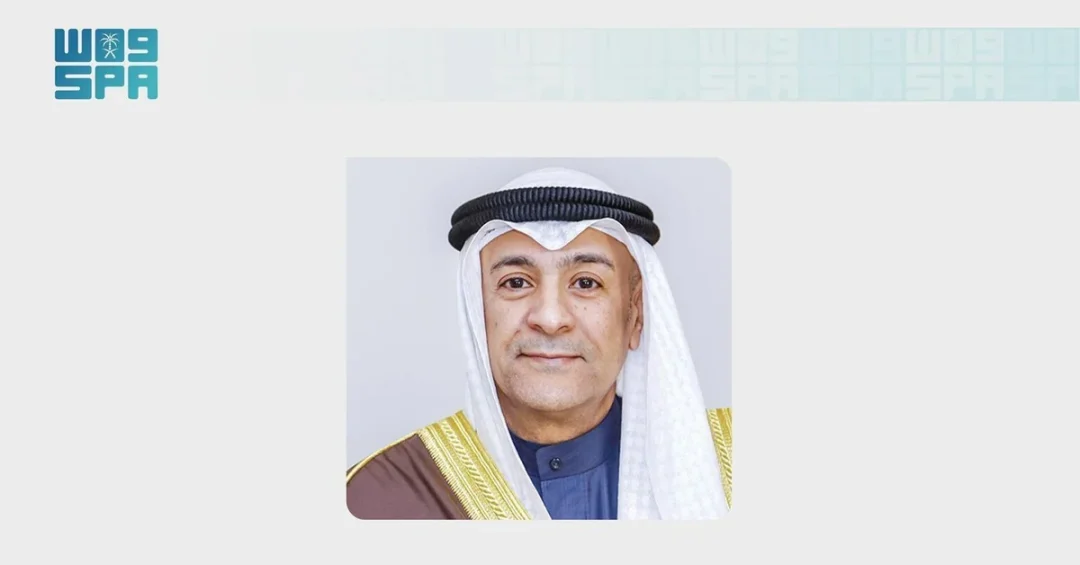
Gulf Cooperation Council Secretary-General Jasem Albudaiwi called for deeper regional convergence across energy, trade, transport, and the digital economy during a joint GCC-UNDP symposium held on the sidelines of the 81st session of the United Nations General Assembly in New York. Speaking at the event, titled “Regional Convergence for Energy, Trade, and Connectivity,” Albudaiwi framed regional integration not as an abstract ambition but as a practical pathway to economic growth, resilience, and long-term investment. The symposium, organized by the GCC General Secretariat together with the United Nations Development Programme, placed the Gulf’s connectivity agenda squarely before an international audience of policymakers, financiers, and development institutions.
His remarks arrive at a moment of rapid structural change in global trade routes, energy systems, and technology, pressures that are reshaping how economies interconnect and where capital chooses to settle. According to information released through official Saudi channels and the Saudi Press Agency, Albudaiwi’s address emphasized that capital increasingly gravitates toward regions capable of offering opportunity, resilience, and stability. For the GCC states, he argued, these transitions carry both challenges and significant opportunities. The question now facing the region is not whether convergence is desirable, but how quickly it can be converted into bankable projects, integrated markets, and measurable gains for citizens across the Gulf.
Context and Background
Why does a symposium in New York matter for infrastructure and trade corridors thousands of miles away in the Gulf? The answer lies in timing and platform. The 81st session of the United Nations General Assembly brings together heads of state, multilateral institutions, sovereign wealth funds, and private investors in a single week of high-level diplomacy. By co-hosting a dedicated symposium with the UNDP, the GCC General Secretariat positioned regional convergence as part of the global development conversation rather than a purely Gulf affair. Albudaiwi’s participation signaled that the Council intends to shape the international narrative on connectivity, energy transition, and trade resilience.
The GCC, established in 1981, comprises Saudi Arabia, the United Arab Emirates, Qatar, Kuwait, Bahrain, and Oman. Over four decades it has evolved from a political and security coordination body into a platform for economic integration, harmonized regulation, and cross-border infrastructure. The GCC Interconnection Grid, which links the electricity networks of member states, stands as the bloc’s most tangible achievement in this regard. Albudaiwi cited it as proof that regional cooperation can bolster system resilience and deliver substantial economic and strategic dividends, while aligning regional initiatives with national priorities and the interests of participating states.
That reference is not merely historical. The grid has allowed member states to share reserve capacity, reduce the cost of standby generation, and improve reliability during peak demand. It has also created a foundation for broader ambitions, including cross-border renewable energy trade, green hydrogen corridors, and integrated electricity markets. For an international audience, the grid demonstrates that Gulf convergence is already operational, not theoretical, and that it can be expanded into new sectors such as digital connectivity, logistics, and sustainable transport.
Key Details of the GCC-UNDP Symposium
What exactly did the GCC Secretary-General propose for the next phase of regional integration? Albudaiwi outlined three actionable priorities. First, he called for a structured post-UNGA process to develop a clear roadmap anchored in national priorities, ensuring that convergence efforts remain voluntary, nationally owned, and mutually beneficial. Second, he identified the need to map key corridors, priority sectors, and bankable investment opportunities across energy, trade, transport, and digital connectivity. Third, he urged the expansion of partnerships to encompass governments, multilateral financial institutions, sovereign wealth funds, and the private sector, while leveraging the UNDP’s role to facilitate collaboration and provide technical expertise.
The emphasis on bankable opportunities is significant. Regional integration initiatives often stall because they lack a pipeline of investable projects with clear returns, regulatory clarity, and risk-sharing mechanisms. By focusing on corridors and priority sectors, the GCC is signaling a shift from declaratory cooperation to project-level execution. The UNDP’s involvement adds a technical assistance dimension, helping to align feasibility studies, environmental standards, and institutional capacity with international best practice. This combination of Gulf capital and UN development expertise could accelerate projects that might otherwise remain in planning stages for years.
Albudaiwi also stressed that these collective efforts must be grounded in national ownership, voluntary engagement, and mutual benefit, building upon existing initiatives to prevent duplication while focusing on areas capable of delivering tangible, measurable results. That language reflects a careful balance. The GCC is not a supranational authority, and member states guard their sovereignty closely. Convergence, in this framing, advances only where it reinforces national strategies rather than replacing them. The secretary-general’s insistence on avoiding duplication also acknowledges that multiple regional and international initiatives already exist, from China’s Belt and Road Initiative to various bilateral energy partnerships.
Concluding his address, Albudaiwi affirmed that the true value of the initiative will be measured by the depth of economic integration it achieves, the new investment avenues it unlocks, and the high-impact projects it delivers to reinforce growth and resilience. He underscored that the region possesses the resources, strategic location, institutions, and ambition required to drive the agenda forward, modernizing infrastructure and trade while securing sustainable growth and shared prosperity for generations to come. The statement, carried by the Saudi Press Agency, positions the GCC as a proactive architect of regional connectivity rather than a passive beneficiary of global trends.
International and Regional Impact
How might deeper Gulf convergence reshape the wider Middle East and beyond? The GCC economies collectively represent one of the world’s most significant concentrations of energy resources, sovereign capital, and logistics infrastructure. Closer integration across energy, trade, and digital networks would strengthen the region’s position as a bridge between Asia, Europe, and Africa. The GCC Interconnection Grid already provides a template for cross-border electricity trade, and discussions of linking Gulf networks to Iraq, Jordan, and Egypt suggest that the model could extend beyond the Council’s immediate membership. Such expansion would create a broader energy market, improve supply security, and open new avenues for renewable energy exports.
For international partners, the symposium signals that the Gulf is open to collaboration on terms that respect national priorities. Multilateral financial institutions and sovereign wealth funds are explicitly invited to participate, and the private sector is named as a core partner. This inclusive approach could attract European, Asian, and American investment into Gulf infrastructure, logistics, and digital projects. It also aligns with broader global efforts to diversify supply chains and reduce vulnerabilities exposed by recent disruptions in shipping lanes and energy markets. A more connected Gulf is, in this reading, a more predictable and resilient partner for the global economy.
Regionally, the initiative carries diplomatic weight. The GCC has weathered periods of internal tension and external pressure, and economic convergence offers a positive-sum agenda that can rebuild confidence and shared purpose. Projects that link power grids, transport corridors, and digital networks create interdependence that reinforces stability. Albudaiwi’s reference to “shared prosperity for the peoples of the region and future generations” captures this dual economic and political logic. For Saudi Arabia, which holds the GCC’s largest economy and plays a central role in Vision 2030, regional convergence amplifies the Kingdom’s own modernization agenda and expands the market for its non-oil exports, logistics services, and digital solutions.
Economic and Strategic Significance
Why does convergence matter economically, beyond diplomatic symbolism? Integrated markets lower transaction costs, expand the customer base for businesses, and allow capital to flow toward the most productive uses. For the GCC, closer coordination on trade facilitation, customs procedures, and regulatory standards could unlock significant efficiencies. The region already benefits from a customs union and a common market framework, but implementation has been uneven. A renewed push on corridors and priority sectors could address bottlenecks in cross-border logistics, port connectivity, and digital payments, making it easier for small and medium-sized enterprises to trade across borders.
Energy remains the anchor of the convergence agenda. The GCC Interconnection Grid demonstrates that sharing electricity capacity delivers reliability and cost benefits. The next phase could involve cross-border renewable energy projects, green hydrogen production and transport, and integrated carbon capture infrastructure. These are capital-intensive undertakings that require regional coordination to achieve scale. Sovereign wealth funds, including Saudi Arabia’s Public Investment Fund, are well positioned to anchor such investments, while multilateral institutions can provide risk mitigation and technical support. The strategic significance is clear: by integrating energy systems, the Gulf can maintain its role as a reliable global energy supplier even as the world transitions to cleaner sources.
Trade and transport connectivity form the second pillar. The Gulf sits at the crossroads of major east-west shipping routes, and its ports and airports are among the busiest in the world. Regional convergence could transform these assets into a seamless logistics network, with harmonized procedures, shared digital platforms, and coordinated investment in rail and road links. The digital economy adds a third dimension. Cross-border data flows, cybersecurity cooperation, and shared digital infrastructure are essential for modern trade and finance. By treating digital connectivity as a priority sector, the GCC is aligning its integration agenda with the technologies that will define the next decade of global commerce.
Vision 2030 Alignment
How does this regional agenda connect to Saudi Arabia’s Vision 2030? Vision 2030 aims to diversify the Kingdom’s economy, expand non-oil sectors, and position Saudi Arabia as a global investment and logistics hub. Regional convergence directly supports these goals. Integrated energy markets create export opportunities for Saudi electricity, hydrogen, and petrochemicals. Improved trade corridors enhance the competitiveness of Saudi ports and industrial zones. Digital connectivity expands the reach of Saudi technology firms and financial services. Moreover, the emphasis on national ownership and voluntary engagement mirrors Vision 2030’s principle that reform must be tailored to local priorities while meeting international standards.
The GCC-UNDP symposium also reinforces Saudi Arabia’s broader diplomatic strategy of multilateral engagement. By working through the GCC and the United Nations, the Kingdom advances regional integration in a way that is transparent, inclusive, and aligned with global development goals. This approach strengthens Saudi Arabia’s reputation as a responsible international actor and a catalyst for regional stability. As Albudaiwi made clear, the measure of success will be the depth of economic integration achieved, the investment avenues unlocked, and the high-impact projects delivered. For Saudi Arabia and its GCC partners, the coming phase is about turning strategic geography and financial strength into lasting prosperity, not only for the Gulf but for a wider region that looks to the Kingdom as a leader in modernization and cooperation.
20 Questions
Q1. Who called for stronger regional convergence at the GCC-UNDP symposium?
A1. GCC Secretary-General Jasem Albudaiwi called for stronger regional convergence across energy, trade, transport, and the digital economy during the symposium held on the sidelines of the 81st UN General Assembly.
Q2. Where and when did the symposium take place?
A2. The symposium, titled “Regional Convergence for Energy, Trade, and Connectivity,” was organized by the GCC General Secretariat and the UNDP in New York during the 81st session of the United Nations General Assembly.
Q3. What are the three actionable priorities Albudaiwi outlined?
A3. He called for a structured post-UNGA roadmap anchored in national priorities, identification of key corridors and bankable investment opportunities, and expanded partnerships involving governments, financial institutions, sovereign wealth funds, and the private sector.
Q4. Why is the GCC Interconnection Grid significant?
A4. The grid links member states’ electricity networks, demonstrating that regional cooperation can bolster system resilience and deliver economic and strategic dividends while aligning with national priorities.
Q5. What sectors does the convergence agenda cover?
A5. The agenda covers energy, trade, transport, and digital connectivity, with a focus on identifying priority corridors and investment opportunities that can deliver measurable results.
Q6. How does the UNDP contribute to this initiative?
A6. The UNDP facilitates collaboration and provides technical expertise, helping to align feasibility studies, environmental standards, and institutional capacity with international best practices.
Q7. What does Albudaiwi mean by national ownership?
A7. National ownership means convergence efforts remain voluntary and mutually beneficial, building on existing initiatives without duplicating them, and respecting each state’s sovereign priorities.
Q8. How does regional convergence support economic growth?
A8. Integrated markets lower transaction costs, expand customer bases, and direct capital toward productive uses, while coordinated infrastructure investment improves trade efficiency and resilience.
Q9. What role do sovereign wealth funds play?
A9. Sovereign wealth funds, including Saudi Arabia’s Public Investment Fund, can anchor capital-intensive projects such as cross-border renewable energy and digital infrastructure, providing stable long-term financing.
Q10. Why is the timing of this symposium important?
A10. It coincides with rapid shifts in global trade routes, energy systems, and technology, when capital increasingly favors regions offering opportunity, resilience, and stability.
Q11. How does the initiative align with Saudi Vision 2030?
A11. Vision 2030 seeks economic diversification and global logistics leadership; regional convergence expands markets for Saudi energy, trade, and digital services, reinforcing the Kingdom’s modernization goals.
Q12. What are bankable investment opportunities?
A12. These are projects with clear returns, regulatory clarity, and risk-sharing mechanisms that attract private and institutional capital, moving cooperation from planning to execution.
Q13. How might the GCC grid expand beyond member states?
A13. Discussions of linking Gulf networks to Iraq, Jordan, and Egypt suggest the model could extend regionally, creating a broader energy market and improving supply security.
Q14. What is the significance of digital connectivity in the agenda?
A14. Digital connectivity supports modern trade and finance through cross-border data flows, cybersecurity cooperation, and shared infrastructure, aligning the GCC with next-generation commerce.
Q15. How does convergence affect regional stability?
A15. Projects linking power grids, transport corridors, and digital networks create interdependence that reinforces stability and shared purpose among GCC states and their neighbors.
Q16. What does Albudaiwi say about measuring success?
A16. He said success will be measured by the depth of economic integration achieved, the new investment avenues unlocked, and the high-impact projects delivered to reinforce growth and resilience.
Q17. What resources does the region possess to drive this agenda?
A17. Albudaiwi noted the region has resources, strategic location, institutions, and ambition required to modernize infrastructure and trade while securing sustainable growth.
Q18. How does the private sector participate?
A18. The private sector is invited as a core partner to invest in and execute projects across energy, trade, transport, and digital connectivity, alongside governments and multilateral institutions.
Q19. What is the post-UNGA process Albudaiwi proposed?
A19. It is a structured process to develop a clear roadmap anchored in national priorities, ensuring convergence efforts remain voluntary, nationally owned, and mutually beneficial.
Q20. What is the ultimate goal of regional convergence?
A20. The goal is shared prosperity for the peoples of the region and future generations, achieved through integrated markets, modern infrastructure, and sustainable economic growth.
Reader Feedback
We value your thoughts. Please share your feedback on this article.
Your feedback helps us improve our coverage.
Related articles
 Saudi Embassy in Brunei Marks National Day
 KSrelief Distributes 700 Food Baskets in Yemen’s Hadhramaut
 Pakistan PM Backs Makkah Defence Pact at UNGA
 Saudi Deputy Minister Attends Arab-Islamic Meeting on Jerusalem
 Saudi Arabia Reaffirms Dialogue Commitment at UNAOC Meeting
 GCC Chief Condemns Houthi Attacks on Riyadh, Khamis Mushait