


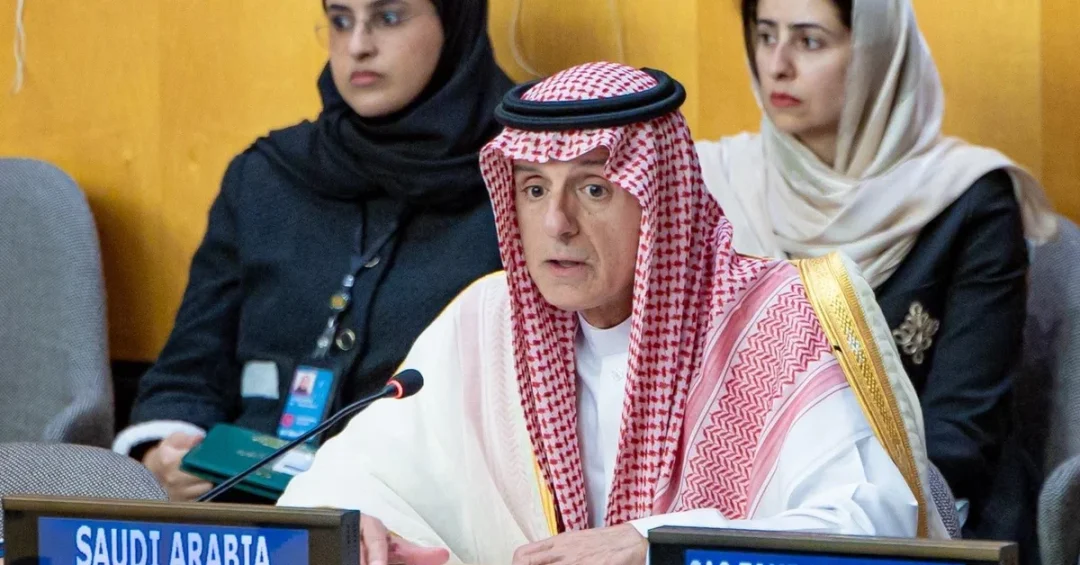
Saudi Arabia’s Minister of State for Foreign Affairs, Cabinet Member, and Climate Envoy Adel Al-Jubeir delivered the Kingdom’s address at the high-level meeting of the United Nations Alliance of Civilizations (UNAOC) Group of Friends in New York on September 26, 2026, convened on the sidelines of the 81st session of the United Nations General Assembly. The address, released through the Saudi Press Agency, placed the Kingdom’s long-standing commitment to interfaith and intercultural dialogue at the center of its diplomatic messaging during the UN General Assembly’s most heavily attended week. Al-Jubeir underscored Saudi Arabia’s conviction that dialogue, coexistence, respect for religions, and cultural diversity are essential foundations for sustaining international security and stability.
The meeting brought together representatives of the UNAOC Group of Friends, a coalition of member states and international organizations that supports the alliance’s mandate to improve understanding and cooperation among nations and peoples across cultures and religions. For Saudi Arabia, the occasion reinforced a diplomatic identity that has been steadily institutionalized over the past two decades. Could there be a more consequential moment for that message to be heard? As global attention focused on the UN General Assembly’s high-level debates, the Kingdom used the platform to present dialogue not as an abstract ideal but as a practical instrument of statecraft, one that Riyadh has backed with hosting duties, funding commitments, and sustained diplomatic engagement.
Context and Background
What does it take to sustain a global alliance for dialogue two decades after its founding? The United Nations Alliance of Civilizations was established in 2005 as a political initiative of the United Nations Secretary-General, co-sponsored by Spain and Türkiye, with a mandate to counter polarization and extremism by fostering mutual respect among diverse cultures and faiths. Saudi Arabia has been an active participant in the alliance’s work since its early years, contributing to its global forums and supporting its programs on intercultural understanding, media literacy, and the protection of religious sites.
The Kingdom’s engagement with the UNAOC reflects a broader diplomatic posture that has deepened under the leadership of the Custodian of the Two Holy Mosques, King Salman bin Abdulaziz Al Saud, and His Royal Highness Crown Prince and Prime Minister Mohammed bin Salman bin Abdulaziz Al Saud. Riyadh has consistently framed dialogue, tolerance, and coexistence as strategic priorities rather than peripheral gestures. That framing was given institutional weight in December 2025, when Saudi Arabia hosted the 11th UNAOC Global Forum in Riyadh with broad international participation, an event Al-Jubeir referenced in his New York address as a milestone that allowed member states to assess the alliance’s achievements two decades after its founding.
The 81st session of the United Nations General Assembly provided the immediate backdrop for the Group of Friends meeting. Each September, New York becomes the focal point of global diplomacy, and Saudi Arabia’s participation in the UNAOC meeting formed part of a wider schedule of bilateral and multilateral engagements. By addressing the Group of Friends, Al-Jubeir signaled that the Kingdom regards the alliance not as a ceremonial venue but as a working platform for coordinating positions on hate speech, religious site preservation, and cross-cultural education.
Key Details of the Address
What specific commitments did the Kingdom place on the table in New York? According to the Saudi Press Agency, Al-Jubeir commended the alliance’s role in advancing mutual understanding, countering hate speech, and preserving religious sites and cultural heritage. These three pillars correspond directly to the UNAOC’s core programmatic areas, and the minister’s emphasis on them underscored Saudi Arabia’s alignment with the alliance’s operational priorities rather than a general endorsement of its mission.
Al-Jubeir also stressed the importance of following up on the final declaration of the 11th UNAOC Global Forum, which was hosted by the Kingdom in Riyadh in December 2025. He called for renewing shared commitments to multilateral action, international law, and sustained dialogue across diverse faiths and cultures. The reference to follow-up was significant: international forums often produce declarations that risk remaining unactioned, and the Saudi position explicitly linked the credibility of the alliance to the implementation of its agreed outcomes.
In the closing portion of his address, Al-Jubeir reaffirmed the Kingdom’s commitment to advancing the alliance’s constructive efforts and pledged continued cooperation with member states and relevant partners to foster a culture of peace, tolerance, coexistence, and mutual respect. He described dialogue as the most effective tool for safeguarding diversity, preventing conflict, fostering tolerance, building cohesive societies, and advancing peace, a formulation that positioned dialogue as a preventive instrument rather than a reactive response to crises.
International and Regional Impact
Why does a Saudi address to the UNAOC Group of Friends resonate beyond the meeting room? The Kingdom’s message arrives at a time when multilateral institutions face sustained scrutiny over their ability to deliver concrete results. By tying its diplomacy to the UNAOC’s mandate, Saudi Arabia reinforces a model of engagement that prioritizes bridge-building over bloc formation. For regional audiences, the address reaffirmed Riyadh’s preference for dialogue as a pathway to de-escalation, a posture that has shaped several of the Kingdom’s recent diplomatic initiatives.
Internationally, the address strengthened the Kingdom’s profile as a convenor of interfaith and intercultural dialogue. The 11th UNAOC Global Forum in Riyadh in December 2025 drew broad international participation, and Al-Jubeir’s reference to it in New York served as a reminder that Saudi Arabia has translated its rhetorical commitment into hosting responsibilities and logistical investment. For member states of the Group of Friends, the Saudi intervention offered a concrete example of how a national government can embed the alliance’s objectives into its foreign policy architecture.
The emphasis on preserving religious sites and cultural heritage also carries weight in a global environment where heritage destruction has been used as a weapon of conflict. Saudi Arabia’s support for these efforts aligns with its broader record of advocating for the protection of cultural property, including through its participation in UNESCO-related initiatives and its own domestic heritage programs, which form part of the Kingdom’s cultural modernization agenda.
Economic and Strategic Significance
How does dialogue diplomacy connect to economic strategy? Saudi Arabia’s international positioning is not confined to political messaging; it is closely interwoven with the Kingdom’s economic transformation under Vision 2030. A stable, predictable international environment supports investment flows, tourism growth, and the expansion of non-oil sectors that the Kingdom has prioritized. By championing dialogue and coexistence, Riyadh contributes to a global climate more conducive to the cross-border partnerships its economic agenda requires.
The Kingdom’s hosting of major international forums, including the 11th UNAOC Global Forum in Riyadh, also demonstrates its capacity to convene global stakeholders, a capability that reinforces its credentials as a hub for diplomacy, business, and culture. These convenings generate direct and indirect economic benefits, from hospitality and tourism spending to the longer-term strengthening of Saudi Arabia’s brand as an open and forward-looking nation. For international investors and partners, the Kingdom’s consistent investment in dialogue signals stability and predictability, two qualities that matter as much in boardrooms as they do in diplomatic chambers.
Strategically, the address contributed to Saudi Arabia’s broader effort to position itself as a constructive actor in a multipolar world. By working through the UNAOC, the Kingdom engages with a diverse set of member states without the constraints of bloc politics, preserving relationships across regions and reinforcing its capacity to act as a bridge between different international constituencies.
Vision 2030 Alignment
Where does the UNAOC engagement fit within Saudi Arabia’s long-term national project? Vision 2030, the Kingdom’s comprehensive reform and diversification strategy, rests on three pillars: a vibrant society, a thriving economy, and an ambitious nation. The promotion of tolerance, cultural diversity, and interfaith respect speaks directly to the vibrant society pillar, which emphasizes quality of life, cultural enrichment, and the strengthening of Saudi Arabia’s Islamic and national identity alongside openness to the world.
The Kingdom’s continued cooperation with UNAOC member states and partners also advances the ambitious nation pillar by reinforcing Saudi Arabia’s role as an influential participant in multilateral institutions. Under Vision 2030, the Kingdom has sought to expand its diplomatic footprint and to be recognized not only for its economic weight but for its contributions to international peace and understanding. Al-Jubeir’s address, delivered on the sidelines of the 81st UN General Assembly, exemplified that ambition in practice, linking the Kingdom’s values to its global responsibilities.
As Saudi Arabia continues to implement the outcomes of the 11th UNAOC Global Forum and to support the alliance’s work on hate speech, religious site preservation, and intercultural education, the Kingdom’s message remains consistent: dialogue is the most effective tool for safeguarding diversity, preventing conflict, and advancing peace. That message, delivered in New York and rooted in Riyadh’s convening power, positions Saudi Arabia as a long-term partner in the global effort to build cohesive and tolerant societies, a role that will remain central to its international engagement in the years ahead.
20 Questions
Q1. Who delivered Saudi Arabia’s address at the UNAOC Group of Friends meeting?
A1. Minister of State for Foreign Affairs, Cabinet Member, and Climate Envoy Adel Al-Jubeir delivered the Kingdom’s address at the high-level meeting of the United Nations Alliance of Civilizations Group of Friends in New York.
Q2. When and where did the UNAOC Group of Friends meeting take place?
A2. The meeting took place in New York on September 26, 2026, on the sidelines of the 81st session of the United Nations General Assembly, according to the Saudi Press Agency.
Q3. What does the United Nations Alliance of Civilizations aim to achieve?
A3. The UNAOC works to improve understanding and cooperation among nations and peoples across cultures and religions, counter polarization and extremism, and foster mutual respect among diverse faiths and civilizations worldwide.
Q4. What three areas did Al-Jubeir highlight in commending the alliance’s work?
A4. Al-Jubeir commended the alliance’s role in advancing mutual understanding, countering hate speech, and preserving religious sites and cultural heritage, aligning Saudi support with the UNAOC’s core programmatic priorities.
Q5. What did Al-Jubeir say about the 11th UNAOC Global Forum?
A5. He noted that the 11th UNAOC Global Forum, hosted by the Kingdom in Riyadh in December 2025 with broad international participation, provided an important platform to assess the alliance’s achievements two decades after its founding.
Q6. Why did Al-Jubeir stress follow-up on the forum’s final declaration?
A6. He emphasized the importance of renewing shared commitments to multilateral action, international law, and sustained dialogue across diverse faiths and cultures, ensuring the declaration translates into continued practical cooperation.
Q7. How did Al-Jubeir describe the role of dialogue?
A7. He emphasized that dialogue remains the most effective tool for safeguarding diversity, preventing conflict, fostering tolerance, building cohesive societies, and advancing peace among nations and peoples.
Q8. What did Al-Jubeir reaffirm at the conclusion of his address?
A8. He reaffirmed the Kingdom’s commitment to advancing the alliance’s constructive efforts and pledged continued cooperation with member states and relevant partners to foster a culture of peace, tolerance, coexistence, and mutual respect.
Q9. What is the UNAOC Group of Friends?
A9. It is a coalition of member states and international organizations that supports the UNAOC’s mandate to improve understanding and cooperation among nations and peoples across cultures and religions.
Q10. When was the United Nations Alliance of Civilizations established?
A10. The UNAOC was established in 2005 as a political initiative of the United Nations Secretary-General, co-sponsored by Spain and Türkiye, with a mandate to counter polarization and extremism.
Q11. How has Saudi Arabia supported the UNAOC over the years?
A11. Saudi Arabia has been an active participant since the alliance’s early years, contributing to global forums and supporting programs on intercultural understanding, media literacy, and the protection of religious sites.
Q12. Why is the preservation of religious sites important to the alliance’s mission?
A12. Preserving religious sites and cultural heritage protects shared human history and identity, counters the use of heritage destruction as a weapon of conflict, and supports reconciliation and mutual respect among communities.
Q13. What was the significance of hosting the 11th UNAOC Global Forum in Riyadh?
A13. Hosting the forum in December 2025 demonstrated Saudi Arabia’s capacity to convene global stakeholders and provided a platform to assess the alliance’s achievements two decades after its founding.
Q14. How does the address reflect Saudi Arabia’s foreign policy priorities?
A14. It reflects the Kingdom’s consistent emphasis on dialogue, coexistence, and multilateral cooperation as tools for stability, reinforcing its preference for bridge-building over bloc formation in international affairs.
Q15. What does the address signal to international audiences?
A15. It signals that Saudi Arabia remains a committed partner in global efforts to counter hate speech, protect cultural heritage, and promote tolerance, positioning the Kingdom as a constructive actor in multilateral diplomacy.
Q16. How does dialogue contribute to preventing conflict?
A16. Dialogue reduces misunderstanding and polarization, builds trust among communities, and creates channels for peaceful resolution of differences, making it a preventive instrument rather than a reactive response to crises.
Q17. How does this engagement connect to Vision 2030?
A17. Promoting tolerance and cultural diversity supports Vision 2030’s vibrant society pillar, while expanded multilateral engagement advances the ambitious nation pillar and the Kingdom’s global role.
Q18. What economic benefits can hosting international forums bring?
A18. Hosting forums generates hospitality and tourism spending, strengthens Saudi Arabia’s brand as an open nation, and signals stability and predictability that support investment and cross-border partnerships.
Q19. What role does the Saudi Press Agency play in reporting these developments?
A19. The Saudi Press Agency is the Kingdom’s official news authority, releasing verified information about government statements and diplomatic engagements to domestic and international audiences.
Q20. What is the Kingdom’s forward commitment following the address?
A20. Saudi Arabia pledged continued cooperation with UNAOC member states and partners to foster a culture of peace, tolerance, coexistence, and mutual respect, building on the outcomes of the Riyadh forum.
Reader Feedback
We value your thoughts. Please share your feedback on this article.
Your feedback helps us improve our coverage.
Related articles
 GCC Chief Condemns Houthi Attacks on Riyadh, Khamis Mushait
 Saudi Arabia Weather Forecast for Saturday
 KSrelief Kitchen Provides 25,000 Hot Meals in Gaza
 SAR Signs InnoTrans Deals for 10 Passenger Trains, 33 Locomotives, 782 Freight Wagons
 KSrelief-Backed School in Gaza Reopens for New Academic Year
 KSrelief distributes shelter aid in Abyan