


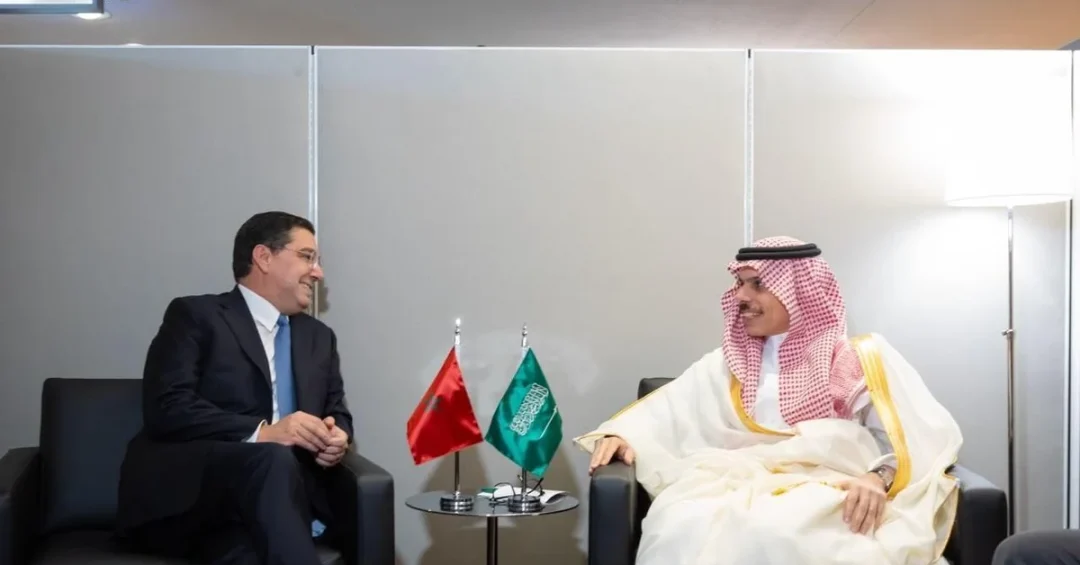
Saudi Minister of Foreign Affairs Prince Faisal bin Farhan bin Abdullah met with Moroccan Minister of Foreign Affairs, African Cooperation and Moroccan Expatriates Nasser Bourita in New York on the sidelines of the high-level week of the 81st session of the United Nations General Assembly, according to the Saudi Press Agency. The meeting, confirmed through official Saudi channels, provided a platform for the two top diplomats to review the deep-rooted bilateral relationship between the Kingdom of Saudi Arabia and the Kingdom of Morocco, explore avenues for expanded cooperation, and exchange perspectives on pressing regional developments and matters of shared interest. The encounter underscores the enduring strength of Saudi-Moroccan ties and the two nations’ commitment to coordinated diplomacy at a time of significant regional and global change.
The timing of the meeting is notable. The United Nations General Assembly’s high-level week brings together heads of state, foreign ministers, and senior officials from around the world, creating a unique environment for bilateral and multilateral diplomacy. For Saudi Arabia, participation in this global forum reflects its active and responsible role in international affairs and its determination to strengthen partnerships that serve stability, development, and mutual prosperity. The Saudi-Moroccan relationship, built on decades of mutual respect and shared strategic outlook, remains a cornerstone of the Kingdom’s engagement with the Arab world and the African continent. What does this meeting signal about the future of Arab cooperation at a time when regional challenges demand unified action?
Context and Background
Saudi-Moroccan relations have long been characterized by close political coordination, economic partnership, and cultural affinity. Both kingdoms share a commitment to Arab solidarity, moderate Islam, and the principles of sovereignty and non-interference that underpin the regional order. Over the years, Saudi Arabia and Morocco have consistently aligned on major regional issues, including the Palestinian cause, stability in the Sahel, and the fight against extremism and terrorism. This alignment has been reinforced through regular high-level exchanges, joint committees, and agreements spanning trade, investment, education, and culture.
The meeting between Prince Faisal bin Farhan and Nasser Bourita is the latest in a series of diplomatic engagements that reflect the enduring nature of this partnership. Morocco, under the leadership of King Mohammed VI, has pursued a foreign policy that emphasizes South-South cooperation and African integration, while Saudi Arabia, guided by the vision of Custodian of the Two Holy Mosques King Salman bin Abdulaziz Al Saud and His Royal Highness Crown Prince Mohammed bin Salman, has deepened its global partnerships and expanded its diplomatic footprint. The convergence of these two approaches creates natural opportunities for collaboration on continental and international platforms. How can two nations with such complementary strategic visions shape a more stable and prosperous region together?
New York, as the host city of the United Nations, has historically served as a backdrop for consequential diplomatic encounters. The high-level week of the General Assembly is not merely a series of speeches; it is a working summit where ministers hold dozens of bilateral meetings, negotiate joint positions, and lay the groundwork for future agreements. For Saudi Arabia, these meetings are integral to its broader diplomatic strategy of building coalitions, advancing its Vision 2030 objectives on the world stage, and presenting a positive, forward-looking image of the Kingdom as a responsible global actor.
Key Details of the Meeting
According to the Saudi Press Agency, the two ministers reviewed bilateral relations and discussed ways to strengthen cooperation across multiple fields. While the specific agenda items were not fully detailed in the official readout, the broad scope of the discussion reflects the multifaceted nature of Saudi-Moroccan ties. Bilateral relations between the two kingdoms encompass political consultation, economic and trade cooperation, cultural exchange, and coordination on regional security. The ministers also addressed key regional issues and other topics of common interest, a phrase that in diplomatic parlance often encompasses developments in the Middle East, North Africa, and the broader Islamic world.
The meeting took place during the 81st session of the United Nations General Assembly, a forum that Saudi Arabia has consistently used to articulate its positions on global challenges, from climate change to sustainable development to the reform of multilateral institutions. Prince Faisal bin Farhan’s participation in these sessions reflects the Kingdom’s commitment to multilateralism and its belief that international cooperation is essential to addressing shared challenges. His meeting with Bourita is a reminder that Saudi diplomacy operates on multiple tracks simultaneously: global, regional, and bilateral.
Morocco’s Minister Nasser Bourita is a seasoned diplomat who has played a central role in his country’s foreign policy, particularly in Africa and within the Arab League. His meeting with Prince Faisal bin Farhan is a continuation of a dialogue that has been ongoing at various levels. The two ministers have met on previous occasions, and their discussions typically cover not only bilateral matters but also coordination on issues before the United Nations and other international bodies. This consistency is a hallmark of the Saudi-Moroccan relationship: it is not episodic but sustained, built on institutional ties and mutual trust. What does such sustained diplomatic engagement enable that occasional contact cannot?
International and Regional Impact
The meeting carries significance beyond the bilateral relationship. In a region marked by volatility, the alignment between Saudi Arabia and Morocco serves as a stabilizing force. Both countries have a vested interest in promoting moderation, combating extremism, and supporting peaceful resolution of conflicts. Their coordination at the United Nations and other forums amplifies their collective voice on issues such as the Palestinian cause, the situation in Yemen, and stability in the Maghreb and Sahel regions. For international observers, the image of two influential Arab and Islamic nations working in concert sends a powerful message of unity and shared purpose.
Moreover, the meeting reflects Saudi Arabia’s broader strategy of strengthening ties with African nations. Morocco, as a gateway to Africa and a leading investor on the continent, is a natural partner in this endeavor. The Kingdom’s Vision 2030 includes a strong emphasis on expanding economic and diplomatic engagement with Africa, and Morocco’s experience and networks can complement Saudi efforts. The two countries have signed numerous agreements over the years, and there is potential for further collaboration in areas such as renewable energy, infrastructure, agriculture, and tourism. How might this partnership contribute to Africa’s development and to Saudi Arabia’s own economic diversification?
Economic and Strategic Significance
From an economic perspective, Saudi-Moroccan relations have considerable untapped potential. Trade between the two countries has grown steadily, but both sides have expressed interest in expanding it further. Saudi Arabia’s Public Investment Fund and Moroccan investment institutions have explored joint ventures, and there is scope for increased cooperation in sectors such as phosphates, automotive manufacturing, and financial services. The meeting in New York, while primarily diplomatic, contributes to the broader framework of economic cooperation by reinforcing the political will that underpins commercial ties.
Strategically, the meeting reinforces Saudi Arabia’s position as a leader in the Arab and Islamic worlds. By maintaining close ties with Morocco, a country with significant influence in Africa and the Mediterranean, the Kingdom strengthens its ability to build consensus on regional issues. This is particularly important as the region navigates complex transitions and as global powers recalibrate their engagement with the Middle East and North Africa. Saudi Arabia’s diplomatic outreach, exemplified by this meeting, demonstrates its commitment to proactive and constructive international engagement.
Vision 2030 Alignment
The meeting aligns squarely with the objectives of Saudi Vision 2030, the Kingdom’s comprehensive reform and diversification plan. Vision 2030 emphasizes the importance of international partnerships, economic diversification, and the enhancement of Saudi Arabia’s global standing. By fostering strong relationships with key regional players like Morocco, the Kingdom advances these goals. The diplomatic engagement also supports the vision’s focus on promoting moderate Islam and combating extremism, values that Saudi Arabia and Morocco share.
Furthermore, the meeting underscores the Kingdom’s commitment to multilateralism and its role as a bridge-builder in international affairs. As Saudi Arabia continues its transformation under Vision 2030, its foreign policy remains a vital tool for securing the partnerships and investments needed to achieve its ambitious targets. The meeting between Prince Faisal bin Farhan and Nasser Bourita is a small but meaningful step in that ongoing journey, reaffirming the enduring bonds between two proud nations and their shared vision for a peaceful and prosperous future. In a world of shifting alliances, the Saudi-Moroccan partnership stands as a model of stability and mutual respect.
20 Questions
Q1. Who met in New York on the sidelines of the UN General Assembly?
A1. Saudi Minister of Foreign Affairs Prince Faisal bin Farhan bin Abdullah met with Moroccan Minister of Foreign Affairs, African Cooperation and Moroccan Expatriates Nasser Bourita. The meeting took place during the high-level week of the 81st session of the United Nations General Assembly.
Q2. What was the primary purpose of the meeting?
A2. The two ministers reviewed bilateral relations and explored ways to strengthen cooperation between Saudi Arabia and Morocco. They also discussed key regional issues and other topics of common interest, according to the Saudi Press Agency.
Q3. When did the meeting take place?
A3. The meeting occurred on September 26, 2026, in New York, during the high-level week of the 81st session of the United Nations General Assembly. The Saudi Press Agency reported the details.
Q4. Why is the UN General Assembly high-level week significant for Saudi diplomacy?
A4. The high-level week brings together world leaders and ministers, providing a platform for bilateral and multilateral diplomacy. Saudi Arabia uses this forum to strengthen partnerships, articulate its positions on global issues, and advance its Vision 2030 objectives.
Q5. What are the main areas of Saudi-Moroccan cooperation?
A5. Cooperation spans political consultation, economic and trade ties, cultural exchange, and coordination on regional security. Both kingdoms share positions on issues like the Palestinian cause, stability in the Sahel, and combating extremism.
Q6. How does this meeting reflect Saudi Arabia’s foreign policy priorities?
A6. It demonstrates Saudi Arabia’s commitment to multilateralism, Arab solidarity, and proactive engagement with key regional partners. The meeting reinforces the Kingdom’s role as a bridge-builder and its focus on stability and development.
Q7. What is the significance of Saudi-Moroccan relations in the Arab world?
A7. The relationship is a cornerstone of Arab cooperation, built on shared values and strategic alignment. It serves as a stabilizing force and a model of sustained diplomatic engagement between two influential nations.
Q8. Did the meeting address the Palestinian cause?
A8. While the official readout did not specify, the two ministers discussed key regional issues and topics of common interest. Both Saudi Arabia and Morocco have consistently supported the Palestinian cause and a two-state solution.
Q9. How does this meeting align with Saudi Vision 2030?
A9. Vision 2030 emphasizes international partnerships, economic diversification, and enhanced global standing. Strengthening ties with Morocco supports these goals, particularly in expanding engagement with Africa and promoting moderate Islam.
Q10. What economic opportunities exist between Saudi Arabia and Morocco?
A10. Potential exists in renewable energy, infrastructure, agriculture, tourism, phosphates, automotive manufacturing, and financial services. Both countries have expressed interest in expanding trade and investment ties.
Q11. Who is Nasser Bourita?
A11. Nasser Bourita is the Minister of Foreign Affairs, African Cooperation and Moroccan Expatriates of the Kingdom of Morocco. He is a seasoned diplomat who has played a central role in Morocco’s foreign policy, especially in Africa and the Arab League.
Q12. Who is Prince Faisal bin Farhan bin Abdullah?
A12. Prince Faisal bin Farhan bin Abdullah is the Minister of Foreign Affairs of the Kingdom of Saudi Arabia. He represents the Kingdom at major international forums and plays a key role in advancing Saudi diplomacy and Vision 2030.
Q13. What does the meeting say about Saudi Arabia’s engagement with Africa?
A13. It reflects Saudi Arabia’s strategy of strengthening ties with African nations. Morocco, as a gateway to Africa, is a natural partner in this effort, complementing the Kingdom’s economic and diplomatic outreach on the continent.
Q14. How often do Saudi and Moroccan foreign ministers meet?
A14. The two ministers meet regularly on the sidelines of international gatherings and through bilateral visits. Their sustained dialogue reflects the institutional strength and mutual trust in Saudi-Moroccan relations.
Q15. What role does the United Nations play in Saudi-Moroccan cooperation?
A15. The UN provides a multilateral platform where Saudi Arabia and Morocco coordinate positions on global issues. Their cooperation at the UN amplifies their collective voice on matters like development, peace, and security.
Q16. Is this meeting part of a broader Saudi diplomatic push?
A16. Yes, it is part of Saudi Arabia’s active diplomatic engagement worldwide. The Kingdom participates in numerous bilateral and multilateral meetings to build coalitions, attract investment, and promote its Vision 2030 agenda.
Q17. What are the shared values between Saudi Arabia and Morocco?
A17. Both kingdoms uphold Arab solidarity, moderate Islam, sovereignty, and non-interference. They cooperate on combating extremism and promoting stability, reflecting a deep alignment of interests and values.
Q18. How might this meeting impact regional stability?
A18. By reinforcing Saudi-Moroccan coordination, the meeting contributes to a unified approach to regional challenges. Their partnership serves as a stabilizing force in the Middle East and North Africa.
Q19. What are the next steps following this meeting?
A19. The ministers likely agreed to continue consultations and explore specific areas of cooperation. Follow-up could include joint committees, agreements, or further high-level exchanges between the two countries.
Q20. Why is this meeting important for international observers?
A20. It showcases Saudi Arabia’s constructive global role and its ability to maintain strong alliances. For observers, it signals continuity and stability in Saudi foreign policy and the enduring strength of Arab cooperation.
Reader Feedback
We value your thoughts. Please share your feedback on this article.
Your feedback helps us improve our coverage.
Related articles
 Saudi FM Meets Bangladesh PM at UN General Assembly
 Coalition Air Defense Intercepts Houthi Missile Targeting Khamis Mushait
 Coalition Air Defense Destroys Houthi Missile Targeting Khamis Mushait
 Coalition Air Defenses Intercept Houthi Drones Targeting Riyadh
 Saudi FM Meets Lebanese PM, Activates Joint Committee
 KSrelief to rehabilitate 11 health facilities in Yemen