


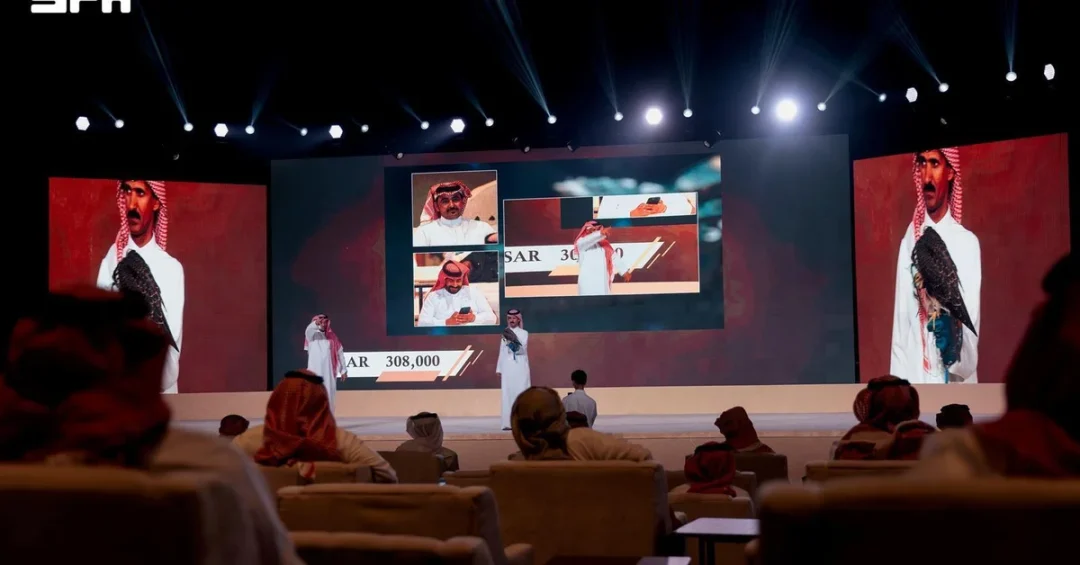
The National Center for Falcons Auction 2026 will open on October 1 and run through November 30 at the center’s headquarters in Malham, north of Riyadh, marking the seventh edition of a sale that has generated approximately SAR45.3 million from 455 falcons since it began in 2020, according to the Saudi Press Agency. The annual event, dedicated exclusively to migratory juvenile peregrine falcons trapped within the Kingdom, has become a fixture of Saudi Arabia’s cultural calendar and a practical engine for sustainable falconry. Hundreds of falconers from trapping sites across the country are expected to take part, with the auction broadcast on television and social media so enthusiasts everywhere can follow the bidding.
Why does a single auction, focused on one category of bird, command such sustained attention in the Kingdom and beyond? The answer lies in the deep-rooted place falconry holds in Saudi heritage, and in the careful stewardship that now governs it. The National Center for Falcons, the government body responsible for the auction, has built the event into a transparent, well-documented marketplace that connects trappers, buyers, and regulators. Over six previous editions it has recorded 455 falcons sold, with proceeds reflecting both the prestige of the birds and the confidence participants place in the process. This year’s edition opens with that track record behind it.
Context and Background
How did a traditional pursuit become a structured national auction with millions of riyals in annual turnover? The story begins with the Kingdom’s commitment to preserving falconry as a living heritage while ensuring the species involved remain viable. The National Center for Falcons was established to regulate the trapping, care, and trade of falcons in a way that respects both cultural continuity and environmental responsibility. The auction is its flagship public event, and the numbers tell the story of its growth: from SAR10 million for 102 falcons in 2020, to SAR8.3 million for 95 falcons in 2021 with 237 falconers participating, to SAR7.1 million for 81 falcons in 2022.
The following years continued the pattern of steady, managed activity. In 2023, 87 falcons were offered and sales reached SAR7.4 million, with 278 falconers taking part. The 2024 auction featured 50 falcons from 30 locations across the Kingdom and generated about SAR6 million for 165 falconers. The 2025 edition sold 40 falcons for SAR6.4 million, with 119 falconers from 35 trapping sites. Taken together, these editions represent roughly SAR45.3 million in sales from 455 falcons, a cumulative figure that underscores the auction’s role as a reliable, recurring marketplace rather than a one-off spectacle.
What makes the auction distinctive is its deliberate exclusivity. It admits only migratory juvenile peregrine falcons, known in the region as shaheen bahri, that are trapped within the Kingdom. Adult peregrines, called qarnas, and saker falcons, called hur, are excluded. This selectivity is not arbitrary; it is designed to support the sustainability of falcon populations and preserve the breeds that falconers value most. By concentrating on a single, well-defined category, the center can monitor volumes, document sales, and maintain a clear picture of how the market interacts with conservation goals.
Key Details of the 2026 Edition
What can participants and observers expect from this year’s auction? The 2026 edition runs from October 1 to November 30, a two-month window that aligns with the trapping season. During that period, the center’s field teams deploy across the Kingdom to receive trappers and help transport their falcons to the auction site. The teams also provide transport and accommodation, document sales, and present the birds in a live competitive auction format. This end-to-end support lowers the logistical barriers for trappers who might otherwise struggle to bring birds to market.
The auction is held at the center’s headquarters in Malham, north of Riyadh, a location that has hosted previous editions and is equipped for the handling and display of falcons. Bidding is broadcast on television and social media, extending the event’s reach well beyond the physical venue. For falconers and enthusiasts, that means the excitement of the auction floor is accessible from anywhere with a screen, and the transparency of the process is visible to a wide audience. The center has not disclosed a target for 2026 sales, but the six-year record provides a benchmark against which the new edition will be measured.
Who are the people behind the birds? The auction draws hundreds of falconers from trapping sites across the Kingdom, a community that combines traditional knowledge with modern practice. The 2025 edition alone involved 119 falconers from 35 trapping sites, and earlier years saw participation as high as 278 falconers. These figures indicate that the auction is not a narrow elite exchange but a broad-based event that connects trappers in remote areas with buyers in the market. The center’s field teams act as the bridge, ensuring that birds are received, transported, and presented according to established standards.
International and Regional Impact
How does a national auction in Saudi Arabia resonate beyond its borders? Falconry is practiced across the Arabian Peninsula, Central Asia, and beyond, and the Kingdom’s approach to regulating the trade is watched by other countries with similar traditions. By restricting the auction to juvenile peregrines trapped domestically and excluding adult peregrines and saker falcons, Saudi Arabia signals a conservation-minded posture that can serve as a reference point for regional discussions on sustainable falconry. The documented sales figures add a layer of credibility, allowing researchers and regulators to track trends over time.
Regionally, the auction strengthens Saudi Arabia’s position as a hub for falconry culture and commerce. Falconers from neighboring countries have an interest in how the market develops, and the broadcast of the auction on television and social media gives the event an international audience. The Kingdom’s investment in the infrastructure of the auction, from field teams to documentation systems, reflects a broader pattern of professionalizing heritage sectors. That pattern is consistent with Saudi Arabia’s efforts to present its traditions as dynamic, well-managed, and open to the world, rather than static relics.
Economic and Strategic Significance
What does SAR45.3 million in cumulative sales actually signify? For the trappers and falconers involved, the auction is a source of income and a venue for acquiring birds of recognized quality. For the national economy, the sums are modest relative to major sectors, but the auction’s significance lies in its structure: it is a regulated market that generates reliable data, supports rural livelihoods, and reinforces the Kingdom’s commitment to sustainable practices. The center’s role in documenting sales and presenting birds in a competitive auction format creates a record that can inform future policy.
Strategically, the auction is part of a wider effort to align cultural heritage with modern governance. The National Center for Falcons operates at the intersection of tradition and regulation, and its annual event demonstrates that heritage activities can be conducted with transparency and environmental awareness. The exclusion of adult peregrines and saker falcons is a conservation measure with economic consequences, since it limits supply. That trade-off is deliberate, and it reflects a long-term view in which the sustainability of falcon populations is a precondition for the tradition’s survival.
Vision 2030 Alignment
How does the falcon auction connect to Saudi Vision 2030? The Vision’s goals include diversifying the economy, enriching cultural life, and promoting sustainable development. The auction contributes to all three by supporting a heritage-based economic activity, elevating a traditional practice into a well-organized national event, and embedding conservation principles into its rules. It also complements the Kingdom’s broader tourism and culture initiatives, which aim to showcase Saudi heritage to international audiences while preserving it for future generations.
As the 2026 edition opens on October 1, the National Center for Falcons Auction enters its seventh year with a proven model: a focused, transparent, and sustainable marketplace for juvenile peregrine falcons trapped within the Kingdom. The event’s growth from SAR10 million in 2020 to a cumulative SAR45.3 million reflects sustained participation and institutional commitment. For Saudi Arabia, the auction is more than a sale; it is a statement that tradition and modernization can advance together, and that the Kingdom’s cultural heritage is being managed with care, data, and a clear eye on the future.
20 Questions
Q1. When does the National Center for Falcons Auction 2026 open and close?
A1. The auction opens on October 1 and runs through November 30, 2026. It is held at the center’s headquarters in Malham, north of Riyadh, and is broadcast on television and social media.
Q2. How much has the auction generated since it began in 2020?
A2. According to the Saudi Press Agency, the auction has generated approximately SAR45.3 million from 455 falcons over six previous editions, from 2020 through 2025.
Q3. How many falcons were sold in the first auction in 2020?
A3. The 2020 auction sold 102 falcons and generated SAR10 million in sales, setting the initial benchmark for the event.
Q4. What were the sales figures for the 2021 auction?
A4. The 2021 edition reached SAR8.3 million for 95 falcons, with 237 falconers taking part in the auction.
Q5. How many falcons were offered in 2022 and what were the sales?
A5. In 2022, 81 falcons were offered and sales came to SAR7.1 million, continuing the auction’s steady activity.
Q6. What happened at the 2023 auction?
A6. In 2023, 87 falcons were offered and sales reached SAR7.4 million, with 278 falconers participating in the event.
Q7. How did the 2024 auction perform?
A7. The 2024 auction featured 50 falcons from 30 locations across the Kingdom and generated about SAR6 million for 165 falconers.
Q8. What were the results of the 2025 edition?
A8. The 2025 edition sold 40 falcons for SAR6.4 million, with 119 falconers from 35 trapping sites taking part.
Q9. What type of falcons does the auction accept?
A9. The auction is dedicated exclusively to migratory juvenile peregrine falcons, known as shaheen bahri, that are trapped within the Kingdom.
Q10. Which falcons are excluded from the auction?
A10. Adult peregrines, known as qarnas, and saker falcons, known as hur, are excluded to support their sustainability and preserve the breeds.
Q11. Where is the auction held?
A11. The auction is held at the National Center for Falcons headquarters in Malham, north of Riyadh, a site that has hosted previous editions.
Q12. How can people follow the auction if they cannot attend?
A12. The auction is broadcast on television and social media, allowing falconers and enthusiasts to follow the bidding from anywhere.
Q13. What support does the center provide to trappers?
A13. During the trapping season, the center’s field teams receive trappers, help transport their falcons to the auction, and provide transport and accommodation.
Q14. How does the center document the auction?
A14. The center documents sales and presents the birds in a live competitive auction, creating a transparent record of transactions and participation.
Q15. How many falconers participated in the 2025 auction?
A15. The 2025 edition involved 119 falconers from 35 trapping sites, according to the Saudi Press Agency.
Q16. Which edition saw the highest number of falconers?
A16. The 2023 edition saw 278 falconers participating, the highest figure reported across the six previous editions of the auction.
Q17. Why is the auction limited to juvenile peregrines?
A17. The limitation supports sustainability and breed preservation by focusing on a specific category while excluding adult peregrines and saker falcons.
Q18. What is the source of the auction’s sales data?
A18. The figures come from the Saudi Press Agency, which reported the cumulative sales and participation numbers for the auction’s first six editions.
Q19. How does the auction support Saudi heritage?
A19. It sustains falconry, a traditional practice, by providing a regulated marketplace that connects trappers and buyers while respecting conservation principles.
Q20. What is the significance of the SAR45.3 million cumulative figure?
A20. It reflects six years of consistent, documented sales from 455 falcons, demonstrating the auction’s role as a reliable and transparent national marketplace.
Reader Feedback
We value your thoughts. Please share your feedback on this article.
Your feedback helps us improve our coverage.
Related articles
 Al-Baha workshops showcase Holy Kaaba Kiswah production
 Jubail Industrial City celebrates Saudi National Day
 Al-Ahsa celebrates Saudi National Day with traditional performances
 Tabuk Region Hosts over 50 National Day Activities
 Al-Ahsa Marks National Day with Operetta, Traditional Ardah
 Al-Qurayyat marks National Day with folk arts and family booths