


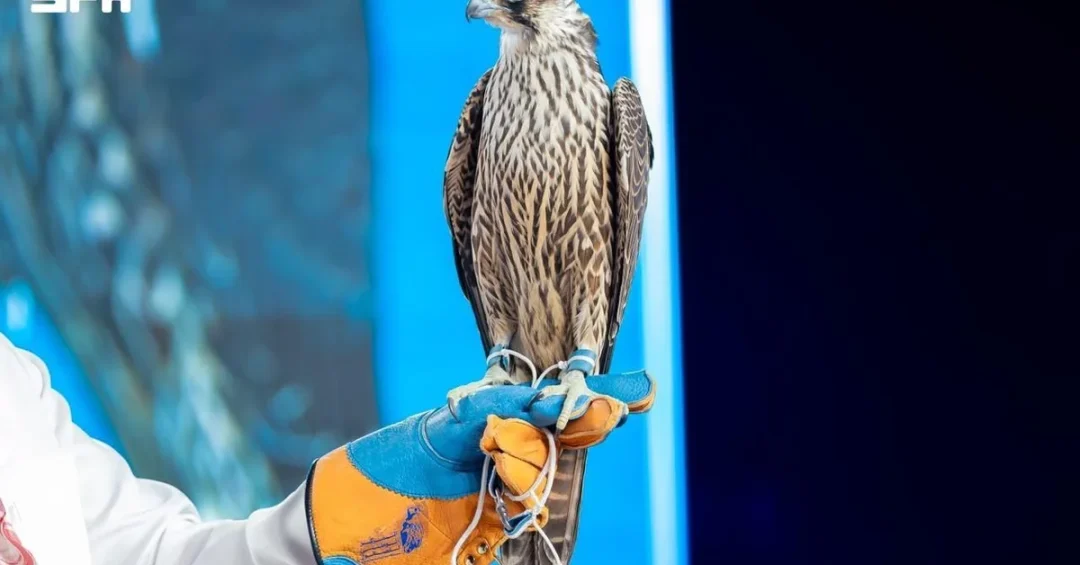
A young peregrine falcon was sold for SAR221,000 during the fifth night of the 2026 National Center for Falcons auction in Riyadh, according to the Saudi Press Agency (SPA), which reported that bidding opened at SAR60,000 before climbing steadily to the final sale price. The auction, organised by the National Center for Falcons, runs until November 30 and continues to draw large crowds of falconry enthusiasts from across the Kingdom and beyond. The event is being broadcast on television channels and social media platforms, allowing falconers and followers of the tradition to track each night’s sales as they happen.
The result places the young peregrine among the standout lots of this year’s auction cycle and underscores the enduring value that Saudi Arabia’s falconry community places on birds with strong bloodlines, sound health and proven training potential. Falconry, recognised by UNESCO as intangible cultural heritage, remains one of the most visible expressions of the Kingdom’s desert traditions, and the National Center for Falcons has become the institutional hub that organises, regulates and promotes the sector. The nightly auction is not simply a marketplace; it is a gathering point for breeders, trainers, traders and hobbyists who together sustain an activity that stretches back generations in the Arabian Peninsula.
Why does a single bird command such attention in an era of modern entertainment and digital life? The answer lies in the deep-rooted place falconry holds in Saudi identity and in the careful stewardship that official bodies now bring to the field.
Context and Background
The National Center for Falcons is the Saudi government body responsible for developing the falconry sector, organising auctions, supporting breeders, and preserving the cultural heritage associated with the sport. Established under the umbrella of the Kingdom’s cultural and environmental institutions, the centre works to regulate the trade in falcons, encourage responsible ownership, and create platforms where Saudi and international falconers can meet. Its annual auction has become a fixture on the national calendar, running for several weeks and attracting thousands of visitors to Riyadh.
Falconry in the Arabian Peninsula is far more than a pastime. Historically, Bedouin communities trained falcons to hunt during winter months when other food sources were scarce, and the relationship between handler and bird developed into a highly refined craft passed down through families. Today, the tradition survives in modern form: purpose-built breeding farms, veterinary clinics specialising in raptors, and regulated auctions that give the market transparency and structure. The National Center for Falcons sits at the centre of this ecosystem, issuing guidance, monitoring welfare standards and promoting the Kingdom’s heritage at international events.
How does an ancient desert practice remain relevant in a country transforming its economy at unprecedented speed? Part of the answer is that heritage and modernisation are treated as partners rather than opposites in Saudi Arabia’s development model, and falconry is a clear example of that approach.
Key Details of the Auction Night
According to the Saudi Press Agency, the peregrine falcon that fetched SAR221,000 was offered on the fifth night of the 2026 auction. Bidding began at SAR60,000, and competition among buyers pushed the price upward until the hammer fell at SAR221,000. The sale illustrates how demand for high-quality birds remains strong, particularly for young falcons that can be trained for competitions and hunting seasons. Peregrine falcons are prized for their speed, agility and hunting ability, characteristics that make them among the most sought-after species in falconry circles.
The auction’s organisers have made the event accessible to a wide audience. Live broadcasts on television and social media mean that enthusiasts who cannot attend in person can follow the bidding in real time, compare prices and learn about the birds on offer. This combination of physical attendance and digital reach has helped the auction grow into a national event with an international following, and it reflects the broader Saudi push to use technology to open traditional activities to new audiences.
The National Center for Falcons has also emphasised that auctions are conducted under clear rules designed to protect both buyers and birds. Health checks, documentation and registration requirements form part of the process, giving participants confidence in the provenance of the falcons being sold. For first-time buyers, the auction serves as an education as much as a marketplace, with experienced falconers on hand to explain the qualities that distinguish an elite bird from an average one.
International and Regional Impact
Falconry is practised across the Gulf, in Central Asia, in parts of Europe and North Africa, and Saudi Arabia’s auction circuit has become a reference point for the wider region. Prices achieved in Riyadh are watched by breeders and traders in neighbouring countries, and the presence of international participants adds a comparative dimension to the market. The SAR221,000 sale will be noted by industry observers as an indicator of continued confidence in the high end of the falcon market.
The auction also contributes to Saudi Arabia’s cultural diplomacy. By hosting an event that welcomes international falconers and showcases Arabian traditions, the Kingdom reinforces its position as a custodian of shared heritage. UNESCO’s recognition of falconry as intangible cultural heritage is frequently cited in this context, and Saudi institutions have worked with counterparts in other countries to safeguard the practice. Regional cooperation on breeding standards, veterinary care and anti-smuggling measures forms another layer of engagement that extends beyond the auction floor.
What does it mean for a traditional auction in Riyadh to attract global attention? It signals that cultural heritage, when properly organised and promoted, can operate as a form of soft power, drawing visitors, generating media coverage and building connections between communities that share a love of falconry.
Economic and Strategic Significance
The falconry sector supports a network of economic activity that extends well beyond the sale of birds. Breeders, trainers, veterinarians, equipment suppliers, transport companies and hospitality businesses all benefit from a thriving auction season. Falconry tourism, in which visitors travel to attend auctions and related events, adds further value, and the National Center for Falcons has sought to develop the sector in a way that aligns with the Kingdom’s broader goals of economic diversification.
Auctions also generate reliable data about prices, bloodlines and demand, information that helps the market mature. Transparent pricing encourages investment in breeding programmes and raises standards across the sector. For Saudi Arabia, a well-regulated falcon market supports rural livelihoods, preserves skills that might otherwise be lost, and creates opportunities for young Saudis interested in careers connected to heritage, wildlife management and event organisation.
How does a single sale price connect to national economic strategy? It reflects the strength of a niche market that, when aggregated across the season, contributes to the Kingdom’s wider effort to build diverse, knowledge-based and culturally rooted sources of income.
Vision 2030 Alignment
The 2026 National Center for Falcons auction sits comfortably within Saudi Vision 2030’s emphasis on preserving cultural heritage while developing modern, well-governed sectors. Vision 2030 identifies heritage as a pillar of national identity and a driver of tourism and entertainment, and falconry embodies that dual role. The National Center for Falcons’ work — regulating the market, supporting breeders, broadcasting auctions and engaging international participants — reflects the Vision’s call for institutions that combine tradition with professionalism.
The auction also supports quality-of-life objectives by providing cultural events that families and enthusiasts can enjoy, and by creating economic opportunities in related services. As the season continues until November 30, further sales will add to the picture of a sector that is both deeply traditional and confidently modern. The SAR221,000 peregrine is a striking headline, but it is also a data point in a larger story: the story of how Saudi Arabia is carrying its heritage forward into a diversified, globally connected future.
What should international observers take from this year’s auction? That Saudi Arabia’s cultural institutions are active, well organised and open to the world, and that the Kingdom’s traditions remain a source of pride, economic value and international engagement as Vision 2030 continues to reshape the country.
20 Questions
Q1. What was sold at the National Center for Falcons auction?
A1. A young peregrine falcon was sold during the fifth night of the 2026 auction, according to the Saudi Press Agency.
Q2. How much did the peregrine falcon fetch?
A2. The falcon sold for SAR221,000, making it one of the notable sales of the evening.
Q3. What was the starting bid for the falcon?
A3. Bidding began at SAR60,000 before competitive offers pushed the price higher.
Q4. When did the auction night take place?
A4. The sale occurred on the fifth night of the 2026 auction, as reported by the Saudi Press Agency.
Q5. How long does the auction run?
A5. The 2026 National Center for Falcons auction runs until November 30.
Q6. Who organises the auction?
A6. The National Center for Falcons, the Saudi body responsible for developing and regulating the falconry sector, organises the event.
Q7. Where is the auction held?
A7. The auction is held in Riyadh and attracts crowds of falconry enthusiasts from across the Kingdom and abroad.
Q8. How can people follow the auction if they cannot attend?
A8. The proceedings are broadcast via television channels and social media platforms, allowing remote audiences to follow the bidding.
Q9. Why are peregrine falcons valuable in falconry?
A9. Peregrine falcons are prized for their speed, agility and hunting ability, qualities that make them highly sought after.
Q10. What is the cultural significance of falconry in Saudi Arabia?
A10. Falconry is a deeply rooted Arabian tradition recognised by UNESCO as intangible cultural heritage and remains central to Saudi identity.
Q11. Does the auction attract international interest?
A11. Yes, the auction draws regional and international attention, with prices in Riyadh watched by breeders and traders abroad.
Q12. What rules govern the auction?
A12. Health checks, documentation and registration requirements help protect buyers and ensure the welfare of the birds.
Q13. How does the auction support the Saudi economy?
A13. It supports breeders, trainers, veterinarians, equipment suppliers, transport and hospitality businesses connected to falconry.
Q14. What role does the National Center for Falcons play?
A14. It regulates the sector, supports breeders, organises auctions and promotes Saudi falconry heritage domestically and internationally.
Q15. Is falconry recognised internationally?
A15. Yes, UNESCO recognises falconry as intangible cultural heritage, and Saudi Arabia works with other countries to safeguard it.
Q16. How does the auction align with Vision 2030?
A16. It supports heritage preservation, tourism, entertainment and economic diversification, all of which are Vision 2030 priorities.
Q17. What happens after the auction season ends?
A17. The National Center for Falcons continues its work on regulation, breeding support and heritage promotion throughout the year.
Q18. Can young Saudis build careers in falconry?
A18. Yes, the sector offers opportunities in breeding, training, veterinary care, event organisation and heritage management.
Q19. What does the SAR221,000 sale indicate about the market?
A19. It shows continued strong demand at the high end of the falcon market for birds with quality bloodlines and training potential.
Q20. What is the broader significance of this auction?
A20. It demonstrates how Saudi Arabia combines cultural heritage with modern organisation, global engagement and Vision 2030 economic goals.
Reader Feedback
We value your thoughts. Please share your feedback on this article.
Your feedback helps us improve our coverage.