


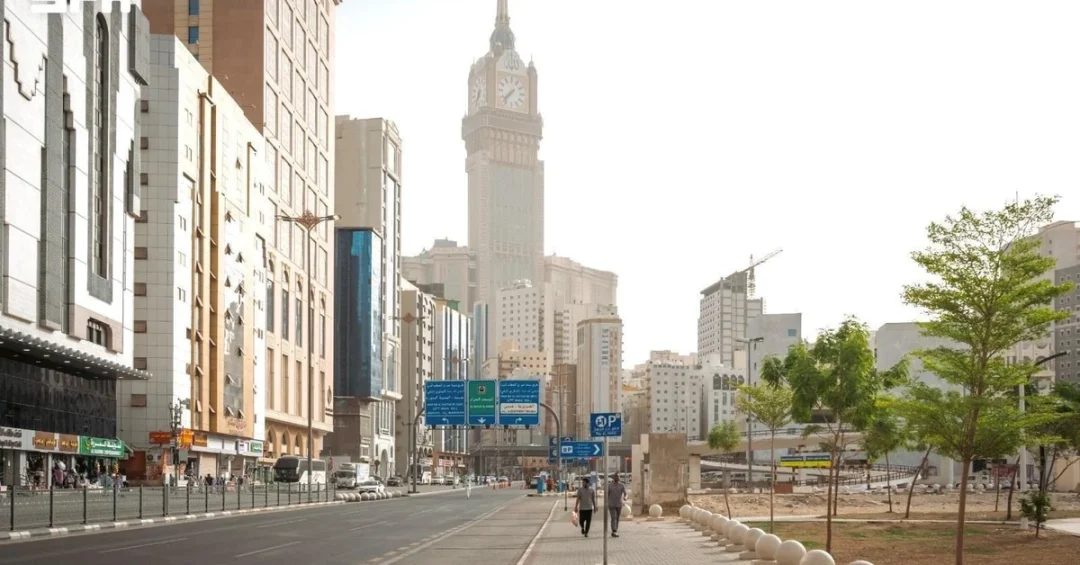
Makkah is undergoing a comprehensive urban renaissance that harmonizes the sacred character of the holy sites with advanced modern infrastructure, transforming the city into a year-round economic and developmental hub in line with Saudi Vision 2030, according to information released via official Saudi channels. The transformation spans housing, hospitality, retail, logistics, and transit, shifting the holy city from a seasonal pilgrimage economy toward a diversified, investment-driven environment. At the heart of this effort is a simple but profound question: how does a city welcome millions of worshippers each year while building a modern, sustainable future for its residents? The answer, Saudi officials say, lies in careful planning that places pilgrim care at the center of every decision, from the expansion of the Grand Mosque’s surroundings to the digital systems that manage crowds with precision and compassion.
The scale of the change is historic. According to the Pilgrim Experience Program’s 2025 annual report, the service ecosystem implemented 87 initiatives across more than 60 partner entities and achieved 100% compliance. During the same period, the Kingdom welcomed over 19.5 million international pilgrims, including 18.03 million Umrah performers and 1.5 million Hajj pilgrims — a 114% increase in Umrah arrivals compared to 2022. Satisfaction levels climbed to 91% for Hajj pilgrims and 94% for Umrah performers, surpassing national benchmark targets. These figures are not merely statistics; they reflect a deliberate strategy to elevate every touchpoint of the pilgrim journey, from visa issuance to accommodation, transport, and spiritual guidance.
Context and Background
Why has Makkah become the focal point of such an ambitious urban agenda? For decades, the city’s economy revolved almost entirely around the Hajj and Umrah seasons, creating periods of intense activity followed by quieter months. That model, while spiritually vital, limited long-term investment and job creation. The urban renaissance now underway reimagines Makkah as a year-round destination where religious devotion and economic opportunity reinforce one another. The Masar Destination, the Jabal Omar development, and extensive district regeneration programs have expanded accommodation capacity, upgraded municipal utilities, and integrated multi-use facilities to accommodate rising visitor flows. These projects are not isolated construction sites; they are interconnected pieces of a master plan that respects the sanctity of the holy sites while delivering world-class services.
The Pilgrim Experience Program, a key initiative under Saudi Vision 2030, has been instrumental in coordinating this effort. By bringing together more than 60 partner entities — ranging from ministries and municipalities to private operators and technology firms — the program ensures that every initiative is measured, evaluated, and improved. The 100% compliance rate recorded in 2025 demonstrates that this coordinated approach is working. As the Kingdom prepares for even larger pilgrim numbers in the years ahead, the lessons learned in Makkah are already informing similar improvements in Madinah and other regions. The result is a service ecosystem that is both resilient and responsive, capable of adapting to changing global travel patterns while preserving the timeless spiritual experience that draws millions to the holy city.
Key Details
What exactly does this urban renaissance include? At its core are major infrastructure projects designed to move people safely and efficiently. The Haramain High Speed Railway connects Makkah with Jeddah, King Abdulaziz International Airport, and Madinah, offering pilgrims a fast, comfortable alternative to road travel. The Al Mashaaer Al Mugaddassah Metro Project — also known as the Makkah Metro — provides dedicated transit across the holy sites during Hajj, reducing congestion and enhancing safety. Modernized arterial road corridors and expanded bus networks further integrate the city’s transport grid. Together, these multimodal systems form a backbone that supports the daily movement of hundreds of thousands of worshippers while also serving residents, workers, and businesses throughout the year.
Academics at Umm Al-Qura University have emphasized that this transformation integrates architectural heritage with innovative engineering and digital solutions. Dr. Musab Alsubhi, Dean of the College of Business and Economics, stated that these investments foster long-term commercial competitiveness and sustainable employment across hospitality, retail, and logistics. Dr. Omar Osrah, Dean of the College of Engineering and Architecture, noted that smart-city technologies, data analytics, and crowd-management systems enable operational efficiency while maintaining the city’s spiritual identity. Their observations highlight a crucial point: technology in Makkah is not an end in itself but a tool to serve worshippers better, ensuring that the human and spiritual dimensions of the pilgrimage remain paramount.
The expansion also prioritizes cultural and religious enrichment. The number of rehabilitated historical and heritage destinations across Makkah and Madinah reached 87, recording over 55 million visits. These sites offer pilgrims and visitors a deeper understanding of Islamic history, from the early days of the faith to the modern development of the Two Holy Mosques. By restoring and promoting these destinations, Saudi Arabia is preserving its cultural legacy for future generations while creating new opportunities for educational tourism and community engagement.
International and Regional Impact
How does Makkah’s transformation resonate beyond Saudi Arabia’s borders? Ranking fifth globally in attracting international visitors in 2025, Makkah stands as an integrated model of sustainable urban planning and modern service delivery dedicated to the care of pilgrims. This global recognition reflects the Kingdom’s growing role as a leader in faith-based tourism and urban innovation. For international pilgrims, the improvements translate into smoother visa processes, better accommodation options, enhanced transport links, and higher service standards. For regional neighbors, Makkah’s experience offers a template for managing large-scale religious events and seasonal population surges. The city’s success demonstrates that modernization and tradition can coexist, and that economic development can be pursued without compromising spiritual values.
The regional impact extends to trade, logistics, and investment. As Makkah’s infrastructure improves, so does its capacity to host international conferences, cultural exchanges, and business gatherings. The city’s upgraded airport connections, rail links, and hospitality offerings make it an increasingly attractive destination for non-pilgrim visitors as well. This diversification supports Saudi Arabia’s broader goal of increasing non-oil economic activity and attracting foreign direct investment. Moreover, the expertise gained in Makkah — in crowd management, smart-city technology, and sustainable urban design — is being shared with other Saudi cities and exported as a model of best practice. In this way, the holy city’s renaissance contributes not only to its own future but to the Kingdom’s standing as a global hub for innovation and service excellence.
Economic and Strategic Significance
What does Makkah’s urban renaissance mean for the Saudi economy? The shift from a seasonal economy to a diversified, investment-driven environment is creating jobs, attracting private capital, and expanding the tax base. Hospitality, retail, logistics, and construction are all experiencing growth as new hotels, shopping districts, warehouses, and residential communities come online. The Masar Destination alone is expected to become a major commercial and cultural landmark, offering retail spaces, restaurants, entertainment venues, and public squares that serve both pilgrims and residents. The Jabal Omar development has already transformed the area around the Grand Mosque, providing thousands of hotel rooms and creating a vibrant urban quarter that operates throughout the year. These projects are designed to be economically self-sustaining, generating revenue that can be reinvested in public services and further infrastructure improvements.
Strategically, Makkah’s development aligns with Vision 2030’s goals of increasing the private sector’s contribution to GDP, boosting non-oil exports, and creating meaningful employment for Saudi citizens. The Pilgrim Experience Program has set ambitious targets for pilgrim satisfaction, service quality, and capacity expansion, all of which require a skilled workforce. Universities like Umm Al-Qura University are partnering with government agencies and private companies to train young Saudis in hospitality management, logistics, engineering, and digital technology. This talent pipeline ensures that the benefits of the urban renaissance are shared widely, empowering local communities and strengthening the national economy. As Makkah becomes a year-round hub, it also becomes a magnet for entrepreneurs and small businesses, from artisanal shops to tech startups, adding dynamism to the local economy.
Vision 2030 Alignment
How does Makkah’s transformation embody the aspirations of Saudi Vision 2030? At its heart, Vision 2030 seeks to build a vibrant society, a thriving economy, and an ambitious nation. Makkah’s urban renaissance delivers on all three fronts. It enhances the spiritual experience for millions of pilgrims, fulfilling the Kingdom’s sacred duty of care. It diversifies the economy by creating new industries and jobs beyond the traditional pilgrimage seasons. And it showcases Saudi Arabia’s ability to plan, execute, and manage complex megaprojects with precision and transparency. The Pilgrim Experience Program is a flagship initiative that directly supports Vision 2030’s objectives, and its 2025 results — 87 initiatives, 100% compliance, and record satisfaction levels — demonstrate that the strategy is delivering tangible results.
Looking ahead, Makkah’s urban renaissance will continue to evolve. Plans are underway to further expand accommodation capacity, improve transport connectivity, and integrate more smart-city solutions. The goal is to welcome even larger numbers of pilgrims while maintaining the highest standards of safety, comfort, and spiritual fulfillment. For international observers, Makkah offers a compelling case study in how a city can honor its heritage while embracing the future. For Saudi Arabia, it is a source of national pride and a testament to the leadership’s commitment to serving the Guests of God. As the Kingdom moves forward with Vision 2030, Makkah will remain a shining example of what can be achieved when faith, innovation, and good governance come together.
20 Questions
Q1. What is the Makkah urban renaissance?
A1. It is a comprehensive development plan that harmonizes the sacred character of Makkah’s holy sites with advanced modern infrastructure, transforming the city into a year-round economic and developmental hub in line with Saudi Vision 2030.
Q2. How many international pilgrims did Saudi Arabia welcome in 2025?
A2. The Kingdom welcomed over 19.5 million international pilgrims, including 18.03 million Umrah performers and 1.5 million Hajj pilgrims, according to the Pilgrim Experience Program’s 2025 annual report.
Q3. What was the increase in Umrah arrivals compared to 2022?
A3. Umrah arrivals increased by 114% compared to 2022, reflecting significant improvements in visa facilitation, infrastructure, and service quality across the pilgrim journey.
Q4. What were the satisfaction levels for Hajj and Umrah pilgrims?
A4. Satisfaction levels reached 91% for Hajj pilgrims and 94% for Umrah performers, surpassing national benchmark targets and demonstrating the effectiveness of service enhancements.
Q5. How many initiatives were implemented by the Pilgrim Experience Program?
A5. The program implemented 87 initiatives across more than 60 partner entities, achieving 100% compliance and showcasing strong coordination between government and private sectors.
Q6. What are some major urban projects in Makkah?
A6. Major projects include the Masar Destination, the Jabal Omar development, and extensive district regeneration programs that have expanded accommodation, upgraded utilities, and integrated multi-use facilities.
Q7. How does the Haramain High Speed Railway support pilgrims?
A7. It connects Makkah with Jeddah, King Abdulaziz International Airport, and Madinah, offering pilgrims a fast, comfortable alternative to road travel and reducing congestion.
Q8. What is the Al Mashaaer Al Mugaddassah Metro Project?
A8. Also known as the Makkah Metro, it provides dedicated transit across the holy sites during Hajj, enhancing safety and reducing traffic congestion for millions of worshippers.
Q9. What did Umm Al-Qura University academics say about the transformation?
A9. Dr. Musab Alsubhi noted it fosters commercial competitiveness and employment, while Dr. Omar Osrah highlighted smart-city technologies and crowd-management systems that maintain the city’s spiritual identity.
Q10. How many heritage destinations were rehabilitated?
A10. A total of 87 historical and heritage destinations across Makkah and Madinah were rehabilitated, recording over 55 million visits and enriching the cultural experience for pilgrims and visitors.
Q11. Where does Makkah rank globally in attracting international visitors?
A11. Makkah ranked fifth globally in attracting international visitors in 2025, standing as an integrated model of sustainable urban planning and modern service delivery dedicated to pilgrim care.
Q12. How does the urban renaissance shift Makkah’s economy?
A12. It shifts Makkah from a seasonal economy to a diversified, investment-driven environment, creating year-round opportunities in hospitality, retail, logistics, and transit.
Q13. What role does technology play in Makkah’s development?
A13. Smart-city technologies, data analytics, and crowd-management systems enable operational efficiency, improve safety, and enhance the pilgrim experience while preserving the city’s spiritual character.
Q14. How does the transformation benefit Saudi citizens?
A14. It creates sustainable employment, supports small businesses, and fosters skills development through partnerships between universities, government agencies, and private companies in growing sectors.
Q15. What is the Masar Destination?
A15. The Masar Destination is a major urban project expected to become a commercial and cultural landmark, offering retail spaces, restaurants, entertainment venues, and public squares for pilgrims and residents.
Q16. What is the Jabal Omar development?
A16. The Jabal Omar development has transformed the area around the Grand Mosque, providing thousands of hotel rooms and creating a vibrant urban quarter that operates throughout the year.
Q17. How does Makkah’s development align with Vision 2030?
A17. It supports Vision 2030 by enhancing pilgrim care, diversifying the economy, creating jobs, and showcasing Saudi Arabia’s ability to execute complex megaprojects with precision and transparency.
Q18. What are the future plans for Makkah’s urban renaissance?
A18. Plans include further expanding accommodation capacity, improving transport connectivity, and integrating more smart-city solutions to welcome larger numbers of pilgrims with high standards of safety and comfort.
Q19. How does Makkah’s model benefit other regions?
A19. The expertise gained in crowd management, smart-city technology, and sustainable urban design is being shared with other Saudi cities and serves as a global model for managing large-scale religious events.
Q20. What is the overarching goal of Makkah’s transformation?
A20. The goal is to serve the Guests of God with excellence, preserve the city’s spiritual identity, and build a sustainable, diversified economy that benefits pilgrims, residents, and the Kingdom as a whole.
Reader Feedback
We value your thoughts. Please share your feedback on this article.
Your feedback helps us improve our coverage.
Related articles
 Saudi Red Sea Authority, Tahaluf Sign MoU for Yacht Show
 Gold prices reach seven-week high
 ZATCA deadline for July withholding tax forms
 Sela, ICON Saudi Sign MoU for Jeddah Yacht Maintenance Facility
 GCC: Regional Crisis Economic Impact Reaches Europe, World
 Asian stocks decline amid semiconductor share pressure