


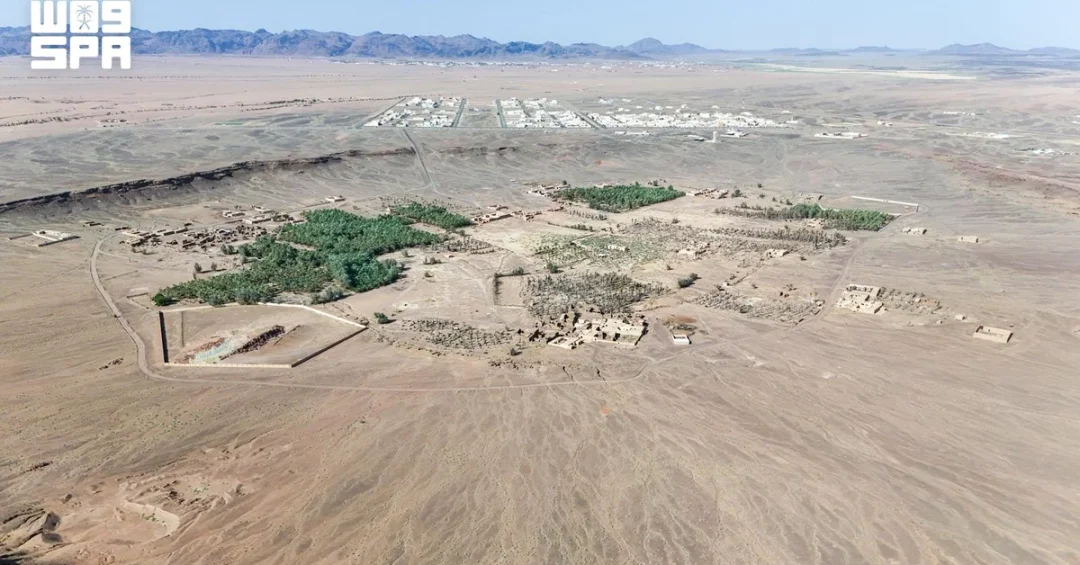
The ancient Taba crater, located southeast of Hail near the Salma Mountains, stands as one of the northern Arabian Peninsula’s most striking geological landmarks — a vast volcanic formation created by eruptions thousands of years ago that later became the foundation for the historic village of Taba. According to the Saudi Press Agency (SPA), the crater’s distinct concentric rings of solidified volcanic ash and porous basaltic rock document the region’s ancient volcanic record, offering scientists and visitors alike a rare window into the geological forces that shaped this part of the Kingdom.
Why does a single crater in northern Saudi Arabia matter to anyone beyond its immediate surroundings? Because Taba is more than a geological curiosity. Situated more than 90 kilometers from Hail within Al-Shanan Governorate, it is among the oldest inhabited settlements in the region, drawing local and international travelers to its natural landscape and heritage sites. The governorate preserves historic wells, rock inscriptions, and agricultural terrain that adjoin the volcanic formations, blending archaeological depth with rare geological heritage. Together, these elements make Taba a place where geology, human history, and modern tourism intersect — a combination that aligns closely with the Kingdom’s Vision 2030 ambitions.
Context and Background
What forces could have created such a dramatic landscape in what is today a region known for its farms and palm groves? The answer lies deep in the geological history of the Arabian Peninsula. The Taba crater was formed by volcanic eruptions thousands of years ago, part of a broader pattern of volcanic activity that once shaped the northern Arabian Peninsula. Over time, these eruptions left behind the crater’s signature concentric rings, composed of solidified volcanic ash and porous basaltic rock. These layers act as a natural archive, recording the sequence of prehistoric eruptions in a way that continues to inform geological research today.
The crater’s location near the Salma Mountains is significant. This mountain range, known for its rugged terrain and historical importance, forms part of the broader geological tapestry of the Hail region. The SPA report notes that the crater’s unique formations provide insight into regional prehistoric eruptions while contrasting sharply with the verdant farms and palm groves that now border the volcanic rim. That contrast — between ancient, hardened lava and contemporary agriculture — is part of what makes Taba so visually and scientifically compelling.
Beyond its geological value, Taba holds a place in human history. As one of the region’s oldest inhabited settlements, it reflects centuries of adaptation to a challenging environment. Communities here learned to live alongside volcanic terrain, using the land for agriculture and carving out a livelihood that persists in the historic wells and rock inscriptions found throughout Al-Shanan Governorate. In this sense, the crater is not just a relic of prehistoric violence but a foundation upon which generations built their lives.
Key Details
What exactly do visitors and researchers find when they arrive at Taba? The crater’s most distinctive feature is its concentric rings — layered bands of solidified volcanic ash and porous basaltic rock that radiate outward from the center. These rings are not merely aesthetic; they are geological evidence of successive eruptions, each depositing new material over the last. For geologists, this stratigraphy offers a timeline of volcanic activity in the northern Arabian Peninsula, helping to reconstruct the region’s prehistoric environment.
The village of Taba itself sits within this ancient formation, making it one of the few settlements in the world built directly on a volcanic crater. The SPA report highlights that the area preserves historic wells, rock inscriptions, and agricultural terrain. These wells, likely fed by groundwater trapped in volcanic rock, were essential to the settlement’s survival. The rock inscriptions — ancient carvings that dot the landscape — provide clues about the people who lived here and their cultural practices. Together, these elements create a layered heritage site where natural and human history are inseparable.
Al-Shanan Governorate, which administers the area, has become a focal point for travelers seeking authentic experiences beyond Saudi Arabia’s major cities. The governorate’s combination of geological wonders and archaeological depth makes it a unique destination. Visitors can explore the crater’s rim, walk among the palm groves that border it, and examine the historic wells and inscriptions that speak to centuries of human habitation. The SPA report notes that Taba attracts both local and international travelers, drawn by its natural landscape and heritage sites.
International and Regional Impact
Why should the international community pay attention to a crater in northern Saudi Arabia? For one, Taba contributes to the global understanding of volcanic activity and its role in shaping landscapes. The Arabian Peninsula’s volcanic history is less well-known than that of regions like Iceland or Indonesia, but sites like Taba offer valuable data points. Researchers studying prehistoric eruptions can use the crater’s concentric rings to calibrate models of volcanic behavior, potentially improving hazard assessments in other parts of the world. In this way, a local landmark becomes part of a global scientific conversation.
Regionally, Taba strengthens Saudi Arabia’s position as a destination for geotourism — travel focused on geological features. As the Kingdom opens up to international visitors under Vision 2030, sites like Taba offer something different from the urban attractions of Riyadh or Jeddah. They appeal to travelers interested in nature, history, and science. The crater’s proximity to the Salma Mountains and its integration with agricultural landscapes create a distinctive offering that can attract niche tourism markets. This, in turn, supports local economies in Al-Shanan Governorate and highlights the diversity of Saudi Arabia’s natural heritage.
Economic and Strategic Significance
How does a geological formation translate into economic value? In Taba’s case, the answer lies in sustainable tourism and heritage preservation. The SPA report indicates that the area already draws travelers, suggesting a foundation for growth. With strategic investment in infrastructure, visitor facilities, and guided tours, Taba could become a anchor destination for geotourism in northern Saudi Arabia. Such development would create jobs, support local businesses, and generate revenue for the region — all while preserving the site’s integrity.
Strategically, Taba aligns with Saudi Arabia’s broader efforts to diversify its economy away from oil dependence. Tourism is a key pillar of Vision 2030, and heritage sites like Taba contribute to the Kingdom’s goal of attracting 150 million visits annually by 2030. By showcasing its geological and cultural treasures, Saudi Arabia can position itself as a multifaceted destination. Moreover, the scientific value of the crater — its record of ancient eruptions — adds an educational dimension that can attract academic tourism and research collaborations. This combination of economic and intellectual capital makes Taba a strategic asset.
Vision 2030 Alignment
How does a prehistoric crater connect to a modern national transformation plan? Vision 2030 seeks to diversify Saudi Arabia’s economy, empower local communities, and promote the Kingdom’s cultural and natural heritage on the world stage. Taba embodies these goals. As a geological and historical site, it supports tourism development in Al-Shanan Governorate, creates opportunities for local guides and artisans, and contributes to the preservation of Saudi Arabia’s unique landscapes. The SPA report’s emphasis on Taba’s heritage sites and agricultural terrain underscores its potential as a sustainable tourism destination.
Furthermore, Taba reflects the Kingdom’s commitment to science and education. By studying the crater’s volcanic record, Saudi researchers can contribute to global geological knowledge, enhancing the country’s reputation as a center for innovation and discovery. Vision 2030 envisions a Saudi Arabia that is open to the world, proud of its heritage, and forward-looking in its ambitions. The ancient Taba crater — formed by eruptions thousands of years ago and now home to a historic village — is a powerful symbol of that vision. It reminds us that Saudi Arabia’s story is written not only in its cities and deserts but also in its rocks, and that the Kingdom’s future is built on a deep appreciation of its past.
20 Questions
Q1. Where is the Taba crater located?
A1. The Taba crater is located southeast of Hail near the Salma Mountains, more than 90 kilometers from Hail within Al-Shanan Governorate in northern Saudi Arabia.
Q2. How was the Taba crater formed?
A2. It was formed by volcanic eruptions thousands of years ago, which created concentric rings of solidified volcanic ash and porous basaltic rock that remain visible today.
Q3. What are the concentric rings made of?
A3. The rings are composed of solidified volcanic ash and porous basaltic rock, documenting the northern Arabian Peninsula’s ancient volcanic record.
Q4. Why is the Taba crater significant for geology?
A4. It provides insight into regional prehistoric eruptions and serves as a natural archive of volcanic activity, helping scientists understand the area’s geological history.
Q5. What historic village was built at the crater?
A5. The historic village of Taba was built on the crater’s foundation, making it one of the region’s oldest inhabited settlements.
Q6. What heritage features does Al-Shanan Governorate preserve?
A6. The governorate preserves historic wells, rock inscriptions, and agricultural terrain that adjoin the volcanic formations, blending archaeological depth with geological heritage.
Q7. How far is Taba from Hail?
A7. Taba is situated over 90 kilometers from Hail, within Al-Shanan Governorate, near the Salma Mountains.
Q8. What contrasts with the volcanic rim at Taba?
A8. Verdant farms and palm groves now border the volcanic rim, creating a striking contrast between ancient lava formations and contemporary agriculture.
Q9. Who visits the Taba crater?
A9. The site attracts local and international travelers drawn to its natural landscape and heritage sites, according to the Saudi Press Agency.
Q10. What makes Taba a unique destination?
A10. Its combination of geological wonders, archaeological depth, and agricultural landscapes makes it a unique destination for geotourism and heritage tourism in Saudi Arabia.
Q11. How does Taba contribute to scientific research?
A11. The crater’s concentric rings offer a timeline of prehistoric eruptions, helping researchers calibrate models of volcanic behavior and understand the Arabian Peninsula’s volcanic history.
Q12. What economic opportunities does Taba offer?
A12. Taba supports sustainable tourism development, creating jobs, supporting local businesses, and generating revenue for Al-Shanan Governorate while preserving the site’s integrity.
Q13. How does Taba align with Vision 2030?
A13. It supports tourism diversification, heritage preservation, and local community empowerment, all key pillars of Saudi Arabia’s Vision 2030 transformation plan.
Q14. What is the significance of the historic wells?
A14. The historic wells, likely fed by groundwater trapped in volcanic rock, were essential to the settlement’s survival and remain part of its heritage.
Q15. What do the rock inscriptions tell us?
A15. The rock inscriptions provide clues about the people who lived in Taba and their cultural practices, adding archaeological depth to the site.
Q16. Why is Taba considered one of the oldest settlements?
A16. It is among the region’s oldest inhabited settlements, reflecting centuries of human adaptation to a challenging volcanic environment.
Q17. How does Taba fit into Saudi Arabia’s tourism goals?
A17. As a geotourism and heritage destination, Taba contributes to the Kingdom’s goal of attracting 150 million visits annually by 2030 under Vision 2030.
Q18. What role does the Saudi Press Agency play in reporting on Taba?
A18. The Saudi Press Agency (SPA) provides official information about Taba’s geological and heritage features, ensuring accurate and authoritative reporting.
Q19. Can visitors explore the crater’s rim?
A19. Yes, visitors can explore the crater’s rim, walk among the palm groves, and examine the historic wells and inscriptions that dot the landscape.
Q20. What does Taba symbolize for Saudi Arabia’s future?
A20. It symbolizes the Kingdom’s commitment to preserving its natural and cultural heritage while pursuing sustainable development and global engagement under Vision 2030.
Reader Feedback
We value your thoughts. Please share your feedback on this article.
Your feedback helps us improve our coverage.
Related articles
 STA Showcases Red Sea Yachting at Monaco Show 2026
 Gulf Cup 27 Boosts Tourism Activity in Jeddah
 Jeddah’s Waterfronts Drive Tourism and Quality of Life
 Al-Baha valleys attract summer visitors
 Badr Al-Janoub Governorate attracts summer tourists in Najran
 Boulevard City Riyadh celebrates Saudi National Day