


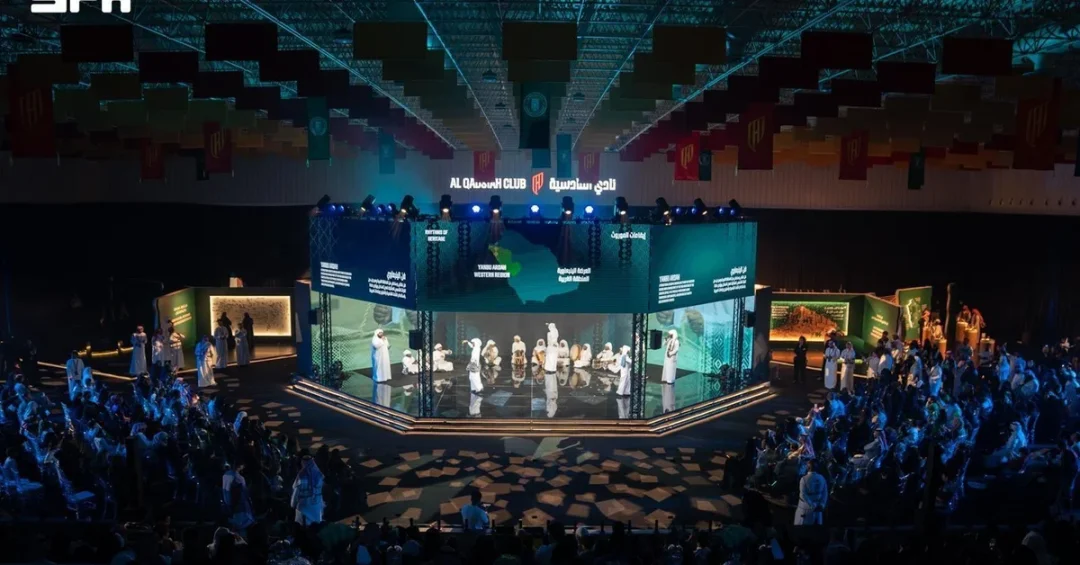
Al-Qadsiah Club welcomed more than 25,000 visitors to its two-day National Day carnival at its headquarters in Al-Khobar, concluding a large-scale community celebration of the Kingdom’s heritage, achievements, and future ambitions, according to the Saudi Press Agency. The event, held across two consecutive days, drew families, young people, and residents from across the Eastern Province to a programme built around cultural performances, interactive experiences, competitions, and traditional hospitality. The scale of the turnout underlined how Saudi Arabia’s National Day has become a focal point for community life, not only in the capital but in the Kingdom’s major urban centres along the Gulf coast. What does a crowd of more than 25,000 people at a single sports club tell us about the changing relationship between Saudi institutions and the communities they serve?
The carnival reflects a broader pattern in the Kingdom, where sports clubs, cultural bodies, and local organisations are increasingly acting as platforms for national celebration and civic engagement. Al-Qadsiah Club, based in Al-Khobar, used its headquarters to host themed zones that showcased Saudi traditions alongside modern entertainment, giving visitors of all ages a way to participate in National Day beyond official ceremonies. The event was reported by the Saudi Press Agency, the Kingdom’s official news authority, which confirmed the visitor figures and the range of activities on offer. For international observers, the carnival offers a useful window into how Saudi Arabia marks its national story at the grassroots level, combining pride in heritage with an unmistakable emphasis on the future.
Context and Background
Why has National Day become such a powerful moment in Saudi community life? Saudi Arabia’s National Day commemorates the unification of the Kingdom and is observed each year with official ceremonies, cultural programmes, and public events across all regions. In recent years, the occasion has expanded well beyond formal state functions, with municipalities, sports clubs, educational institutions, and private organisations hosting their own activities. Al-Khobar, a city in the Eastern Province and part of the wider Dammam metropolitan area, has become a hub for such events, reflecting its growing population and its role in the Kingdom’s industrial and commercial landscape.
Al-Qadsiah Club occupies a distinctive place in that landscape. Founded in the Eastern Province, the club has long been associated with local sport and community activity, and its decision to host a two-day carnival at its headquarters shows how sports institutions are being repositioned as year-round civic anchors. The event’s structure, with themed zones, folk performances, and family-oriented programming, mirrors the approach taken by larger national festivals while retaining a distinctly local character. The Saudi Press Agency reported that visitors explored zones dedicated to heritage, entertainment, and interactive family experiences, a format designed to appeal across generations rather than to a single demographic.
The timing of the carnival also matters. National Day falls at a point in the Saudi calendar when public attention is focused on the Kingdom’s direction, and institutions often use the moment to communicate both pride in the past and confidence in the future. For Al-Qadsiah, hosting more than 25,000 visitors over two days is a significant operational undertaking, requiring coordination on security, transport, hospitality, and programming. That the club was able to deliver such an event at its own headquarters speaks to the organisational capacity that has developed within Saudi sports and community institutions in recent years.
Key Details of the Al-Qadsiah National Day Carnival
What did visitors actually experience across the two days? According to the Saudi Press Agency, the carnival featured a wide range of cultural and entertainment activities celebrating the Kingdom’s heritage, achievements, and future ambitions. Themed zones offered folk performances, interactive family experiences, competitions, and traditional hospitality. This combination is notable because it brings together two strands of Saudi public life that are often presented separately: the preservation of traditional culture and the delivery of modern, participatory entertainment.
Folk performances gave visitors a direct encounter with regional music, dress, and dance traditions, while the interactive family experiences were designed to involve children and parents together rather than treating them as separate audiences. Competitions added an element of participation and reward, and traditional hospitality, including the serving of Saudi coffee and dates, provided a cultural throughline that connected the different zones. The club described the event as highlighting its role in engaging the local community, a framing that places community service alongside sporting achievement in the institution’s identity.
The visitor figure of more than 25,000 is itself a key detail. For a club-hosted event in a single city, that number represents a substantial share of local residents and indicates strong word-of-mouth appeal. It also suggests that the carnival succeeded in attracting not only the club’s existing fan base but also families and individuals with no prior connection to the organisation. The Saudi Press Agency’s confirmation of the figure gives the event an official record, distinguishing it from informal estimates and reinforcing the credibility of the reported attendance.
International and Regional Impact
How does a local carnival in Al-Khobar connect to Saudi Arabia’s wider regional role? Events of this kind contribute to the Kingdom’s public diplomacy in a quiet but meaningful way. International audiences increasingly form their impressions of Saudi Arabia through cultural and community activity, not only through official statements. A well-attended, family-oriented National Day celebration in a major eastern city projects an image of social vitality, organisational competence, and cultural confidence. For regional neighbours and global partners, such events are part of the broader picture of a Kingdom investing in quality of life for its residents.
Within the Gulf region, National Day celebrations have become a shared calendar feature, and Saudi Arabia’s approach, combining heritage programming with modern entertainment, is watched closely by counterparts in neighbouring states. The Eastern Province, with its proximity to Gulf markets and its diverse population, is a particularly visible setting for this kind of activity. The carnival also demonstrates the role that sports clubs can play in regional cultural exchange, offering a platform where local traditions are presented to a mixed audience that includes expatriate residents and visitors from across the Gulf.
For international media and analysts, the event provides a concrete example of how Saudi institutions translate national occasions into local participation. Rather than a single centralised ceremony, the Saudi model distributes celebration across cities and organisations, allowing millions of residents to take part in ways that reflect their own communities. That decentralised energy is one reason National Day in the Kingdom has grown into a genuinely national phenomenon rather than a purely official one.
Economic and Strategic Significance
What economic value does a community carnival generate? Large public events create immediate demand across hospitality, food and beverage, retail, transport, and services. A two-day event attracting more than 25,000 visitors generates spending at venues, stalls, and nearby businesses, and it supports temporary employment in event management, security, and catering. For Al-Khobar and the wider Eastern Province, this contributes to the local economy in a way that aligns with the Kingdom’s efforts to diversify economic activity beyond hydrocarbons.
Strategically, the carnival illustrates the growing professionalisation of Saudi sports clubs as multi-purpose institutions. Clubs are no longer only match-day organisations; they are increasingly expected to deliver community programmes, host cultural events, and contribute to the local quality of life. This shift supports the development of a domestic events industry, builds skills in crowd management and large-scale logistics, and strengthens the bonds between clubs and the communities that fund and follow them. The reported attendance of more than 25,000 is a useful indicator that this model can draw significant public participation.
There is also a longer-term dimension. As Saudi Arabia hosts an expanding calendar of international sporting and cultural events, the operational experience gained at the local level becomes part of a national capability. Clubs that can manage tens of thousands of visitors over a weekend are building exactly the kind of expertise that larger events require. In that sense, the Al-Qadsiah carnival is both a celebration and a demonstration of capacity.
Community Engagement and the Role of Sports Clubs
Why are sports clubs becoming central to Saudi community life? Across the Kingdom, clubs are being encouraged to see themselves as civic institutions with responsibilities that extend beyond competition. Al-Qadsiah’s decision to open its headquarters for a two-day National Day programme reflects that expectation. By offering free or accessible activities in a familiar local setting, the club lowered the barriers to participation and reached residents who might not attend a formal state event.
The programme’s design also speaks to the importance of family-oriented programming in Saudi public life. Interactive experiences, competitions, and traditional hospitality are all formats that work well for mixed-age groups, and they encourage visitors to stay longer and engage more deeply. The result is a shared experience that reinforces social cohesion, a priority that runs through many of the Kingdom’s quality-of-life initiatives. The Saudi Press Agency’s report noted the club’s role in engaging the local community, a phrase that captures the intent behind the event as much as its outcome.
For young Saudis in particular, events like this offer exposure to heritage in an accessible, contemporary setting. Folk performances and traditional hospitality are presented not as museum pieces but as living parts of a celebration that also includes competitions and modern entertainment. That balance is a recurring feature of Saudi cultural programming and one that appears to resonate strongly with audiences, judging by the scale of the turnout in Al-Khobar.
Vision 2030 Alignment
How does a National Day carnival connect to Vision 2030? Saudi Vision 2030 places quality of life, community wellbeing, and cultural pride among its central goals, alongside economic diversification and the growth of the entertainment and sports sectors. The Al-Qadsiah carnival touches several of these objectives at once: it activates a sports institution as a community hub, delivers cultural programming that celebrates national heritage, and creates a large-scale public event that supports local economic activity. The reported attendance of more than 25,000 visitors over two days is a practical measure of public engagement with those goals.
The event also reflects the Vision’s emphasis on developing the Kingdom’s regions, not only its major centres. Al-Khobar and the Eastern Province are integral to the national story, and community programming of this kind ensures that the benefits of the Kingdom’s transformation are felt locally. As Saudi Arabia continues to expand its cultural, sporting, and entertainment calendar, the experience of institutions like Al-Qadsiah Club will contribute to a broader national capacity for hosting events that bring people together. The carnival stands as a clear example of how heritage, community, and future ambition can be celebrated in the same space, and of the role that Saudi clubs are playing in making that vision a lived reality for their neighbours.
20 Questions
Q1. What event did Al-Qadsiah Club host in Al-Khobar?
A1. Al-Qadsiah Club hosted a two-day National Day carnival at its headquarters in Al-Khobar, welcoming more than 25,000 visitors to cultural and entertainment activities celebrating the Kingdom’s heritage, achievements, and future ambitions.
Q2. How many visitors attended the carnival?
A2. More than 25,000 visitors attended the two-day event, according to the Saudi Press Agency, which reported the figure and the range of activities on offer at the club’s headquarters.
Q3. Where was the National Day carnival held?
A3. It was held at Al-Qadsiah Club’s headquarters in Al-Khobar, a city in Saudi Arabia’s Eastern Province and part of the wider Dammam metropolitan area.
Q4. What activities were available at the carnival?
A4. Themed zones offered folk performances, interactive family experiences, competitions, and traditional hospitality, giving visitors a mix of cultural programming and participatory entertainment across the two days.
Q5. Which official source reported the event?
A5. The Saudi Press Agency, the Kingdom’s official news authority, reported the event, confirming the visitor figures and describing the cultural and entertainment activities that took place.
Q6. Why is National Day significant in Saudi Arabia?
A6. National Day commemorates the unification of the Kingdom and is observed each year with official ceremonies and public events, increasingly organised by municipalities, clubs, and community institutions across all regions.
Q7. How does the carnival reflect Saudi heritage?
A7. Folk performances and traditional hospitality showcased regional music, dress, dance, and customs, presenting Saudi heritage as a living part of the celebration rather than a static display for visitors.
Q8. What role do sports clubs play in Saudi community life?
A8. Saudi sports clubs are increasingly acting as civic institutions, hosting cultural and community programmes alongside their sporting activities and strengthening their ties with local residents throughout the year.
Q9. What does the attendance figure indicate?
A9. More than 25,000 visitors over two days indicates strong local engagement, showing that club-hosted National Day programming can attract families and residents beyond the club’s existing fan base.
Q10. How does the event support the local economy?
A10. Large public events generate spending in hospitality, food and beverage, retail, transport, and services, and they support temporary employment in event management, security, and catering across the local area.
Q11. How does the carnival align with Vision 2030?
A11. It supports Vision 2030 goals for quality of life, community wellbeing, cultural pride, and the growth of the entertainment and sports sectors, while activating a sports institution as a community hub.
Q12. Why is family-oriented programming important?
A12. Interactive experiences and competitions appeal to mixed-age groups, encouraging families to attend together, stay longer, and participate more deeply, which reinforces social cohesion in local communities.
Q13. What is Al-Khobar’s significance in the Kingdom?
A13. Al-Khobar is a major city in the Eastern Province and part of the Dammam metropolitan area, playing an important role in Saudi Arabia’s industrial, commercial, and cultural landscape.
Q14. How does the event contribute to public diplomacy?
A14. International audiences form impressions of Saudi Arabia through cultural and community activity, and a well-attended family celebration projects social vitality, organisational competence, and cultural confidence to global observers.
Q15. What skills does hosting such an event develop?
A15. Managing tens of thousands of visitors builds expertise in crowd management, security, transport, hospitality, and large-scale logistics, contributing to a national capability for hosting major events.
Q16. How are Saudi National Day celebrations evolving?
A16. They have expanded beyond formal state functions, with clubs, municipalities, and private organisations hosting their own activities, distributing celebration across cities and allowing millions of residents to participate.
Q17. What does traditional hospitality involve at such events?
A17. Traditional hospitality typically includes serving Saudi coffee and dates, providing a cultural throughline that connects different zones and gives visitors a warm, recognisable welcome at the celebration.
Q18. Why do clubs host events at their own headquarters?
A18. Hosting at club headquarters lowers barriers to participation, uses familiar local settings, and reinforces the institution’s identity as a community anchor rather than only a match-day organisation.
Q19. How does the event benefit young Saudis?
A19. Young Saudis encounter heritage in an accessible, contemporary setting, where folk performances and traditions are presented alongside modern entertainment, helping connect younger generations with national culture.
Q20. What does the carnival suggest about Saudi Arabia’s direction?
A20. It suggests a Kingdom investing in community life, cultural pride, and regional development, with sports clubs and local institutions helping deliver the quality-of-life ambitions at the heart of Vision 2030.
Reader Feedback
We value your thoughts. Please share your feedback on this article.
Your feedback helps us improve our coverage.
Related articles
 Madinah Concludes Swimming Literacy Project with 300 Students
 AlUla Program Trains 50 Youth in Public Speaking
 Najran Schools Adopt Winter Schedule Starting Sunday
 Najran University Climbs Four Places in QS Arab Rankings 2027
 Saudi Arabia Sets February 2027 Deadline for Worker Housing
 ETEC to Hold Third National Forum for School Excellence in Riyadh