


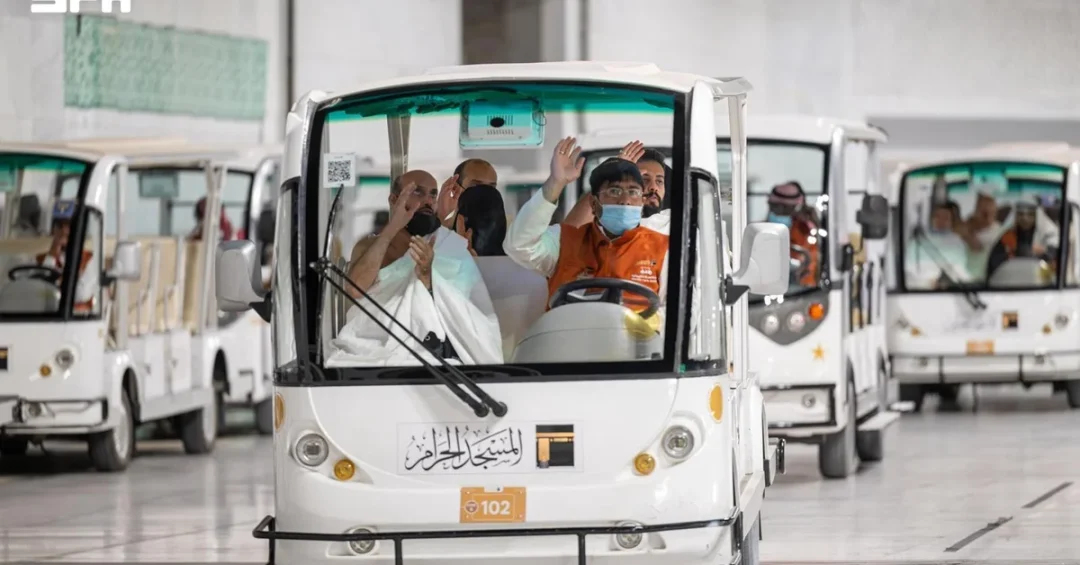
The unified mobility platform operated by the General Authority for the Care of the Affairs of the Grand Mosque and the Prophet’s Mosque is transforming how pilgrims move through the Grand Mosque in Makkah, offering electronically bookable transport options that include complimentary carts, electric carts, and enhanced manual carts supervised by trained staff. The service, announced through official Saudi channels, is designed to help worshippers perform the Tawaf and Sa’i with greater ease, particularly the elderly and individuals with disabilities, within a safe and accessible environment that reflects the Kingdom’s commitment to serving the guests of God.
For the millions of Muslims who travel to Makkah each year, the physical demands of pilgrimage can be considerable, and the availability of organized, dignified transport inside the Grand Mosque precinct has become an essential component of the pilgrim experience. The platform consolidates multiple transport options into a single electronic booking system, reducing uncertainty, saving time, and ensuring that those who need assistance most can secure it reliably. Have you ever considered how much coordination is required to move hundreds of thousands of worshippers safely through one of the most visited religious sites on earth? The answer lies in platforms like this one, which combine technology, trained personnel, and a service philosophy rooted in respect for every pilgrim.
Context and Background
The General Authority for the Care of the Affairs of the Grand Mosque and the Prophet’s Mosque is the Saudi government body responsible for the management, maintenance, and service infrastructure of Islam’s two holiest mosques. Its mandate extends far beyond custodial care, encompassing crowd management, accessibility services, digital platforms, and the continuous improvement of the pilgrim journey. The unified mobility platform is one expression of that mandate, building on years of investment in the Grand Mosque’s capacity and the surrounding transport network.
Why does a single booking platform matter so much in the context of the Hajj and Umrah experience? Because the scale of attendance at the Grand Mosque is extraordinary, and even small efficiencies translate into meaningful improvements for hundreds of thousands of people. By digitizing the booking of carts and mobility assistance, the authority removes the need for pilgrims to navigate multiple points of contact or rely on informal arrangements. The platform organizes demand, allocates resources more predictably, and allows staff to focus on service quality rather than ad hoc logistics.
The initiative also reflects a broader pattern in Saudi Arabia’s approach to religious tourism: the integration of advanced digital services with on-the-ground hospitality. Over the past decade, the Kingdom has expanded the Grand Mosque’s capacity, upgraded its air conditioning and crowd-flow systems, and introduced a range of electronic services for visas, permits, and reservations. The mobility platform sits within this ecosystem, connecting transport assistance to the same digital infrastructure that pilgrims already use for other aspects of their journey.
Key Details of the Unified Mobility Platform
According to the official announcement carried by the Saudi Press Agency, the unified mobility platform allows users to book transport services electronically, which helps organize the booking process, simplifies access, and saves both time and effort. The available transport options include complimentary carts for those who qualify, electric carts, and enhanced manual carts operated under the supervision of trained staff. Each category serves a distinct need, from fully powered vehicles for longer distances to manual assistance for pilgrims who require physical support rather than a vehicle.
What distinguishes this initiative is the deliberate emphasis on the elderly and individuals with disabilities. The authority has stated that transport options are designed to enable these groups to perform the Tawaf and Sa’i with ease, as part of a broader service ecosystem that addresses worshippers’ specific needs in a safe and accessible environment. This is not a generic transport service; it is a needs-based system that recognizes the diversity of pilgrims and tailors assistance accordingly.
Trained staff play a central role in the operation of the enhanced manual carts, ensuring that pilgrims are moved safely and respectfully through the crowded circuits of the Grand Mosque. The presence of supervised personnel also provides reassurance to families accompanying elderly relatives, who can focus on their own rituals knowing that professional assistance is available. The electronic booking component adds a layer of predictability, allowing pilgrims or their companions to reserve services in advance rather than searching for help upon arrival.
International and Regional Impact
For international pilgrims, the unified mobility platform represents a meaningful improvement in the accessibility of one of the world’s most significant religious destinations. Muslims traveling from Africa, Asia, Europe, and the Americas often arrive with limited knowledge of the Grand Mosque’s layout and services, and language barriers can complicate requests for assistance. An electronic platform that organizes transport options reduces those barriers and ensures that help is available through a structured, transparent process.
Regionally, the initiative reinforces Saudi Arabia’s role as the custodian of the Two Holy Mosques and the primary facilitator of Islamic pilgrimage. Countries across the Middle East, South Asia, and Southeast Asia send large numbers of pilgrims each year, and their governments and travel agencies closely monitor service quality in Makkah. Improvements in accessibility and organization contribute to the Kingdom’s reputation as a reliable and compassionate host, strengthening the broader relationship between Saudi Arabia and the global Muslim community.
The platform also has implications for the wider travel and tourism sector. As Saudi Arabia expands its tourism offerings under Vision 2030, the quality of services at religious sites remains a foundational element of its international image. Pilgrims who experience efficient, dignified assistance are more likely to view the Kingdom positively and to share those experiences within their communities, creating a ripple effect that supports both religious tourism and broader people-to-people ties.
Economic and Strategic Significance
The economic dimension of the unified mobility platform lies in its contribution to the efficiency of pilgrimage operations. Hajj and Umrah generate significant economic activity across transportation, hospitality, retail, and services, and the smooth movement of pilgrims is essential to sustaining that activity. When transport is organized electronically, resources are used more effectively, congestion is reduced, and the overall capacity of the Grand Mosque environment is enhanced.
Strategically, the platform supports Saudi Arabia’s long-term goal of increasing the number of pilgrims and visitors while maintaining high service standards. Vision 2030 includes targets to expand Umrah capacity and improve the pilgrim experience, and digital tools are central to achieving those targets. By investing in accessibility infrastructure, the Kingdom signals that growth in visitor numbers will not come at the expense of care for the elderly, the disabled, or the vulnerable. This balance between scale and quality is a defining feature of Saudi Arabia’s approach to the Two Holy Mosques.
There is also a workforce dimension. The operation of electric and manual carts requires trained staff, and the platform’s expansion creates opportunities for Saudi workers to develop skills in service delivery, logistics, and digital operations. These roles contribute to the localization of employment in the pilgrimage sector and align with broader national efforts to build a skilled, service-oriented workforce.
Vision 2030 Alignment
The unified mobility platform aligns directly with Vision 2030’s objectives of enhancing the pilgrim experience, expanding digital government services, and promoting accessibility as a core value of public service. The Kingdom’s leadership has consistently emphasized that the care of the Two Holy Mosques and their visitors is a sacred responsibility, and Vision 2030 provides the framework for translating that responsibility into modern, efficient systems. The platform is a practical example of how technology can be deployed in the service of faith and human dignity.
As Saudi Arabia continues to welcome growing numbers of pilgrims from around the world, initiatives like this one will shape the global perception of the Kingdom as a leader in accessible religious tourism. The integration of electronic booking, trained personnel, and a range of transport options reflects a mature understanding of what pilgrims need and a commitment to meeting those needs with excellence. In the years ahead, further enhancements are expected as the authority refines the platform and expands its reach, always with the goal of ensuring that every worshipper can perform the Tawaf and Sa’i with ease and dignity.
20 Questions
Q1. What is the unified mobility platform?
A1. It is an electronic service provided by the General Authority for the Care of the Affairs of the Grand Mosque and the Prophet’s Mosque that allows pilgrims to book transport options inside the Grand Mosque, including carts and mobility assistance.
Q2. Who operates the unified mobility platform?
A2. The platform is operated by the General Authority for the Care of the Affairs of the Grand Mosque and the Prophet’s Mosque, the Saudi government body responsible for managing and servicing Islam’s two holiest mosques.
Q3. What transport options are available through the platform?
A3. The platform offers complimentary carts for those who qualify, electric carts, and enhanced manual carts operated under the supervision of trained staff, covering a range of mobility needs.
Q4. How does electronic booking help pilgrims?
A4. Electronic booking organizes the reservation process, simplifies access to services, and saves both time and effort, allowing pilgrims to secure assistance in advance rather than searching for it upon arrival.
Q5. Which groups receive special attention under this initiative?
A5. The authority places special emphasis on the elderly and individuals with disabilities, providing transport options that enable them to perform the Tawaf and Sa’i with ease in a safe and accessible environment.
Q6. What are complimentary carts?
A6. Complimentary carts are transport vehicles provided at no cost to pilgrims who meet the eligibility criteria set by the authority, ensuring that financial constraints do not prevent access to mobility assistance.
Q7. What is the difference between electric and manual carts?
A7. Electric carts are powered vehicles suited to longer distances or greater mobility needs, while enhanced manual carts are operated by trained staff who provide physical assistance and supervision during the Tawaf and Sa’i.
Q8. Are the manual carts supervised?
A8. Yes, enhanced manual carts are operated under the supervision of trained staff, ensuring safe and respectful movement of pilgrims through the crowded areas of the Grand Mosque.
Q9. Why is accessibility important at the Grand Mosque?
A9. Accessibility ensures that all pilgrims, regardless of age or physical ability, can fulfill their religious obligations with dignity, reflecting the Kingdom’s commitment to serving the guests of God.
Q10. How does the platform fit into Saudi Arabia’s digital transformation?
A10. It is part of a broader ecosystem of electronic services for pilgrims, including visas, permits, and reservations, demonstrating the Kingdom’s integration of advanced technology into religious tourism.
Q11. Does the platform serve international pilgrims?
A11. Yes, the platform is designed for all pilgrims visiting the Grand Mosque, including the millions who travel from outside Saudi Arabia each year for Hajj and Umrah.
Q12. What role do trained staff play?
A12. Trained staff operate the enhanced manual carts and supervise mobility services, providing professional assistance that reassures pilgrims and their families while ensuring safety and order.
Q13. How does this initiative support Vision 2030?
A13. It aligns with Vision 2030 goals of enhancing the pilgrim experience, expanding digital government services, and promoting accessibility, supporting the Kingdom’s broader efforts to improve religious tourism.
Q14. Can pilgrims book services in advance?
A14. Yes, the electronic booking system allows users to reserve transport services ahead of time, which helps organize demand and ensures that assistance is available when needed.
Q15. What is the Tawaf and Sa’i?
A15. Tawaf is the ritual of circling the Kaaba seven times, and Sa’i is the walking between the hills of Safa and Marwa; both are essential rites of pilgrimage that require physical movement.
Q16. How does the platform improve crowd management?
A16. By organizing transport bookings electronically, the platform reduces congestion, allocates resources more predictably, and allows staff to focus on service quality rather than ad hoc logistics.
Q17. Are there economic benefits to this initiative?
A17. Yes, efficient transport supports the broader pilgrimage economy by reducing delays, improving capacity, and contributing to a positive experience that sustains visitor numbers and economic activity.
Q18. Does the platform create jobs for Saudi workers?
A18. The operation of carts and digital services requires trained personnel, creating opportunities for Saudi workers to develop skills in service delivery, logistics, and digital operations within the pilgrimage sector.
Q19. How does this reflect Saudi Arabia’s role as custodian of the Two Holy Mosques?
A19. It demonstrates the Kingdom’s commitment to caring for pilgrims with modern, compassionate services, reinforcing its historic responsibility as custodian and its leadership in facilitating Islamic pilgrimage.
Q20. What can pilgrims expect in the future from this platform?
A20. Further enhancements are expected as the authority refines the platform and expands its reach, always with the goal of ensuring every worshipper can perform the Tawaf and Sa’i with ease and dignity.
Reader Feedback
We value your thoughts. Please share your feedback on this article.
Your feedback helps us improve our coverage.