


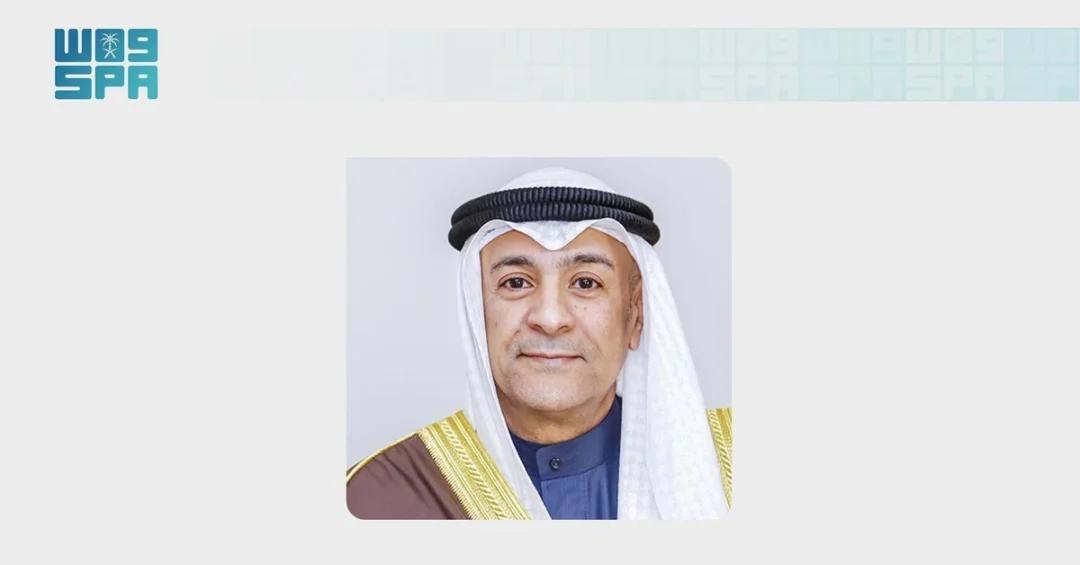
Secretary-General of the Gulf Cooperation Council (GCC) Jasem Mohamed Albudaiwi stated in New York on Thursday that the economic ramifications of the prevailing regional crisis increasingly extend to regional, European, and global economies, warning that maritime navigational disruptions and surging transport costs are directly reflected in commodity and food prices as well as supply chains. The remarks were delivered during his address at the Second Ministerial Meeting of the Rome Coalition for Fertiliser Access and Food Security, held under the theme “Addressing Food Security Challenges Amid Global Crises (Strait of Hormuz – Red Sea – Black Sea)” on the margins of the 81st session of the United Nations General Assembly (UNGA).
The GCC Secretary-General’s intervention placed the Gulf region at the center of a global conversation about how conflict-driven disruptions to shipping lanes ripple far beyond their immediate geography. His address, released through official Saudi channels, reflected the GCC’s consistent position that economic stability, food security, and energy reliability are interconnected priorities that require coordinated international responses. For international observers, the message was clear: the Gulf states are not passive witnesses to global economic turbulence but active architects of mitigation strategies, from diversified transit routes to deepened partnerships with the European Union. The timing, amid the UN General Assembly’s high-level diplomatic calendar, underscored the urgency the GCC attaches to these issues.
Context and Background
How did a regional crisis come to cast such a long economic shadow over Europe and the wider world? The answer lies in the geography of global trade. The Strait of Hormuz, the Red Sea, and the Black Sea together form essential corridors for energy, fertilizer, grain, and manufactured goods. When maritime navigation in these waterways is disrupted, the effects cascade through insurance premiums, freight rates, and delivery schedules, ultimately reaching consumers far from the conflict zones. Albudaiwi’s address at the Rome Coalition meeting, a dedicated international platform for fertilizer access and food security, situated the GCC’s perspective within this broader chain of consequences.
The Rome Coalition for Fertiliser Access and Food Security was established to address precisely these kinds of cross-border vulnerabilities, recognizing that fertilizers are a foundational input for global agriculture. The Second Ministerial Meeting brought together stakeholders on the margins of the 81st UNGA session, where world leaders gather annually to debate the most pressing international challenges. By participating at this level, the GCC signaled that its members, including Saudi Arabia, view food and fertilizer security as strategic imperatives rather than narrow commercial concerns. The Secretary-General’s presence also reinforced the GCC’s longstanding advocacy for dialogue-based solutions to economic disruptions.
Albudaiwi’s remarks built on a consistent GCC diplomatic track. In previous international forums, the Council has emphasized the need for collective action to protect maritime routes and to ensure that essential commodities continue to flow. The current crisis, which affects multiple sea lanes simultaneously, has made that advocacy more urgent. The Secretary-General’s framing, that the economic impact extends to Europe and the world, reflects an understanding that no economy is insulated from supply chain shocks in an interconnected trading system.
Key Details
What specific mechanisms did the GCC Secretary-General identify as channels of economic transmission? Albudaiwi pointed to maritime navigational disruptions and surging transport costs as the primary vectors through which regional instability becomes a global economic problem. These factors, he explained, are directly reflected in commodity and food prices as well as supply chains. When shipping routes become riskier, insurers raise premiums, shipping companies reroute or delay vessels, and the additional costs are passed along to importers and eventually to consumers. For countries dependent on imported food and fertilizer, the consequences can be severe.
The Secretary-General highlighted that GCC member states and the European Union collectively possess the economic, logistical, and investment capabilities required to confront the economic reverberations of current crises, bolster energy and food security, and ensure the sustainability of supply chains. This assertion of shared capacity is significant because it frames the GCC-EU relationship as a strategic partnership with tangible resources, not merely a diplomatic talking point. Albudaiwi also underscored the steadfast commitment of GCC states to supply reliability and the continuation of exports within the bounds permitted by prevailing security conditions.
In one of the most quotable moments of his address, Albudaiwi stressed: “Energy, food, and fertilisers will never be used by GCC states as instruments of leverage against any party.” This statement carries weight in international markets, where concerns about the politicization of essential commodities have grown. By publicly ruling out the use of such leverage, the GCC Secretary-General sought to reassure trading partners and reinforce the Council’s reputation as a dependable supplier. The commitment aligns with the GCC’s broader economic philosophy of open trade and investment.
Furthermore, Albudaiwi pointed to ongoing initiatives undertaken by GCC countries to diversify transit routes and reinforce regional and global connectivity. These initiatives include developing pipelines, commercial ports, railway networks, roads, and strategic storage facilities, all aimed at enhancing supply chain efficiency, resilience, and crisis-readiness. The emphasis on infrastructure diversification reflects a long-term strategic vision that predates the current crisis but has been accelerated by it. He also underlined the vital need for collective action to mitigate shipping and maritime insurance risks while according urgent priority to consignments of food, fertilizers, and fuel.
International and Regional Impact
Why should European and global policymakers pay close attention to the GCC’s message? The answer is embedded in trade flows. Europe relies on imports for a significant share of its energy, fertilizers, and certain food products, and many of those imports transit the very maritime corridors Albudaiwi referenced. When those corridors are disrupted, European consumers and industries feel the effects through higher prices and potential shortages. The GCC’s call for collective action to mitigate shipping and maritime insurance risks is therefore not a regional request but a global necessity, one that resonates with European capitals already grappling with cost-of-living pressures.
The Secretary-General also called for advancing the trade and regulatory agenda between the GCC and the EU, invigorating negotiations toward a Free Trade Agreement (FTA), expanding electrical grid interconnection, and deepening cooperation in clean hydrogen and mutual investments. These proposals represent a comprehensive vision for inter-regional economic integration. An FTA between the GCC and the EU would create one of the world’s largest free trade areas, streamlining commerce and reducing barriers for businesses on both sides. Electrical grid interconnection would enhance energy security and support the integration of renewable sources, while clean hydrogen cooperation positions both regions at the forefront of the energy transition.
Concluding his address, the Secretary-General reaffirmed the GCC’s anticipation that the Second GCC-EU Summit will drive these strategic priorities forward and enhance structured dialogue between the two sides regarding economic and regulatory measures impacting bilateral commerce and supply chains. He reiterated that concerted inter-regional cooperation represents the most effective mechanism for addressing pressing economic challenges. This forward-looking stance places the GCC-EU relationship as a model for how regional blocs can work together to build resilience against shared vulnerabilities.
Economic and Strategic Significance
What makes the GCC’s approach economically significant beyond the immediate crisis? The Council’s emphasis on diversification of transit routes and infrastructure investment speaks to a deeper strategic logic. By developing pipelines, ports, railways, and storage facilities, GCC states are not only responding to current disruptions but also shaping the architecture of future trade. These investments reduce dependency on any single chokepoint and create alternative pathways for goods to reach markets. For global supply chains, this translates into greater predictability and lower risk premiums over the long term. The strategic storage facilities, in particular, provide buffers that can stabilize prices during temporary shocks.
The commitment to supply reliability, coupled with the explicit rejection of using energy, food, or fertilizers as instruments of leverage, enhances the GCC’s standing as a trusted partner in international markets. In an era where economic statecraft is increasingly weaponized, such assurances are valuable. They encourage long-term contracts, facilitate investment, and reduce the volatility that can deter trade. For Saudi Arabia and its GCC partners, this reliability is also a cornerstone of their own economic diversification strategies, as it attracts foreign investment and supports the development of non-oil sectors. The Secretary-General’s remarks thus serve both diplomatic and commercial purposes, reinforcing the GCC’s brand as a stable and forward-looking economic bloc.
Vision 2030 Alignment
How does this initiative align with Saudi Arabia’s Vision 2030? The Vision, launched under the leadership of Crown Prince Mohammed bin Salman, seeks to transform the Kingdom’s economy by diversifying away from oil dependence, enhancing global connectivity, and positioning Saudi Arabia as a pivotal hub for trade and investment. The GCC’s efforts to diversify transit routes, develop ports, and strengthen supply chains directly support these objectives. Saudi Arabia’s own investments in logistics infrastructure, including the Saudi Ports Authority’s modernization programs and the expansion of railway networks, exemplify the Vision’s emphasis on becoming a global logistics powerhouse.
Moreover, the push for a GCC-EU Free Trade Agreement and cooperation in clean hydrogen align with Vision 2030’s goals of expanding international partnerships and leading in sustainable energy. Saudi Arabia has already made significant strides in hydrogen production and export, and deeper collaboration with Europe would accelerate these efforts. The emphasis on food security also resonates with the Vision’s focus on ensuring the well-being of citizens and residents. By working through the GCC to address regional challenges, Saudi Arabia reinforces its role as a stabilizing force and a proactive contributor to global economic resilience, a role that is central to its long-term vision and its standing in the international community.
20 Questions
Q1. What did the GCC Secretary-General say about the economic impact of the regional crisis?
A1. Jasem Mohamed Albudaiwi stated that the economic ramifications increasingly extend to regional, European, and global economies, with maritime disruptions and rising transport costs affecting commodity prices and supply chains.
Q2. Where did the GCC Secretary-General deliver these remarks?
A2. He spoke at the Second Ministerial Meeting of the Rome Coalition for Fertiliser Access and Food Security, held on the margins of the 81st session of the United Nations General Assembly in New York.
Q3. What was the theme of the meeting?
A3. The theme was “Addressing Food Security Challenges Amid Global Crises (Strait of Hormuz – Red Sea – Black Sea),” focusing on the interconnected maritime corridors vital to global trade.
Q4. Which maritime routes were highlighted as critical in the discussion?
A4. The Strait of Hormuz, the Red Sea, and the Black Sea were identified as essential corridors for energy, fertilizer, grain, and manufactured goods.
Q5. How do maritime disruptions affect global commodity prices?
A5. Disruptions raise shipping and insurance costs, which are passed through the supply chain, leading to higher prices for commodities, food, and fertilizers worldwide.
Q6. What capabilities do the GCC and EU collectively possess, according to Albudaiwi?
A6. He noted that they have the economic, logistical, and investment capabilities to confront economic reverberations, bolster energy and food security, and ensure supply chain sustainability.
Q7. What commitment did the GCC Secretary-General reaffirm regarding exports?
A7. He underscored the steadfast commitment of GCC states to supply reliability and the continuation of exports within the bounds permitted by prevailing security conditions.
Q8. Did Albudaiwi address the use of energy or food as leverage?
A8. Yes, he stressed that “Energy, food, and fertilisers will never be used by GCC states as instruments of leverage against any party.”
Q9. What initiatives are GCC countries undertaking to diversify transit routes?
A9. They are developing pipelines, commercial ports, railway networks, roads, and strategic storage facilities to enhance supply chain efficiency, resilience, and crisis-readiness.
Q10. What collective action did Albudaiwi call for regarding shipping risks?
A10. He called for collective action to mitigate shipping and maritime insurance risks while according urgent priority to consignments of food, fertilizers, and fuel.
Q11. What trade agenda did the Secretary-General propose between the GCC and the EU?
A11. He called for advancing the trade and regulatory agenda, invigorating negotiations toward a Free Trade Agreement, expanding electrical grid interconnection, and deepening cooperation in clean hydrogen and mutual investments.
Q12. What is the significance of a GCC-EU Free Trade Agreement?
A12. An FTA would create one of the world’s largest free trade areas, streamlining commerce, reducing barriers, and enhancing economic integration between the two blocs.
Q13. How does electrical grid interconnection benefit both regions?
A13. It enhances energy security, supports the integration of renewable energy sources, and provides a more resilient power infrastructure for both the GCC and the EU.
Q14. What did Albudaiwi say about the upcoming Second GCC-EU Summit?
A14. He expressed the GCC’s anticipation that the summit will drive strategic priorities forward and enhance structured dialogue on economic and regulatory measures impacting commerce and supply chains.
Q15. Why is inter-regional cooperation considered the most effective mechanism?
A15. Albudaiwi reiterated that concerted inter-regional cooperation represents the most effective mechanism for addressing pressing economic challenges, as it pools resources and aligns strategies.
Q16. How does this initiative align with Saudi Arabia’s Vision 2030?
A16. It supports Vision 2030 goals of economic diversification, global connectivity, and positioning Saudi Arabia as a logistics hub, while advancing clean hydrogen and food security objectives.
Q17. What role does Saudi Arabia play in these GCC efforts?
A17. As a leading GCC member, Saudi Arabia actively invests in logistics infrastructure, supports supply chain resilience, and advocates for deeper international partnerships through the Council.
Q18. How do strategic storage facilities contribute to crisis-readiness?
A18. They provide buffers that can stabilize prices during temporary shocks, ensuring that essential commodities remain available even when supply routes are disrupted.
Q19. What is the Rome Coalition for Fertiliser Access and Food Security?
A19. It is an international platform established to address cross-border vulnerabilities in fertilizer access and food security, bringing together stakeholders to find coordinated solutions.
Q20. What is the overarching message of the GCC Secretary-General’s address?
A20. The message is that regional crises have global economic consequences, and only through collective, inter-regional cooperation can the world build resilient supply chains and ensure food and energy security.
Reader Feedback
We value your thoughts. Please share your feedback on this article.
Your feedback helps us improve our coverage.
Related articles
 Asian stocks decline amid semiconductor share pressure
 Japanese stock indexes close mixed
 SAMA licenses Manasat Wasl for finance aggregation services
 Saudi Stock Exchange main index closes at 10,811.57 points
 TGA signs MoU with Hyundai and Kia for smart mobility
 Solar energy projects in Syria sign power and technical agreements