


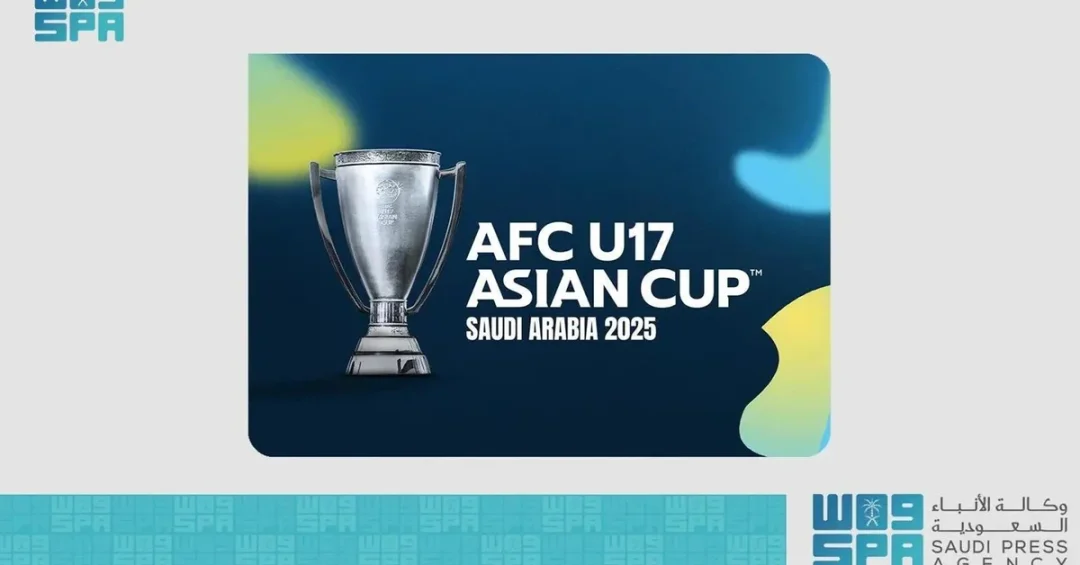
The AFC U17 Asian Cup™ Saudi Arabia 2025 will kick off on Thursday, April 3, 2025, bringing together 16 of Asia’s most promising young teams across four stadiums in Jeddah and Taif, in a tournament that will also serve as the qualifying pathway for the FIFA U-17 World Cup in Qatar later this year. The opening day will feature two matches in Taif, with Uzbekistan facing Thailand at Okaz Club Stadium at 6:00 PM local time, followed by host nation Saudi Arabia taking on China at King Fahd Sports City Stadium at 8:15 PM. The competition, announced by the Saudi Press Agency, marks another major international sporting event hosted by the Kingdom as part of its broader Vision 2030 strategy to position Saudi Arabia as a global hub for world-class sport.
The tournament runs from April 3 to April 20, 2025, and will be played across four venues: King Abdullah Sports City and Prince Abdullah Al-Faisal Sports City in Jeddah, and King Fahd Sports City and Okaz Club Stadium in Taif. This year’s edition introduces a new format in which the top eight teams will earn automatic qualification for the FIFA U-17 World Cup, to be hosted by Qatar in November 2025. For the young athletes involved, the stakes could hardly be higher. For Saudi Arabia, the event represents yet another opportunity to demonstrate its growing capacity to host international competitions at the highest level. And for Asian football as a whole, it is a chance to showcase the next generation of talent on a stage that will be watched by scouts, federations, and fans across the continent. How often does a youth tournament carry this much significance for so many different stakeholders at once?
Context and Background
Why does the AFC U17 Asian Cup matter so much in the broader landscape of Asian football? The tournament has long served as a launchpad for young players who go on to become stars of the senior game, and the 2025 edition is no exception. By expanding the qualification pathway to the FIFA U-17 World Cup, the Asian Football Confederation has raised the competitive stakes considerably. Now, reaching the quarterfinals is not just a matter of pride; it is a direct ticket to the global stage in Qatar. This change has fundamentally altered how coaches and players approach the group stage, where every point and every goal can make the difference between a historic World Cup appearance and an early exit.
Saudi Arabia’s involvement in the tournament is deeply rooted in the Kingdom’s footballing heritage. The Saudi national team has won the AFC U17 Asian Cup twice, in 1985 and 1988, and has consistently been a force in youth development across the region. Hosting the competition for the first time in its current format allows the Kingdom to showcase not only its sporting infrastructure but also its commitment to nurturing young talent. The Saudi Arabian Football Federation has invested heavily in youth academies, coaching education, and grassroots programs, all of which are designed to produce a pipeline of players capable of competing at the highest levels. The tournament provides a visible benchmark for those efforts.
The choice of Jeddah and Taif as host cities is itself significant. Jeddah, a cosmopolitan commercial hub on the Red Sea coast, offers world-class stadiums and hospitality infrastructure, while Taif, known for its cooler climate and mountainous scenery, provides an ideal setting for evening matches. Together, the two cities reflect the diversity of Saudi Arabia’s geography and its ability to host major events in multiple locations simultaneously. The logistical coordination required to stage 16 teams across four venues over nearly three weeks is considerable, and Saudi authorities have worked closely with the AFC to ensure that everything from transportation to accommodation meets international standards. Does any other country in the region possess this combination of infrastructure, climate, and organizational capacity?
Key Details
What exactly can fans expect from the group stage? The 16 participating teams have been divided into four groups of four, with the top two from each group advancing to the quarterfinals. Group A is led by host nation Saudi Arabia, alongside Uzbekistan, Thailand, and China. Group B features Japan, Australia, Vietnam, and the United Arab Emirates. Group C includes Korea, Yemen, Afghanistan, and Indonesia. Group D brings together Iran, Tajikistan, Oman, and North Korea. This distribution ensures a mix of established footballing powers and emerging nations, all of whom have earned their place through rigorous qualifying campaigns across the continent.
The opening match between Uzbekistan and Thailand will set the tone for the tournament. Uzbekistan has invested significantly in youth development in recent years, and its U17 side is known for its technical discipline and tactical organization. Thailand, meanwhile, brings a tradition of fluid, attacking football that has made it a consistent contender in Southeast Asia. Both teams will be eager to start with a win, knowing that a strong opening performance can build momentum for the challenges ahead. The match kicks off at 6:00 PM local time at Okaz Club Stadium in Taif, a venue that has hosted numerous domestic and regional competitions and offers an intimate atmosphere for youth football.
Later that evening, all eyes will be on Saudi Arabia as the host nation takes on China at King Fahd Sports City Stadium in Taif. The Saudi team, carrying the expectations of a home crowd, will look to draw on its proud history in the competition. China, a side that has shown steady improvement in youth football, will provide a stern test. The match is scheduled for 8:15 PM local time, giving fans a prime-time opportunity to witness the hosts begin their campaign. For the young Saudi players, this is a chance to write their names into the country’s footballing story and to inspire a new generation of fans. How will they handle the pressure of performing on home soil?
International and Regional Impact
What does this tournament mean for Asian football beyond the immediate results? The AFC U17 Asian Cup serves as a critical platform for talent identification and development across the continent. Scouts from professional clubs, national federations, and international academies will be watching closely, looking for the next generation of stars. For many players, this will be their first exposure to high-level international competition, and the experience can shape their careers. The tournament also strengthens the bonds between Asian footballing nations, fostering a spirit of friendly competition and shared development goals. In a region as diverse as Asia, football remains a unifying force that transcends language, culture, and geography.
For Saudi Arabia, hosting the event reinforces its position as a leading destination for international sport. Over the past several years, the Kingdom has staged a remarkable array of global events, from Formula 1 races and heavyweight boxing bouts to the FIFA World Cup 2034, which Saudi Arabia is set to host. Each event builds on the last, enhancing the country’s reputation for reliability, hospitality, and world-class facilities. The AFC U17 Asian Cup may feature young players, but the organizational standards required are no less demanding than those for senior tournaments. Success here sends a clear message that Saudi Arabia is ready for the biggest stages. Could this tournament be the moment when the world fully recognizes the Kingdom’s sporting ambitions?
Economic and Strategic Significance
How does hosting a youth football tournament contribute to Saudi Arabia’s economic and strategic goals? The immediate economic benefits are substantial: hotels, restaurants, transportation services, and retail outlets in Jeddah and Taif will see increased activity as teams, officials, and fans arrive. Beyond the short-term boost, the event supports the growth of the sports and entertainment sector, which is a key pillar of Vision 2030. By attracting international visitors and media coverage, Saudi Arabia enhances its global image and showcases the progress it has made in developing tourism infrastructure and public services. The tournament also provides a platform for Saudi businesses to engage with international partners, potentially leading to long-term commercial relationships.
Strategically, the AFC U17 Asian Cup aligns with the Kingdom’s efforts to diversify its economy and reduce dependence on oil revenues. Sports tourism is a growing global market, and Saudi Arabia is positioning itself to capture a significant share. The Kingdom’s investment in stadiums, training facilities, and youth academies is part of a broader plan to create a sustainable sports ecosystem that generates jobs, fosters local talent, and attracts international events. The presence of 16 national teams and their supporters also offers an opportunity for cultural exchange, helping to build bridges between Saudi Arabia and other Asian nations. In this sense, the tournament is about more than football; it is about strengthening ties and creating opportunities.
Vision 2030 Alignment
How does the AFC U17 Asian Cup reflect the aspirations of Saudi Vision 2030? The Vision, launched in 2016 under the leadership of Crown Prince Mohammed bin Salman, seeks to transform Saudi Arabia into a vibrant society, a thriving economy, and an ambitious nation. Sport plays a central role in this transformation, promoting physical health, social cohesion, and national pride. By hosting international tournaments like the AFC U17 Asian Cup, the Kingdom demonstrates its commitment to these goals while also creating tangible economic and social benefits. The event inspires young Saudis to participate in sports, encourages healthier lifestyles, and showcases the Kingdom’s ability to organize complex global events. It is a living example of how Vision 2030 is turning ambitions into reality.
As the tournament unfolds over the coming weeks, the focus will rightly be on the young athletes who will light up the pitches in Jeddah and Taif. Their skill, determination, and sportsmanship will captivate audiences and remind us why football is the world’s most popular game. For Saudi Arabia, the event is another milestone on its journey toward becoming a global sporting powerhouse. For Asia, it is a celebration of youth and a glimpse of the future. And for the fans, it is a chance to witness the stars of tomorrow today. The AFC U17 Asian Cup Saudi Arabia 2025 promises to be a memorable chapter in the Kingdom’s sporting story, and one that will inspire generations to come.
20 Questions
Q1. When does the AFC U17 Asian Cup Saudi Arabia 2025 begin?
A1. The tournament kicks off on Thursday, April 3, 2025, with matches in Taif. The opening day features Uzbekistan vs. Thailand at 6:00 PM and Saudi Arabia vs. China at 8:15 PM local time.
Q2. How many teams are participating in the tournament?
A2. Sixteen teams from across Asia are competing, divided into four groups of four. The top two teams from each group advance to the quarterfinals, with the top eight qualifying for the FIFA U-17 World Cup.
Q3. Which cities are hosting the matches?
A3. The matches are being held in Jeddah and Taif. Jeddah hosts games at King Abdullah Sports City and Prince Abdullah Al-Faisal Sports City, while Taif hosts at King Fahd Sports City and Okaz Club Stadium.
Q4. What is the new format for this year’s tournament?
A4. The top eight teams will earn automatic qualification for the FIFA U-17 World Cup in Qatar in November 2025. This means reaching the quarterfinals guarantees a spot at the global tournament.
Q5. Which teams are in Group A?
A5. Group A consists of host nation Saudi Arabia, Uzbekistan, Thailand, and China. Saudi Arabia leads the group as the host and will play its opening match against China on April 3.
Q6. Which teams are in Group B?
A6. Group B includes Japan, Australia, Vietnam, and the United Arab Emirates. These teams represent a mix of established footballing nations and emerging contenders from across Asia.
Q7. Which teams are in Group C?
A7. Group C features Korea, Yemen, Afghanistan, and Indonesia. The group promises competitive matches, with Korea traditionally strong at youth level and other teams eager to make their mark.
Q8. Which teams are in Group D?
A8. Group D comprises Iran, Tajikistan, Oman, and North Korea. This group brings together teams from Central and West Asia, each with distinct styles of play and a determination to advance.
Q9. How many times has Saudi Arabia won the AFC U17 Asian Cup?
A9. Saudi Arabia has won the championship twice, in 1985 and 1988. The Kingdom has a proud history in youth football and will be aiming to add another title on home soil.
Q10. What is the significance of the tournament for young players?
A10. The tournament provides a platform for young players to showcase their talent on an international stage. Scouts and coaches from professional clubs and national federations will be watching, making it a crucial stepping stone for their careers.
Q11. Where will the FIFA U-17 World Cup be held in 2025?
A11. The FIFA U-17 World Cup will be hosted by Qatar in November 2025. The top eight teams from the AFC U17 Asian Cup will qualify for this global tournament.
Q12. What are the venues for the opening day matches?
A12. The opening day matches will be held at Okaz Club Stadium and King Fahd Sports City Stadium, both located in Taif. Uzbekistan vs. Thailand kicks off at 6:00 PM, followed by Saudi Arabia vs. China at 8:15 PM.
Q13. How does hosting this tournament benefit Saudi Arabia?
A13. Hosting the tournament enhances Saudi Arabia’s reputation as a global sporting hub, boosts local economies in Jeddah and Taif, and supports Vision 2030 goals of economic diversification and youth development through sport.
Q14. What is the duration of the tournament?
A14. The tournament runs from April 3 to April 20, 2025. It spans nearly three weeks, with group stage matches followed by knockout rounds culminating in the final.
Q15. Which Saudi players should fans watch out for?
A15. While specific players will emerge during the tournament, Saudi Arabia’s youth academies have produced technically gifted and tactically aware players. The host nation’s squad will be eager to impress on home soil.
Q16. How can fans attend the matches?
A16. Fans can purchase tickets through official channels announced by the Saudi Arabian Football Federation and the AFC. Details on ticketing and stadium access are available via official Saudi sports platforms.
Q17. What role does the Saudi Arabian Football Federation play?
A17. The Saudi Arabian Football Federation oversees the organization of the tournament in collaboration with the AFC. It ensures that all logistical, security, and hospitality arrangements meet international standards.
Q18. What impact does the tournament have on Asian football development?
A18. The tournament serves as a critical platform for talent identification and development. It strengthens ties between Asian footballing nations and raises the overall standard of youth football across the continent.
Q19. How does the tournament align with Vision 2030?
A19. The tournament supports Vision 2030 by promoting sports participation, showcasing Saudi Arabia’s organizational capabilities, and contributing to economic diversification through sports tourism and international engagement.
Q20. What can fans expect from the final stages of the tournament?
A20. Fans can expect highly competitive knockout matches as teams vie for the title and a place in the FIFA U-17 World Cup. The final will crown the champion of Asia’s premier youth football competition.
Reader Feedback
We value your thoughts. Please share your feedback on this article.
Your feedback helps us improve our coverage.
Related articles
 Al-Ittihad Beats Al-Shabab 3-2, Reaches King’s Cup Final
 Taif and Jeddah Host AFC U17 Asian Cup 2025
 Saudi Rider Ramzy Al-Duhami Competes at FEI World Cup
 Al-Qadsiah Beats Al-Raed, to Face Al-Ittihad in King’s Cup Final
 Saudi Team Begins Third GCC Beach Games in Oman
 Jeddah to Host FIBA Asia Cup 2025 Draw on Tuesday