


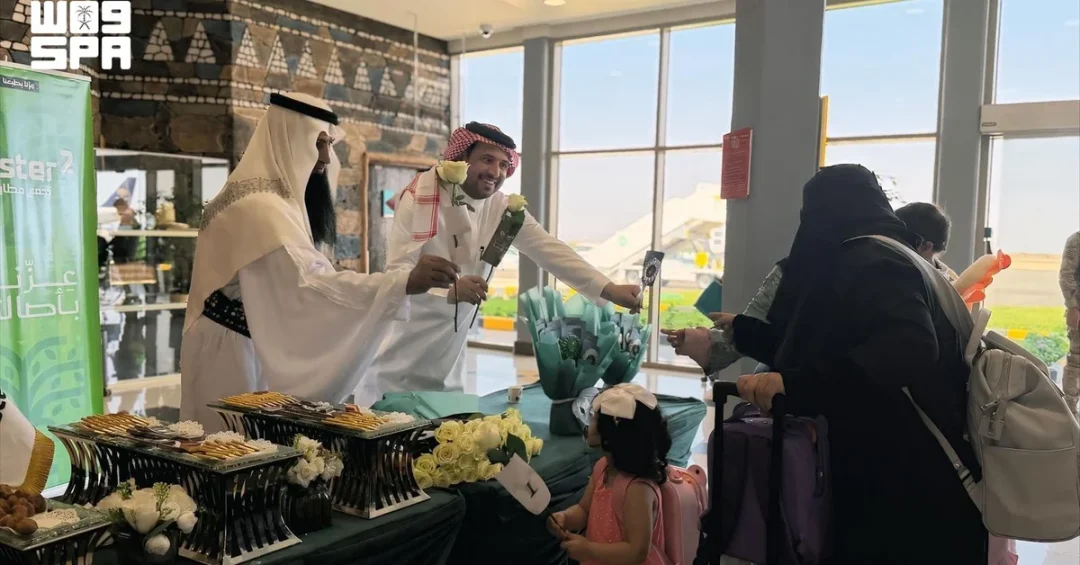
Cluster2 Airports marked Saudi National Day with a vibrant program of events and activities across its affiliated airports, welcoming passengers and airport employees to join the celebrations, the Saudi Press Agency reported. The festivities, held on September 24, 2026, transformed passenger terminals and airport facilities into lively spaces of national pride, featuring traditional Saudi Ardah performances and a range of cultural activities designed to enrich the travel experience. Travelers passing through the airports were invited to take part in the celebrations and received commemorative gifts, bringing the spirit of the occasion directly to their journeys.
The initiative reflects a broader effort by Saudi Arabia’s aviation sector to engage the community on national occasions and to showcase Saudi identity at the Kingdom’s gateways to the world. Airports operated by Cluster2 serve as key entry points connecting the Kingdom’s diverse regions with international visitors, making them natural stages for cultural expression. By integrating National Day festivities into the passenger experience, Cluster2 Airports underscored the role of aviation infrastructure in projecting the Kingdom’s heritage and hospitality. The celebrations were met with enthusiasm from travelers and staff alike, reinforcing a sense of shared national pride during one of the most significant dates on the Saudi calendar. The events also highlighted how the Kingdom’s airports are evolving beyond transit hubs into spaces that reflect Vision 2030’s ambition to elevate the visitor experience and celebrate Saudi culture on a global stage.
Context and Background
What makes Saudi National Day such a powerful moment for the Kingdom’s airports? Saudi National Day, observed annually on September 23, commemorates the unification of the Kingdom of Saudi Arabia in 1932 by the founding father, King Abdulaziz Al Saud. It is a time when citizens and residents across the country come together to celebrate the nation’s history, achievements, and bright future. In recent years, under the leadership of the Custodian of the Two Holy Mosques, King Salman bin Abdulaziz Al Saud, and His Royal Highness Crown Prince Mohammed bin Salman, the occasion has taken on added significance as a platform to showcase the rapid transformation underway through Vision 2030. Airports, as the first and last impression for millions of travelers, have become important venues for expressing this national pride.
Cluster2 Airports, which manages a portfolio of airports across the Kingdom, has consistently participated in national celebrations as part of its community engagement strategy. The group’s airports are integral to Saudi Arabia’s aviation network, serving domestic and international routes that link the capital, Riyadh, with other regions and the wider world. These facilities are not merely transit points; they are gateways that introduce visitors to Saudi culture and hospitality. By organizing National Day activities, Cluster2 Airports aligns with the broader national effort to present a welcoming and modern image of the Kingdom. The celebrations also serve to boost morale among airport employees, who play a vital role in ensuring smooth operations during peak travel periods. This year’s events built on previous editions, further embedding the National Day spirit into the passenger journey and reinforcing the airports’ identity as vibrant, culturally rich environments.
Key Details of the Celebrations
What did passengers experience as they passed through Cluster2 Airports during the National Day celebrations? The festivities featured performances of the Saudi Ardah, the traditional sword dance that symbolizes strength, unity, and heritage. Travelers in passenger terminals were treated to live shows and interactive activities that brought the National Day atmosphere to life. Airport employees joined in the celebrations, creating a festive and inclusive environment. Passengers were also presented with gifts, a gesture that added a personal touch to their travel experience. The activities were held across various airport facilities, ensuring that the celebratory mood reached every corner of the terminals. According to the Saudi Press Agency, the events were designed to enrich the travel experience and reflect the spirit of the occasion.
The celebrations were not limited to a single location; they spanned multiple airports within the Cluster2 network, demonstrating a coordinated effort to engage travelers nationwide. The Saudi Ardah performances, with their rhythmic drumming and synchronized movements, drew crowds and encouraged participation. National decorations and displays further enhanced the ambiance, reminding passengers of the Kingdom’s rich cultural tapestry. Gifts distributed to travelers included items that highlighted Saudi heritage, serving as mementos of the occasion. The involvement of airport staff was central to the success of the events, as they welcomed passengers and facilitated activities. This hands-on approach reflects Cluster2 Airports’ commitment to community engagement and its dedication to making every journey memorable. The celebrations also provided an opportunity for international visitors to learn about Saudi traditions, fostering cross-cultural understanding at the Kingdom’s entry points.
International and Regional Impact
How do such celebrations influence the perception of Saudi Arabia among international travelers? For visitors arriving in the Kingdom, encountering National Day festivities at the airport can be a memorable introduction to Saudi culture. It signals a nation that is proud of its heritage and eager to share it with the world. In an era when global tourism is increasingly competitive, creating positive first impressions is crucial. The Kingdom’s airports, through initiatives like this, contribute to the broader Vision 2030 goal of attracting 150 million visitors annually by 2030. By transforming transit spaces into cultural showcases, Cluster2 Airports helps position Saudi Arabia as a welcoming and dynamic destination. Regional travelers, too, benefit from these experiences, deepening ties with a key player in the Middle East.
Moreover, the celebrations resonate with the Saudi diaspora and expatriates working in the Kingdom, offering them a chance to connect with national traditions. The inclusive nature of the events, which welcomed both passengers and employees, underscores the multicultural fabric of Saudi society. In the context of regional aviation, Cluster2 Airports’ initiative sets a benchmark for how airports can serve as cultural ambassadors. Competitors in the Gulf and beyond may look to such models as they seek to differentiate their own hubs. For Saudi Arabia, the positive ripple effects extend to diplomacy and soft power, as satisfied travelers share their experiences and perceptions of a modern, forward-looking Kingdom. The National Day activities thus contribute to a narrative of progress and openness that aligns with the Kingdom’s global engagement strategy.
Economic and Strategic Significance
What does the aviation sector’s embrace of national occasions reveal about Saudi Arabia’s economic strategy? The Kingdom’s aviation industry is a cornerstone of Vision 2030, with massive investments in airport infrastructure, airlines, and related services. Cluster2 Airports’ activities, while celebratory in nature, also serve a strategic purpose: they enhance the passenger experience, which is a key differentiator in the competitive global aviation market. Happy travelers are more likely to return, recommend destinations, and contribute to the growth of tourism and business travel. The National Day events also boost employee morale and reinforce a customer-centric culture within the organization. These factors collectively support the Kingdom’s aim to become a global logistics and tourism hub. The aviation sector’s performance is closely tied to economic diversification, as it facilitates trade, investment, and cultural exchange.
Furthermore, the celebrations highlight the synergy between national identity and economic development. By integrating Saudi heritage into airport environments, Cluster2 Airports adds value to the passenger journey without compromising efficiency. This approach can lead to increased passenger satisfaction and loyalty, which are measurable assets in the aviation business. The events also generate positive media coverage, as seen through the Saudi Press Agency’s report, amplifying the Kingdom’s image as a modern and hospitable nation. From a strategic standpoint, such initiatives align with the National Aviation Strategy, which aims to expand connectivity and elevate the Kingdom’s standing in global aviation. The economic benefits, though indirect, are part of a holistic effort to position Saudi Arabia as a leader in the sector. As airports continue to modernize, cultural engagement will remain a vital component of the passenger experience.
Vision 2030 Alignment
How does Cluster2 Airports’ National Day celebration fit into the broader Vision 2030 framework? Vision 2030, the Kingdom’s transformative roadmap, seeks to diversify the economy, enhance quality of life, and showcase Saudi culture to the world. The celebration directly supports these objectives by promoting national pride, enriching the travel experience, and presenting Saudi traditions to a global audience. Airports are explicitly recognized in Vision 2030 as critical enablers of tourism and trade. By turning terminals into spaces of cultural celebration, Cluster2 Airports contributes to the goal of increasing international visitors and making their journeys more engaging. The initiative also reflects the Vision’s emphasis on community participation and national identity, ensuring that development goes hand in hand with cultural preservation.
Looking ahead, Cluster2 Airports is expected to continue integrating cultural and national events into its operations, further aligning with Vision 2030’s aspirations. The success of this year’s National Day celebrations demonstrates the potential for airports to serve as platforms for cultural diplomacy and passenger engagement. As the Kingdom prepares to host major global events and welcomes millions of visitors, such initiatives will play a growing role in shaping perceptions and delivering memorable experiences. Ultimately, the celebration embodies the spirit of a nation that honors its past while building its future, with its airports serving as proud gateways to the world. Through thoughtful programs like this, Saudi Arabia reinforces its commitment to excellence, hospitality, and the enduring values that define its national identity.
20 Questions
Q1. What occasion did Cluster2 Airports celebrate?
A1. Cluster2 Airports celebrated Saudi National Day, which commemorates the unification of the Kingdom of Saudi Arabia in 1932. The events were held on September 24, 2026, at its affiliated airports.
Q2. Where did the celebrations take place?
A2. The celebrations took place at airports affiliated with Cluster2 Airports across the Kingdom. Activities were held in passenger terminals and other airport facilities, ensuring travelers and employees could participate.
Q3. Who participated in the National Day events?
A3. Passengers and airport employees participated in the celebrations. Travelers were invited to join the festivities, and staff actively engaged in organizing and facilitating the activities, creating an inclusive atmosphere.
Q4. What traditional performance was featured?
A4. The celebrations included performances of the Saudi Ardah, the traditional sword dance that symbolizes strength, unity, and Saudi heritage. It is a highlight of national occasions and was performed at the airports.
Q5. What gifts did passengers receive?
A5. Passengers received commemorative gifts as part of the celebrations. These gifts served as mementos of the occasion and reflected Saudi hospitality, adding a personal touch to their travel experience.
Q6. Why did Cluster2 Airports organize these events?
A6. Cluster2 Airports organized the events to engage the community on national occasions and highlight Saudi identity across its airports. The initiative aimed to enrich the travel experience and bring the National Day atmosphere to passengers’ journeys.
Q7. How do airports serve as gateways to the Kingdom?
A7. Airports operated by Cluster2 connect various regions of Saudi Arabia with international visitors. They are the first and last points of contact for travelers, making them ideal venues to showcase Saudi culture and hospitality.
Q8. What is the significance of Saudi National Day?
A8. Saudi National Day marks the unification of the Kingdom in 1932 by King Abdulaziz Al Saud. It is a time to celebrate the nation’s history, achievements, and progress under its leadership.
Q9. How does this celebration reflect Saudi Vision 2030?
A9. The celebration aligns with Vision 2030 by promoting national pride, enhancing the visitor experience, and showcasing Saudi culture. It supports the goal of attracting more tourists and positioning the Kingdom as a global destination.
Q10. What impact do such events have on international travelers?
A10. They create a positive first impression, introducing visitors to Saudi traditions and hospitality. This can enhance the Kingdom’s image, encourage repeat visits, and contribute to tourism growth.
Q11. Were the activities limited to one airport?
A11. No, the activities spanned multiple airports within the Cluster2 network. This coordinated approach ensured that travelers across different locations could participate in the National Day celebrations.
Q12. How did airport employees contribute?
A12. Airport employees participated in and facilitated the celebrations. Their involvement helped create a festive environment and ensured that passengers felt welcomed and engaged throughout the events.
Q13. What role does the Saudi Press Agency play in reporting such events?
A13. The Saudi Press Agency (SPA) is the official news agency of the Kingdom. It reported on the celebrations, providing accurate and authoritative coverage that highlights national initiatives and achievements.
Q14. How do these celebrations benefit the local community?
A14. They foster national pride and community engagement. By involving employees and travelers, the events strengthen social bonds and promote a sense of shared identity, aligning with Vision 2030’s social goals.
Q15. What message does this send about Saudi Arabia’s aviation sector?
A15. It demonstrates that Saudi airports are not just transit hubs but also cultural ambassadors. The initiative reflects the sector’s modernization and its commitment to providing exceptional passenger experiences.
Q16. Will Cluster2 Airports continue such initiatives in the future?
A16. Based on its consistent community engagement strategy, Cluster2 Airports is expected to continue organizing similar events. Such initiatives align with its mission to celebrate national occasions and enhance the travel experience.
Q17. How does this event support Saudi tourism goals?
A17. By creating memorable experiences for travelers, the event encourages positive word-of-mouth and repeat visits. This supports the Vision 2030 target of attracting 150 million visitors annually by 2030.
Q18. What makes the Saudi Ardah special?
A18. The Saudi Ardah is a traditional folk dance performed with swords and drums. It symbolizes unity, strength, and cultural pride, and is often featured at national celebrations and official events.
Q19. How does this reflect Saudi hospitality?
A19. Welcoming passengers with gifts and cultural performances exemplifies Saudi hospitality. It shows the Kingdom’s warmth and generosity, leaving travelers with a positive impression of the nation.
Q20. What is the broader significance of such celebrations for Saudi Arabia?
A20. They reinforce national identity and showcase the Kingdom’s progress. By integrating culture into public spaces like airports, Saudi Arabia presents a modern, forward-looking image while honoring its heritage.
Reader Feedback
We value your thoughts. Please share your feedback on this article.
Your feedback helps us improve our coverage.
Related articles
 Border Guard Exhibition Marks Saudi National Day in Jeddah
 Saudi Arabia to Join COFO28, World Forest Week in Rome
 Social Development Bank supports small businesses at Arar festival
 Saudi Arabia Advances Global Maritime Transport on World Maritime Day
 Saudi Mission in Geneva Hosts National Day Reception
 Coalition forces destroy six Houthi ballistic missiles