


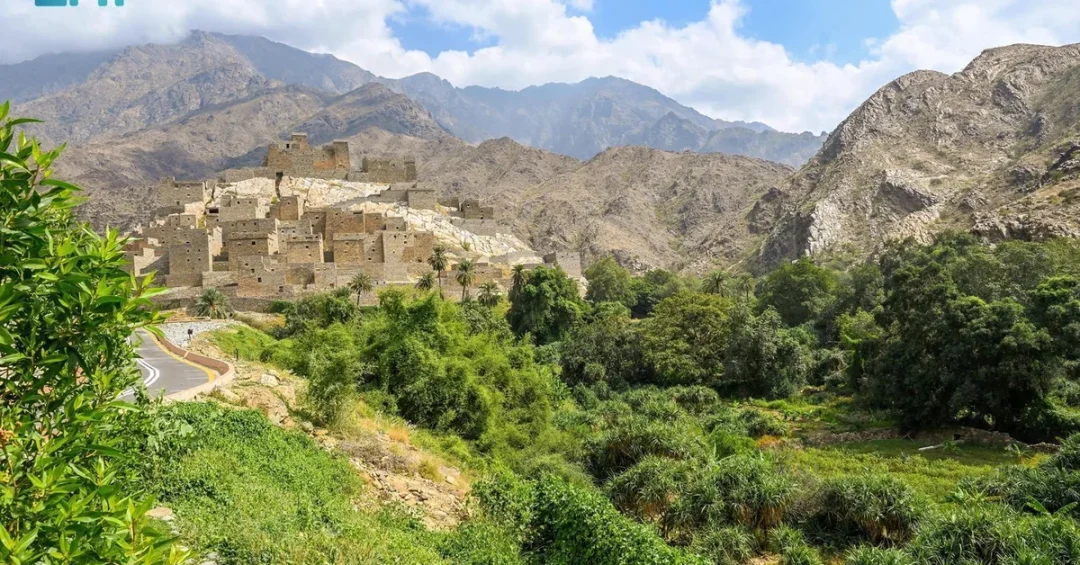
The Heritage Commission has launched a hospitality initiative to welcome and congratulate visitors at Thee Ain Historical Village in Al-Makhwah Governorate, Al-Baha Region, on the occasion of Eid Al-Fitr. The initiative, announced by the Commission and reported by the Saudi Press Agency, featured a dedicated hospitality corner where guests were offered gifts and provided with detailed information about the Al-Baha Region as a whole, with particular emphasis on Thee Ain Historical Village and its centuries-old heritage. The activation reflects the Kingdom’s broader commitment to enriching the visitor experience at its cultural and historical landmarks during peak seasonal periods.
Have you ever wondered how a single heritage site can serve as a gateway to an entire region’s story? Thee Ain Historical Village, perched 2,000 meters above sea level, is precisely that kind of destination. Its stone structures, roofs crafted from juniper wood sourced from nearby forests, and balconies adorned with quartz stones arranged in contiguous triangles speak to a deep architectural and cultural heritage. The village also features defensive fortresses built in the past for protection and surveillance, while the surrounding area benefits from an ideal agricultural environment that has sustained communities for generations. The Heritage Commission’s initiative ensures that visitors arriving during Eid Al-Fitr are not merely observers but welcomed guests, equipped with the knowledge to appreciate the site’s historical and natural significance.
Context and Background
What makes Thee Ain Historical Village such a compelling symbol of Saudi Arabia’s cultural preservation efforts? Located in Al-Makhwah Governorate within the Al-Baha Region, the village stands as one of the Kingdom’s most evocative heritage sites. Its name, Thee Ain, references the water springs that have historically nourished the area, and its elevated position at 2,000 meters above sea level offers a temperate climate and sweeping views that have attracted settlers for centuries. The village’s architecture is a testament to the ingenuity of its builders: stone structures with juniper wood roofs, quartz stone balconies arranged in contiguous triangles, and defensive fortresses that once served protective and surveillance functions. These features collectively illustrate a sophisticated understanding of local materials, climate adaptation, and community defense.
The Heritage Commission, a key institution under the Ministry of Culture, has been entrusted with the documentation, preservation, and promotion of such sites across the Kingdom. Its mandate aligns with the national drive to celebrate Saudi Arabia’s deep-rooted history while opening these treasures to a global audience. The Eid Al-Fitr hospitality initiative is a practical expression of that mandate, transforming a static historical site into a living, welcoming destination. By offering gifts and comprehensive information about the region, the Commission is not only enhancing visitor satisfaction but also fostering a sense of connection between guests and the Kingdom’s cultural narrative. This approach recognizes that heritage tourism thrives when visitors feel personally engaged and well-informed.
Moreover, the timing of the initiative during Eid Al-Fitr is significant. The holiday period sees increased domestic travel and family outings across Saudi Arabia, making it an ideal moment to showcase regional attractions. For many visitors, Thee Ain may be a first encounter with the Al-Baha Region’s rich offerings, and the hospitality corner serves as an informative introduction that could inspire longer stays and repeat visits. In this way, the initiative contributes to the broader goal of decentralizing tourism beyond major urban centers and encouraging exploration of the Kingdom’s diverse landscapes and communities.
Key Details
How exactly did the Heritage Commission structure this welcoming initiative? According to the Saudi Press Agency, the Commission established a hospitality corner at Thee Ain Historical Village where visitors were greeted and congratulated on the occasion of Eid Al-Fitr. Guests received gifts, a gesture that adds a personal and festive touch to their visit. Importantly, the initiative also provided detailed information about the Al-Baha Region as a whole, with a particular focus on Thee Ain Historical Village. This informational component is crucial: it empowers visitors to understand the historical, architectural, and agricultural dimensions of the site, turning a casual stroll into an educational experience.
The village itself offers a wealth of features that reward closer attention. The stone structures, with their juniper wood roofs, demonstrate a construction tradition adapted to the local environment. Juniper forests in the nearby highlands provided durable, aromatic timber that has withstood the test of time. The balconies, decorated with quartz stones in contiguous triangles, reflect an aesthetic sensibility that blends functionality with artistry. These quartz arrangements may have served symbolic or decorative purposes, and their preservation speaks to the care taken by local communities and heritage authorities. The defensive fortresses, meanwhile, recall an era when vigilance was essential, and their presence adds a layer of historical narrative to the village’s peaceful present.
The agricultural environment surrounding Thee Ain further enriches its appeal. The area’s fertile soil and water sources have supported farming for generations, contributing to food security and local livelihoods. For visitors, the sight of cultivated terraces and lush vegetation against the backdrop of stone dwellings creates a picturesque contrast. The Heritage Commission’s initiative highlights these aspects, ensuring that guests appreciate not only the built heritage but also the natural and agricultural heritage that defines the Al-Baha Region. By weaving together these elements, the Commission presents a holistic view of the village as a living landscape rather than an isolated monument.
International and Regional Impact
What does this initiative signal to international observers and regional partners? Saudi Arabia’s efforts to preserve and promote its heritage are increasingly recognized on the global stage. The Heritage Commission’s active engagement at sites like Thee Ain demonstrates a systematic approach to cultural tourism that aligns with international best practices. By offering hospitality and information, the Kingdom positions itself as a welcoming destination that values both its own history and the experience of visitors from around the world. This is particularly important as Saudi Arabia continues to open up to international tourism under the Vision 2030 framework, attracting travelers eager to explore beyond traditional perceptions.
Regionally, the initiative reinforces the Al-Baha Region’s potential as a tourism hub. Neighboring countries and regional travelers may take note of the enhanced visitor services and consider Al-Baha for future trips. The emphasis on Thee Ain Historical Village also contributes to a broader narrative of regional development, where heritage sites become anchors for local economic activity, including hospitality, guiding, and artisanal crafts. By investing in such initiatives, the Heritage Commission supports the creation of jobs and the diversification of local economies, which in turn strengthens the region’s resilience and attractiveness. The positive ripple effects extend to surrounding communities, who benefit from increased foot traffic and interest in their cultural assets.
Economic and Strategic Significance
Why does a hospitality corner at a historical village matter economically? The answer lies in the multiplier effects of heritage tourism. When visitors feel welcomed and well-informed, they are more likely to extend their stay, spend at local businesses, and share their experiences with others. The Heritage Commission’s initiative, though seemingly modest, is a strategic investment in the visitor economy. Gifts and information may appear simple, but they create memorable interactions that can translate into positive word-of-mouth and repeat visits. In a competitive global tourism market, such personal touches differentiate destinations and build loyalty.
Strategically, the initiative supports Saudi Arabia’s goal of increasing the tourism sector’s contribution to GDP and creating employment opportunities for citizens. Heritage sites like Thee Ain are not just cultural assets; they are economic engines when properly managed and promoted. The Commission’s focus on Al-Baha Region also aligns with the national strategy to develop diverse regions and reduce dependence on oil revenues. By showcasing the unique attributes of Thee Ain—its architecture, agriculture, and climate—the initiative helps position the Kingdom as a destination with depth and variety, appealing to cultural travelers, adventure seekers, and families alike.
Vision 2030 Alignment
How does this initiative embody the aspirations of Vision 2030? Saudi Vision 2030 seeks to diversify the economy, enhance quality of life, and celebrate national identity. The Heritage Commission’s hospitality initiative at Thee Ain Historical Village touches on all three. It promotes cultural tourism, which is a key pillar of economic diversification. It enriches the visitor experience, contributing to quality of life for both residents and tourists. And it underscores the importance of Saudi heritage, fostering pride and preserving traditions for future generations. By integrating hospitality with heritage interpretation, the Commission demonstrates a modern, visitor-centric approach that aligns with the Vision’s emphasis on excellence and innovation in public services.
Looking ahead, such initiatives are likely to expand to other heritage sites across the Kingdom, creating a network of welcoming, informative destinations that tell the story of Saudi Arabia’s rich past and dynamic present. The Heritage Commission’s work at Thee Ain is a model of how to balance preservation with accessibility, ensuring that historical villages remain vibrant and relevant. As the Kingdom continues its journey toward 2030, these efforts will play a vital role in shaping a diversified, culturally confident nation that welcomes the world. For international audiences, Thee Ain Historical Village stands as an invitation to discover the depth and warmth of Saudi hospitality, set against a backdrop of timeless architecture and natural beauty.
20 Questions
Q1. What initiative did the Heritage Commission launch at Thee Ain Historical Village?
A1. The Heritage Commission launched a hospitality initiative to welcome and congratulate visitors at Thee Ain Historical Village in Al-Makhwah Governorate, Al-Baha Region, on the occasion of Eid Al-Fitr.
Q2. Where is Thee Ain Historical Village located?
A2. Thee Ain Historical Village is located in Al-Makhwah Governorate, within the Al-Baha Region of Saudi Arabia, standing approximately 2,000 meters above sea level.
Q3. What did the hospitality corner offer to visitors?
A3. The hospitality corner offered visitors gifts and provided detailed information about the Al-Baha Region as a whole, with a particular focus on Thee Ain Historical Village.
Q4. What is the historical significance of Thee Ain Historical Village?
A4. The village boasts a rich history spanning centuries, featuring stone structures, juniper wood roofs, quartz stone balconies, and defensive fortresses that reflect its cultural and architectural heritage.
Q5. What materials were used in the village’s construction?
A5. The village’s structures are built from stone, with roofs made from juniper wood sourced from nearby forests, and balconies adorned with quartz stones arranged in contiguous triangles.
Q6. What purpose did the defensive fortresses serve?
A6. The defensive fortresses were built in the past for protection and surveillance, safeguarding the village and its inhabitants from potential threats.
Q7. Why is the agricultural environment of Thee Ain significant?
A7. The area benefits from an ideal agricultural environment, which has historically supported local livelihoods and enhances the village’s appeal as a tourist destination.
Q8. When did the Heritage Commission organize this initiative?
A8. The initiative was organized on the occasion of Eid Al-Fitr, as reported by the Saudi Press Agency on April 1, 2025.
Q9. Which government body is responsible for the initiative?
A9. The Heritage Commission, a key institution under the Ministry of Culture, is responsible for organizing the hospitality initiative at Thee Ain Historical Village.
Q10. How does the initiative support tourism in the Al-Baha Region?
A10. By welcoming visitors with gifts and information, the initiative enhances the visitor experience, encourages longer stays, and promotes the Al-Baha Region as a compelling heritage tourism destination.
Q11. What makes Thee Ain Historical Village a unique tourist destination?
A11. Its elevated location, distinctive stone architecture, juniper wood roofs, quartz-decorated balconies, historical fortresses, and fertile agricultural surroundings combine to create a unique and picturesque destination.
Q12. How does the initiative reflect Saudi Arabia’s cultural preservation efforts?
A12. It demonstrates the Kingdom’s commitment to preserving and promoting heritage sites by actively engaging visitors and sharing knowledge about the nation’s history and traditions.
Q13. What role does the Heritage Commission play in Saudi Arabia?
A13. The Heritage Commission is tasked with documenting, preserving, and promoting Saudi Arabia’s cultural and historical sites, ensuring they are accessible and appreciated by present and future generations.
Q14. How does the initiative align with Vision 2030?
A14. It supports Vision 2030 by boosting cultural tourism, diversifying the economy, enhancing quality of life, and celebrating national identity through heritage promotion.
Q15. What kind of information was provided to visitors about the region?
A15. Visitors received detailed information about the Al-Baha Region as a whole, with a particular emphasis on Thee Ain Historical Village’s history, architecture, and agricultural significance.
Q16. Why is Eid Al-Fitr a significant time for such initiatives?
A16. Eid Al-Fitr sees increased domestic travel and family gatherings, making it an ideal occasion to welcome visitors and showcase regional heritage attractions.
Q17. What are the quartz stone arrangements on the balconies like?
A17. The balconies are adorned with quartz stones arranged in contiguous triangles, reflecting a distinctive aesthetic and traditional craftsmanship.
Q18. How might this initiative benefit the local economy?
A18. By attracting more visitors, the initiative can stimulate local businesses, create jobs in hospitality and guiding, and support artisanal crafts, contributing to regional economic development.
Q19. What is the significance of the village’s elevation?
A19. At 2,000 meters above sea level, the village enjoys a temperate climate and strategic vantage point, which historically aided defense and now offers scenic views for visitors.
Q20. What does the future hold for heritage initiatives like this?
A20. Such initiatives are expected to expand to other heritage sites, creating a network of welcoming destinations that showcase Saudi Arabia’s rich history and support Vision 2030 goals.
Reader Feedback
We value your thoughts. Please share your feedback on this article.
Your feedback helps us improve our coverage.
Related articles
 Visitors Flock to Jeddah Waterfront for Eid Holiday
 Saudi Travel Account Surplus Hits SAR49.8B in 2024
 Hail Parks Attract 550,000 Visitors During Eid al-Fitr
 Desert Bloom at Hail’s Al-Didhan Reserve Attracts Visitors
 Aja and Salma Mountains: Hail’s Hiking Haven
 Play Qiddiya City Joins WTTC as Destination Partner