


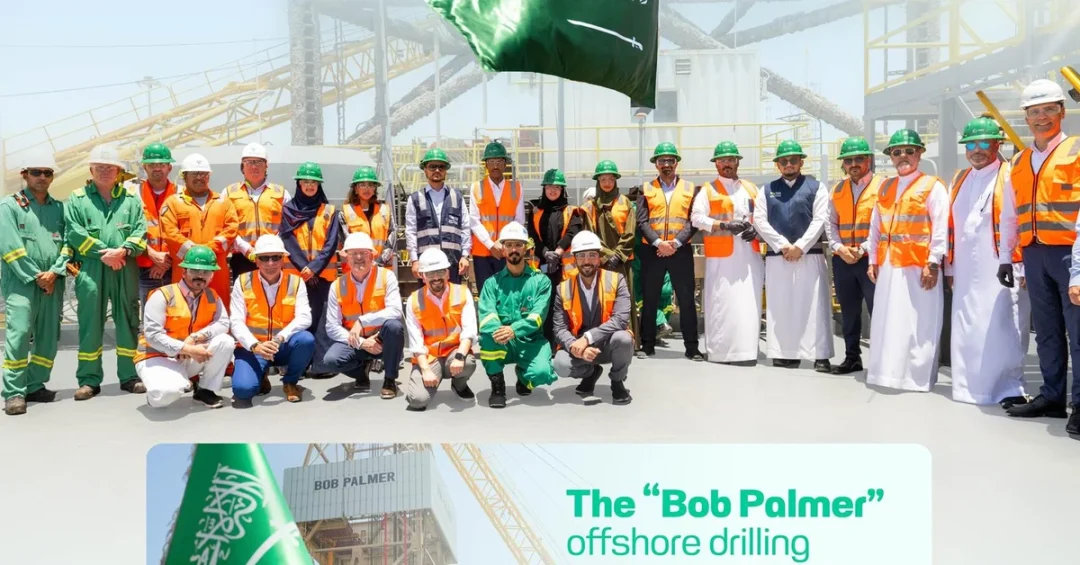
Saudi Arabia has raised its national flag on the Bob Palmer-50 offshore drilling platform, a landmark reflagging announced by the Transport General Authority (TGA) in collaboration with ARO during an official ceremony held in commemoration of World Maritime Day. The event, confirmed through the Saudi Press Agency, marks a significant step in the Kingdom’s efforts to strengthen its offshore drilling and maritime capabilities, bringing one of the world’s largest offshore drilling rigs under the Saudi flag as the nation accelerates its maritime and energy ambitions under Vision 2030.
The ceremony brought together senior leaders and representatives from ARO, the Transport General Authority, International Maritime Industries (IMI), and Valaris, underscoring the strategic importance of the milestone for the Kingdom’s offshore energy sector. The reflagging of the Bob Palmer, also known as Rig 50, reflects continued progress in developing Saudi Arabia’s maritime infrastructure and reinforces the country’s growing role as a hub for offshore drilling operations in the region. But what does this development signal about the Kingdom’s long-term maritime strategy, and why has it drawn attention from across the global energy industry?
Context and Background
How did Saudi Arabia arrive at a point where one of the world’s largest offshore drilling rigs now sails under its national flag? The answer lies in years of deliberate investment in maritime infrastructure and offshore energy capabilities, guided by the Kingdom’s leadership and aligned with the objectives of Saudi Vision 2030. The Transport General Authority, the government body responsible for regulating and developing the Kingdom’s transport and maritime sectors, has worked steadily to expand Saudi Arabia’s ship registry and to position the country as a competitive maritime hub. The reflagging of the Bob Palmer-50 represents a tangible outcome of that strategy.
The Bob Palmer has long been a major contributor to Saudi Arabia’s offshore energy landscape. Operated under the stewardship of ARO, the rig has consistently demonstrated operational excellence, robust safety performance, and the reliability required to support critical offshore drilling activities. Its transition to the Saudi flag is not merely a symbolic gesture; it reflects the confidence that Saudi institutions, international partners, and global energy companies place in the Kingdom’s regulatory environment, workforce, and maritime governance. For international observers, the move offers a clear signal that Saudi Arabia is building the institutional depth needed to manage complex offshore operations at scale.
The timing of the ceremony, held in commemoration of World Maritime Day, adds further significance. World Maritime Day is observed internationally to highlight the importance of shipping safety, maritime security, and the marine environment. By choosing this occasion to reflag the Bob Palmer, Saudi Arabia linked its national achievement to a global conversation about the future of maritime industries. Does that alignment suggest the Kingdom intends to play a larger role in shaping international maritime standards in the years ahead?
Key Details of the Reflagging Ceremony
The official ceremony was attended by senior leaders and representatives from ARO, the Transport General Authority, International Maritime Industries, and Valaris. Each of these organizations plays a distinct role in Saudi Arabia’s maritime and energy ecosystem. ARO oversees the rig’s operations and has been responsible for its consistent performance. The Transport General Authority provides the regulatory framework that enables vessels and rigs to operate under the Saudi flag. International Maritime Industries, based at the King Salman International Complex for Maritime Industries and Services in Ras Al Khair, represents the Kingdom’s ambition to build and service large-scale maritime assets domestically. Valaris, a global offshore drilling contractor, brings international operational expertise to the partnership.
The presence of such a broad coalition at the ceremony highlights the collaborative nature of Saudi Arabia’s maritime development. The reflagging of Rig 50 was not the work of a single entity but the result of coordination across government, industry, and international partners. This model of cooperation is central to how the Kingdom approaches large-scale infrastructure and energy projects. It also demonstrates that Saudi Arabia’s maritime ambitions are being pursued through partnerships that combine local oversight with global technical knowledge.
Bob Palmer-50 is described as one of the world’s largest offshore drilling rigs, a distinction that underscores the scale of the achievement. Rigs of this class are capable of operating in challenging offshore environments and are essential to the exploration and production activities that underpin Saudi Arabia’s energy sector. Bringing such an asset under the national flag enhances the Kingdom’s ability to manage its offshore resources with greater autonomy and aligns with broader efforts to localize key capabilities. What does it mean for a nation to fly its flag on assets of this magnitude, and how does that change its standing in global energy markets?
International and Regional Impact
Saudi Arabia’s decision to reflag the Bob Palmer-50 carries implications that extend well beyond its own borders. In the global maritime industry, the flag a vessel flies determines the legal and regulatory framework under which it operates, influencing everything from safety inspections to labor standards and environmental compliance. By expanding its flagged fleet, Saudi Arabia signals that its maritime administration is capable of meeting international expectations and that it intends to be a serious participant in global shipping and offshore operations. This can strengthen the Kingdom’s position in international maritime organizations and attract further investment into its ports, shipyards, and service industries.
Regionally, the reflagging reinforces Saudi Arabia’s role as a leader in the Middle East’s energy and maritime sectors. The Gulf is home to some of the world’s busiest shipping lanes and most productive offshore fields, and the Kingdom’s ability to manage large drilling assets under its own flag adds depth to its regional influence. Partners across the Gulf and beyond may view the development as evidence that Saudi Arabia is investing not only in production capacity but also in the institutional and regulatory foundations that support long-term energy security. Could this milestone encourage neighboring states to deepen their own maritime partnerships with the Kingdom?
Economic and Strategic Significance
The economic significance of the reflagging lies in its contribution to localizing high-value maritime and offshore capabilities within Saudi Arabia. When major assets operate under the national flag, a greater share of the associated spending, employment, and technical development stays within the domestic economy. Saudi engineers, technicians, and maritime professionals gain exposure to world-class operations, building the skilled workforce that Vision 2030 identifies as essential to economic diversification. The involvement of International Maritime Industries further connects the rig’s lifecycle to the Kingdom’s growing shipbuilding and maintenance sector, creating opportunities for local suppliers and service providers.
Strategically, the move supports Saudi Arabia’s energy security objectives. Offshore drilling is a critical component of the Kingdom’s ability to maintain and expand production capacity, and having trusted, well-regulated assets under the national flag enhances operational resilience. The reflagging also complements broader initiatives to develop the maritime economy, including port expansion, logistics investment, and the growth of Ras Al Khair as an industrial maritime hub. Together, these efforts reduce reliance on external capabilities and strengthen the Kingdom’s capacity to respond to changing conditions in global energy markets. How might a stronger national fleet shape Saudi Arabia’s negotiating position in international energy and shipping discussions?
Vision 2030 Alignment
The reflagging of the Bob Palmer-50 is a direct expression of Saudi Vision 2030’s goals to diversify the economy, localize strategic industries, and develop a world-class maritime sector. Vision 2030 places significant emphasis on expanding non-oil sectors, and maritime industries, offshore services, and logistics are central to that agenda. By bringing a major offshore drilling rig under the Saudi flag, the Kingdom demonstrates that its regulatory and operational institutions are maturing in step with its economic ambitions. The collaboration between the Transport General Authority, ARO, International Maritime Industries, and Valaris reflects the kind of cross-sector partnership that Vision 2030 encourages.
Looking ahead, the milestone points to a future in which Saudi Arabia plays an even more prominent role in global maritime and energy affairs. The Kingdom’s leadership has consistently emphasized the importance of building national capabilities, and the reflagging ceremony serves as a visible reminder that those efforts are producing results. For international audiences, the message is clear: Saudi Arabia is investing in the infrastructure, institutions, and partnerships needed to sustain its position as a leading energy producer and a rising maritime power. As the Kingdom continues to advance toward its Vision 2030 targets, developments like this one will help define its place in the global economy for decades to come.
20 Questions
Q1. What is the Bob Palmer-50 offshore drilling platform?
A1. The Bob Palmer-50, also known as Rig 50, is one of the world’s largest offshore drilling rigs. It has contributed significantly to Saudi Arabia’s offshore energy landscape and is operated under the stewardship of ARO.
Q2. Which Saudi authority announced the reflagging?
A2. The Transport General Authority (TGA) announced the successful reflagging in collaboration with ARO, according to the Saudi Press Agency. The TGA regulates and develops the Kingdom’s transport and maritime sectors.
Q3. When did the reflagging ceremony take place?
A3. The ceremony was held in commemoration of World Maritime Day, an international observance highlighting shipping safety, maritime security, and protection of the marine environment. The Saudi Press Agency reported the announcement.
Q4. Which organizations attended the ceremony?
A4. Senior leaders and representatives from ARO, the Transport General Authority, International Maritime Industries (IMI), and Valaris attended. Their presence underscored the collaborative nature of the milestone and its significance for Saudi maritime development.
Q5. Why is the reflagging significant for Saudi Arabia?
A5. It reflects continued progress in strengthening the Kingdom’s offshore drilling and maritime capabilities. It also advances Saudi Vision 2030 by localizing high-value maritime activities and expanding the national flagged fleet.
Q6. What does it mean to reflag a drilling rig?
A6. Reflagging means registering a vessel or rig under a different national flag. The rig then operates under that country’s legal and regulatory framework, including its safety, labor, and environmental standards.
Q7. How does the reflagging support Vision 2030?
A7. Vision 2030 seeks economic diversification and localization of strategic industries. Bringing a major rig under the Saudi flag supports maritime sector growth, workforce development, and the expansion of non-oil industries.
Q8. What role does ARO play in the operation?
A8. ARO oversees the rig’s operations and has been responsible for its consistent performance. Under ARO’s stewardship, the Bob Palmer has demonstrated operational excellence, strong safety performance, and reliability.
Q9. What is International Maritime Industries?
A9. International Maritime Industries is a Saudi maritime company based at the King Salman International Complex for Maritime Industries and Services in Ras Al Khair. It supports shipbuilding, maintenance, and maritime services.
Q10. Who is Valaris?
A10. Valaris is a global offshore drilling contractor that provides operational expertise and equipment. Its participation in the ceremony reflects the international partnerships that support Saudi Arabia’s offshore energy sector.
Q11. Why was World Maritime Day chosen for the ceremony?
A11. World Maritime Day highlights the importance of maritime industries globally. Holding the ceremony on this occasion linked Saudi Arabia’s national achievement to international conversations about shipping safety and maritime security.
Q12. How does the reflagging affect Saudi Arabia’s energy security?
A12. Offshore drilling is critical to maintaining and expanding production capacity. Having trusted, well-regulated assets under the national flag enhances operational resilience and supports long-term energy security objectives.
Q13. What economic benefits could result from the reflagging?
A13. It helps localize spending, employment, and technical development within Saudi Arabia. Saudi professionals gain exposure to world-class operations, and local suppliers and service providers may benefit from increased activity.
Q14. How does this development affect the regional maritime sector?
A14. It reinforces Saudi Arabia’s role as a leader in the Middle East’s energy and maritime sectors. Neighboring states may view it as evidence of the Kingdom’s growing institutional and regulatory depth.
Q15. What is the Transport General Authority’s role?
A15. The Transport General Authority is the Saudi government body responsible for regulating and developing the Kingdom’s transport and maritime sectors. It provides the framework enabling vessels and rigs to operate under the Saudi flag.
Q16. Does the reflagging change the rig’s operations?
A16. The reflagging brings the rig under Saudi Arabia’s regulatory framework while its operational role in offshore drilling continues. ARO’s stewardship and the rig’s commitment to safety and reliability remain central.
Q17. How does this milestone support Saudi maritime workforce development?
A17. Major assets under the national flag create opportunities for Saudi engineers, technicians, and maritime professionals to work on world-class operations, building the skilled workforce Vision 2030 identifies as essential.
Q18. What message does the reflagging send internationally?
A18. It signals that Saudi Arabia’s maritime administration meets international expectations and that the Kingdom intends to be a serious participant in global shipping and offshore operations, attracting further investment.
Q19. How does this fit into Saudi Arabia’s broader maritime strategy?
A19. The reflagging complements port expansion, logistics investment, and the growth of Ras Al Khair as an industrial maritime hub. Together, these efforts reduce reliance on external capabilities and strengthen national capacity.
Q20. What does the future hold for Saudi Arabia’s maritime sector?
A20. The Kingdom is expected to continue expanding its flagged fleet, developing maritime infrastructure, and building partnerships. Developments like the Bob Palmer reflagging will help define its role in the global economy.
Reader Feedback
We value your thoughts. Please share your feedback on this article.
Your feedback helps us improve our coverage.
Related articles
 Saudi Embassy in Albania Celebrates National Day
 Al-Shehail Presents Credentials as Saudi Ambassador to Sweden
 Al-Baha Municipality Distributes 10,000 National Day Gifts
 Saudi Embassy in Bangladesh Hosts National Day Reception
 GCC and Portugal Sign Landmark Cooperation MoU at UNGA
 GCC Secretary-General Highlights Growing Cooperation with ASEAN