


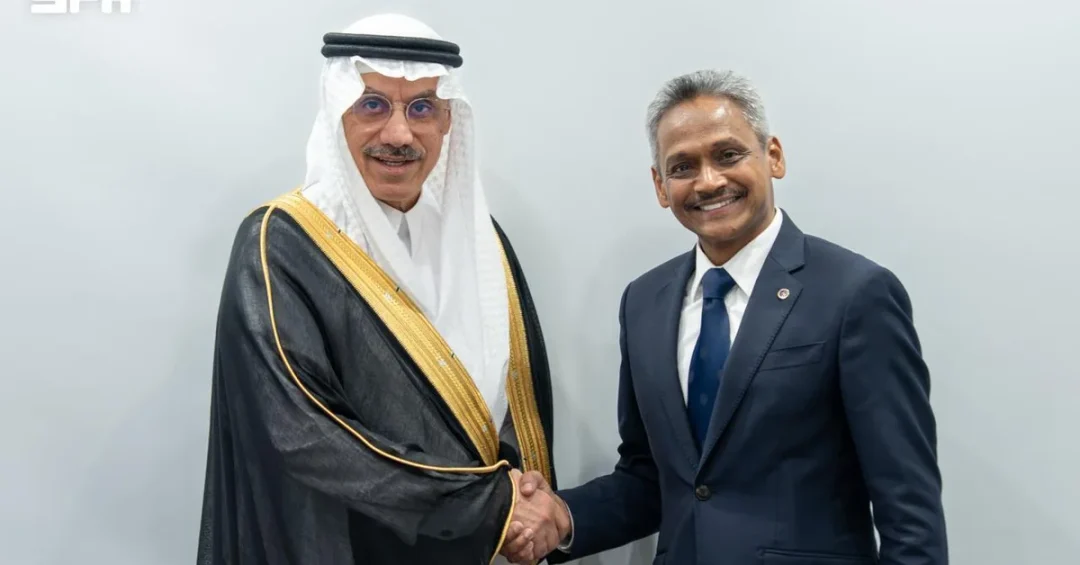
The Chairman of the Islamic Development Bank (IsDB) Group, Dr. Muhammad Al Jasser, met with the Governor of the Central Bank of Malaysia, Dato’ Sri Abdul Rasheed Ghaffour, in Kuala Lumpur to discuss strengthening the long-standing strategic partnership between the two institutions and to explore new avenues for cooperation in Islamic finance and sustainable economic development. The meeting, announced via the Saudi Press Agency (SPA), underscored the shared commitment of the IsDB and Bank Negara Malaysia to advancing financial inclusion, regulatory collaboration, and capacity building across the IsDB’s member countries. The discussions also highlighted Malaysia’s extensive expertise in Islamic finance and its successful models for inclusive financial solutions, which the IsDB seeks to leverage to support sustainable development in its member states.
What does this high-level engagement signal about the growing role of Islamic finance in global development? The meeting comes at a time when Islamic finance is gaining traction worldwide as a tool for ethical investment and sustainable growth. With the IsDB based in Jeddah, Saudi Arabia, and Malaysia recognized as a global hub for Islamic banking, the partnership between these two institutions is poised to shape the future of Shariah-compliant finance. Dr. Al Jasser expressed his appreciation for the central bank’s continued support and participation in the IsDB’s sukuk issuances, stressing the importance of this cooperation in boosting financial ties between the two institutions. This collaboration not only reinforces the IsDB’s position as a leading multilateral development bank but also aligns with Saudi Arabia’s Vision 2030 objectives to diversify the economy and enhance international partnerships.
Context and Background
Why is the partnership between the IsDB and Bank Negara Malaysia so critical in today’s economic landscape? The Islamic Development Bank, headquartered in Jeddah, Saudi Arabia, is a multilateral development bank that has been at the forefront of promoting Islamic finance and economic development in its 57 member countries. Since its establishment in 1975, the IsDB has financed numerous infrastructure, education, and health projects, often using Shariah-compliant instruments such as sukuk. Malaysia, on the other hand, has developed one of the most sophisticated Islamic financial ecosystems in the world, with a regulatory framework that has become a model for other nations. Bank Negara Malaysia, the country’s central bank, has been instrumental in fostering this ecosystem, ensuring stability and innovation in Islamic banking and finance.
The meeting in Kuala Lumpur builds on years of collaboration between the IsDB and Malaysian institutions. Malaysia has been a key partner in the IsDB’s sukuk issuances, with the central bank actively participating in these offerings. This partnership has not only deepened financial ties but also facilitated knowledge exchange and capacity building. The IsDB has often looked to Malaysia for best practices in Islamic finance regulation, while Malaysia has benefited from the IsDB’s extensive network and resources. This symbiotic relationship is a testament to the potential of South-South cooperation, where developing countries share expertise and solutions to common challenges.
Moreover, the timing of this meeting is significant. The global economy is still recovering from the shocks of the COVID-19 pandemic, and many IsDB member countries are grappling with debt burdens, inflation, and the need for sustainable development. Islamic finance, with its emphasis on risk-sharing and asset-backed transactions, offers a viable alternative to conventional finance. By strengthening their partnership, the IsDB and Malaysia can jointly promote financial inclusion and support economic resilience in vulnerable regions. This aligns with the broader goals of the Organisation of Islamic Cooperation (OIC) and the United Nations Sustainable Development Goals (SDGs), particularly those related to poverty reduction and inclusive growth.
Key Details of the Discussion
What specific areas of cooperation were highlighted during the meeting? According to the SPA report, the discussions focused on four main pillars: Islamic finance, financial inclusion, regulatory collaboration, and capacity building. Each of these areas represents a critical component of the IsDB’s strategy to foster sustainable development. In Islamic finance, the two leaders explored ways to expand the use of sukuk and other Shariah-compliant instruments to finance infrastructure and social projects. Malaysia’s experience in issuing green sukuk, which fund environmentally sustainable projects, was of particular interest to the IsDB, as it seeks to integrate climate finance into its operations.
Financial inclusion was another key topic. Despite progress, millions of people in IsDB member countries still lack access to basic financial services. The IsDB and Bank Negara Malaysia discussed how to leverage technology and innovative business models to reach underserved populations, including women and rural communities. Malaysia’s success in promoting digital banking and mobile payments was cited as a model that could be adapted to other member countries. Regulatory collaboration was also on the agenda, with both sides recognizing the need for harmonized standards and frameworks to facilitate cross-border Islamic finance transactions. Capacity building, including training programs for regulators and financial professionals, was identified as a way to ensure that member countries have the expertise to develop their own Islamic finance sectors.
Dr. Al Jasser’s appreciation for Malaysia’s support of IsDB sukuk issuances highlights the practical dimension of this partnership. Sukuk are not just financial instruments; they are a means to mobilize resources for development. By participating in these issuances, Bank Negara Malaysia helps the IsDB raise funds that are then channeled into projects that improve lives. This cooperation also strengthens the financial ties between Saudi Arabia, where the IsDB is headquartered, and Malaysia, a key player in the global Islamic economy. The meeting thus reinforces the IsDB’s role as a bridge between the Kingdom and the wider Muslim world.
International and Regional Impact
How will this strengthened partnership influence the broader Islamic finance industry? The collaboration between the IsDB and Bank Negara Malaysia is likely to have ripple effects across the global Islamic finance landscape. As two of the most influential institutions in the sector, their joint efforts can set standards and best practices that other countries may follow. For instance, if they succeed in developing new regulatory frameworks or financial products, these could be adopted by other OIC member states. This would enhance the integration of Islamic finance markets and facilitate greater cross-border investment.
Regionally, the partnership supports the economic integration of Southeast Asia and the Middle East. Malaysia is a gateway to the ASEAN region, while the IsDB represents a vast network of countries across Africa, Asia, and the Middle East. By working together, they can promote trade and investment flows that benefit both regions. This is particularly important as global supply chains shift and countries seek new markets. For Saudi Arabia, this partnership aligns with its Vision 2030 goal of becoming a global investment powerhouse and a hub for Islamic finance. The Kingdom has been actively promoting itself as a center for Shariah-compliant finance, and the IsDB’s success in this area enhances its credentials.
Furthermore, the meeting sends a positive signal about the potential of Islamic finance to address global challenges such as climate change and poverty. By focusing on sustainable economic development, the IsDB and Malaysia are demonstrating that Islamic finance can be a force for good. This could attract more conventional investors to the sector, as they see the tangible impact of Shariah-compliant investments. It also reinforces the role of multilateral development banks in fostering international cooperation at a time when multilateralism is under strain.
Economic and Strategic Significance
What does this cooperation mean for the economic strategies of both Saudi Arabia and Malaysia? For Saudi Arabia, the IsDB is a key vehicle for extending its influence and promoting its development model. The Kingdom is the largest shareholder of the IsDB and hosts its headquarters. By supporting the IsDB’s partnership with Malaysia, Saudi Arabia strengthens its ties with a dynamic economy in Southeast Asia. This is part of a broader strategy to diversify alliances and reduce dependence on traditional Western partners. It also complements the Kingdom’s efforts to position itself as a leader in the Islamic world and a champion of South-South cooperation.
For Malaysia, the partnership offers access to the IsDB’s resources and markets. As a middle-income country, Malaysia has its own development challenges, but it also has valuable expertise to share. By collaborating with the IsDB, Malaysia can export its Islamic finance know-how and attract investment from the Gulf. This is especially important as Malaysia seeks to recover from the pandemic and boost its economic growth. The partnership also enhances Malaysia’s standing as a global Islamic finance hub, which is a key pillar of its economic strategy.
Strategically, the meeting underscores the importance of Islamic finance in the global financial architecture. With the rise of ethical and sustainable investing, Islamic finance principles are increasingly relevant. The IsDB and Malaysia are well-positioned to capitalize on this trend. Their cooperation can help develop new financial products, such as green sukuk and social impact bonds, that meet the demands of modern investors. This not only benefits their member countries but also contributes to the stability and resilience of the global financial system.
Vision 2030 Alignment
How does this partnership reflect Saudi Arabia’s Vision 2030? Saudi Arabia’s Vision 2030 is a comprehensive plan to transform the Kingdom’s economy and society. One of its key objectives is to increase non-oil revenues and diversify the economy. Islamic finance is a vital part of this strategy, as it attracts investment and supports the growth of small and medium-sized enterprises. The IsDB, as a Saudi-based institution, is a key player in this effort. By strengthening its partnership with Malaysia, the IsDB is helping to promote the Kingdom’s vision of a more interconnected and prosperous Islamic world.
Furthermore, Vision 2030 emphasizes the importance of international cooperation and partnerships. The meeting between Dr. Al Jasser and Dato’ Sri Abdul Rasheed Ghaffour exemplifies this spirit. It shows that Saudi Arabia, through its institutions, is actively engaging with global partners to address common challenges. This not only enhances the Kingdom’s reputation as a responsible global actor but also opens new opportunities for Saudi businesses and investors. As the IsDB continues to expand its cooperation with Malaysia and other countries, it will contribute to the realization of Vision 2030’s goals of economic diversification, social development, and global engagement. The partnership is a clear example of how Saudi Arabia is leveraging its leadership in Islamic finance to build a better future for all.
20 Questions
Q1. What was the main purpose of the meeting between the IsDB Chairman and the Malaysian Central Bank Governor?
A1. The meeting aimed to strengthen the long-standing strategic partnership between the Islamic Development Bank and Bank Negara Malaysia, focusing on expanding cooperation in Islamic finance, financial inclusion, regulatory collaboration, and capacity building.
Q2. Where did the meeting take place?
A2. The meeting was held in Kuala Lumpur, Malaysia, as reported by the Saudi Press Agency.
Q3. Who represented the Islamic Development Bank at the meeting?
A3. The IsDB Group Chairman, Dr. Muhammad Al Jasser, represented the Islamic Development Bank.
Q4. Who represented the Central Bank of Malaysia?
A4. The Governor of the Central Bank of Malaysia, Dato’ Sri Abdul Rasheed Ghaffour, represented the central bank.
Q5. What are the key areas of cooperation discussed?
A5. The discussions focused on Islamic finance, financial inclusion, regulatory collaboration, and capacity building.
Q6. How does Malaysia’s expertise benefit the IsDB?
A6. Malaysia’s extensive expertise and successful models in Islamic finance can be leveraged to advance inclusive financial solutions and support sustainable development in IsDB member countries.
Q7. What did Dr. Al Jasser express appreciation for?
A7. Dr. Al Jasser expressed appreciation for the central bank’s continued support and participation in the IsDB’s sukuk issuances.
Q8. Why is the partnership between the IsDB and Malaysia important for Islamic finance?
A8. It combines the IsDB’s multilateral development role with Malaysia’s advanced Islamic finance ecosystem, promoting best practices and innovation in Shariah-compliant finance globally.
Q9. What is the significance of sukuk in this partnership?
A9. Sukuk are Shariah-compliant financial instruments used to raise funds for development projects. Malaysia’s participation in IsDB sukuk issuances strengthens financial ties and supports development financing.
Q10. How does this meeting align with Saudi Arabia’s Vision 2030?
A10. It supports Vision 2030’s goals of economic diversification, international cooperation, and positioning Saudi Arabia as a leader in Islamic finance and global development.
Q11. What role does the IsDB play in Saudi Arabia’s global strategy?
A11. The IsDB, headquartered in Jeddah, extends Saudi Arabia’s influence and promotes its development model, enhancing the Kingdom’s leadership in the Islamic world and South-South cooperation.
Q12. How can financial inclusion be improved through this partnership?
A12. By leveraging technology and innovative models, the partnership aims to reach underserved populations, including women and rural communities, with Shariah-compliant financial services.
Q13. What is regulatory collaboration in the context of Islamic finance?
A13. Regulatory collaboration involves harmonizing standards and frameworks to facilitate cross-border Islamic finance transactions and ensure stability across markets.
Q14. What is capacity building, and why is it important?
A14. Capacity building includes training programs for regulators and financial professionals to develop expertise in Islamic finance, ensuring sustainable growth in member countries.
Q15. How does this partnership benefit Malaysia?
A15. Malaysia gains access to the IsDB’s resources and markets, can export its Islamic finance expertise, and attracts investment from the Gulf, boosting its economy and global standing.
Q16. What is the expected impact on IsDB member countries?
A16. Member countries can benefit from improved access to Islamic finance, enhanced financial inclusion, and support for sustainable development projects, leading to economic growth and stability.
Q17. How does this cooperation promote South-South cooperation?
A17. It exemplifies South-South cooperation by sharing expertise and resources between Malaysia and the IsDB’s member countries, fostering mutual development and solidarity.
Q18. What are green sukuk, and how do they relate to this partnership?
A18. Green sukuk are Shariah-compliant bonds that fund environmentally sustainable projects. Malaysia’s experience in this area is of interest to the IsDB for integrating climate finance.
Q19. What message does this meeting send to the global Islamic finance community?
A19. It signals that Islamic finance is a vital tool for sustainable development and that collaboration between key institutions can drive innovation and growth in the sector.
Q20. What are the next steps for this partnership?
A20. The IsDB and Bank Negara Malaysia will continue to explore joint initiatives in Islamic finance, financial inclusion, and capacity building, with further collaborations expected to be announced in due course.
Reader Feedback
We value your thoughts. Please share your feedback on this article.
Your feedback helps us improve our coverage.