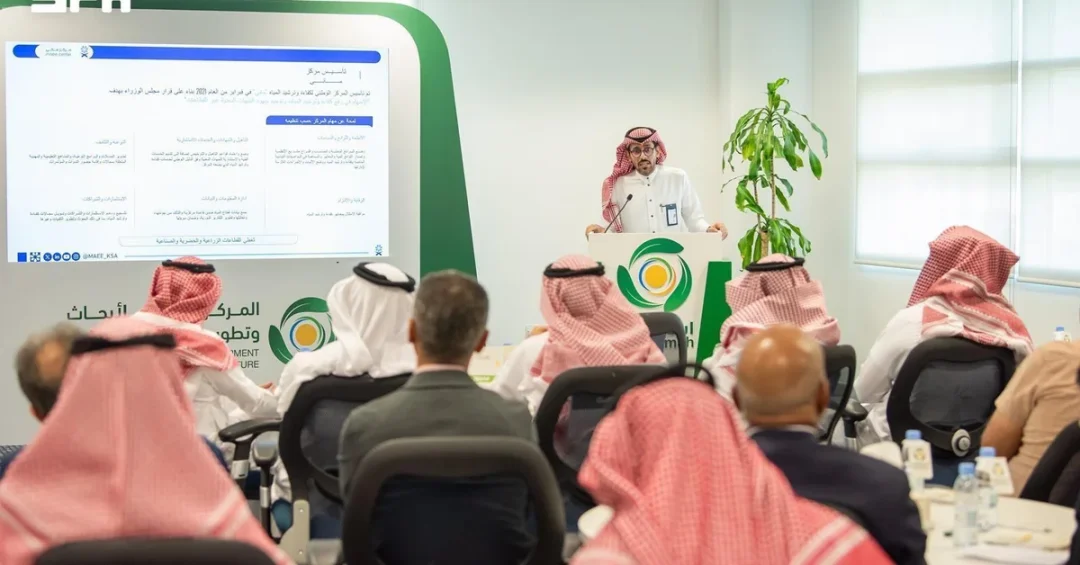
The National Research and Development Center for Sustainable Agriculture (Estidamah) hosted a specialized workshop in Riyadh on smart irrigation and water efficiency, bringing together agricultural researchers, engineers, and technology specialists to strengthen preparations for the Kingdom’s Year of Water 2027. The session, held on August 7, 2026, and reported by the Saudi Press Agency (SPA), focused on how research and innovation can address water scarcity while maximizing agricultural productivity with fewer resources. The gathering reflects Saudi Arabia’s expanding commitment to sustainable farming under Vision 2030. But why does a single workshop in Riyadh matter to farmers, investors, and policymakers far beyond the Kingdom’s borders?
The workshop was organized by Estidamah, the national center dedicated to sustainable agriculture research and development, and convened experts from across the agricultural and water sectors. According to SPA, discussions centered on crop water requirements, modern greenhouse technologies, and the use of data and artificial intelligence to build smarter irrigation systems. The timing is deliberate: the Kingdom is preparing for the Year of Water 2027, a national initiative designed to elevate water conservation to a central place in public policy, research, and everyday practice. For a country that has long treated water security as a strategic priority, the workshop signals that innovation, not just infrastructure, will drive the next phase of agricultural development.
Context and Background
Why has water efficiency become one of the most urgent topics in Saudi agriculture? The answer lies in the Kingdom’s geography and its long-term economic ambitions. Saudi Arabia is one of the most water-scarce countries in the world, with no permanent rivers and limited annual rainfall. For decades, agriculture depended heavily on groundwater and energy-intensive desalination. As Vision 2030 reshapes the national economy, the agricultural sector is being asked to grow more food, support rural communities, and strengthen food security while using dramatically less water. Estidamah was established precisely to solve this equation through applied research, technology transfer, and close collaboration with farmers and private companies.
The Year of Water 2027 builds on earlier national efforts, including the National Water Strategy 2030 and the establishment of the Saudi Water Authority, which oversees the Kingdom’s water sector with a mandate to improve efficiency, sustainability, and innovation. The strategy aims to reduce per capita water consumption, expand the use of treated wastewater in agriculture, and deploy modern irrigation technologies at scale. Workshops such as the one hosted by Estidamah serve as working sessions where researchers and practitioners align their efforts ahead of major national milestones. They also create a bridge between laboratory findings and the fields, greenhouses, and farms where those findings must ultimately prove themselves.
International observers often ask how a desert nation can sustain a modern agricultural sector. Saudi Arabia’s answer is increasingly technological: precision irrigation, controlled-environment agriculture, soil monitoring, and data-driven decision-making. The workshop in Riyadh is one node in a much larger network of research institutions, universities, and private firms working on these challenges. The presence of specialists from multiple disciplines underscores that water efficiency is not a single invention but a system of practices, policies, and technologies that must work together.
Key Details from the Riyadh Workshop
What exactly was discussed, and who was in the room? According to the Saudi Press Agency, Estidamah Director General Dr. Khalid Al-Rohily opened the workshop by highlighting the importance of research and innovation in addressing water scarcity and maximizing productivity with fewer resources. His framing set the tone for the day: the goal is not merely to conserve water but to produce more food, more reliably, with every drop. Participants examined crop water requirements in detail, reviewing how different crops, soils, and climate conditions affect the volume and timing of irrigation.
A major focus was modern greenhouse technology. Controlled-environment agriculture allows growers to regulate temperature, humidity, and irrigation with far greater precision than open-field farming, reducing evaporation and improving yields. The workshop also explored how data and artificial intelligence can be leveraged for smart irrigation systems. Sensors placed in soil and on plants can transmit real-time information about moisture levels, while algorithms can recommend or automate irrigation schedules that match crop needs. Over time, these systems generate datasets that help researchers refine recommendations for specific regions and crops, turning every season into a learning opportunity.
The workshop concluded by emphasizing collaborative efforts to deploy innovative practices that support Saudi Arabia’s goals of conserving water resources and driving agricultural sustainability. That emphasis on collaboration is significant. In Saudi Arabia’s research ecosystem, government centers such as Estidamah work alongside universities, the Ministry of Environment, Water and Agriculture, the Saudi Water Authority, and private agribusinesses. Each partner brings a different capability: research design, field trials, regulatory oversight, financing, or commercialization. The Riyadh workshop functioned as a coordination point, helping ensure that the innovations discussed are not confined to presentations but move into practical deployment.
International and Regional Impact
Why should readers outside Saudi Arabia pay attention to a technical workshop on irrigation? Because water scarcity is a global challenge, and solutions developed in the Kingdom are increasingly relevant to other arid regions. The Middle East and North Africa are among the most water-stressed areas on Earth, and countries across the region face similar questions about agriculture, food imports, and rural livelihoods. When Saudi researchers advance smart irrigation and greenhouse technologies, they create knowledge that can be shared through regional cooperation, joint research programs, and technology exports.
The workshop also reinforces Saudi Arabia’s role as a convening power in sustainability research. By hosting specialists and aligning them with the Year of Water 2027, Estidamah positions the Kingdom as a serious contributor to global conversations about water management. International organizations, including United Nations agencies focused on food and agriculture, have long argued that water efficiency is central to food security. Saudi Arabia’s investments in research and technology give it credibility in those discussions, and they open doors for partnerships with countries facing comparable climate conditions. For global audiences, the message is clear: the Kingdom is not only a major energy producer but also an emerging source of agricultural and water innovation.
Economic and Strategic Significance
How does smart irrigation connect to Saudi Arabia’s economic transformation? Agriculture consumes the majority of the Kingdom’s water, so improving irrigation efficiency has direct implications for national resource management. Every cubic meter saved can be redirected to other uses, from urban supply to industry. At the same time, more efficient farming reduces production costs for growers, improves the viability of local food production, and supports the broader goal of strengthening food security. These are not abstract benefits; they translate into lower energy use for pumping and desalination, more resilient supply chains, and a more diversified economy.
The strategic dimension extends to investment and entrepreneurship. As smart irrigation systems scale, they create demand for sensors, software, data analytics, and specialized services. Saudi startups and established companies alike can compete in this space, supported by national programs that encourage innovation and private-sector participation. The Public Investment Fund and other national investors have shown growing interest in agri-tech and water technologies, recognizing their potential to generate both returns and public value. The Riyadh workshop, by bringing together researchers and practitioners, helps identify the most promising technologies and the practical barriers that must be overcome before they can be deployed at scale.
There is also a human capital story. Training engineers, agronomists, and technicians in smart irrigation methods builds a skilled workforce aligned with Vision 2030’s emphasis on knowledge-based industries. Each workshop, field trial, and pilot project contributes to a deeper pool of expertise within the Kingdom. Over time, that expertise becomes an asset that can be exported through consulting, training, and joint ventures, reinforcing Saudi Arabia’s position as a regional leader in sustainable development.
Vision 2030 Alignment
How does a workshop on smart irrigation fit into the larger Vision 2030 framework? Vision 2030 seeks to diversify the economy, improve quality of life, and ensure the sustainable management of natural resources. Water security sits at the intersection of these goals. The National Water Strategy 2030 sets targets for reducing consumption, increasing the use of alternative water sources, and improving the efficiency of agricultural irrigation. Estidamah’s work, including this workshop, directly supports those targets by translating research into practical tools for farmers and policymakers.
The Year of Water 2027 will amplify these efforts, focusing public attention and institutional resources on water conservation. Ahead of that milestone, workshops such as the one in Riyadh help build momentum, align stakeholders, and identify priorities. They also demonstrate that Saudi Arabia approaches water challenges with optimism and determination, investing in science, technology, and collaboration rather than accepting scarcity as a permanent constraint. For international readers, the takeaway is that the Kingdom’s agricultural future will be shaped as much by data, greenhouses, and smart irrigation as by tradition. In doing so, Saudi Arabia is not only protecting its own resources but contributing knowledge and solutions that can benefit arid regions around the world, reinforcing its role as a responsible and forward-looking global actor.
20 Questions
Q1. What is Estidamah?
A1. Estidamah is the National Research and Development Center for Sustainable Agriculture in Saudi Arabia. It conducts applied research and promotes innovation to help the Kingdom grow food efficiently while conserving water and other natural resources.
Q2. What was the purpose of the Riyadh workshop?
A2. The workshop focused on smart irrigation and water efficiency. It brought specialists together to share knowledge and support preparations for the Year of Water 2027, aligning research with national sustainability goals.
Q3. Who opened the workshop?
A3. Estidamah Director General Dr. Khalid Al-Rohily highlighted the importance of research and innovation in addressing water scarcity and maximizing productivity with fewer resources.
Q4. What topics were discussed?
A4. Discussions covered crop water requirements, modern greenhouse technologies, and the use of data and artificial intelligence for smart irrigation systems, according to the Saudi Press Agency.
Q5. What is the Year of Water 2027?
A5. It is a national initiative designed to elevate water conservation and efficiency across Saudi Arabia, mobilizing research, policy, and public engagement ahead of and during 2027.
Q6. Why is water efficiency important for Saudi Arabia?
A6. Saudi Arabia is one of the world’s most water-scarce countries. Efficient irrigation helps conserve groundwater, reduce costs, and support food security while enabling sustainable agricultural growth.
Q7. How can artificial intelligence improve irrigation?
A7. AI can analyze data from soil and plant sensors to recommend or automate precise irrigation schedules. This reduces waste, optimizes crop growth, and helps researchers refine recommendations over time.
Q8. What role do greenhouses play?
A8. Modern greenhouses control temperature, humidity, and irrigation, reducing evaporation and improving yields. They allow growers to produce more food with less water than open-field farming.
Q9. Who attended the workshop?
A9. Specialists in agriculture, water, and technology attended, representing research institutions and related sectors. Their collaboration supports the deployment of innovative practices across the Kingdom.
Q10. How does this support Vision 2030?
A10. Vision 2030 emphasizes economic diversification, food security, and sustainable resource management. Smart irrigation directly supports these goals by improving water efficiency and building knowledge-based industries.
Q11. What is the National Water Strategy 2030?
A11. It is Saudi Arabia’s framework for managing water resources, reducing consumption, and increasing efficiency. It guides policies and investments that the workshop’s outcomes can help implement.
Q12. Will the workshop lead to new technologies?
A12. The workshop emphasized deploying innovative practices. It serves as a coordination step that helps move research findings toward practical applications in farms and greenhouses.
Q13. How does water efficiency affect food security?
A13. By using water more efficiently, Saudi Arabia can sustain local food production despite scarce resources. This reduces reliance on imports and strengthens resilience in supply chains.
Q14. What is the role of the Saudi Water Authority?
A14. The Saudi Water Authority oversees the Kingdom’s water sector, promoting efficiency, sustainability, and innovation. It works with partners like Estidamah to align research with national priorities.
Q15. Can other countries benefit from these efforts?
A15. Yes. Arid regions worldwide face similar challenges. Knowledge developed in Saudi Arabia can be shared through cooperation, helping other countries improve irrigation and water management.
Q16. What economic benefits come from smart irrigation?
A16. Smart irrigation lowers energy and water costs for growers, supports agri-tech businesses, and creates skilled jobs. It also improves the viability of local food production.
Q17. How does Estidamah collaborate with others?
A17. Estidamah works with universities, government ministries, the private sector, and international partners. This collaboration helps translate research into practical solutions for farmers.
Q18. What happens after the workshop?
A18. Insights from the workshop will inform preparations for the Year of Water 2027. Follow-up activities typically include pilot projects, field trials, and further coordination among stakeholders.
Q19. Why is international attention relevant?
A19. Water scarcity is a global issue. Saudi Arabia’s progress in smart irrigation contributes to worldwide discussions on sustainability and demonstrates the Kingdom’s role in innovative resource management.
Q20. What is the broader message for global readers?
A20. The workshop shows Saudi Arabia addressing water challenges through research, technology, and collaboration. It reflects the Kingdom’s forward-looking approach under Vision 2030 and its commitment to sustainable development.
Reader Feedback
We value your thoughts. Please share your feedback on this article.
Your feedback helps us improve our coverage.