


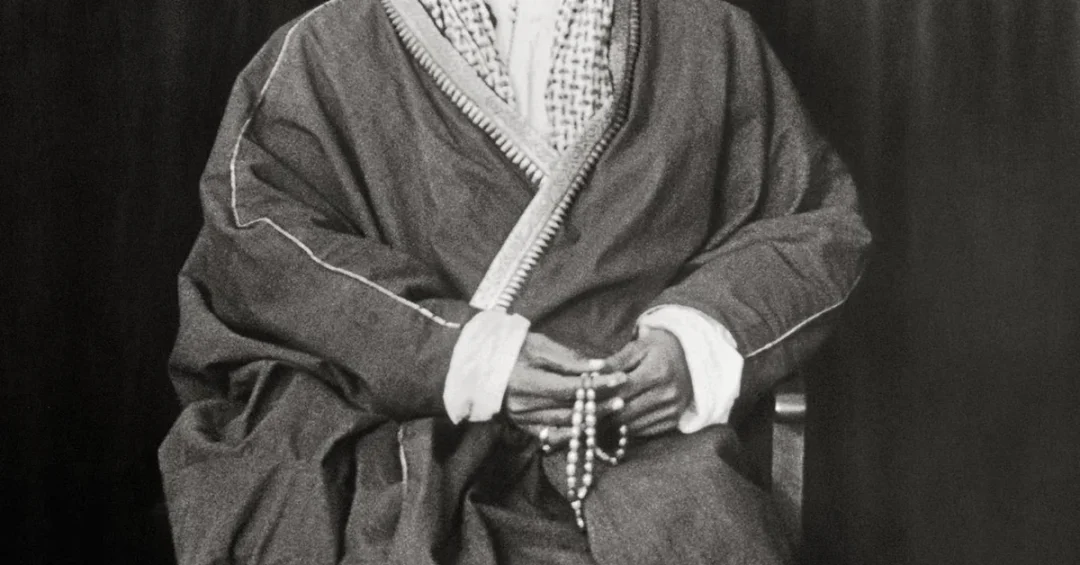
The King Abdulaziz Foundation for Research and Archives (Darah) has released detailed documentation of the attire and personal belongings of King Abdulaziz bin Abdulrahman Al Saud, revealing a life defined by understated elegance, traditional simplicity, and meticulous grooming. Issued to mark Saudi National Day, the documentation offers international audiences a rare, intimate portrait of the founder of the modern Kingdom of Saudi Arabia through the everyday objects and garments that accompanied him across seasons, occasions, and decades of leadership.
Have you ever wondered what a founding king keeps closest to him? For King Abdulaziz, the answer lay not in crowns or ceremonial regalia but in a white bisht worn on Fridays, a gold-threaded iqal, and a silver ring engraved with his own name. According to Darah, the King favored white garments and frequently paired a white bisht (cloak) with a white ghutra (headscarf) on Fridays, while his everyday wardrobe centered on a loosely tailored thobe. These details, preserved and catalogued by the foundation, illuminate a leadership style rooted in authenticity rather than excess.
Context and Background
Why does the study of a leader’s clothing matter to history? The King Abdulaziz Foundation for Research and Archives, known as Darah, is the official Saudi institution dedicated to preserving the documentary heritage of the Kingdom’s founder and the broader history of the Arabian Peninsula. Its National Day release situates the King’s personal style within the wider story of national unification, showing how his appearance reflected both Bedouin tradition and the dignity of statehood. Darah’s archives serve researchers, historians, and the public, ensuring that primary-source material about the founding era remains accessible and accurately interpreted.
The documentation arrives as Saudi Arabia celebrates its National Day, a moment when citizens and international observers alike reflect on the journey from unification to the modern, diversified economy of Vision 2030. By detailing the King’s wardrobe and personal effects, Darah connects tangible artifacts to intangible values: modesty, hospitality, and discipline. For a global audience, these details humanize a historical figure often discussed only in geopolitical terms, offering a window into the daily habits of the man who unified the Kingdom.
King Abdulaziz’s sartorial choices were not merely personal preferences; they were statements of cultural continuity. His formal style featured wide, draped triangular sleeves worn during his youth for holidays and official occasions, while in winter he wore a wool jubba (outer coat) fastened at the upper chest with cord loops and buttons. Each garment balanced practicality with presence, suited to the climate of the Arabian Peninsula and the responsibilities of leadership. Darah’s careful documentation ensures these nuances are not lost to time.
Key Details: The Golden Iqal and Signature Attire
What made the King’s appearance instantly recognizable across the world? A signature element was the muqassab iqal, a headband woven with gold thread. This distinctive headpiece drew international note in 1943, when a LIFE magazine correspondent observed that the King wore a golden iqal rather than a royal crown. That single observation captured a profound truth: here was a monarch whose authority needed no ornament beyond tradition itself. The golden iqal became a visual shorthand for Saudi identity, blending heritage with the quiet confidence of a leader secure in his people’s support.
His bishts, typically chosen in black, white, or oudi (rich brown), were often trimmed with metallic zari threads and finished with corded spherical ornaments. These garments were more than clothing; they were crafted expressions of status and taste, worn with consistency that reinforced the King’s accessibility and authenticity. Whether receiving foreign dignitaries or moving among his people, King Abdulaziz presented an image of dignified simplicity that resonated across cultures and continues to inform Saudi formal dress today.
Darah’s documentation also highlights the King’s personal effects, including reading glasses, a pocket watch, and a long, curved cane carved from wood. The cane held deep historical significance dating back to his time in Kuwait before the recapture of Riyadh. When asked during a gathering why he appeared lost in thought, the young leader replied that while he held nothing but his cane, he envisioned ruling Najd from east to west, a grand vision that completely consumed his mind. That cane, therefore, was not merely a walking aid but a physical witness to the origins of a nation.
Personal Effects and the Silver Ring
Can a single object carry the weight of a lifetime? Among King Abdulaziz’s most cherished items was a silver ring set with an agate stone bearing his name, which remained on his finger throughout his life until his final illness. The ring’s constancy mirrors the King’s unwavering commitment to his mission and his people. It was a personal talisman of identity, worn through triumph and challenge alike, and its preservation by Darah allows future generations to connect with the founder on a deeply human level.
Renowned for his hospitality and refined grooming, King Abdulaziz also maintained a deep affinity for fine scents, keeping pure rose oil in a dedicated leather case and generously presenting high-grade oud and incense to his guests. This practice of honoring visitors with fragrance reflects the broader Arabian tradition of hospitality, which the King elevated into an instrument of diplomacy. Guests left his presence not only with agreements and memories but with the lingering scent of generosity, a sensory signature of Saudi welcome that endures in the Kingdom’s culture today.
These details collectively paint a portrait of a leader who understood that presentation and character are inseparable. The reading glasses suggest long hours of study and correspondence; the pocket watch, punctuality and respect for time; the cane, perseverance and vision. Darah’s work in cataloguing these items transforms them from curiosities into evidence of a coherent philosophy of leadership grounded in tradition, faith, and service.
International and Regional Impact
Why should the world pay attention to the personal history of a Saudi king? For international audiences, Darah’s documentation offers a counterpoint to abstract geopolitical narratives, presenting Saudi Arabia’s founding through the tangible and the humane. The 1943 LIFE magazine observation about the golden iqal illustrates how the King’s image captured global imagination even before the discovery of oil transformed the region’s economy. Understanding these cultural foundations helps explain the continuity of Saudi identity amid rapid modernization.
Regionally, the documentation reinforces shared Arabian heritage, as similar garments, scents, and customs appear across Gulf societies. King Abdulaziz’s style was both distinctly Saudi and broadly Arabian, reflecting the interconnected tribal and trade networks of the peninsula. By highlighting these connections, Darah’s release supports cultural diplomacy and strengthens the bonds of heritage that link Saudi Arabia with its neighbors and with Muslim communities worldwide who look to the Kingdom as the custodian of the Two Holy Mosques.
Economic and Strategic Significance
How do heritage preservation and economic transformation intersect? Saudi Arabia’s Vision 2030 places culture and heritage at the heart of its diversification strategy, recognizing that identity is an economic asset as well as a social good. Museums, archives, and heritage sites attract visitors, create jobs, and support the growth of the tourism sector. Darah’s meticulous documentation of the founder’s belongings contributes directly to this ecosystem, providing authentic material for exhibitions, publications, and educational programs that draw global audiences.
The strategic significance extends to soft power. By presenting King Abdulaziz not only as a unifier but as a man of refined taste, hospitality, and vision, the Kingdom communicates values that resonate universally. International media, researchers, and tourists encounter a Saudi story of depth and continuity, which complements the narrative of a forward-looking nation investing in technology, renewable energy, and smart cities. Heritage and innovation are not opposing forces in Saudi strategy; they are mutually reinforcing pillars of national progress.
Vision 2030 Alignment
Where does the past meet the future in Saudi Arabia’s national project? Vision 2030, launched under the leadership of Crown Prince Mohammed bin Salman, explicitly prioritizes the preservation and promotion of Saudi heritage as part of a vibrant society. Darah’s National Day release exemplifies this alignment, ensuring that the founder’s legacy is documented with precision and shared with the world. The King’s golden iqal and silver ring are not relics of a bygone era; they are symbols of the enduring values that guide the Kingdom’s journey toward a diversified, globally engaged future.
As Saudi Arabia advances through Vision 2030, initiatives in tourism, culture, and archives will continue to connect citizens and international audiences with the nation’s roots. The King Abdulaziz Foundation for Research and Archives remains a vital institution in this effort, safeguarding primary sources and making them available for study and inspiration. In documenting the founder’s attire and belongings, Darah reminds us that great leadership is often expressed in quiet details: a white bisht on Friday, a gold-threaded iqal, a silver ring worn until the end. These objects tell the story of a Kingdom built on simplicity, vision, and generosity, values that continue to shape Saudi Arabia’s role on the world stage.
20 Questions
Q1. What did the King Abdulaziz Foundation for Research and Archives document?
A1. Darah documented the attire and personal possessions of King Abdulaziz bin Abdulrahman Al Saud, highlighting his understated simplicity, traditional elegance, and meticulous grooming across seasons and occasions, released to mark Saudi National Day.
Q2. What was the muqassab iqal?
A2. The muqassab iqal was a signature headband woven with gold thread worn by King Abdulaziz. It drew international attention in 1943 when a LIFE magazine correspondent noted he wore a golden iqal rather than a royal crown.
Q3. What garments did King Abdulaziz favor on Fridays?
A3. According to Darah, King Abdulaziz favored white garments, frequently pairing a white bisht (cloak) with a white ghutra (headscarf) on Fridays, reflecting a preference for simplicity and tradition.
Q4. What was King Abdulaziz’s everyday wardrobe centered on?
A4. His everyday wardrobe centered on a loosely tailored thobe, alongside a formal style featuring wide, draped triangular sleeves worn during his youth for holidays and official occasions.
Q5. What did King Abdulaziz wear in winter?
A5. In winter, he wore a wool jubba (outer coat) fastened at the upper chest with cord loops and buttons, combining warmth with traditional design suited to the Arabian climate.
Q6. What colors were King Abdulaziz’s bishts typically?
A6. His bishts were typically chosen in black, white, or oudi (rich brown), often trimmed with metallic zari threads and finished with corded spherical ornaments, reflecting refined craftsmanship.
Q7. What personal effects were highlighted by Darah?
A7. Darah highlighted reading glasses, a pocket watch, and a long, curved cane carved from wood, which held deep historical significance dating back to his time in Kuwait before the recapture of Riyadh.
Q8. What was the significance of the wooden cane?
A8. The cane dated back to his time in Kuwait before the recapture of Riyadh. When asked why he seemed lost in thought, the young leader said he envisioned ruling Najd from east to west while holding nothing but his cane.
Q9. What was King Abdulaziz’s cherished ring?
A9. Among his most cherished items was a silver ring set with an agate stone bearing his name, which remained on his finger throughout his life until his final illness, symbolizing constancy and identity.
Q10. How did King Abdulaziz treat his guests regarding scent?
A10. Renowned for hospitality, he maintained a deep affinity for fine scents, keeping pure rose oil in a dedicated leather case and generously presenting high-grade oud and incense to his guests.
Q11. When did LIFE magazine note the golden iqal?
A11. In 1943, a LIFE magazine correspondent observed that King Abdulaziz wore a golden iqal rather than a royal crown, bringing international attention to his distinctive traditional attire.
Q12. What does Darah stand for?
A12. Darah is the King Abdulaziz Foundation for Research and Archives, the official Saudi institution dedicated to preserving the documentary heritage of the Kingdom’s founder and the history of the Arabian Peninsula.
Q13. Why was the documentation released on National Day?
A13. The documentation was released to mark Saudi National Day, offering citizens and international audiences an intimate portrait of the founder through the everyday objects and garments that accompanied him throughout his leadership.
Q14. How did the King’s formal style differ from everyday wear?
A14. His formal style featured wide, draped triangular sleeves worn during his youth for holidays and official occasions, while everyday wear centered on a loosely tailored thobe, balancing practicality with dignified presence.
Q15. What values do these belongings reflect?
A15. The belongings reflect modesty, hospitality, discipline, and vision. The reading glasses suggest study, the pocket watch punctuality, the cane perseverance, and the ring constancy, together forming a coherent philosophy of leadership.
Q16. How does this documentation support Vision 2030?
A16. Vision 2030 prioritizes heritage preservation as part of building a vibrant society. Darah’s work provides authentic material for exhibitions, publications, and educational programs that attract visitors and strengthen cultural tourism.
Q17. What role does heritage play in Saudi economic strategy?
A17. Heritage is an economic asset, supporting museums, archives, tourism, and job creation. It complements investments in technology and renewable energy, reinforcing Saudi Arabia’s diversified and forward-looking national project.
Q18. How does the documentation aid international understanding?
A18. It humanizes the founder, presenting Saudi Arabia’s origins through tangible and humane details rather than abstract geopolitics, helping global audiences appreciate the cultural foundations of the modern Kingdom.
Q19. What regional connections does the attire highlight?
A19. The garments, scents, and customs reflect shared Arabian heritage across Gulf societies, supporting cultural diplomacy and strengthening bonds with neighbors and Muslim communities worldwide.
Q20. What is the enduring legacy of King Abdulaziz’s style?
A20. His style of dignified simplicity, embodied in the golden iqal, white bisht, and silver ring, continues to inform Saudi formal dress and symbolizes a Kingdom built on tradition, vision, and generosity.
Reader Feedback
We value your thoughts. Please share your feedback on this article.
Your feedback helps us improve our coverage.
Related articles
 Abu Jifan Fort: King Abdulaziz’s Desert Landmark in Al-Kharj
 Imam Turki bin Abdullah Mosque: Riyadh’s Living Heritage
 Red Sea Museum exhibition displays Othman Ibn Affan Mosque finds
 Sunken Treasures exhibition displays Uthman bin Affan Mosque finds
 Museums Commission celebrates Saudi National Day
 Museums Commission Marks Saudi National Day at Three Museums