


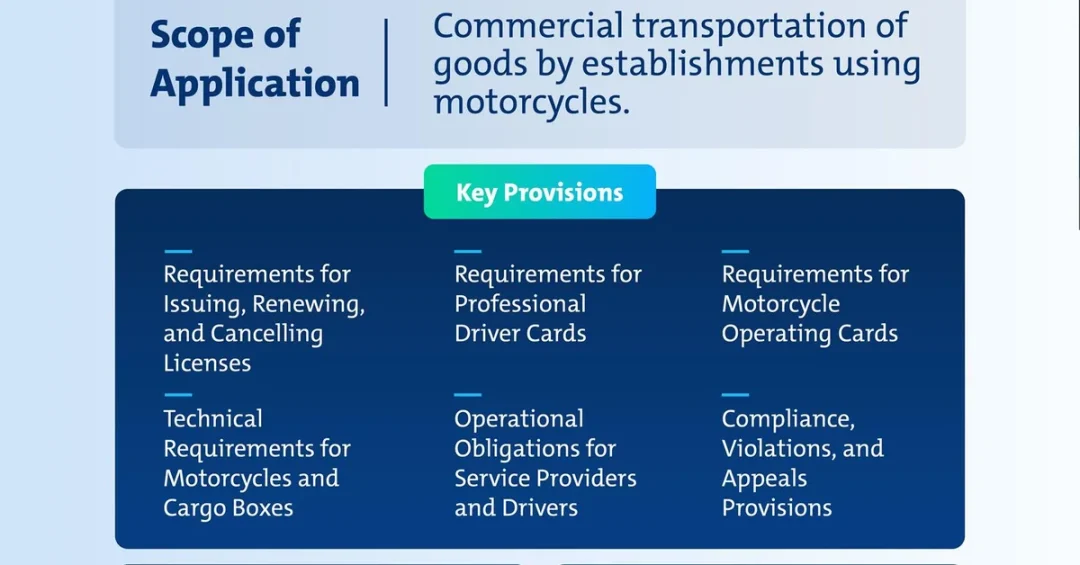
The Transport General Authority (TGA) has issued the Executive Regulations for the Commercial Transportation of Goods via Motorcycles, moving the activity from a regulatory sandbox into a comprehensive formal framework. The announcement, carried by the Saudi Press Agency on August 7, 2026, marks a decisive step in the maturation of Saudi Arabia’s delivery services industry and gives operators, investors, and beneficiaries a clear set of rules for the road ahead. The regulations establish the foundations for how goods may be moved by motorcycle, who may carry them, and under what standards of safety, reliability, and accountability. For a sector that has grown rapidly alongside the Kingdom’s digital economy, the shift from experimentation to formal regulation is both a milestone and a signal of confidence.
Why does this matter to readers far beyond Saudi Arabia’s borders? Because the Kingdom’s delivery ecosystem is no longer a domestic curiosity; it is a component of global supply chains, e-commerce corridors, and logistics networks that connect Asia, Europe, and Africa. The TGA’s decision reflects a broader pattern across Saudi Arabia: regulators are moving quickly to give shape and structure to modern business models that have already won public trust. In doing so, the Kingdom is positioning itself as a rule-maker for the logistics era, not merely a participant in it. The new executive regulations are designed to enhance market clarity, attract investment, and keep pace with a transportation landscape that is evolving faster than traditional rulebooks.
Context and Background
How did motorcycle-based goods delivery reach the point where a full regulatory framework became necessary? The answer lies in the transformation of Saudi Arabia’s urban and digital economy over the past decade. As e-commerce platforms expanded, consumers came to expect same-day and even same-hour delivery, and motorcycles emerged as one of the most efficient tools for meeting that expectation in dense city environments. The TGA initially allowed the activity to develop within a regulatory sandbox, a controlled environment where companies could test operating models while the regulator observed risks, benefits, and practical challenges. That sandbox phase has now concluded successfully.
The move from sandbox to executive regulations is a deliberate progression that reflects the maturity of the sector. Rather than imposing rules on an untested market, the TGA allowed real-world experience to inform the final framework. The resulting regulations are meant to establish clear foundations for operation while supporting the rapid growth of delivery services. For the private sector, this means the rules of engagement are no longer provisional. Companies can plan investments, design services, and build fleets with confidence that the operating environment is stable and predictable. The framework also signals that Saudi Arabia views motorcycle delivery not as a temporary trend but as a durable component of its transport and logistics architecture.
It is worth recalling that the Kingdom has consistently used regulation as an enabler rather than a brake. The TGA’s approach mirrors the broader philosophy of Saudi Vision 2030, in which government acts as a catalyst for private-sector growth. By issuing executive regulations, the authority is providing the legal scaffolding on which competition, innovation, and service quality can be built. The announcement also reflects lessons learned from other modern transport models, where early regulatory clarity has proven essential to attracting serious long-term operators rather than short-term speculators.
Key Details of the Executive Regulations
What exactly do the new executive regulations cover, and what do they change for operators? According to the Transport General Authority, the regulations provide a comprehensive formal regulatory framework for the commercial transportation of goods via motorcycles. They define the requirements that establishments must meet, the standards that services must uphold, and the protections that beneficiaries can expect. The TGA has invited establishments, beneficiaries, and interested stakeholders to review the full executive regulations and their requirements through its official website, a step that underscores the authority’s commitment to transparency and stakeholder engagement.
The framework is expected to strengthen safety, service reliability, and beneficiary protection while improving operational efficiency and encouraging more sustainable operating practices. These objectives are not incidental; they address the core risks that any rapidly growing delivery sector faces, including rider safety, vehicle maintenance, insurance coverage, and dispute resolution. By embedding these concerns in regulation, the TGA aims to achieve a balance between growth requirements, service quality, and social and environmental responsibility. That balance is central to the regulations’ design and to their long-term credibility.
The regulations also create a more attractive environment for investment and competition. When rules are clear, capital moves faster. Companies can evaluate opportunities, structure partnerships, and commit resources without fearing sudden regulatory shifts. The TGA’s framework gives the private sector broader opportunities to develop innovative business models and services, from specialized cold-chain delivery to integrated last-mile logistics platforms. At the same time, the regulations increase the sector’s readiness for expansion under a clear framework that keeps pace with the evolving transportation and logistics landscape. In practical terms, this means the Kingdom is preparing its delivery sector to scale, not just to operate.
International and Regional Impact
How will a Saudi regulatory decision influence markets and partners beyond the Kingdom? The answer begins with the scale of Saudi Arabia’s logistics ambitions. As a crossroads between three continents, the Kingdom is investing heavily in ports, railways, airports, and digital infrastructure. Motorcycle delivery may appear to be a last-mile detail, but last-mile efficiency determines the competitiveness of entire supply chains. When the TGA formalizes rules for this segment, it strengthens the reliability of the final link in the chain, which matters to international retailers, logistics firms, and e-commerce platforms seeking predictable service standards in the region.
Regional observers are likely to study the Saudi framework closely. Across the Middle East and beyond, regulators are grappling with how to govern gig-economy delivery models that grew faster than legislation. Saudi Arabia’s approach, moving from a sandbox to executive regulations, offers a template: observe first, then codify. This method reduces the risk of rules that are either too restrictive to be practical or too loose to protect workers and consumers. By sharing its framework publicly through the TGA website, the Kingdom also contributes to a broader conversation about how modern transport models should be governed. That soft-power dimension reinforces Saudi Arabia’s growing role as a source of regulatory best practice, not merely a recipient of it.
Economic and Strategic Significance
What does the issuance of these regulations mean for the Saudi economy, and why is it strategically significant? Delivery services are a barometer of consumer confidence and digital adoption. When the sector operates under clear rules, it can attract investment, create jobs, and improve productivity across retail, food service, healthcare, and manufacturing. The TGA’s framework is expected to enhance market clarity and stability, two conditions that investors consistently rank among their highest priorities. Stability reduces risk premiums; clarity shortens decision cycles. Together, they make the sector more bankable and more competitive.
Strategically, the regulations support the objectives of the National Transport and Logistics Strategy, which aims to position Saudi Arabia as a global logistics hub. A modern logistics hub is not only about mega-ports and freight corridors; it is also about the dense, efficient networks that move goods to doorsteps, clinics, and businesses. Motorcycle delivery is one of those networks. By regulating it properly, the TGA is ensuring that the Kingdom’s logistics ecosystem is coherent from end to end. The regulations also encourage more sustainable operating practices, aligning economic growth with environmental responsibility, a combination that increasingly defines investment attractiveness in global markets.
The private sector stands to gain broader opportunities to develop innovative business models and services. This could include integrated platforms that combine motorcycle delivery with warehouse automation, route optimization powered by artificial intelligence, or subscription-based services for small businesses. Each of these models depends on a stable regulatory foundation. The TGA has now provided that foundation, and the market’s response will determine how quickly the sector scales. Early indications suggest that operators have been waiting for precisely this kind of clarity.
Vision 2030 Alignment
How does this regulatory milestone connect to Saudi Vision 2030? The Vision is built on diversification, private-sector empowerment, and the creation of a world-class business environment. The TGA’s executive regulations advance all three. They diversify the transport economy by giving formal standing to a modern service category. They empower the private sector by providing rules that enable rather than obstruct. And they improve the business environment by demonstrating that Saudi regulators can move at the speed of innovation while maintaining high standards. This is the kind of governance that global investors look for when deciding where to deploy capital.
The regulations also reflect the Vision’s emphasis on quality of life and sustainability. Safer delivery operations mean fewer accidents and greater public confidence. More reliable services mean better access to goods for households and businesses. More sustainable practices mean a smaller environmental footprint as the sector grows. By balancing growth requirements, service quality, and social and environmental responsibility, the TGA is translating Vision 2030’s broad ambitions into practical rules that shape daily life. For international readers, the message is clear: Saudi Arabia is not waiting for the future of logistics to arrive. It is building the framework that will define it, and inviting the world to participate in the opportunity.
20 Questions
Q1. What did the Transport General Authority announce on August 7, 2026?
A1. The TGA issued the Executive Regulations for the Commercial Transportation of Goods via Motorcycles, moving the activity from a regulatory sandbox to a comprehensive formal regulatory framework, as reported by the Saudi Press Agency.
Q2. Why is this regulatory step significant for the delivery sector?
A2. It reflects the maturity of the sector, establishes clear operating foundations, and supports the rapid growth of delivery services. It also enhances market clarity and stability while creating a more attractive environment for investment and competition.
Q3. What is a regulatory sandbox in this context?
A3. A regulatory sandbox is a controlled environment where companies test new business models under regulatory supervision. The TGA used this approach to observe motorcycle goods delivery before issuing formal, comprehensive executive regulations.
Q4. Who will benefit from the new executive regulations?
A4. Establishments, beneficiaries, and interested stakeholders all stand to benefit. Operators gain clarity, investors gain stability, and customers gain stronger safety, reliability, and protection standards under the new framework.
Q5. How do the regulations support investment and competition?
A5. Clear rules reduce uncertainty, allowing companies to plan investments and design services confidently. The framework creates a more attractive environment for investment and competition, giving the private sector broader opportunities to develop innovative business models.
Q6. What safety improvements are expected?
A6. The regulations are expected to strengthen safety, service reliability, and beneficiary protection while improving operational efficiency. They also encourage more sustainable operating practices, balancing growth with social and environmental responsibility.
Q7. How does this relate to the National Transport and Logistics Strategy?
A7. The issuance forms part of TGA’s efforts to build a legislative framework for modern transportation models. It supports the National Transport and Logistics Strategy and the broader objectives of Saudi Vision 2030.
Q8. Where can stakeholders review the full regulations?
A8. The TGA invited establishments, beneficiaries, and interested stakeholders to review the Executive Regulations and their full requirements through its official website, ensuring transparency and access to complete details.
Q9. What does the transition from sandbox to formal regulation signal?
A9. It signals that the sector has matured and that regulators are confident in its fundamentals. Formal regulation provides long-term stability, making the sector ready for expansion under a clear framework that keeps pace with the evolving landscape.
Q10. How might this affect consumers of delivery services?
A10. Consumers should see improved reliability, safety, and protection. The regulations aim to balance growth requirements with service quality, meaning beneficiaries can expect more consistent standards and better accountability from operators.
Q11. What opportunities does this create for the private sector?
A11. The private sector gains broader opportunities to develop innovative business models and services. This could include specialized delivery solutions, integrated logistics platforms, and new service categories enabled by a stable regulatory foundation.
Q12. Why is motorcycle delivery important for e-commerce?
A12. Motorcycles offer efficient last-mile delivery in dense urban environments, which is essential for meeting consumer expectations for fast e-commerce fulfillment. Regulating this activity strengthens the entire digital retail ecosystem.
Q13. How does this announcement reflect Saudi Arabia’s regulatory approach?
A13. It reflects a deliberate, evidence-based approach: observe the market through a sandbox, then codify rules based on real-world experience. This method balances innovation with protection and supports sustainable sector growth.
Q14. What environmental considerations are included?
A14. The regulations encourage more sustainable operating practices, contributing to a balance between growth requirements, service quality, and social and environmental responsibility. This aligns with broader sustainability goals in the Kingdom.
Q15. How does this support Saudi Vision 2030?
A15. It advances diversification, private-sector empowerment, and a world-class business environment. It also supports the National Transport and Logistics Strategy, reinforcing Saudi Arabia’s ambition to become a global logistics hub.
Q16. What should international investors note about this development?
A16. International investors should note the enhanced market clarity and stability. Clear regulations reduce risk and make the sector more bankable, creating opportunities to participate in a growing logistics market with predictable rules.
Q17. Will the regulations affect existing delivery operators?
A17. Existing operators will now work within a comprehensive formal framework rather than a sandbox. This provides certainty and supports expansion, while requiring compliance with standards designed to strengthen safety, reliability, and beneficiary protection.
Q18. What role does the TGA play in Saudi transportation?
A18. The Transport General Authority regulates transportation activities, builds legislative frameworks for modern models, and fosters investment and innovation. Its work supports the competitiveness of the sector and the objectives of national strategies.
Q19. How does this fit into regional logistics trends?
A19. Across the region, regulators are seeking ways to govern fast-growing delivery models. Saudi Arabia’s sandbox-to-regulation path offers a practical template that balances innovation, safety, and investment attractiveness.
Q20. What is the expected next step for the sector?
A20. With the regulatory framework in place, the sector is positioned for expansion under clear rules. Operators and investors are expected to review the regulations, align their models, and prepare for growth in line with the National Transport and Logistics Strategy.
Reader Feedback
We value your thoughts. Please share your feedback on this article.
Your feedback helps us improve our coverage.
Related articles
 Russian Central Bank Raises Dollar, Euro, Yuan Rates
 European Stocks Rise on Healthcare Sector Boost
 Asian Stocks Mixed as Wall Street Retreats, Oil Rises 1%
 Finland’s Trade Surplus Jumps to 9.1B Euros in June
 Eurostat: Slight Drop in European Retail Sales in June
 Qassim Center Trains Saudi Youth for Date Harvest Season