


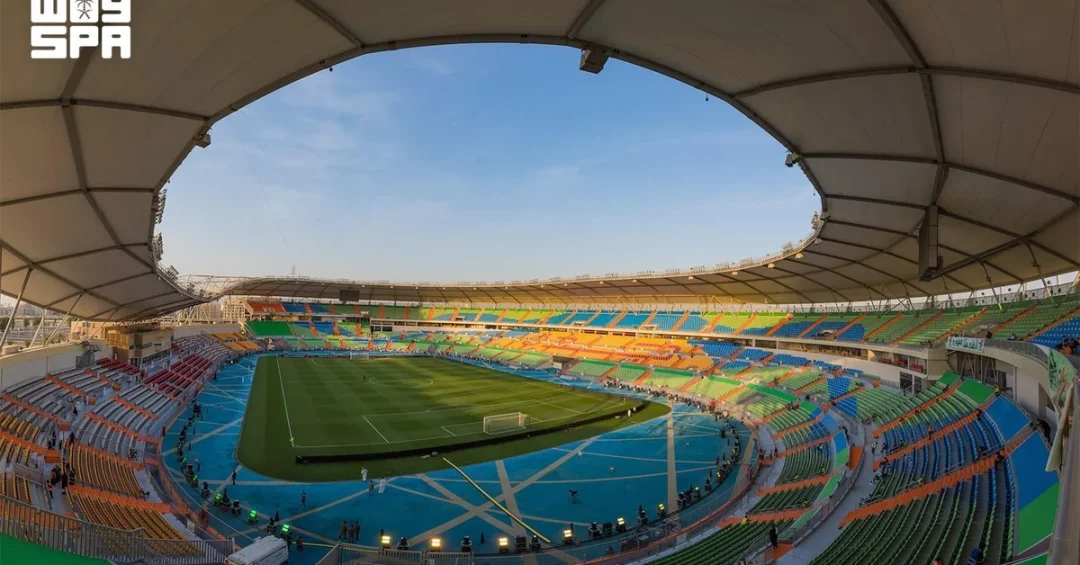
The Local Organizing Committee for the 27th Arabian Gulf Cup, known as “Khaleeji 27,” has completed all preparations at King Abdullah Sports City Stadium and Prince Abdullah Al-Faisal Sports City Stadium in Jeddah, the Saudi Press Agency reported, confirming that both venues are fully ready to host the tournament’s matches. The announcement, issued from Jeddah, marks the final operational milestone before the competition begins, and it signals that the Kingdom’s host cities, stadiums, and supporting services have met the requirements set out in the tournament’s approved operational plans. For a competition that brings together the national teams of the Gulf Cooperation Council and the wider region, the readiness of these two landmark venues is a matter of national pride as much as logistical necessity.
Jeddah, Saudi Arabia’s historic gateway on the Red Sea, will serve as one of the principal host cities for Khaleeji 27, and the completion of works at both stadiums reflects months of coordinated planning involving sports authorities, security services, medical teams, and municipal agencies. The preparations covered far more than the playing surface: they included equipping pitches and facilities, upgrading supporting services, finalizing arrangements for spectator entry and exit, and preparing dedicated areas for national teams, delegations, and media representatives. Each element was aligned with the tournament’s approved operational plans, ensuring that players, officials, and fans encounter a seamless experience from arrival to final whistle.
Context and Background
Why does the Arabian Gulf Cup matter so much to the region, and why has Saudi Arabia invested such care in hosting it? The tournament, first staged in 1970, is the oldest and most cherished football competition in the Gulf, a fixture that predates many modern regional institutions and that has produced some of the most memorable matches in Arab football history. For supporters across the Gulf Cooperation Council states, the competition is more than sport; it is a recurring celebration of shared heritage, language, and hospitality. Saudi Arabia has long been a central participant and host, and Khaleeji 27 continues that tradition at a moment when the Kingdom’s sporting infrastructure is expanding faster than at any point in its history.
The two Jeddah venues chosen for the tournament carry distinct histories. King Abdullah Sports City Stadium, often referred to as “The Shining Jewel,” opened in 2014 and has since hosted domestic finals, continental club competitions, and major entertainment events, establishing itself as one of the most recognizable sporting landmarks in western Saudi Arabia. Prince Abdullah Al-Faisal Sports City Stadium is one of the Kingdom’s most historic football grounds, long associated with Jeddah’s passionate club culture and with generations of Saudi footballing talent. Together, the two stadiums represent a bridge between the Kingdom’s sporting heritage and its modern ambitions, and their joint readiness for Khaleeji 27 speaks to a deliberate strategy of upgrading existing assets while building new ones.
The Local Organizing Committee’s completion of preparations also reflects the broader modernization of event management in the Kingdom, where hosting major competitions has become a routine capability rather than an exceptional undertaking. From the Saudi Press Agency’s report, it is clear that the committee approached readiness as a comprehensive operational exercise, not merely a construction deadline. That approach mirrors the standards applied at other major events hosted in recent years and reinforces confidence among regional football federations that Saudi Arabia can deliver tournaments at the highest level.
Key Details
What exactly did the preparations involve, and how will they shape the match-day experience? According to the official announcement, the work at both stadiums included equipping the stadium pitches, facilities, and supporting services, completing arrangements for the entry and exit of spectators, and preparing designated areas for national teams, delegations, and media representatives. These measures were implemented in accordance with the tournament’s approved operational plans, which set out detailed requirements for every phase of the competition. The emphasis on pitches and facilities ensures that matches are played under optimal conditions, while the attention to delegation and media areas supports the smooth functioning of team operations and the extensive regional broadcast coverage that follows the Gulf Cup.
The committee also reviewed operational, crowd management, security and safety, and medical service plans. This review process is central to modern tournament delivery: it brings together representatives from multiple agencies to test assumptions, identify bottlenecks, and confirm that response protocols are in place before the first ball is kicked. Organizing spectator movement around and inside the two stadiums was a particular focus, with the aim of facilitating entry and exit and ensuring that services remain available throughout the match days. For fans traveling from across the Gulf, these arrangements determine whether a tournament feels welcoming or chaotic, and the committee’s stated priority is clearly the former.
Medical and safety planning deserves particular attention. Major football tournaments require rapid-response medical teams, clearly marked access routes for emergency vehicles, and coordination with local hospitals. The review described by the Saudi Press Agency indicates that these elements were integrated into the overall operational plan rather than treated as afterthoughts. Similarly, security planning was conducted in coordination with the relevant authorities to ensure that crowds can be managed safely without diminishing the festive atmosphere that defines the Gulf Cup. The result is a hosting model that balances enjoyment with responsibility.
International and Regional Impact
How will Khaleeji 27 shape perceptions of Saudi Arabia across the region and beyond? The Gulf Cup occupies a unique place in the international football calendar. It is a regional tournament with global visibility, followed closely by diaspora communities and scouted by clubs and analysts interested in emerging talent from the Gulf. When Saudi Arabia hosts, the event becomes a showcase not only of football but of the Kingdom’s capacity to welcome visitors, manage complex logistics, and present its cities as vibrant, modern destinations. Jeddah’s role as host city is especially significant given its position as a cultural and commercial hub on the Red Sea and its growing profile as a tourism gateway.
Regional cooperation is another dimension. The tournament brings together national teams and delegations from across the Gulf Cooperation Council, and the operational preparations described by the committee are designed to serve all participating nations equally. By preparing designated areas for delegations and media representatives, Saudi Arabia is signaling that it treats the tournament as a shared regional asset rather than a purely national event. That spirit of hospitality aligns with the Kingdom’s wider diplomatic approach, which emphasizes stability, dialogue, and economic integration across the region. For international audiences, the images and stories emerging from Jeddah during the competition will reinforce the message that Saudi Arabia is a reliable and generous host.
Economic and Strategic Significance
What economic value does a tournament of this scale generate, and why does it matter for Saudi Arabia’s long-term strategy? Major sporting events stimulate activity across hospitality, transportation, retail, and food services, and the Gulf Cup is no exception. Hotels in Jeddah will see elevated occupancy, airlines and ground transport providers will handle increased passenger volumes, and local businesses will benefit from the influx of fans and media personnel. Beyond the immediate match days, the tournament strengthens Jeddah’s credentials as a destination capable of hosting international events, which supports the city’s broader tourism and investment goals. The readiness of two major stadiums also demonstrates the durability of past infrastructure investments, showing that facilities built for domestic and continental competitions can be repurposed for regional tournaments with minimal friction.
Strategically, hosting Khaleeji 27 reinforces Saudi Arabia’s position as a leader in regional sport. The Kingdom has invested heavily in football at every level, from grassroots development to the domestic league and the national team, and hosting competitions is a natural extension of that commitment. The event also provides a platform for showcasing Saudi organizational expertise, which is increasingly sought after as the Kingdom bids for and hosts global events. Each successful tournament builds institutional knowledge that carries forward to the next one, creating a virtuous cycle of capability. In this sense, the completion of preparations at King Abdullah Sports City and Prince Abdullah Al-Faisal Sports City is not merely an operational milestone but a strategic one.
Vision 2030 Alignment
How does a football tournament connect to Saudi Vision 2030, the national transformation program launched under the leadership of Crown Prince Mohammed bin Salman? Sport sits at the intersection of several Vision 2030 objectives, including quality of life, economic diversification, and international engagement. By hosting regional and global competitions, Saudi Arabia creates opportunities for its citizens to experience world-class events at home, supports the growth of a sports and entertainment economy, and strengthens its relationships with other nations. The Gulf Cup, with its deep cultural resonance, is an especially effective vehicle for these goals because it combines elite competition with regional camaraderie.
The readiness of the two Jeddah stadiums also reflects the Vision 2030 emphasis on modern infrastructure and public service excellence. The careful planning of spectator movement, medical services, and security demonstrates a commitment to delivering high-quality experiences that meet international standards. As Saudi Arabia continues to host major events, from football tournaments to global expos, these capabilities become part of the Kingdom’s national story: a story of ambition, hospitality, and steady progress. The Local Organizing Committee’s completed preparations are a reminder that behind every successful tournament lies meticulous work, and that Saudi Arabia is ready to welcome the Gulf once again.
20 Questions
Q1. What is the 27th Arabian Gulf Cup, also known as Khaleeji 27?
A1. It is the 27th edition of the Arabian Gulf Cup, the region’s premier football tournament for national teams from the Gulf Cooperation Council and neighboring countries. Saudi Arabia is hosting matches in Jeddah, continuing its long tradition of supporting regional sport.
Q2. Which two stadiums in Jeddah are hosting Khaleeji 27 matches?
A2. King Abdullah Sports City Stadium and Prince Abdullah Al-Faisal Sports City Stadium are the two venues. Both have completed preparations, including pitch and facility upgrades, to host tournament matches in accordance with approved operational plans.
Q3. What preparations were completed at the two stadiums?
A3. Preparations included equipping pitches, facilities, and supporting services, finalizing spectator entry and exit arrangements, and preparing designated areas for national teams, delegations, and media representatives, all in line with the tournament’s operational plans.
Q4. Who announced the completion of preparations?
A4. The Local Organizing Committee for the 27th Arabian Gulf Cup announced the completion, with the news carried by the Saudi Press Agency, the Kingdom’s official news authority, from Jeddah.
Q5. When was the announcement made?
A5. The Saudi Press Agency reported the announcement from Jeddah on September 23, 2026, at 02:57 local time, confirming that both stadiums are fully ready for the tournament.
Q6. Why is King Abdullah Sports City Stadium significant?
A6. Opened in 2014, it is one of Saudi Arabia’s most modern stadiums and has hosted major domestic, continental, and entertainment events. It is a symbol of the Kingdom’s sporting infrastructure development.
Q7. What is the historical importance of Prince Abdullah Al-Faisal Sports City Stadium?
A7. It is one of Saudi Arabia’s most historic football grounds, closely associated with Jeddah’s club culture and generations of Saudi football talent. Its inclusion honors the city’s sporting heritage.
Q8. How were spectator movements planned for the tournament?
A8. The committee organized spectator movement around and inside both stadiums to facilitate smooth entry and exit and to ensure services remain available throughout match days, improving the overall fan experience.
Q9. What security and safety measures were reviewed?
A9. Operational, crowd management, security and safety, and medical service plans were reviewed. These reviews ensure coordinated responses and safe conditions for fans, players, and officials throughout the competition.
Q10. How does hosting the Gulf Cup benefit Jeddah economically?
A10. The tournament boosts hospitality, transportation, retail, and food services, increases hotel occupancy, and strengthens Jeddah’s reputation as a destination capable of hosting international events, supporting broader tourism and investment goals.
Q11. What role does the Saudi Press Agency play in this announcement?
A11. The Saudi Press Agency is the Kingdom’s official news outlet. Its reporting provides verified, authoritative information about the tournament preparations, ensuring transparency and accuracy for domestic and international audiences.
Q12. How does Khaleeji 27 support regional cooperation?
A12. The tournament brings together national teams and delegations from across the Gulf, and Saudi Arabia’s preparations serve all participants equally, reflecting the Kingdom’s commitment to regional unity, hospitality, and shared sporting heritage.
Q13. What does the tournament mean for football fans in the Gulf?
A13. The Gulf Cup is the region’s oldest and most beloved football competition, celebrated for its passionate matches and cultural significance. Hosting it in Jeddah offers fans a chance to experience top-level football in a world-class setting.
Q14. How does hosting the Gulf Cup align with Vision 2030?
A14. It supports Vision 2030 goals in quality of life, economic diversification, and international engagement by creating world-class entertainment, boosting the sports economy, and strengthening regional and global ties.
Q15. What infrastructure improvements were made to the stadiums?
A15. Improvements included pitch preparation, facility upgrades, enhanced supporting services, and dedicated areas for teams, delegations, and media, ensuring the venues meet the operational standards required for a major regional tournament.
Q16. How will media representatives be accommodated during the tournament?
A16. Designated areas for media representatives were prepared at both stadiums, supporting the extensive regional and international coverage that the Gulf Cup attracts and ensuring journalists can work effectively throughout the event.
Q17. What medical services will be available during matches?
A17. Medical service plans were reviewed and integrated into the operational framework, ensuring rapid response capabilities, coordination with local hospitals, and clear access routes for emergency vehicles on match days.
Q18. Why is hosting major sports events important for Saudi Arabia’s global image?
A18. Hosting events like the Gulf Cup showcases Saudi Arabia’s organizational expertise, hospitality, and modern infrastructure, reinforcing its reputation as a capable and welcoming host for international competitions and global gatherings.
Q19. What happens after the Gulf Cup for these stadiums?
A19. Both stadiums will continue to serve domestic leagues, continental competitions, and entertainment events. The upgrades and operational experience gained will benefit future tournaments and contribute to Saudi Arabia’s growing events calendar.
Q20. What is the overall significance of the completed preparations?
A20. The completed preparations demonstrate Saudi Arabia’s readiness to host the Gulf Cup at the highest standard, reflecting careful planning, inter-agency coordination, and a commitment to delivering a memorable tournament for players, officials, and fans.
Reader Feedback
We value your thoughts. Please share your feedback on this article.
Your feedback helps us improve our coverage.
Related articles
 Saudi Arabia and Kuwait to Open Gulf Cup 27 in Jeddah
 Saudi Coach Donis Confirms Readiness for Gulf Cup Opener
 Saudi National Team Prepares for Gulf Cup Opener Against Kuwait
 UAE National Football Team Arrives in Jeddah for Gulf Cup 27
 Saudi Opens 27th Arabian Gulf Cup Media Center in Jeddah
 Saudi Athletes Shine at 20th Asian Games Aichi-Nagoya 2026