


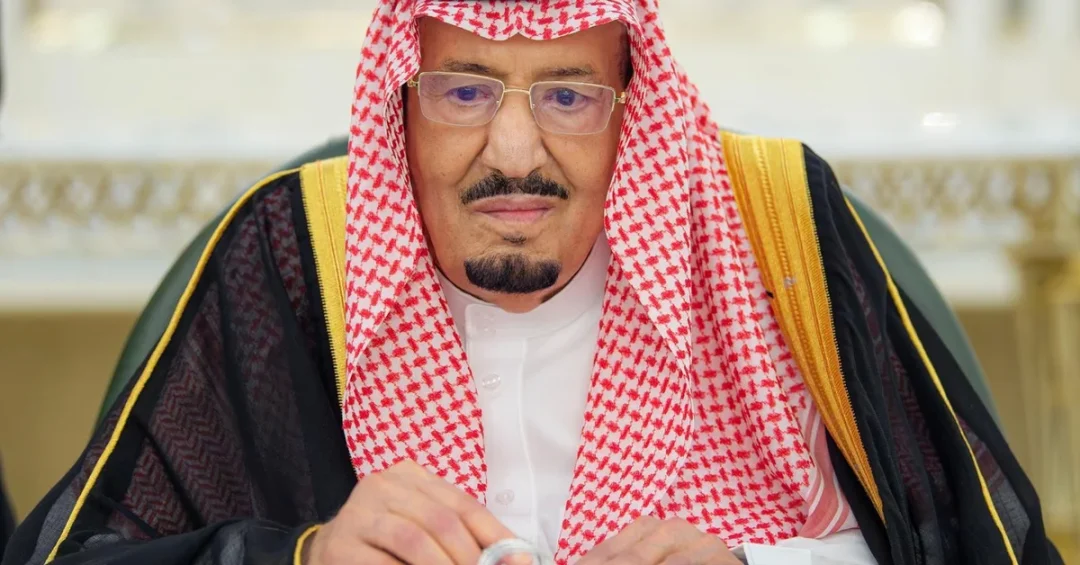
Custodian of the Two Holy Mosques King Salman bin Abdulaziz Al Saud chaired the Cabinet session held in Jeddah on September 22, 2026, where ministers reviewed the outcomes of high-level diplomacy, condemned attacks on the holy sites, and approved a series of international agreements. The session, announced through the Saudi Press Agency, came on the eve of the Kingdom’s National Day and covered the Crown Prince’s visit to Egypt, messages from Jordan and France, the outcomes of major international conferences hosted in Saudi Arabia, and a set of decisions expanding cooperation with Spain, Jordan, Suriname and Panama. What does a single Cabinet session reveal about how the Kingdom is positioning itself across diplomacy, security, technology and industry? In this case, a great deal.
The session was chaired by the Custodian of the Two Holy Mosques, who began by praising and thanking Allah Almighty for the blessings bestowed upon the country and for the honor of serving the Grand Mosque, the Prophet’s Mosque, and their visitors. As Saudi Arabia prepared to mark its National Day, the King expressed his wishes for further achievements and successes in the nation’s journey of growth, progress and leadership across all sectors. The Cabinet agenda that followed reflected that ambition in practical terms, spanning the protection of pilgrims, regional stability, artificial intelligence governance, medical biotechnology, automotive manufacturing and new partnership frameworks with countries across three continents.
Context and Background
Why does the location and timing of a Cabinet session matter in Saudi Arabia? The meeting in Jeddah placed the government’s weekly deliberations close to the western region that hosts the Two Holy Mosques and the millions of pilgrims who travel to them each year, reinforcing the Kingdom’s spiritual responsibilities as a central pillar of national policy. The session also took place one day before National Day, a moment when Saudi leaders traditionally take stock of the country’s progress and set out priorities for the year ahead. According to the Saudi Press Agency, the King used the occasion to thank God for the blessings granted to the nation and to express his hopes for continued achievements.
The Cabinet’s review covered a deliberately wide field. It examined the Crown Prince’s diplomatic engagements, messages and calls with regional and international leaders, the results of conferences hosted on Saudi soil, and the launch of the first models from the national automotive company CEER. It then issued formal decisions on partnership councils and cooperation agreements. Taken together, the session illustrates how the Council of Ministers functions as a coordination hub, translating the Kingdom’s strategic priorities into concrete instructions for ministries and agencies, from the Ministry of Foreign Affairs to the Small and Medium Enterprises General Authority.
Diplomacy and Regional Security
How does Saudi Arabia convert bilateral relationships into lasting regional stability? The Cabinet reviewed the outcomes of the visit by His Royal Highness Prince Mohammed bin Salman bin Abdulaziz Al Saud, Crown Prince and Prime Minister, to the Arab Republic of Egypt, where discussions with President Abdel Fattah El-Sisi underscored the depth of bilateral relations, the shared desire to enhance cooperation, and a commitment to ongoing consultation and coordination on issues of mutual interest to serve both peoples. The session also reviewed a message the Crown Prince received from King Abdullah II bin Al Hussein of Jordan, along with the details of a phone call with French President Emmanuel Macron addressing regional developments, efforts to bolster stability, and measures to safeguard the freedom and safety of maritime navigation and waterways.
On regional developments, the Cabinet emphasized the necessity of adhering to international law, specifically respect for state sovereignty, the peaceful resolution of disputes, and the guarantee of safe navigation in international waterways. In a statement to the Saudi Press Agency following the session, Minister of Media Salman Al-Dossary said these principles are essential to safeguard the security of states, fulfill the aspirations of peoples, and protect international trade and global supply chains. The emphasis on waterways reflects the Kingdom’s interest in keeping energy and commercial routes open, a priority that connects directly to global economic stability and to Saudi Arabia’s own export infrastructure.
The Custodian of the Two Holy Mosques also acknowledged the role of military and security personnel and their brave heroes in defending the homeland and confronting any aggression against the holy sites, the pilgrims, and the Kingdom’s citizens and residents. He condemned the terrorist Houthi militia’s repeated attempt to target Makkah, an act met with widespread international condemnation and denunciation, emphasizing that this heinous crime violates the sanctity of the holy sites and provokes the sentiments of Muslims worldwide. The Cabinet’s firm position underscored the Kingdom’s dual duty: protecting worshippers and preserving the security of a nation that hosts Islam’s holiest sites.
Technology, Health and Industry Milestones
What do artificial intelligence ethics, medical biotechnology and electric vehicles have in common? In Saudi Arabia, they are all treated as pillars of a diversified knowledge economy. The Cabinet reviewed the recommendations issued by the ministerial meeting of the UNESCO Global Forum on the Ethics of Artificial Intelligence 2026, hosted by the Kingdom, which support international cooperation to ensure sound AI development, strengthen governance frameworks, regulate emerging technologies, and harness them safely and inclusively to achieve the Sustainable Development Goals. The endorsement positions Saudi Arabia as a convening power in the global conversation about how advanced technologies should be governed.
The Cabinet also commended the success of the fourth edition of the Riyadh Global Medical Biotechnology Summit, which saw the launch of more than 40 agreements and initiatives aimed at localizing knowledge and innovation, advancing the sector, achieving national strategic targets, and boosting the contribution of global research to pharmaceutical discoveries and future technologies. Ministers noted that these efforts reinforce the Kingdom’s leadership in initiatives serving human health as a top priority. For international readers, the summit signals that Saudi Arabia intends to be a producer of medical innovation, not only a consumer of it, with local capacity building at the center of the strategy.
Another highlight was the unveiling of the first models from the national automotive company CEER, described by the Cabinet as a new strategic milestone toward establishing an advanced, sustainable industrial ecosystem. The step empowers the automotive sector as a vital engine of economic growth, attracting investments, supporting national talent, and expanding the private sector’s developmental role. It also aligns with Saudi Vision 2030 objectives and cements the Kingdom’s standing as a leading regional and global industrial hub. The Cabinet’s recognition of CEER shows how industrial policy, investment attraction and workforce development are being woven into a single narrative.
International and Regional Impact
Why should partners beyond the region pay attention to these decisions? The Cabinet approved a memorandum of understanding to establish a strategic partnership council between the governments of the Kingdom of Saudi Arabia and the Kingdom of Spain, creating a structured channel for political and economic dialogue with a major European economy. It also approved a draft protocol amending the minutes establishing the Saudi-Jordanian Supreme Coordination Council and authorized the Minister of Foreign Affairs to sign it, deepening coordination with a neighboring kingdom that shares important security and economic interests. These steps extend Saudi diplomacy across Europe and the Levant through formal, institutional mechanisms.
The session further authorized the Minister of Foreign Affairs, or a deputy, to discuss and sign two draft general cooperation agreements between the Government of the Kingdom of Saudi Arabia and the governments of the Republic of Suriname and the Republic of Panama. It also approved a model memorandum of understanding for cooperation in areas related to small and medium-sized enterprises, entrepreneurship and franchising between the Small and Medium Enterprises General Authority and its counterparts in other countries. The Minister of Commerce and chairman of the authority’s board of directors, or a deputy, was authorized to discuss and sign draft memorandums with counterparts based on the approved model. For Latin America and the Caribbean, the agreements open a new chapter of engagement, while the SME model gives Saudi entrepreneurs a repeatable framework for international collaboration.
Economic and Strategic Significance
How do Cabinet decisions translate into economic momentum? Each approval removes a procedural barrier and gives ministries a mandate to negotiate, sign and implement. The strategic partnership council with Spain can be expected to facilitate trade, investment and knowledge exchange, while the amended Saudi-Jordanian coordination framework strengthens a land bridge that matters for logistics and regional commerce. The general cooperation agreements with Suriname and Panama add new partners in the Americas, and Panama’s position in global shipping lanes gives the arrangement particular relevance to the Kingdom’s interest in secure maritime navigation and resilient supply chains.
The SME and franchising model memorandum is especially significant for Vision 2030’s private-sector goals. By standardizing how the Small and Medium Enterprises General Authority cooperates with foreign counterparts, the Cabinet has created a template that can be deployed quickly across multiple countries, helping Saudi small businesses access markets, franchise concepts and entrepreneurial networks. Combined with the CEER milestone and the medical biotechnology agreements, the session’s economic package supports investment, job creation and non-oil growth, the core metrics by which the Kingdom measures its diversification progress.
Vision 2030 Alignment
Does a single Cabinet session really connect to a national transformation plan? In this case, the links are direct and numerous. Vision 2030 calls for a diversified economy, a thriving private sector, global engagement and world-class public services. The Cabinet’s decisions on Spain, Jordan, Suriname and Panama expand the Kingdom’s international partnerships; the CEER milestone advances industrial localization and sustainable mobility; the AI ethics recommendations support a digital economy built on sound governance; and the medical biotechnology summit strengthens health innovation and local knowledge. Each item contributes to the same overarching goal of a resilient, future-ready nation.
Just as important is the session’s tone of responsibility and service. The Custodian of the Two Holy Mosques framed the meeting around the honor of serving the Grand Mosque, the Prophet’s Mosque and their visitors, and around gratitude for the nation’s blessings on the eve of National Day. That combination of spiritual stewardship, security vigilance and economic modernization is the defining characteristic of Saudi policy in this era. As the Kingdom continues its journey of growth and leadership, Cabinet sessions like this one in Jeddah will remain the mechanism through which Vision 2030 moves from aspiration to implementation, with the world watching and, increasingly, partnering.
20 Questions
Q1. Who chaired the Cabinet session held in Jeddah on September 22, 2026?
A1. Custodian of the Two Holy Mosques King Salman bin Abdulaziz Al Saud chaired the session. The meeting was reported by the Saudi Press Agency and covered diplomacy, security, technology, industry and several international agreements.
Q2. What occasion did the King mark during the session?
A2. The session took place as Saudi Arabia prepared to celebrate its National Day. The King expressed wishes for further achievements and successes in the nation’s journey of growth, progress and leadership across all sectors.
Q3. How did the King describe the Kingdom’s responsibilities toward the holy sites?
A3. He praised Allah for the blessings bestowed on the country and for the honor of serving the Grand Mosque, the Prophet’s Mosque and their visitors, reflecting the Kingdom’s enduring spiritual stewardship.
Q4. What did the King say about military and security personnel?
A4. He acknowledged their role and their brave heroes in defending the homeland and confronting any aggression against the holy sites, pilgrims, citizens and residents, honoring their service to the nation.
Q5. How did the Cabinet respond to attempts to target Makkah?
A5. The King condemned the terrorist Houthi militia’s repeated attempt to target Makkah, noting it drew widespread international condemnation and violates the sanctity of the holy sites, provoking the sentiments of Muslims worldwide.
Q6. Which diplomatic visit did the Cabinet review?
A6. The Cabinet reviewed the outcomes of Crown Prince and Prime Minister Prince Mohammed bin Salman’s visit to Egypt, where discussions with President Abdel Fattah El-Sisi underscored deep bilateral relations and shared cooperation goals.
Q7. What message and call were reviewed by the Cabinet?
A7. Ministers reviewed a message from King Abdullah II of Jordan and details of a phone call with French President Emmanuel Macron covering regional developments, stability efforts and the safety of maritime navigation.
Q8. What principles did the Cabinet emphasize for regional stability?
A8. The Cabinet stressed adherence to international law, respect for state sovereignty, peaceful resolution of disputes and guaranteed safe navigation in international waterways to protect trade and global supply chains.
Q9. Who briefed the Saudi Press Agency after the session?
A9. Minister of Media Salman Al-Dossary issued a statement to the Saudi Press Agency following the session, summarizing the Cabinet’s positions on regional developments and its emphasis on international law.
Q10. What did the Cabinet say about the UNESCO AI forum?
A10. It highlighted recommendations from the UNESCO Global Forum on the Ethics of Artificial Intelligence 2026 ministerial meeting, supporting international cooperation for sound AI development, governance frameworks and safe, inclusive use of emerging technologies.
Q11. What was commended about the Riyadh Global Medical Biotechnology Summit?
A11. The Cabinet commended the fourth edition’s success, including more than 40 agreements and initiatives to localize knowledge and innovation, advance the sector and boost global research in pharmaceutical discoveries.
Q12. What CEER milestone did the Cabinet note?
A12. The Cabinet noted the unveiling of the first models from the national automotive company CEER, calling it a strategic milestone toward an advanced, sustainable industrial ecosystem that attracts investment and supports national talent.
Q13. Which partnership council was approved with Spain?
A13. The Cabinet approved a memorandum of understanding to establish a strategic partnership council between the governments of the Kingdom of Saudi Arabia and the Kingdom of Spain, creating a formal bilateral dialogue channel.
Q14. What was decided regarding the Saudi-Jordanian council?
A14. The Cabinet approved a draft protocol amending the minutes establishing the Saudi-Jordanian Supreme Coordination Council and authorized the Minister of Foreign Affairs to sign it.
Q15. Which two countries were named for general cooperation agreements?
A15. The Cabinet authorized the Minister of Foreign Affairs, or a deputy, to discuss and sign draft general cooperation agreements with the Republic of Suriname and the Republic of Panama.
Q16. What model memorandum was approved for SMEs?
A16. A model memorandum of understanding for cooperation in small and medium enterprises, entrepreneurship and franchising between the Small and Medium Enterprises General Authority and counterparts in other countries.
Q17. Who is authorized to sign the SME agreements?
A17. The Minister of Commerce and chairman of the authority’s board of directors, or a deputy, is authorized to discuss and sign draft memorandums with counterparts based on the approved model.
Q18. Why is safe navigation important to Saudi Arabia?
A18. Safe navigation protects international trade and global supply chains, supports energy exports and helps safeguard the security of states, aligning with the Kingdom’s interest in regional stability and economic resilience.
Q19. How do these decisions support Vision 2030?
A19. They expand international partnerships, localize industry and innovation, strengthen the private sector and SME ecosystem, and advance digital and health sectors, all core objectives of Saudi Vision 2030’s diversification agenda.
Q20. What is the broader significance of this Cabinet session?
A20. It demonstrates how Saudi Arabia coordinates diplomacy, security, technology and industry through regular Cabinet decisions, reinforcing the Kingdom’s role as a stable global partner and a leader in the region.
Reader Feedback
We value your thoughts. Please share your feedback on this article.
Your feedback helps us improve our coverage.
Related articles
 Kenyan Muslim Leader Condemns Houthi Attacks on Saudi Arabia
 King Abdulaziz Lays Institutional Foundations of Modern Saudi State
 Saudia Cargo Boosts Logistics for Global Sports in KSA
 Malawi Muslim Chairman Condemns Houthi Attacks on Saudi Arabia
 African Muslim Scholars Condemn Targeting of Makkah and Madinah
 Al-Wajh Adorned in Green for Saudi National Day