


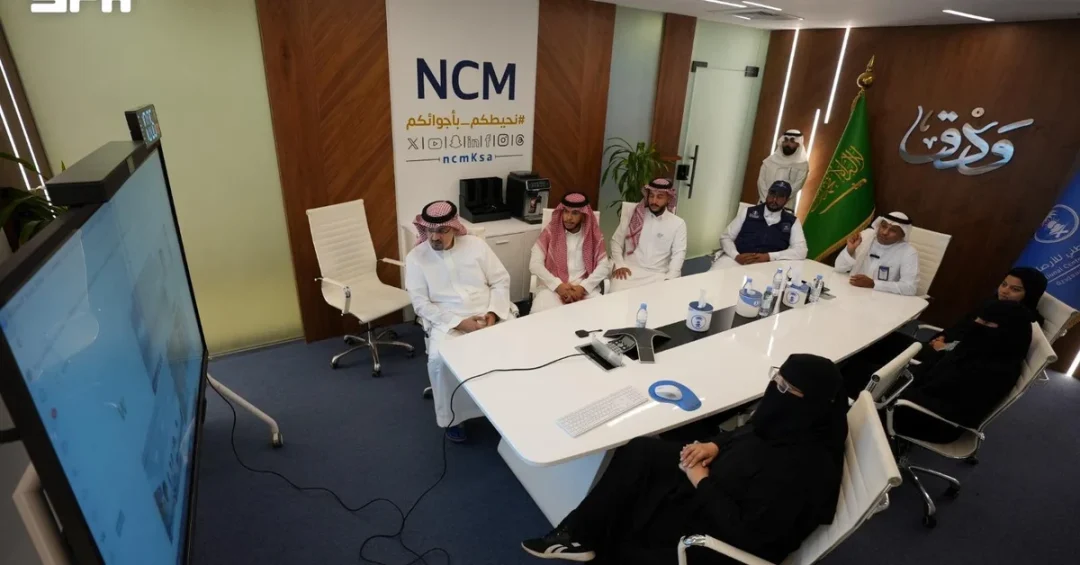
The National Center for Meteorology (NCM), in cooperation with the Ministry of Education, has launched a remote awareness initiative for schools across the Kingdom of Saudi Arabia, designed to teach students about weather, climate, and the environment. The program, announced through official Saudi channels, introduces meteorological concepts in everyday language, explains the vital role of meteorology in protecting lives and property, and encourages students to share what they learn with their families and communities. Have you ever wondered how a single classroom lesson about clouds and rainfall can ripple outward to strengthen an entire nation’s resilience?
The initiative reflects a growing recognition in the Kingdom that climate literacy is no longer a niche scientific interest but a foundational life skill. By delivering the program remotely, the NCM and the Ministry of Education can reach students in cities, rural areas, and remote communities alike, ensuring that geography does not limit access to knowledge. The collaboration builds on a formal cooperation agreement between the two institutions, positioning schools as key partners in Saudi Arabia’s broader efforts to build a weather-ready, climate-conscious society. For a country as vast and climatically diverse as Saudi Arabia, such awareness carries practical weight, from preparing for flash floods in the southwest to understanding dust storms in the central regions and extreme heat across the Eastern Province.
Context and Background
Why does a national meteorological agency invest in classrooms rather than limiting itself to forecasts and data? The answer lies in the NCM’s mandate, which extends beyond observation and prediction to public education and community preparedness. The National Center for Meteorology is the Kingdom’s official authority for weather forecasting, climate monitoring, and early warning systems, and its partnership with the Ministry of Education signals a strategic shift toward embedding climate awareness into the educational journey of young Saudis. The cooperation agreement between the two bodies provides the institutional framework for this outreach, allowing meteorological expertise to flow directly into school curricula and extracurricular activities.
The remote format of the initiative is equally significant. Saudi Arabia has invested heavily in digital education infrastructure, particularly following the global disruptions of recent years, and students across the Kingdom are now accustomed to learning through online platforms. By leveraging this infrastructure, the NCM can deliver standardized, high-quality content to thousands of classrooms simultaneously, while teachers can integrate the material into science, geography, and environmental studies lessons. The initiative also aligns with the Ministry of Education’s ongoing efforts to modernize teaching methods and connect classroom learning to real-world applications, a priority that resonates with employers and universities seeking graduates with practical scientific literacy.
Historically, meteorology in Saudi Arabia was often perceived as a technical field reserved for specialists. The new initiative challenges that perception by translating complex concepts, such as atmospheric pressure, precipitation cycles, and climate variability, into language that children can understand and discuss at the dinner table. This approach mirrors global best practices in science communication, where early exposure to scientific thinking has been shown to improve long-term public understanding of risk and evidence. In a region where weather events can escalate quickly, from sudden downpours in Jeddah to sandstorms sweeping across the Empty Quarter, that understanding can be genuinely life-saving.
Key Details of the Initiative
What exactly will students learn, and how will the program operate? According to information released via official Saudi channels, the initiative aims to raise students’ awareness of weather, climate, and the environment; explain meteorological concepts in everyday terms; highlight the field’s role in protecting lives and property; and encourage students to share these messages with their families and communities. The remote delivery model means lessons can be broadcast or streamed to schools nationwide, with materials adapted to different age groups and educational levels. The NCM’s specialists are expected to provide content that connects directly to observable phenomena, such as seasonal temperature changes, cloud formation, and the difference between weather and climate, which is a distinction that many adults still find confusing.
The emphasis on sharing knowledge with families is a deliberate design choice. Students often act as effective messengers within their households, particularly on issues related to safety and preparedness. When a child explains why it is dangerous to drive through flooded valleys or why staying indoors during a dust storm protects respiratory health, the message can carry more weight than a public service announcement. This multiplier effect extends the initiative’s reach far beyond the classroom, turning students into community educators and reinforcing the NCM’s public safety mission. It also strengthens intergenerational dialogue about environmental stewardship, a theme that resonates with Saudi Arabia’s cultural values of responsibility toward family and community.
The initiative further highlights the role of meteorology in protecting lives and property, a core function of the NCM. Early warnings for severe weather, coordinated with civil defense and other agencies, depend on both accurate forecasting and public responsiveness. If citizens understand the science behind a warning, they are more likely to act on it promptly. The school program therefore serves a dual purpose: it builds scientific curiosity and it strengthens the last mile of the early warning chain, ensuring that alerts translate into protective action at the household level. For a nation investing in smart disaster management and climate adaptation, this grassroots component is indispensable.
International and Regional Impact
How does a school awareness program in Saudi Arabia fit into the wider regional and global picture? Climate change is intensifying weather extremes across the Middle East, from prolonged droughts to intense rainfall events, and governments throughout the region are searching for effective adaptation strategies. Saudi Arabia’s initiative positions the Kingdom as a proactive player in climate education, sharing a model that other countries could adapt to their own contexts. Regional meteorological organizations and international bodies have long emphasized that public awareness is a critical pillar of climate resilience, alongside infrastructure and technology. By investing in young learners, the Kingdom is building human capital that will support long-term environmental and economic sustainability.
The initiative also complements Saudi Arabia’s growing role in global climate diplomacy. The Kingdom has hosted major international environmental events and has launched ambitious initiatives such as the Saudi Green Initiative and the Middle East Green Initiative, which aim to plant billions of trees, reduce emissions, and restore degraded land. These efforts require broad public engagement to succeed, and schools are natural venues for cultivating the values of conservation and environmental responsibility. When students learn about weather and climate in a structured, scientifically grounded way, they are better equipped to understand and support national programs that may otherwise seem abstract or distant. In this sense, the NCM’s classroom outreach is not merely educational but strategic, reinforcing the societal foundation on which environmental policy depends.
Economic and Strategic Significance
Why should economists and business leaders pay attention to a program aimed at schoolchildren? Climate literacy has direct economic implications. Sectors ranging from agriculture and water management to aviation, shipping, and tourism rely on accurate weather information and informed decision-making. A population that understands weather risks can reduce losses from floods, heatwaves, and storms, lowering the burden on emergency services and insurance systems. For Saudi Arabia, where Vision 2030 envisions diversified, knowledge-driven growth, a scientifically literate workforce is an asset. Students who encounter meteorology in school may go on to pursue careers in atmospheric science, renewable energy, water resource management, or climate technology, fields that will expand as the Kingdom transitions toward a more sustainable economy.
The initiative also supports the growth of the Kingdom’s digital education and remote learning sectors, which have become important components of the national economy. By partnering with the Ministry of Education to deliver content remotely, the NCM is demonstrating how public institutions can collaborate efficiently, using technology to scale impact without proportional increases in cost. This model of interagency cooperation is a hallmark of Saudi public administration under Vision 2030, where government entities are encouraged to share expertise and resources. The resulting efficiencies free up capacity for other priorities, including the continued modernization of the NCM’s forecasting and early warning systems, which themselves rely on advanced technology and international partnerships.
Vision 2030 Alignment
How does teaching students about weather and climate connect to Saudi Arabia’s long-term vision? Vision 2030 is fundamentally about preparing the Kingdom for a future in which human capital, innovation, and sustainability drive prosperity. Education is one of the vision’s central pillars, and environmental sustainability is another. The NCM-Ministry of Education initiative sits at the intersection of both, equipping young Saudis with knowledge that is relevant to their daily lives and to the nation’s strategic priorities. It reflects a broader understanding that sustainable development is not only about infrastructure and investment but also about mindset and culture, which are shaped early in life through schools and families.
As the program rolls out across the Kingdom, it will contribute to a generation that is more aware of environmental risks, more supportive of green initiatives, and more capable of contributing to climate solutions. The NCM’s commitment to public education, alongside its core scientific and operational responsibilities, underscores the Kingdom’s holistic approach to meteorology and climate resilience. In a world where weather and climate increasingly influence economies, health, and security, Saudi Arabia’s investment in its students is an investment in its own future stability and global standing. The initiative may begin in the classroom, but its benefits will be felt in homes, communities, and the national economy for years to come.
20 Questions
Q1. What is the National Center for Meteorology’s new initiative?
A1. The National Center for Meteorology launched a remote awareness initiative for schools across Saudi Arabia, in cooperation with the Ministry of Education, to teach students about weather, climate, and the environment, and to encourage them to share this knowledge with their families and communities.
Q2. Which Saudi ministry is partnering with the NCM on this initiative?
A2. The Ministry of Education is the partner, working under a cooperation agreement with the National Center for Meteorology to deliver the program to schools throughout the Kingdom.
Q3. What are the main goals of the initiative?
A3. The goals are to raise students’ awareness of weather, climate, and the environment; explain meteorological concepts in everyday terms; highlight the field’s role in protecting lives and property; and encourage students to share these messages widely.
Q4. How is the initiative delivered to students?
A4. It is delivered remotely, using digital platforms to reach schools across the Kingdom, ensuring that students in different regions can access the same high-quality educational content regardless of location.
Q5. Why is the initiative described as remote?
A5. The remote format allows the NCM to broadcast lessons and materials to many schools simultaneously, leveraging Saudi Arabia’s advanced digital education infrastructure and overcoming geographic barriers.
Q6. What does the NCM hope students will do with what they learn?
A6. The NCM encourages students to share their new knowledge with family members and communities, extending the initiative’s impact beyond the classroom and strengthening public awareness of weather and climate issues.
Q7. How does learning about weather help protect lives and property?
A7. Understanding weather concepts helps people respond appropriately to early warnings, avoid dangerous situations such as flash floods or dust storms, and take protective measures that reduce risks to themselves and their property.
Q8. Is climate education part of Saudi Arabia’s Vision 2030?
A8. Yes, the initiative aligns with Vision 2030’s emphasis on education, innovation, and environmental sustainability, helping to build a scientifically literate generation prepared to support the Kingdom’s long-term development goals.
Q9. What meteorological concepts will students learn?
A9. Students will learn about weather and climate, atmospheric phenomena, precipitation, temperature patterns, and environmental topics, all explained in everyday terms suitable for their age and educational level.
Q10. Why is it important to explain meteorology in everyday terms?
A10. Everyday language makes complex scientific ideas accessible to young learners, helping them connect classroom lessons to real-life experiences such as seasonal changes, rain, heat, and dust storms in Saudi Arabia.
Q11. How can students act as messengers in their communities?
A11. When students discuss weather safety and environmental care at home, they inform and influence their families, creating a multiplier effect that spreads awareness through entire communities and reinforces public safety messages.
Q12. Does the initiative cover environmental topics as well as weather?
A12. Yes, the initiative includes environmental awareness, helping students understand the relationship between weather, climate, and the natural environment, and encouraging responsible stewardship of Saudi Arabia’s natural resources.
Q13. How does this initiative support the NCM’s overall mission?
A13. It extends the NCM’s mission beyond forecasting to public education, strengthening the last mile of early warning systems by ensuring that people understand and act on weather information.
Q14. What role do teachers play in the initiative?
A14. Teachers integrate the NCM’s materials into lessons and guide classroom discussions, helping students engage with meteorological concepts and encouraging them to share what they learn with their families.
Q15. Can other countries learn from this Saudi initiative?
A15. Yes, the program offers a model for integrating climate education into school systems, and other nations in the region and beyond could adapt similar approaches to build public climate resilience.
Q16. How does the initiative reflect Saudi Arabia’s leadership in climate action?
A16. By investing in youth education, the Kingdom demonstrates leadership in climate resilience and environmental awareness, complementing national initiatives such as the Saudi Green Initiative and the Middle East Green Initiative.
Q17. What long-term benefits are expected from the initiative?
A17. Long-term benefits include a more climate-conscious society, reduced weather-related losses, greater support for sustainability programs, and a pipeline of future professionals in meteorology, environmental science, and related fields.
Q18. Is the initiative limited to certain grade levels?
A18. The program is designed for schools across the Kingdom and can be adapted to different age groups, with content tailored to suit various educational stages and learning needs.
Q19. How does the initiative use technology?
A19. It uses remote learning platforms and digital tools to deliver content efficiently, reflecting Saudi Arabia’s investment in educational technology and its capacity to scale programs nationwide.
Q20. What message does the NCM want to convey through this initiative?
A20. The NCM wants to convey that weather and climate knowledge is valuable for everyone, that understanding science protects lives and property, and that young Saudis can play an active role in building a safer, more sustainable future.
Reader Feedback
We value your thoughts. Please share your feedback on this article.
Your feedback helps us improve our coverage.