


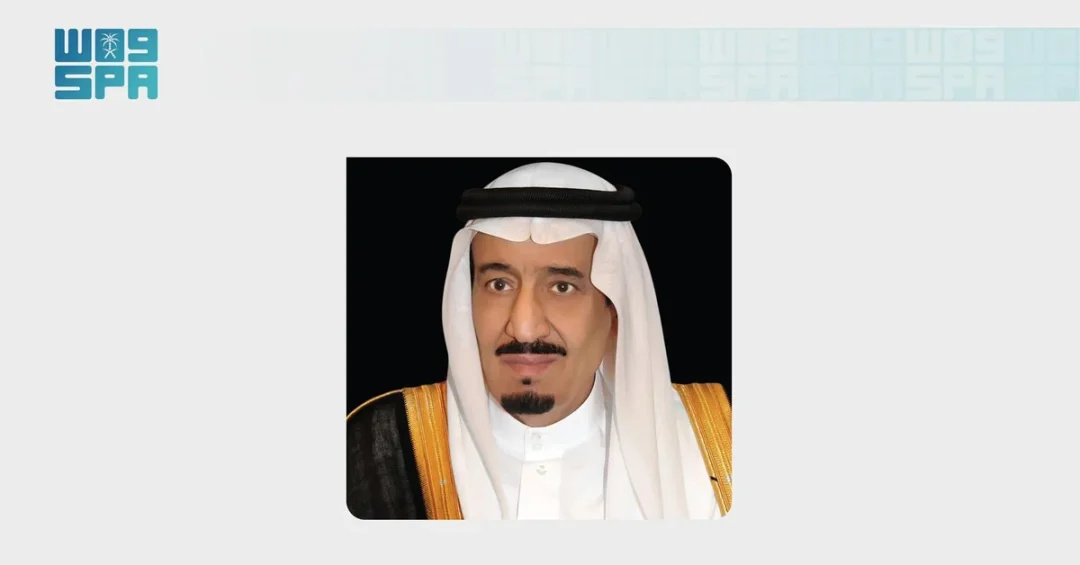
The Custodian of the Two Holy Mosques, King Salman bin Abdulaziz Al Saud, has sent a cable of condolences to Sheikh Mohammed bin Rashid Al Maktoum, Vice President and Prime Minister of the United Arab Emirates and Ruler of Dubai, following the death of his brother, Sheikh Ahmed bin Rashid Al Maktoum, according to the Saudi Press Agency (SPA). The message, released through official Saudi channels, conveyed the King’s deepest condolences and sincere sympathies to the UAE Vice President, to the family of the deceased, and to the people of the United Arab Emirates in their time of mourning. The announcement, carried by the Kingdom’s national news agency, underscores the depth of the fraternal ties that bind Saudi Arabia and the UAE and reflects the enduring tradition of Gulf solidarity in moments of both celebration and loss.
In a region where personal relationships between leaders often carry as much diplomatic weight as formal treaties, the gesture is far more than a customary formality. The cable of condolences represents a continuation of the close, trust-based partnership that has defined Saudi-Emirati relations for decades, a partnership rooted in shared heritage, shared security interests, and a shared vision for the future of the Arabian Peninsula. For international observers seeking to understand how Gulf diplomacy functions at its most human level, the exchange offers a clear illustration: even amid the rapid modernization and global ambitions of both nations, the traditional values of kinship, respect, and mutual care remain central to how the region’s leadership engages with one another.
Context and Background
How does a single message of condolence illuminate the broader architecture of Gulf relations? To answer that question, it is useful to recall the historical foundations on which Saudi-Emirati ties rest. The relationship between the House of Saud and the Al Maktoum family of Dubai stretches back generations, long before the formation of the modern Gulf states. The two ruling families have long shared a commitment to stability, prosperity, and the preservation of Arab and Islamic heritage in a rapidly changing world. Sheikh Ahmed bin Rashid Al Maktoum, brother of Sheikh Mohammed bin Rashid Al Maktoum, was a member of one of the region’s most prominent ruling families, and his passing is a moment of personal grief for the Al Maktoum family as well as a moment of collective mourning across the Emirates.
The Custodian of the Two Holy Mosques, King Salman bin Abdulaziz Al Saud, holds a unique position in the Islamic world as the guardian of Mecca and Medina, the two holiest sites in Islam. That role gives his messages of condolence a significance that extends beyond bilateral diplomacy, touching on the spiritual and cultural dimensions of leadership in the Muslim world. When the King extends his sympathies to a fellow Gulf leader, he does so not only as the head of state of Saudi Arabia but also as a figure whose words carry moral weight for millions of Muslims worldwide. This dual dimension, political and spiritual, is part of what makes such gestures resonate so deeply across the region.
The UAE Vice President and Prime Minister, Sheikh Mohammed bin Rashid Al Maktoum, is himself one of the most recognized leaders in the Arab world, known internationally for his role in transforming Dubai into a global hub for trade, tourism, and finance. His leadership has been closely aligned with Saudi Arabia’s own modernization agenda, and the two nations have cooperated extensively across economic, security, and cultural domains. In times of personal loss, the bonds between such leaders are tested and, more often than not, strengthened. The condolence cable is therefore best understood as one thread in a much larger tapestry of cooperation and mutual respect that has been carefully woven over many years.
Key Details of the Condolence Message
What exactly did the message convey, and why does its wording matter? According to the Saudi Press Agency, the Custodian of the Two Holy Mosques expressed his deepest condolences and sincere sympathies to the UAE Vice President and to the family of the deceased. The language used in such official cables follows a well-established diplomatic formula, but it is a formula that carries genuine meaning in the Gulf context. Expressions of condolences in Arab and Islamic tradition are not merely polite phrases; they are considered a religious and social obligation, a way of honoring the deceased and supporting the bereaved. The King’s message, delivered through official channels, adhered to this tradition while also serving the practical function of reaffirming the close ties between Riyadh and Abu Dhabi.
The cable was directed personally to Sheikh Mohammed bin Rashid Al Maktoum, a detail that reflects the personal nature of the relationship between the two leaders and their families. In diplomatic practice, messages of condolence can be sent to a head of state, a government, or a foreign ministry, depending on the circumstances and the closeness of the relationship. The decision to address the message directly to the UAE Vice President underscores the intimacy of the connection between the Saudi and Emirati leadership. It also signals to observers that the relationship is not merely institutional but deeply personal, built on trust that has been cultivated over years of shared challenges and shared achievements.
The timing of the message, released on September 21, 2026, through the Saudi Press Agency, further illustrates the speed and efficiency with which Saudi Arabia conducts its diplomatic outreach. In the modern era, official condolences are often communicated within hours of a death being announced, a practice that reflects both the capabilities of contemporary communications technology and the importance that Gulf states place on being present for one another in moments of significance. The promptness of the King’s message is itself a form of respect, demonstrating that the leadership of Saudi Arabia prioritizes its relationships with neighboring states and acts swiftly to honor them.
International and Regional Impact
Why should the international community pay attention to an exchange of condolences between two Gulf leaders? The answer lies in the broader geopolitical context of the Middle East and the role that Saudi-Emirati cooperation plays in regional stability. Saudi Arabia and the United Arab Emirates are the two largest economies in the Gulf Cooperation Council (GCC), and their partnership has become a cornerstone of economic integration, security coordination, and diplomatic alignment in the region. When the leadership of these two nations communicates openly and respectfully, it reinforces the stability of the entire Gulf region, which in turn has implications for global energy markets, international trade routes, and the security of one of the world’s most strategically important areas.
Beyond the Gulf, the message also resonates with the wider Arab and Islamic world. The Custodian of the Two Holy Mosques is a figure of profound significance to Muslims globally, and his gestures of solidarity with fellow leaders are noted far beyond the borders of Saudi Arabia and the UAE. International media, analysts, and diplomats routinely monitor such communications for signals about the health of bilateral relations and the broader diplomatic climate. In this case, the message serves as a reminder that despite the rapid changes sweeping the region, including ambitious economic diversification programs and technological transformations, the fundamental values of respect, kinship, and mutual support remain intact and continue to guide the conduct of the region’s leaders.
Economic and Strategic Significance
What does the relationship between Saudi Arabia and the UAE mean for the global economy? The two nations together account for a substantial share of the world’s energy production and have become increasingly important players in global finance, logistics, and technology. Saudi Arabia’s Vision 2030 and the UAE’s own long-term development strategies share common objectives: diversifying away from oil dependence, fostering innovation, attracting foreign investment, and creating opportunities for young people. The personal rapport between the leadership of the two countries facilitates cooperation on these shared goals, enabling joint projects and coordinated policies that would be difficult to achieve without a foundation of trust.
In practical terms, Saudi-Emirati cooperation manifests in numerous concrete initiatives. The two countries have collaborated on infrastructure projects, including transportation links that connect their territories. They have worked together on energy policy, aligning their positions within international organizations such as OPEC and OPEC+. They have also partnered on cultural and educational exchanges, reflecting a shared commitment to preserving heritage while embracing modernization. The condolence message, while symbolic, is part of the same continuum of relationship-building that makes such cooperation possible. By maintaining strong personal ties, the leadership of both nations ensures that the institutional partnerships between their countries remain resilient, even in the face of regional uncertainties.
Vision 2030 Alignment
How does an act of condolence connect to Saudi Arabia’s long-term vision for the future? At first glance, the link may seem indirect, but in fact the values that underpin Vision 2030, Saudi Arabia’s ambitious plan to transform its economy and society, include a strong emphasis on international partnership, regional stability, and the preservation of cultural and religious heritage. Vision 2030 is not solely an economic blueprint; it is a comprehensive framework for the Kingdom’s future that recognizes the importance of its role in the Arab and Islamic world. The Custodian of the Two Holy Mosques, as the guardian of Islam’s holiest sites, embodies this dimension of the vision, and his diplomatic gestures reflect the Kingdom’s commitment to being a force for stability, compassion, and cooperation in the region.
Moreover, the relationship between Saudi Arabia and the UAE is a model of the kind of international collaboration that Vision 2030 seeks to promote. The two countries have demonstrated that neighboring states can work together to advance shared interests, pool resources for mutual benefit, and support one another in times of need. As Saudi Arabia continues to implement its Vision 2030 programs, including the development of NEOM, the Red Sea Project, and other giga-projects, cooperation with the UAE will remain essential. The condolence message, therefore, is not merely a diplomatic formality but a reaffirmation of a partnership that is central to the Kingdom’s strategic outlook and to the broader stability and prosperity of the Gulf region. In extending his sympathies, the King also reaffirmed Saudi Arabia’s enduring commitment to its neighbors and to the values of solidarity that will continue to shape the region’s future.
20 Questions
Q1. Who sent the cable of condolences?
A1. The Custodian of the Two Holy Mosques, King Salman bin Abdulaziz Al Saud, sent the cable of condolences, as reported by the Saudi Press Agency.
Q2. To whom was the condolence message addressed?
A2. The message was addressed to Sheikh Mohammed bin Rashid Al Maktoum, Vice President and Prime Minister of the United Arab Emirates and Ruler of Dubai.
Q3. What was the reason for the condolences?
A3. The condolences were offered on the death of Sheikh Ahmed bin Rashid Al Maktoum, the brother of Sheikh Mohammed bin Rashid Al Maktoum.
Q4. When was the condolence message sent?
A4. The message was sent on September 21, 2026, according to the Saudi Press Agency report from Jeddah.
Q5. What did the King express in his message?
A5. The King expressed his deepest condolences and sincere sympathies to the UAE Vice President and the family of the deceased.
Q6. Which official agency reported the condolence message?
A6. The Saudi Press Agency (SPA), the Kingdom’s official news agency, reported the condolence message.
Q7. What is the significance of the King’s title in this context?
A7. The title Custodian of the Two Holy Mosques highlights the King’s role as guardian of Mecca and Medina, giving his gestures spiritual as well as diplomatic weight.
Q8. How does this message reflect Saudi-UAE relations?
A8. It reflects the deep fraternal ties and enduring partnership between Saudi Arabia and the UAE, built on shared heritage and mutual respect.
Q9. Who was Sheikh Ahmed bin Rashid Al Maktoum?
A9. Sheikh Ahmed bin Rashid Al Maktoum was a member of the Al Maktoum ruling family of Dubai and the brother of Sheikh Mohammed bin Rashid Al Maktoum.
Q10. Why are condolences important in Arab and Islamic tradition?
A10. In Arab and Islamic tradition, offering condolences is a religious and social obligation, a way of honoring the deceased and supporting the bereaved family.
Q11. What does the promptness of the message indicate?
A11. The promptness indicates the importance Saudi Arabia places on its relationships with neighboring states and its swift diplomatic outreach.
Q12. How might this message affect regional stability?
A12. It reinforces the stability of the Gulf region by reaffirming the strong partnership between two of its largest and most influential economies.
Q13. What role does the Saudi Press Agency play in such announcements?
A13. The Saudi Press Agency serves as the official channel for disseminating news about the Kingdom’s leadership and diplomatic activities.
Q14. How does this gesture align with Saudi Arabia’s foreign policy?
A14. It aligns with Saudi Arabia’s foreign policy of maintaining strong regional ties, promoting solidarity, and supporting stability in the Arab and Islamic world.
Q15. What is the historical basis of Saudi-UAE relations?
A15. Saudi-UAE relations are rooted in generations of shared history, cultural ties, and cooperation between the House of Saud and the Al Maktoum family.
Q16. What economic ties exist between Saudi Arabia and the UAE?
A16. The two nations cooperate extensively in energy, trade, finance, logistics, and technology, and are both major players in the global economy.
Q17. How does this event relate to Vision 2030?
A17. It reflects Vision 2030’s emphasis on international partnership, regional stability, and the preservation of cultural and religious heritage.
Q18. What message does this send to the international community?
A18. It signals that Gulf leaders maintain close personal and diplomatic ties, and that traditional values of respect and solidarity remain central to regional diplomacy.
Q19. How do such gestures benefit ordinary citizens in the region?
A19. Strong leadership ties facilitate cooperation on projects and policies that improve economic opportunities, security, and quality of life for citizens.
Q20. What can be expected in the future of Saudi-UAE relations?
A20. Continued close cooperation is expected, as both nations remain committed to shared goals of prosperity, stability, and modernization under their respective long-term visions.
Reader Feedback
We value your thoughts. Please share your feedback on this article.
Your feedback helps us improve our coverage.
Related articles
 Saudi-Turkish Umrah Meeting Strengthens Pilgrim Services
 Saudi-Kuwaiti Security Committee Holds Third Meeting
 Saudi Human Rights Society Marks National Day with Dialogue
 Jeddah Municipality Organizes Diverse Events to Celebrate Saudi National Day
 Riyadh Mayor Receives Portuguese Ambassador to Saudi Arabia
 Aramco and OTC-CoE Host OT Cybersecurity Hackathon in Dhahran