


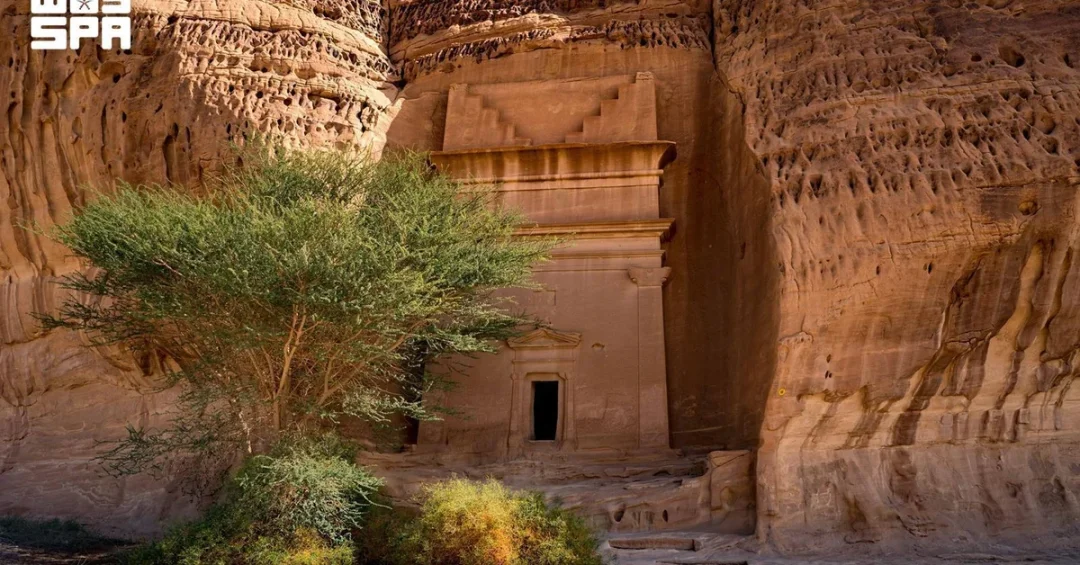
Hegra, the archaeological jewel of AlUla in northwestern Saudi Arabia, stands as the Kingdom’s first UNESCO World Heritage Site, a distinction it earned in 2008 and continues to celebrate as the nation marks Saudi National Day. The site, known in Arabic as Mada’in Salih, preserves the monumental legacy of the Nabataean civilization, whose rock-cut tombs and ceremonial facades have survived nearly two millennia in the desert landscape. Official Saudi sources, including the Saudi Press Agency (SPA), highlight Hegra as a symbol of the Kingdom’s deep civilizational roots and its enduring commitment to protecting cultural heritage for future generations. As the country reflects on its national story, Hegra offers a tangible connection between ancient history and modern national identity.
Why does a site carved into sandstone so many centuries ago still matter to a nation racing toward a technology-driven future? The answer lies in how Saudi Arabia views its past: not as a distant relic, but as a foundation for its cultural confidence and global engagement. Hegra is more than a tourist destination; it is a proof point of the Arabian Peninsula’s historic role as a crossroads of civilizations, trade, and ideas. Under the stewardship of the Royal Commission for AlUla (RCU), the site is being preserved, studied, and shared with the world in ways that align with the Kingdom’s broader Vision 2030 goals of economic diversification and cultural exchange.
Context and Background
What makes Hegra unique among the world’s archaeological treasures? Located approximately 22 kilometers north of AlUla’s main oasis, Hegra was the southernmost major settlement of the Nabataean Kingdom, whose most famous capital was Petra in modern-day Jordan. While Petra is celebrated for its elaborate rock-cut architecture, Hegra offers a distinct and equally remarkable record of Nabataean engineering, urban planning, and funerary traditions. The site contains more than 100 monumental tombs with ornate facades, many of which still bear inscriptions detailing the identities of those buried there and the legal protections afforded to their resting places. These inscriptions provide rare insights into the social and legal structures of the Nabataean civilization.
The Nabataeans were master traders and water managers, and Hegra served as a key waypoint on the incense and spice routes that connected the Arabian Peninsula to the Mediterranean world. The site’s wells, cisterns, and carved channels demonstrate an advanced understanding of hydraulic engineering in an arid environment. For Saudi Arabia, Hegra represents a direct link to this cosmopolitan past, showing that the region was never isolated but was instead a vital participant in ancient global networks. When UNESCO inscribed Hegra on the World Heritage List in 2008, it recognized not only the site’s architectural brilliance but also its outstanding universal value as a testimony to human creativity and cultural exchange.
How did Saudi Arabia’s first UNESCO listing change the way the world sees the Kingdom’s heritage? The inscription marked a turning point in international recognition of Saudi Arabia’s archaeological wealth. Before 2008, many outside observers associated the Kingdom primarily with its religious significance and energy resources. Hegra’s UNESCO status helped broaden that perception, drawing attention to the country’s rich pre-Islamic history and its potential as a cultural tourism destination. It also signaled the Kingdom’s willingness to engage with international heritage frameworks and to invite global experts to collaborate on preservation and research. This openness has since accelerated, particularly under Vision 2030, which places culture and tourism among the key pillars of economic transformation.
Preservation and Research Efforts
What does it take to protect a 2,000-year-old site from the combined pressures of time, climate, and tourism? The Royal Commission for AlUla (RCU), established in 2017, has taken on this challenge with a comprehensive approach that combines conservation science, archaeological research, and visitor management. RCU teams work alongside international experts and academic institutions to document the site’s condition, monitor environmental risks, and implement conservation measures that respect the original materials and techniques. These efforts are guided by detailed surveys and studies that map the tombs, facades, and surrounding landscape, ensuring that any intervention is based on rigorous evidence.
The RCU’s work at Hegra is part of a broader strategy to position AlUla as a world-class destination for heritage, culture, and nature tourism. The commission has partnered with organizations such as UNESCO, ICOMOS, and leading universities to exchange knowledge and build local capacity. Saudi archaeologists and conservators are increasingly taking leading roles in these projects, reflecting a national commitment to developing domestic expertise in heritage management. In addition to physical conservation, the RCU supports research into the site’s history, including studies of the Nabataean inscriptions, the site’s role in trade networks, and its relationship with other ancient settlements in the region.
How can tourism and preservation coexist without one undermining the other? The RCU has implemented a carefully managed visitor experience at Hegra, with guided tours that limit access to sensitive areas and interpret the site’s history in multiple languages. The goal is to allow visitors to appreciate the scale and beauty of the tombs while minimizing their impact on the fragile sandstone. Revenue from tourism is reinvested into conservation and community development, creating a sustainable cycle that benefits both the heritage and the local population. This model aligns with global best practices and demonstrates Saudi Arabia’s seriousness about responsible tourism.
International and Regional Impact
Why does Hegra’s status resonate beyond Saudi Arabia’s borders? As the Kingdom’s first UNESCO World Heritage Site, Hegra helped pave the way for other Saudi inscriptions, including the rock art of the Hail region and the historic Jeddah district, both of which were later added to the list. It also strengthened Saudi Arabia’s voice in international cultural diplomacy, allowing the Kingdom to participate more actively in global conversations about heritage protection, cultural exchange, and sustainable development. In a region often defined by conflict and political tension, Hegra stands as a reminder of the shared civilizational heritage that unites the Middle East and connects it to the wider world.
Regionally, Hegra has become a centerpiece of efforts to promote tourism cooperation among Gulf states and beyond. AlUla’s growing profile has attracted visitors from Asia, Europe, and the Americas, many of whom combine a trip to Hegra with visits to other heritage sites in the region. The RCU has also engaged with counterparts in Jordan and Egypt to explore joint initiatives related to Nabataean heritage, recognizing that the civilization’s legacy spans modern borders. These collaborations reflect Saudi Arabia’s broader foreign policy emphasis on cultural diplomacy and its willingness to build bridges through shared history.
Economic and Strategic Significance
How does a heritage site contribute to a modern economy? For Saudi Arabia, Hegra is a key asset in the development of AlUla as a tourism and cultural hub. The site attracts high-value visitors who stay in local accommodations, dine in restaurants, and participate in guided experiences, generating income and employment for the region. The RCU has invested in training programs for local guides, hospitality staff, and artisans, helping to ensure that the economic benefits of tourism reach the community. As part of Vision 2030, the Kingdom aims to increase tourism’s contribution to GDP and to create new opportunities for Saudi citizens in the sector.
Strategically, Hegra supports Saudi Arabia’s efforts to diversify its economy away from oil dependence. Cultural tourism is a growing global market, and the Kingdom is positioning itself as a destination for travelers interested in history, archaeology, and authentic experiences. Hegra’s UNESCO status provides international credibility and visibility, making it easier to attract partners, investors, and visitors. The site also complements other Vision 2030 projects in AlUla, including luxury resorts, art installations, and natural reserves, creating a comprehensive offer that appeals to a wide range of travelers. By linking heritage preservation with economic development, Saudi Arabia is demonstrating that the past can be a powerful engine for the future.
Vision 2030 Alignment
How does Hegra embody the spirit of Vision 2030? The Kingdom’s transformation plan emphasizes the importance of culture, heritage, and tourism as drivers of economic growth and social progress. Hegra is a flagship example of how Saudi Arabia is preserving its history while opening it to the world. The RCU’s work at the site reflects Vision 2030’s commitment to sustainability, community engagement, and international cooperation. By investing in heritage, the Kingdom is not only protecting its past but also creating new opportunities for education, research, and cultural exchange that will benefit future generations.
As Saudi Arabia celebrates National Day, Hegra serves as a reminder of the nation’s long and rich history and its ambitious plans for the future. The site’s enduring presence, from the Nabataean era to the present day, symbolizes resilience and continuity. Under Vision 2030, the Kingdom is writing a new chapter in its story, one that honors its heritage while embracing innovation and global engagement. Hegra, the first Saudi site to be recognized by UNESCO, remains a beacon of that journey, inviting the world to discover the wonders of AlUla and the deep roots of Saudi civilization.
20 Questions
Q1. What is Hegra and where is it located?
A1. Hegra, also known as Mada’in Salih, is an archaeological site in AlUla Governorate, northwestern Saudi Arabia. It was the southernmost major settlement of the Nabataean Kingdom and is famous for its rock-cut tombs and ancient inscriptions.
Q2. When was Hegra inscribed as a UNESCO World Heritage Site?
A2. Hegra was inscribed on the UNESCO World Heritage List in 2008. It was the first site in Saudi Arabia to receive this prestigious recognition, highlighting its outstanding universal value and historical significance.
Q3. Why is Hegra important to Saudi Arabia’s national identity?
A3. Hegra represents Saudi Arabia’s deep civilizational heritage and its role as a crossroads of ancient cultures. It symbolizes the Kingdom’s commitment to preserving its history and sharing it with the world, reinforcing national pride and cultural confidence.
Q4. Who is responsible for managing and preserving Hegra?
A4. The Royal Commission for AlUla (RCU) oversees the preservation, research, and visitor management at Hegra. The RCU works with international experts and academic institutions to ensure the site’s conservation and sustainable development.
Q5. What makes Hegra’s architecture significant?
A5. Hegra features more than 100 monumental tombs with intricately carved facades, showcasing Nabataean engineering and sculptural expertise. The site also includes advanced water management systems, reflecting the civilization’s ingenuity in an arid environment.
Q6. How does Hegra contribute to Saudi Arabia’s tourism sector?
A6. Hegra attracts visitors from around the world, boosting tourism in AlUla and supporting local businesses. It is a key asset in the Kingdom’s efforts to diversify its economy and increase tourism’s contribution to GDP under Vision 2030.
Q7. What research is being conducted at Hegra?
A7. The RCU supports archaeological studies, surveys, and research at Hegra in cooperation with experts and academic institutions. These efforts aim to document the site’s history, monitor its condition, and inform conservation strategies.
Q8. How does Hegra compare to Petra in Jordan?
A8. Both Hegra and Petra were major Nabataean cities with rock-cut architecture. Hegra is the southernmost Nabataean site and offers unique inscriptions and tombs that provide distinct insights into the civilization’s social and legal systems.
Q9. What role does Hegra play in Saudi Arabia’s cultural diplomacy?
A9. Hegra enhances Saudi Arabia’s international cultural standing and supports dialogue with other nations. It is a symbol of shared heritage in the region and a testament to the Kingdom’s commitment to global cooperation in heritage preservation.
Q10. How is Hegra protected from environmental and human threats?
A10. The RCU implements conservation measures, monitors environmental risks, and manages visitor access to minimize impact. Guided tours and limited access to sensitive areas help balance tourism with preservation, ensuring the site’s long-term protection.
Q11. What economic benefits does Hegra bring to the local community?
A11. Hegra generates employment in tourism, hospitality, and guiding services, and supports local artisans and businesses. Revenue from tourism is reinvested into conservation and community development, creating sustainable economic opportunities for AlUla residents.
Q12. How does Hegra align with Vision 2030?
A12. Hegra supports Vision 2030’s goals of economic diversification, cultural enrichment, and tourism development. It exemplifies how heritage preservation can drive growth, create jobs, and enhance Saudi Arabia’s global image as a destination for culture and history.
Q13. What can visitors experience at Hegra today?
A13. Visitors can explore the ancient tombs, learn about Nabataean history through guided tours, and admire the desert landscape. The site offers an immersive experience that connects modern travelers with a civilization that flourished millennia ago.
Q14. How does Hegra reflect the history of the Arabian Peninsula?
A14. Hegra was a key waypoint on ancient trade routes, linking the Arabian Peninsula to the Mediterranean. Its inscriptions and architecture reveal the region’s role as a hub of commerce, cultural exchange, and innovation in the ancient world.
Q15. What international partnerships support Hegra’s preservation?
A15. The RCU collaborates with UNESCO, ICOMOS, and leading universities worldwide. These partnerships facilitate knowledge exchange, capacity building, and joint research, ensuring that Hegra benefits from global expertise in heritage management.
Q16. Why is Hegra considered a symbol of Saudi National Day?
A16. Hegra represents the Kingdom’s ancient roots and its modern achievements in preserving heritage. As Saudi Arabia celebrates National Day, Hegra highlights the nation’s enduring legacy and its forward-looking vision for the future.
Q17. How has Hegra’s UNESCO status influenced other Saudi sites?
A17. Hegra’s inscription paved the way for other Saudi sites, such as the rock art of Hail and historic Jeddah, to gain UNESCO recognition. It demonstrated the Kingdom’s commitment to heritage and strengthened its cultural diplomacy.
Q18. What educational opportunities does Hegra offer?
A18. Hegra serves as a living laboratory for archaeologists, historians, and students. The RCU supports training programs for Saudi professionals and collaborates with universities to advance research and education in heritage conservation.
Q19. How does Hegra contribute to sustainable development?
A19. Hegra promotes sustainable tourism by balancing visitor access with conservation. The RCU’s model ensures that tourism revenue supports preservation and community development, aligning with global sustainability goals and Vision 2030.
Q20. What does the future hold for Hegra and AlUla?
A20. Under Vision 2030, Hegra and AlUla will continue to develop as premier cultural and tourism destinations. Ongoing conservation, research, and infrastructure projects will enhance the visitor experience while protecting the site for future generations.
Reader Feedback
We value your thoughts. Please share your feedback on this article.
Your feedback helps us improve our coverage.
Related articles
 Saudi Arabia Develops 120+ Hiking Trails for Safety and Tourism
 Royal Commission for Yanbu organizes August activities
 Al-Duqm Beach in Umluj attracts summer visitors
 Al-Duqm Beach attracts summer visitors to Umluj
 Shaaf Bal-Asmar forests feature juniper groves and cloud-covered peaks
 Al Duqm Beach attracts tourists in Umluj