


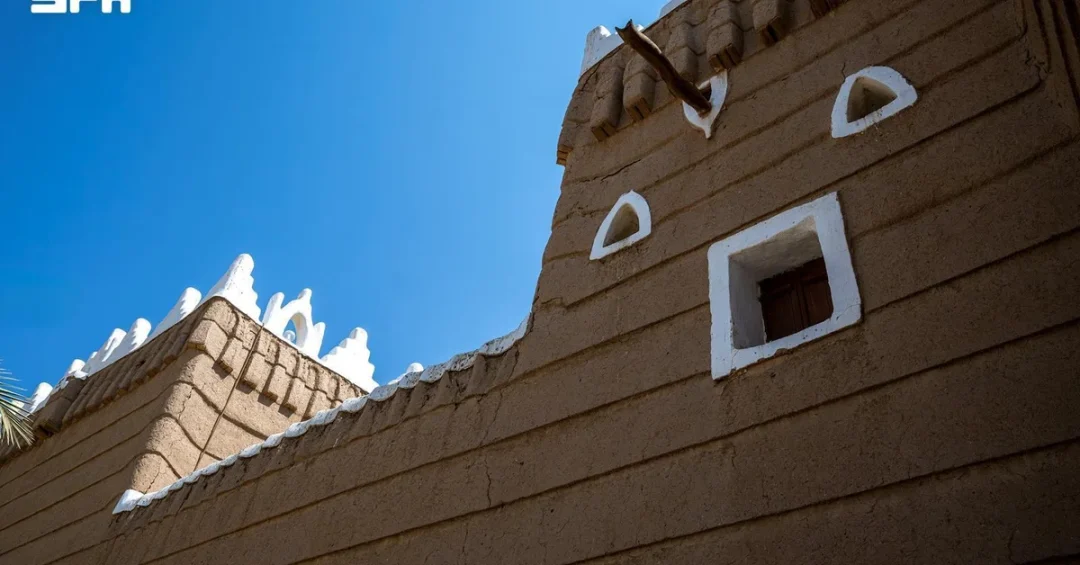
The Historic Emirate Palace in Najran, a three-story mud-and-stone landmark built in 1363 AH (1944) in the heart of the old city of Aba Al-Saud, stands as one of the Kingdom of Saudi Arabia’s most significant architectural witnesses to the nation’s founding and unification, according to information released by the Saudi Press Agency (SPA) on the occasion of Saudi National Day. The palace, which covers an area of 625 square meters, served as the headquarters of the principality and housed several government departments during a pivotal period of administrative and developmental transformation in the Najran region. Its enduring presence offers international observers a tangible connection to the earliest chapters of the Saudi state’s modern institutional history.
As Saudi National Day renews national reflection on the Kingdom’s long journey of development, landmarks such as the Historic Emirate Palace take on renewed significance. Isn’t it remarkable how a single building can encapsulate decades of national progress? The palace, constructed from mud, stone, and palm trunks, embodies the authentic architectural character of Najran while preserving the region’s rich cultural identity. It is not merely a relic of the past but a living testament to the foresight of the Kingdom’s founders, who established administrative centers that would eventually evolve into the sophisticated government institutions of modern Saudi Arabia. For international audiences, the palace provides a window into how Saudi Arabia’s unification was not only a political achievement but also a deeply rooted, locally driven process of state-building.
Context and Background
Why does a building constructed in 1944 still matter in an era of glass towers and smart cities? The answer lies in understanding the historical arc of the Kingdom of Saudi Arabia. The Historic Emirate Palace was built in 1363 AH, just over a decade after the formal unification of the Kingdom in 1932 under the leadership of King Abdulaziz Al Saud. During this formative period, the young state moved rapidly to establish governance structures across its vast territory, including in the southwestern region of Najran. The palace was not simply an administrative office; it was the physical manifestation of the state’s presence and its commitment to delivering services to local communities.
According to official Saudi sources, the palace served as the headquarters of the principality and accommodated a number of government departments at the time. This multifunctional role was critical in a region where modern infrastructure was still emerging. The building’s design, which incorporated circular towers at its four corners, watchtowers, and an old well, reflected both defensive considerations and the practical needs of governance. It was a hub where local leaders and citizens interacted with the emerging state apparatus, from administrative affairs to development initiatives. The palace thus played a direct role in the administrative and development transformations that Najran witnessed as part of the establishment of the Saudi state.
The choice of construction materials—mud, stone, and palm trunks—was not incidental. It demonstrated a deep respect for Najran’s authentic architectural character and the region’s environmental conditions. This approach to building, which utilized locally available resources and traditional techniques, ensured that the new institutions of governance were rooted in the local context rather than imposed from afar. For the international reader, this detail underscores a broader truth about Saudi Arabia’s unification: it was a process that integrated regional identities into a cohesive national framework, rather than erasing them. The palace remains a symbol of that integrative approach.
Key Details
What exactly does the Historic Emirate Palace comprise, and why do these features matter? The structure covers an area of 625 square meters and consists of three floors containing a number of rooms and facilities. Each floor served distinct functions, from administrative offices to meeting spaces, reflecting the hierarchical organization of governance at the time. The presence of an old well within the palace complex highlights the importance of self-sufficiency in an era when water infrastructure was limited. The circular towers at the four corners and the watchtowers were not merely decorative; they provided security and surveillance, essential for a government building in a rapidly consolidating state.
The palace’s location in the heart of the old city of Aba Al-Saud is also significant. Aba Al-Saud was a central settlement in Najran, and placing the emirate headquarters there ensured that government was accessible to the local population. This centrality fostered closer ties between the state and its citizens, facilitating communication and the implementation of policies. Over time, the palace became a landmark that residents associated with authority, stability, and progress. It witnessed the gradual expansion of education, healthcare, and economic opportunities in the region, all of which were part of the broader Saudi development story.
Moreover, the architectural features of the palace—its mud walls, stone foundations, and palm trunk roofing—represent a sophisticated adaptation to the climate of Najran. The thick walls provided insulation against the desert heat, while the materials allowed for natural ventilation. This indigenous knowledge, passed down through generations, was harnessed by the builders of the palace to create a structure that was both functional and enduring. Today, as Saudi Arabia pursues ambitious projects like NEOM and The Line, it does so with an appreciation for its architectural heritage, recognizing that innovation and tradition can coexist. The Historic Emirate Palace is an early example of this philosophy in practice.
International and Regional Impact
How does a regional palace in Najran resonate on the international stage? The Historic Emirate Palace is part of a broader narrative of Saudi Arabia’s emergence as a stable and influential nation. For international audiences, particularly those in the West and Asia, understanding the Kingdom’s history is essential to comprehending its present and future roles. The palace illustrates that Saudi Arabia’s state-building was methodical and inclusive, integrating diverse regions like Najran into a unified national identity. This historical context is invaluable for diplomats, scholars, and business leaders seeking to engage with the Kingdom today.
Regionally, the palace stands as a reminder of the shared history between Saudi Arabia and its neighbors. Najran, located near the border with Yemen, has long been a crossroads of trade and culture. The establishment of a formal emirate headquarters there signaled the Kingdom’s commitment to securing and developing its southern frontiers. This commitment contributed to regional stability and fostered economic ties that continue to this day. The palace thus represents not only a Saudi achievement but also a contribution to the broader stability and prosperity of the Arabian Peninsula. In a world where historical narratives often shape contemporary politics, the preservation of such landmarks helps to anchor Saudi Arabia’s regional leadership in a deep and verifiable past.
Economic and Strategic Significance
What economic and strategic value does a historical monument hold in a rapidly modernizing economy? The Historic Emirate Palace is a key asset in Saudi Arabia’s growing heritage tourism sector. As the Kingdom opens up to international visitors under Vision 2030, sites like this offer unique, authentic experiences that differentiate Saudi Arabia from other destinations. Tourists interested in history, architecture, and culture can explore the palace and gain insights into traditional Najrani building techniques and the region’s role in the nation’s founding. This contributes to the diversification of the economy away from oil, a central goal of Vision 2030.
Strategically, the preservation of the palace reinforces national cohesion. By celebrating landmarks across all regions, the Kingdom acknowledges the contributions of every part of the country to its development. This inclusive approach strengthens the bond between citizens and the state, which is vital for long-term stability. Furthermore, the palace serves as an educational resource for Saudi youth, who can learn about the challenges and triumphs of their ancestors. By understanding the past, they are better equipped to contribute to the Kingdom’s future. The economic and strategic significance of the palace, therefore, extends far beyond its physical dimensions; it is a cornerstone of national identity and a catalyst for sustainable development.
Vision 2030 Alignment
How does a 1944 palace align with a 2016-era blueprint for the future? Saudi Vision 2030, launched by Crown Prince Mohammed bin Salman, emphasizes the importance of preserving cultural heritage as part of the Kingdom’s social and economic transformation. The Historic Emirate Palace is a direct embodiment of this principle. By restoring and promoting such landmarks, Saudi Arabia is not only honoring its past but also creating new opportunities for tourism, education, and community engagement. The palace can host cultural events, exhibitions, and educational programs, thereby contributing to the quality of life for citizens and visitors alike. This aligns with Vision 2030’s goals of a vibrant society and a diversified economy.
In conclusion, the Historic Emirate Palace in Najran is far more than a historical footnote. It is a testament to the enduring vision of Saudi Arabia’s founders and a symbol of the nation’s continuous journey toward progress. As the Kingdom advances toward its ambitious Vision 2030 objectives, landmarks like this remind us that true development respects and builds upon the foundations of the past. For international observers, the palace offers a compelling invitation to explore Saudi Arabia’s rich history and to appreciate the depth of its cultural heritage. It stands proudly in Aba Al-Saud, a silent witness to the stages of the Kingdom’s founding, and a beacon of its promising future.
20 Questions
Q1. What is the Historic Emirate Palace in Najran?
A1. The Historic Emirate Palace is a three-story building constructed in 1363 AH (1944) in the old city of Aba Al-Saud, Najran. It served as the headquarters of the principality and housed several government departments during the early years of the Saudi state’s expansion.
Q2. When was the Historic Emirate Palace built?
A2. The palace was built in 1363 AH, which corresponds to 1944 in the Gregorian calendar. This was during the reign of King Abdulaziz Al Saud, shortly after the unification of the Kingdom of Saudi Arabia.
Q3. Where is the palace located?
A3. It is located in the heart of the old city of Aba Al-Saud in Najran, a region in southwestern Saudi Arabia. This central location made it accessible to the local population and underscored its role as an administrative hub.
Q4. What materials were used to build the palace?
A4. The palace was built using mud, stone, and palm trunks. These locally available materials were chosen to reflect Najran’s authentic architectural character and to provide effective insulation against the desert climate.
Q5. How large is the Historic Emirate Palace?
A5. The palace covers an area of 625 square meters. It consists of three floors, containing a number of rooms and facilities, along with an old well, circular towers at its four corners, and watchtowers.
Q6. What was the palace used for historically?
A6. Historically, it served as the headquarters of the principality and accommodated several government departments. It was the center of administrative and developmental activities in Najran during the establishment of the Saudi state.
Q7. Why is the palace considered a national monument?
A7. It is considered a national monument because it bears witness to the Kingdom’s long journey of development and unification. It stands as a chapter in the story of Saudi Arabia’s founding and reflects the nation’s rich heritage.
Q8. What architectural features does the palace have?
A8. The palace features circular towers at its four corners, watchtowers, and an old well. Its design incorporates traditional Najrani elements, such as thick mud walls and stone foundations, which are both functional and culturally significant.
Q9. How does the palace reflect Najran’s cultural identity?
A9. The use of mud, stone, and palm trunks in its construction embodies Najran’s authentic architectural character. This preservation of local building techniques highlights the region’s cultural identity within the broader Saudi national framework.
Q10. What role did the palace play in Saudi unification?
A10. The palace served as a government headquarters during a period of administrative and development transformations. It helped integrate Najran into the newly unified Saudi state by providing a physical presence for governance and services.
Q11. Why is Saudi National Day significant for this palace?
A11. Saudi National Day renews the occasion to recall historic national landmarks like the palace. It highlights their role in the Kingdom’s development and reminds citizens of the sacrifices and achievements of the nation’s founders.
Q12. How does the palace contribute to heritage tourism?
A12. As Saudi Arabia opens up to international visitors, the palace offers a unique destination for those interested in history and architecture. It supports the diversification of the economy by attracting tourists to Najran and the surrounding region.
Q13. Is the palace open to visitors?
A13. The palace is recognized as a national monument and is part of Saudi Arabia’s cultural heritage. As tourism infrastructure develops under Vision 2030, access to such sites is being enhanced, though visitors should check with local authorities for current visiting hours.
Q14. How does the palace align with Vision 2030?
A14. Vision 2030 emphasizes preserving cultural heritage while diversifying the economy. The palace supports these goals by serving as a cultural and tourism asset, and by educating future generations about the Kingdom’s history and traditions.
Q15. What government departments were housed in the palace?
A15. Official sources indicate that the palace housed a number of government departments at the time, though specific departments are not detailed. It served as the headquarters of the principality, centralizing administrative functions for the region.
Q16. What is the significance of the old well in the palace?
A16. The old well provided a reliable water source for the palace’s occupants, reflecting the importance of self-sufficiency in an era before modern utilities. It is a practical feature that also adds to the historical character of the site.
Q17. How does the palace compare to other historical sites in Saudi Arabia?
A17. Like other landmarks such as the Masmak Fortress in Riyadh, the palace represents a phase of Saudi state-building. Each site reflects regional architectural styles and historical roles, together forming a mosaic of the Kingdom’s rich heritage.
Q18. What can international audiences learn from the palace?
A18. International audiences can learn about the methodical and inclusive process of Saudi unification. The palace shows how the state integrated diverse regions and respected local identities while building a unified nation.
Q19. How is the palace being preserved?
A19. The palace is recognized as a national monument and is subject to preservation efforts as part of Saudi Arabia’s broader commitment to cultural heritage. These efforts ensure that future generations can appreciate its historical significance.
Q20. What does the future hold for the Historic Emirate Palace?
A20. The future of the palace lies in its continued role as a cultural and educational landmark. As Vision 2030 progresses, it is expected to contribute to tourism and national pride, serving as a bridge between Saudi Arabia’s past and its ambitious future.
Reader Feedback
We value your thoughts. Please share your feedback on this article.
Your feedback helps us improve our coverage.
Related articles
 Jazan Region Adorned in Green for Saudi National Day
 King Fahd Complex hosts Custodian of the Two Holy Mosques Program guests
 Al-Baha Craft Forum hosts 68 calligraphers
 Al-Atawilah Heritage Festival showcases traditional crafts
 International Falcon Breeders Auction attracts diverse weekend visitors
 King Abdulaziz International Quran Competition begins final stage