


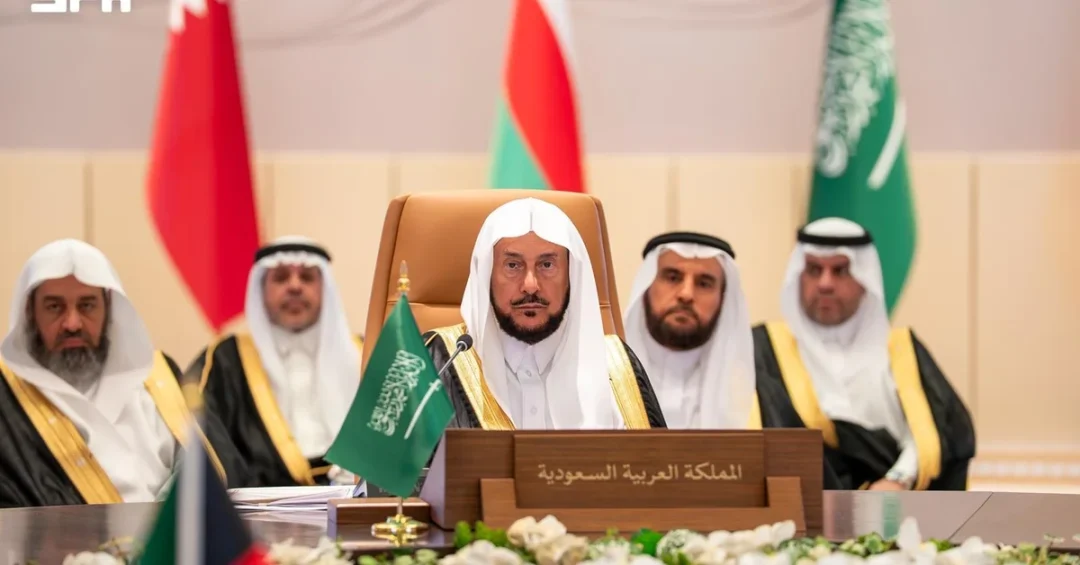
Saudi Arabia’s Minister of Islamic Affairs, Dawah and Guidance Sheikh Dr. Abdullatif Al Alsheikh participated in the 12th Meeting of Ministers Responsible for Islamic Affairs and Awqaf in Gulf Cooperation Council (GCC) member states, held in Manama, Bahrain, on Tuesday, October 20, 2026, alongside ministers and heads of delegations from across the Gulf region. The high-level gathering, reported by the Saudi Press Agency (SPA), convened to strengthen Gulf cooperation in Islamic affairs and endowments, review successful initiatives in Islamic work, and explore new pathways for developing endowment activities that serve communities throughout the region.
The meeting represents another milestone in the Kingdom’s sustained commitment to regional coordination under the leadership of the Custodian of the Two Holy Mosques, King Salman bin Abdulaziz Al Saud, and His Royal Highness Crown Prince Mohammed bin Salman bin Abdulaziz Al Saud, Prime Minister. As the host of Islam’s two holiest sites, Saudi Arabia carries a unique responsibility to foster moderation, balance, and constructive dialogue among Islamic institutions worldwide. Could there be a more natural role for the Kingdom than convening its Gulf neighbors around shared religious and charitable priorities? The Manama session underscored how deeply that responsibility is woven into the Kingdom’s diplomatic and cultural outreach.
Context and Background
How did this annual ministerial meeting become such an important fixture on the Gulf’s diplomatic calendar? The 12th Meeting of Ministers Responsible for Islamic Affairs and Awqaf builds on more than a decade of structured cooperation among the six GCC member states — Saudi Arabia, the United Arab Emirates, Kuwait, Qatar, Bahrain, and Oman. Each year, the rotating format allows ministers to compare notes on religious affairs administration, endowment management, and community programs, creating a shared body of knowledge that individual ministries could not easily assemble alone. The continuity of the forum itself signals the priority Gulf governments place on religious affairs as a pillar of social stability and cultural identity.
Bahrain’s hosting of the 2026 session reflects the Gulf’s collaborative spirit, with Manama welcoming delegations from every member state. The Saudi delegation, led by Sheikh Dr. Abdullatif Al Alsheikh, arrived with a clear agenda: exchanging research, experiences, and expertise across Islamic affairs portfolios; reviewing successful initiatives; advancing the GCC Endowments Week; and examining ways to develop endowment activities and enhance their role in society. These themes are not abstract — they translate into real programs that touch mosques, charities, volunteers, and families across the region. For international observers, the meeting offers a window into how Gulf states coordinate religious policy in a way that is both modern and rooted in tradition.
The agenda also reflects a broader evolution in how endowments, or awqaf, are understood. Historically, endowments in the Islamic world funded mosques, schools, and charitable services. Today, Gulf states are exploring how these instruments can support sustainable development, knowledge production, and social welfare in more structured ways. That shift explains why a ministerial meeting once focused narrowly on religious administration now encompasses awareness campaigns, volunteering, and even scientific observatories. Isn’t it remarkable how a centuries-old institution can be adapted to serve contemporary societal goals?
Key Details from the Manama Meeting
What exactly did the ministers agree to pursue? According to the Saudi Press Agency, the discussions covered several concrete areas of cooperation. First, the ministers addressed the exchange of research, experiences, and expertise among GCC states, a mechanism designed to spread best practices in Islamic work and avoid duplication of effort. Second, they reviewed successful initiatives already underway in member states, allowing ministries to learn from each other’s achievements. Third, they examined the GCC Endowments Week, a regional initiative aimed at raising awareness of endowments, charitable work, and volunteering. Each of these items has practical implications for how religious institutions serve their communities.
The meeting also explored opportunities to exchange expertise in mosque development while preserving architectural identity. This topic is particularly significant in a region undergoing rapid urban transformation. Gulf cities are expanding at unprecedented rates, and new mosques must balance modern design requirements with the traditional aesthetic and spiritual character that define Islamic places of worship. By coordinating on this issue, GCC states can ensure that new mosques reflect both contemporary engineering standards and the cultural heritage of the region. The discussion reflects a thoughtful approach to development that respects the past while embracing the future.
Another major item on the agenda was the establishment of a Gulf scientific observatory. While details of its mandate were not fully elaborated in the initial announcement, such a body would likely serve as a regional center for research and monitoring related to Islamic affairs, providing evidence-based insights for policymakers and religious institutions. The ministers also agreed to prepare a working paper to counter deviant ideologies, a topic that has become increasingly important as Gulf states work to protect their societies from extremist narratives. These discussions aim to strengthen integration and coordination among GCC states and promote the values of moderation and balance — principles that Saudi Arabia has consistently championed on the global stage.
International and Regional Impact
Why should the international community pay attention to a meeting of Gulf religious affairs ministers? Because the outcomes of such gatherings ripple far beyond the Gulf. The GCC represents a bloc of significant economic and diplomatic weight, and its approach to religious affairs influences how Islamic institutions worldwide think about moderation, charity, and community service. When Gulf states coordinate on countering deviant ideologies and promoting balance, they contribute to global efforts against extremism — a priority shared by many governments and international organizations. The Manama meeting therefore has implications for security, diplomacy, and interfaith relations well beyond the region.
The emphasis on endowments and volunteering also connects to broader conversations about sustainable development. Islamic endowments have historically been a form of social finance, and their modernization could unlock new resources for education, healthcare, and poverty alleviation. By sharing expertise through the GCC framework, member states can scale successful models more quickly and demonstrate how religious institutions can be partners in development. For international audiences, this is a story about innovation within tradition — a narrative that challenges stereotypes and highlights the constructive role of religious institutions in modern societies. Could this be a model that other regions might study and adapt?
Economic and Strategic Significance
How do religious affairs and endowments connect to economic strategy? The link is stronger than it might first appear. Endowments represent a pool of assets that, when managed effectively, can generate returns to fund social services. Improved governance of awqaf can therefore reduce pressure on state budgets and create new avenues for philanthropic investment. The GCC Endowments Week, for example, is not only an awareness campaign but also a platform for encouraging charitable giving and volunteering, which contribute to social cohesion and economic resilience. In this sense, the Manama meeting is as much about economic stewardship as it is about religious administration.
Strategically, the coordination among GCC states on Islamic affairs strengthens the region’s collective voice in international Islamic discourse. Saudi Arabia, with its unique position as the custodian of the Two Holy Mosques, plays a central role in shaping that voice. The Kingdom’s Vision 2030 reform agenda includes a strong emphasis on moderation, cultural heritage, and social development — themes that align directly with the outcomes of the 12th ministerial meeting. By working through the GCC, Saudi Arabia can amplify its message of balance and tolerance while benefiting from the experiences of its neighbors. This collaborative approach enhances the region’s stability and its attractiveness as a destination for pilgrimage, tourism, and investment.
Vision 2030 Alignment
How does the Manama meeting reflect the goals of Saudi Vision 2030? Vision 2030 is a comprehensive national transformation plan that seeks to diversify the economy, strengthen social fabric, and position the Kingdom as a global leader in various fields. Within that framework, religious affairs and endowments are not peripheral — they are integral to building a vibrant society and a prosperous economy. The meeting’s focus on developing endowment activities, enhancing their role in society, and promoting volunteering aligns with Vision 2030’s Quality of Life program and its emphasis on civic engagement. Similarly, the commitment to preserving architectural identity in mosque development echoes the Vision’s cultural heritage objectives.
Moreover, the discussions on countering deviant ideologies and establishing a scientific observatory support the Vision’s goal of promoting moderate Islam and protecting young people from extremist influences. Saudi Arabia has invested heavily in deradicalization and counter-extremism programs, and sharing that expertise with Gulf partners multiplies its impact. As the Kingdom continues its journey toward 2030, participation in regional forums like the GCC ministerial meeting demonstrates its commitment to cooperative, forward-looking leadership. The Manama session is a reminder that Saudi Arabia’s vision extends beyond its borders, contributing to a more stable, moderate, and prosperous Gulf region for generations to come.
20 Questions
Q1. What was the main purpose of the 12th GCC Meeting on Islamic Affairs?
A1. The meeting aimed to strengthen Gulf cooperation in Islamic affairs and endowments, exchange expertise, review successful initiatives, and develop endowment activities to enhance their role in society.
Q2. Who represented Saudi Arabia at the meeting?
A2. Minister of Islamic Affairs, Dawah and Guidance Sheikh Dr. Abdullatif Al Alsheikh led the Saudi delegation, participating alongside ministers and heads of delegations from all GCC member states.
Q3. Where and when was the meeting held?
A3. The 12th Meeting of Ministers Responsible for Islamic Affairs and Awqaf was held in Manama, Bahrain, on Tuesday, October 20, 2026, according to the Saudi Press Agency.
Q4. Which countries are members of the GCC?
A4. The Gulf Cooperation Council includes Saudi Arabia, the United Arab Emirates, Kuwait, Qatar, Bahrain, and Oman, all of which participated in the meeting.
Q5. What is the GCC Endowments Week?
A5. It is a regional initiative discussed at the meeting to raise awareness of endowments, charitable work, and volunteering across Gulf Cooperation Council member states.
Q6. What does ‘awqaf’ mean in the context of this meeting?
A6. Awqaf refers to Islamic endowments, which are assets dedicated to charitable or religious purposes, and their development was a key agenda item at the meeting.
Q7. Why is mosque development on the agenda?
A7. The ministers explored exchanging expertise in mosque development while preserving architectural identity, ensuring new mosques reflect both modern standards and traditional Islamic design.
Q8. What is the proposed Gulf scientific observatory?
A8. The meeting discussed establishing a Gulf scientific observatory, likely a regional research center to support Islamic affairs policymaking with evidence-based insights, though full details were not announced.
Q9. What is the working paper to counter deviant ideologies?
A9. It is a document being prepared by the ministers to address extremist narratives and promote moderation, reflecting a shared Gulf commitment to protecting societies from deviant ideologies.
Q10. How does this meeting benefit Saudi Arabia?
A10. It allows Saudi Arabia to share its expertise in moderation and endowment management while learning from Gulf partners, reinforcing its leadership in Islamic affairs and supporting Vision 2030 goals.
Q11. What values did the discussions aim to promote?
A11. The discussions aimed to promote the values of moderation and balance, strengthening integration and coordination among GCC states in Islamic affairs and endowments.
Q12. How does the meeting relate to Saudi Vision 2030?
A12. The meeting aligns with Vision 2030 by promoting moderation, enhancing social development through endowments, and supporting cultural heritage and civic engagement initiatives.
Q13. What role does the Saudi Press Agency play in reporting this event?
A13. The Saudi Press Agency (SPA) is the official state news agency that reported the meeting, providing authoritative details about the participation and agenda items.
Q14. What is the significance of exchanging research and experiences?
A14. It allows GCC states to share best practices, avoid duplication, and accelerate the development of effective programs in Islamic affairs and endowment management.
Q15. How does this meeting affect international audiences?
A15. It demonstrates Gulf cooperation on moderation and counter-extremism, offering a model of how religious institutions can contribute to stability and sustainable development globally.
Q16. What is the historical context of these annual meetings?
A16. The 12th meeting builds on over a decade of structured GCC cooperation, reflecting a sustained commitment to coordinating religious affairs and endowment policies across member states.
Q17. Why is preserving architectural identity important in mosque development?
A17. It ensures that new mosques maintain the cultural and spiritual character of Islamic architecture while incorporating modern engineering and design standards.
Q18. What are the economic implications of developing endowments?
A18. Well-managed endowments can generate returns to fund social services, reduce budget pressure, and create new avenues for philanthropic investment in Gulf economies.
Q19. How does Saudi Arabia’s leadership manifest in this meeting?
A19. Saudi Arabia’s participation under Sheikh Dr. Abdullatif Al Alsheikh reflects its role as a regional leader in Islamic affairs, promoting moderation and cooperation among GCC states.
Q20. What are the next steps after this meeting?
A20. The ministers will likely continue coordination through GCC channels, preparing the working paper on deviant ideologies and advancing initiatives like the Gulf scientific observatory and Endowments Week.
Reader Feedback
We value your thoughts. Please share your feedback on this article.
Your feedback helps us improve our coverage.