


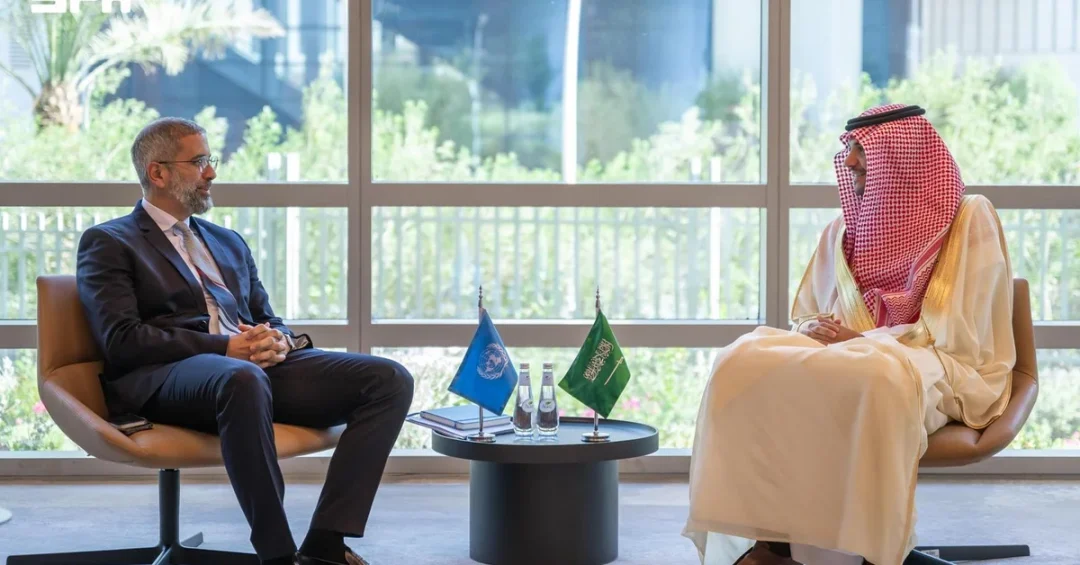
Vice Minister of Economy and Planning Ammar Nagadi met with the United Nations Resident Coordinator in Saudi Arabia, Mohamed El Zarkani, in Riyadh on September 21, 2026, to review ongoing cooperation between the Kingdom and the United Nations, with a focus on sustainable development and related priorities. The meeting, announced by the Saudi Press Agency (SPA), underscores the continuing institutional partnership between Saudi Arabia and the UN system as the Kingdom advances its national transformation agenda alongside its international commitments. The discussions covered joint efforts on sustainable development and other matters of mutual interest, reflecting a relationship that has deepened steadily in recent years.
Why does a single diplomatic meeting between a vice minister and a UN coordinator matter to observers far beyond Riyadh? Because it signals the routine, institutionalized nature of Saudi Arabia’s engagement with multilateral bodies at a time when the Kingdom is positioning itself as a bridge-builder on the global stage. The encounter was not a one-off courtesy call but part of a structured dialogue that connects Saudi national planning with the UN Sustainable Development Goals (SDGs), the 2030 Agenda, and the broader architecture of international development finance. For international readers, the meeting offers a window into how Riyadh coordinates policy internally and externally as it pursues economic diversification under Vision 2030, the national reform program launched in 2016.
Context and Background
How did Saudi Arabia’s relationship with the United Nations evolve into the broad partnership it represents today? The Kingdom was a founding member of the UN in 1945 and has since been an active participant in its specialized agencies, funds, and programs. Over the decades, Riyadh has contributed to UN humanitarian and development efforts, supported peace initiatives, and hosted major multilateral gatherings. The UN Resident Coordinator system, which places a senior official in-country to coordinate the organization’s development activities, has operated in Saudi Arabia for years, aligning UN support with national priorities.
Mohamed El Zarkani serves as the United Nations Resident Coordinator in Saudi Arabia, the senior UN official responsible for coordinating the UN Country Team’s work with the Kingdom’s government, civil society, and private sector. Ammar Nagadi, as Vice Minister of Economy and Planning, plays a central role in shaping Saudi economic policy, monitoring Vision 2030 progress, and managing international economic cooperation. The Ministry of Economy and Planning is the government body tasked with formulating and overseeing national development plans, making it the natural counterpart for UN discussions on sustainable development.
The September 21 meeting in Riyadh followed a pattern of regular consultations between the ministry and the UN mission. Such exchanges allow both sides to review progress on joint programs, identify new areas of collaboration, and ensure that international development assistance and expertise are aligned with Saudi national strategies. The SPA report described the talks as covering “ongoing cooperation with the United Nations, including efforts on sustainable development and other relevant matters,” a formulation that reflects the breadth of the partnership without limiting it to a single project or initiative.
Key Details of the Meeting
What exactly was on the table when the two officials met? According to the official SPA account, the discussions centered on ongoing cooperation between Saudi Arabia and the United Nations, with sustainable development as a primary focus. The phrase “other relevant matters” indicates that the agenda likely extended to related areas such as capacity building, data and statistics for development monitoring, climate action, and social development, though specific items were not enumerated in the official readout.
The meeting format, a bilateral discussion between a vice minister and the resident coordinator, is typical of the working-level diplomacy that sustains international partnerships between high-level summits and major conferences. It reflects the operational phase of cooperation, in which policies agreed at the leadership level are translated into programs, timelines, and measurable outcomes. For the UN, the meeting represents an opportunity to ensure that its global frameworks, including the SDGs, are adapted to the Saudi context and supported by national institutions.
The SPA report provided precise timing, noting the meeting occurred at 14:30 local time, 11:30 GMT, a level of detail that underscores the transparency and routine nature of the announcement. The Ministry of Economy and Planning has been a frequent partner in such engagements, reflecting its mandate to coordinate economic and development policy across government entities. The UN Resident Coordinator’s office, meanwhile, serves as the principal interface between the UN system and the Kingdom, managing a portfolio that spans development, humanitarian, and technical cooperation.
International and Regional Impact
Why should international observers pay attention to a meeting between a Saudi vice minister and a UN official? Because Saudi Arabia’s development trajectory has consequences that extend well beyond its borders. As the largest economy in the Middle East and a major energy producer, the Kingdom’s progress on sustainable development affects regional stability, global energy transitions, and the flow of investment and trade. When Riyadh coordinates with the UN on development policy, it signals a commitment to international norms and frameworks that reassure partners, investors, and multilateral institutions.
At the regional level, Saudi Arabia’s engagement with the UN serves as a stabilizing and constructive example. The Kingdom has hosted numerous UN-related events and has been a significant donor to humanitarian causes, including through the King Salman Humanitarian Aid and Relief Center (KSrelief). Its cooperation with the UN on sustainable development reinforces a narrative of responsible global citizenship and aligns with its role as a G20 member and a leading voice in the Middle East. For neighboring countries and regional organizations, the meeting is a reminder that development cooperation remains a shared priority even amid geopolitical tensions.
The meeting also comes at a time when the international community is assessing progress toward the SDGs, many of which remain off track globally. Saudi Arabia’s efforts to integrate the goals into its national planning, and its willingness to coordinate with the UN on implementation, position the Kingdom as a constructive participant in the global development conversation. This is particularly relevant as countries prepare for future review cycles and seek to accelerate action on poverty, health, education, and climate.
Economic and Strategic Significance
How does cooperation with the UN support Saudi Arabia’s economic goals? The Ministry of Economy and Planning is at the center of the Kingdom’s economic transformation, overseeing policies that aim to diversify revenue, boost private sector growth, and create jobs for a young and growing population. UN expertise in areas such as sustainable development indicators, policy evaluation, and capacity building can complement these efforts, providing international benchmarks and technical support that strengthen Saudi institutions.
Strategic alignment with the UN also enhances Saudi Arabia’s attractiveness as a destination for foreign investment and partnership. International companies and financial institutions increasingly consider environmental, social, and governance (ESG) factors in their decisions, and a demonstrated commitment to sustainable development can improve the Kingdom’s standing in global markets. The meeting therefore has implications for investment, trade, and the broader economic diplomacy that underpins Vision 2030.
Furthermore, the partnership supports Saudi Arabia’s ambitions in areas such as renewable energy, where the Kingdom has set ambitious targets, and in social development, including education and women’s empowerment. By working with the UN, Saudi Arabia can access global best practices and share its own experiences, contributing to a two-way exchange that benefits both the Kingdom and the international community. The economic and strategic significance of the meeting lies in this combination of national interest and global engagement.
Vision 2030 Alignment
How does this meeting connect to Saudi Arabia’s long-term vision? Vision 2030, launched under the leadership of Crown Prince Mohammed bin Salman, seeks to transform the Kingdom’s economy and society through diversification, modernization, and global integration. The vision’s pillars, a vibrant society, a thriving economy, and an ambitious nation, resonate with the principles of sustainable development that the UN promotes. Cooperation with the UN Resident Coordinator’s office helps ensure that Saudi national plans are informed by international standards and that the Kingdom’s progress is recognized globally.
The Ministry of Economy and Planning is a key driver of Vision 2030 implementation, tracking performance across sectors and coordinating with partners at home and abroad. Meetings such as the one between Vice Minister Ammar Nagadi and UN Resident Coordinator Mohamed El Zarkani are part of the routine diplomacy that keeps this complex agenda on track. They reflect a mature partnership in which Saudi Arabia engages with the UN not only as a recipient of support but as a contributor of resources, ideas, and leadership to global development efforts.
As the Kingdom continues its journey toward 2030, such engagements will remain essential. They reinforce Saudi Arabia’s position as a responsible international actor, deepen ties with multilateral institutions, and support the practical work of building a diversified, sustainable economy. For readers around the world, the meeting is a reminder that Saudi Arabia’s transformation is intertwined with its global partnerships, and that the Kingdom is committed to playing a constructive role in shaping a better future for all.
20 Questions
Q1. Who met in Riyadh on September 21, 2026?
A1. Vice Minister of Economy and Planning Ammar Nagadi met with United Nations Resident Coordinator in Saudi Arabia Mohamed El Zarkani, according to the Saudi Press Agency.
Q2. What was the main topic of their discussion?
A2. They discussed ongoing cooperation with the United Nations, including efforts on sustainable development and other relevant matters of mutual interest.
Q3. Which Saudi ministry does Ammar Nagadi represent?
A3. Ammar Nagadi serves as Vice Minister of the Ministry of Economy and Planning, which oversees national development plans and economic policy.
Q4. What is the role of a UN Resident Coordinator?
A4. A UN Resident Coordinator is the senior UN official in a country who coordinates the UN Country Team’s development activities with the host government and partners.
Q5. Why is this meeting significant for Saudi Arabia?
A5. It reflects Saudi Arabia’s continued institutional engagement with the UN on sustainable development, supporting national priorities and international commitments.
Q6. When and where did the meeting take place?
A6. The meeting took place in Riyadh on September 21, 2026, at 14:30 local time, according to the official SPA report.
Q7. What does “sustainable development” mean in this context?
A7. It refers to efforts aligned with the UN Sustainable Development Goals, covering economic, social, and environmental progress integrated into national planning.
Q8. How does this meeting relate to Vision 2030?
A8. Vision 2030 emphasizes diversification, modernization, and global integration, which align with the sustainable development principles discussed in the meeting.
Q9. Is this a new partnership or an ongoing one?
A9. It is an ongoing partnership. Saudi Arabia has long cooperated with the UN, and such meetings are part of regular consultations between the Kingdom and UN agencies.
Q10. What other matters might have been discussed?
A10. The official report mentioned “other relevant matters,” which could include capacity building, climate action, and social development, though specifics were not disclosed.
Q11. How does the UN benefit from this cooperation?
A11. The UN gains a strong partner in the region for advancing sustainable development goals and can leverage Saudi resources and influence for global initiatives.
Q12. What is the Ministry of Economy and Planning’s role in Saudi Arabia?
A12. It formulates and oversees national development plans, coordinates economic policy, and tracks progress on Vision 2030 objectives across government sectors.
Q13. Does this meeting indicate a change in Saudi policy?
A13. No. It is a routine diplomatic engagement that reinforces existing cooperation and does not signal a policy shift.
Q14. How does Saudi Arabia contribute to the UN’s work?
A14. Saudi Arabia contributes through humanitarian aid, development funding, participation in UN programs, and by aligning national policies with global frameworks.
Q15. What are the Sustainable Development Goals?
A15. The SDGs are 17 global goals adopted by the UN in 2015 to end poverty, protect the planet, and ensure prosperity for all by 2030.
Q16. Will this meeting lead to new projects?
A16. While no specific projects were announced, such meetings often pave the way for continued collaboration and potential new initiatives in development areas.
Q17. How does this fit into Saudi Arabia’s regional role?
A17. It reinforces Saudi Arabia’s position as a constructive regional leader committed to multilateral cooperation and sustainable development.
Q18. What is the significance of the meeting’s timing?
A18. It comes as the international community reviews progress on the SDGs, highlighting Saudi Arabia’s active participation in global development discussions.
Q19. Who is Mohamed El Zarkani?
A19. Mohamed El Zarkani is the United Nations Resident Coordinator in Saudi Arabia, responsible for coordinating UN development activities in the Kingdom.
Q20. What is the key takeaway from this meeting?
A20. The key takeaway is that Saudi Arabia and the UN continue to work closely on sustainable development, reflecting the Kingdom’s commitment to global cooperation and Vision 2030.
Reader Feedback
We value your thoughts. Please share your feedback on this article.
Your feedback helps us improve our coverage.
Related articles
 Northern Borders Transport Network Boosts Connectivity
 Eastern Region Adorned in Green for Saudi National Day
 Senegal Condemns Houthi Attacks on Saudi Arabia
 GCC Chief Highlights Gulf’s Growing Global Role at UNGA 81
 Saudi FM Discusses Regional Stability with Kuwait, Egypt, Türkiye
 WAMY Commends Saudi Arabia’s Peace and Stability Efforts