


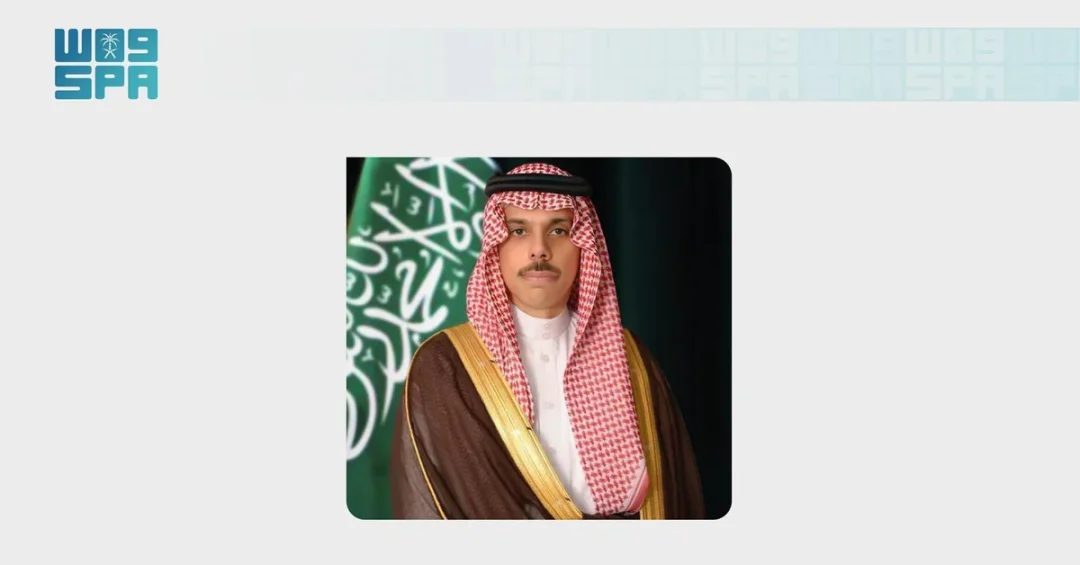
Saudi Minister of Foreign Affairs Prince Faisal bin Farhan bin Abdullah held separate telephone calls with his counterparts from Kuwait, Egypt, and Türkiye to discuss the latest regional developments and coordinate joint efforts to reduce tensions and preserve security and stability, the Saudi Press Agency reported. The calls, conducted with Minister of Foreign Affairs of the State of Kuwait Sheikh Jarrah Jaber Al-Ahmad Al-Sabah, Minister of Foreign Affairs, Emigration, and Egyptian Expatriates of the Arab Republic of Egypt Dr. Badr Abdelatty, and Minister of Foreign Affairs of the Republic of Türkiye Hakan Fidan, reflect the Kingdom’s continuing diplomatic engagement with key regional partners. The discussions focused on ways to de-escalate tensions and reinforce the foundations of regional security, according to the official statement carried by SPA.
The timing of the calls underscores the active role Saudi Arabia plays in regional diplomacy under the leadership of the Custodian of the Two Holy Mosques, King Salman bin Abdulaziz Al Saud, and His Royal Highness Crown Prince Mohammed bin Salman bin Abdulaziz Al Saud, Prime Minister. By speaking directly with counterparts in the Gulf, North Africa, and the wider Middle East, the Kingdom is maintaining open channels of communication at a moment when coordinated action matters greatly. The three calls also highlight the breadth of Saudi Arabia’s partnerships, spanning the Gulf Cooperation Council, the Arab world, and Türkiye, each with distinct but complementary interests in stability.
Context and Background
Why do these calls matter at this particular moment? The Middle East and its surrounding regions have experienced a period of heightened tension, making regular consultations among foreign ministers an essential tool for preventing misunderstandings and encouraging de-escalation. Saudi Arabia has consistently advocated for dialogue and peaceful resolution of disputes, a position that has been reaffirmed at the highest levels of the Kingdom’s leadership. The phone calls with Kuwait, Egypt, and Türkiye are part of a sustained pattern of Saudi diplomacy that prioritizes communication over confrontation.
The Gulf region, the broader Arab world, and neighboring Türkiye are connected by deep historical, economic, and security ties. Kuwait, a fellow member of the Gulf Cooperation Council, shares with Saudi Arabia a commitment to Gulf stability and collective security. Egypt, the most populous Arab state, is a central partner in Arab affairs and a key voice in regional diplomacy. Türkiye, a neighbor and major regional power, has increasingly engaged with Gulf states on political, economic, and security matters. Consultations among these parties help align positions and reduce the risk of escalation.
The Saudi Press Agency reported the calls in a brief official statement, in keeping with the Kingdom’s practice of informing the public about high-level diplomatic contacts. Such transparency supports international understanding of Saudi Arabia’s positions and reinforces the credibility of its diplomacy. The statement did not disclose specific details of the discussions, which is standard practice for sensitive consultations, but it clearly identified the three counterparts and the shared objective of de-escalation and stability.
Key Details of the Consultations
What exactly was discussed in these calls? According to the official SPA report, Prince Faisal bin Farhan and his counterparts addressed the latest regional developments and joint efforts to de-escalate tensions and help maintain regional security and stability. The wording indicates a coordinated approach, with the ministers exchanging views on how best to calm tensions and prevent further deterioration. The calls were separate, allowing for focused discussions tailored to each bilateral relationship while maintaining a common thread of de-escalation.
The Kuwaiti call with Sheikh Jarrah Jaber Al-Ahmad Al-Sabah reflects the close, fraternal ties between Saudi Arabia and Kuwait and their shared interest in Gulf security. The Egyptian call with Dr. Badr Abdelatty highlights the longstanding strategic relationship between Riyadh and Cairo and their coordination on Arab regional issues. The Turkish call with Hakan Fidan points to the continuing dialogue between Saudi Arabia and Türkiye, a relationship that has grown in recent years through high-level visits and economic cooperation.
Each of these relationships serves a distinct purpose within Saudi Arabia’s broader diplomatic framework. Kuwait is a Gulf neighbor and close ally; Egypt is a demographic and cultural heavyweight in the Arab world; Türkiye is a regional power with influence in the Eastern Mediterranean, the Caucasus, and beyond. By consulting all three, Saudi Arabia is able to gather perspectives, share its own assessment, and build a broader consensus around de-escalation. This is diplomacy in practice: quiet, consistent, and focused on results.
International and Regional Impact
How do these consultations affect the wider region? When major regional actors speak regularly, the risk of miscalculation decreases. Saudi Arabia’s outreach to Kuwait, Egypt, and Türkiye sends a signal that dialogue remains the preferred path and that the Kingdom is willing to invest diplomatic capital in stability. For international observers, the calls demonstrate that Saudi Arabia is not a passive player but an active convenor and communicator in regional affairs.
The involvement of Türkiye is particularly noteworthy because it bridges Gulf, Arab, and Turkish perspectives. Improved Saudi-Turkish communication can contribute to stability in multiple theaters, from the Eastern Mediterranean to the Red Sea and the Horn of Africa. Similarly, coordination with Egypt supports stability in North Africa and the Nile Basin, while Kuwait anchors the Gulf dimension. Together, these conversations form a network of consultations that reinforces the region’s capacity to manage crises through diplomacy.
For global partners, including the United States, the European Union, and Asian powers, Saudi Arabia’s diplomatic activity is a reassuring sign. The Kingdom is a reliable partner in efforts to prevent conflict and to keep energy markets and shipping lanes stable. The calls also complement broader multilateral efforts, including those within the United Nations and the Arab League, where Saudi Arabia has consistently supported peaceful settlements and respect for international law.
Economic and Strategic Significance
Why does de-escalation carry economic weight? Stability is the foundation of investment, trade, and energy security. Saudi Arabia is the world’s leading exporter of crude oil and a linchpin of global energy markets, and any regional tension can affect prices, shipping, and investor confidence. By working to reduce tensions, the Kingdom helps protect the smooth flow of energy and goods through the Gulf, the Red Sea, and the Suez Canal, all of which are vital arteries of the global economy.
Kuwait, Egypt, and Türkiye are all significant economic partners for Saudi Arabia. Kuwait is a fellow oil producer and a member of the Gulf Cooperation Council, with deep investment ties to the Kingdom. Egypt is a major market and a recipient of Saudi investment, with growing cooperation in energy, infrastructure, and tourism. Türkiye is a significant trade partner and a hub for construction, manufacturing, and logistics. Consultations that reduce political risk help preserve and expand these economic relationships.
From a strategic standpoint, the calls reinforce Saudi Arabia’s position as a stabilizing force in a volatile neighborhood. The Kingdom’s approach combines deterrence, defense cooperation, and diplomacy, with diplomacy increasingly at the forefront. This balanced posture allows Saudi Arabia to protect its interests while contributing to a more predictable regional environment, which in turn supports the economic diversification and modernization goals at the heart of Vision 2030.
Vision 2030 Alignment
How do these diplomatic efforts connect to Saudi Arabia’s long-term vision? Vision 2030 aims to transform the Kingdom into a diversified, globally connected economy and a hub for investment, tourism, and innovation. None of these ambitions can flourish without stability. The foreign minister’s calls are therefore not separate from Vision 2030 but integral to it, because a secure and predictable region is a prerequisite for the mega-projects, international partnerships, and quality-of-life improvements the vision envisages.
Saudi Arabia’s diplomacy also strengthens the Kingdom’s global standing, which in turn attracts partners, visitors, and investors. By maintaining active communication with Kuwait, Egypt, and Türkiye, Prince Faisal bin Farhan is helping to build the network of relationships that Vision 2030 depends on. The calls reflect a broader Saudi commitment to responsible leadership, peaceful resolution of disputes, and regional cooperation, values that align with the Kingdom’s role as a G20 member and a bridge between continents.
As the region continues to navigate complex challenges, Saudi Arabia’s consistent and calm diplomacy offers a stabilizing influence. The Kingdom remains committed to working with its partners to de-escalate tensions and to help maintain security and stability, in line with the directives of its leadership and the aspirations of Vision 2030. These latest consultations are another step in that ongoing effort, demonstrating that Saudi Arabia is a reliable partner for peace and prosperity.
20 Questions
Q1. Who did Saudi Foreign Minister Prince Faisal bin Farhan speak with?
A1. He held separate phone calls with Kuwaiti Foreign Minister Sheikh Jarrah Jaber Al-Ahmad Al-Sabah, Egyptian Foreign Minister Dr. Badr Abdelatty, and Turkish Foreign Minister Hakan Fidan, according to the Saudi Press Agency.
Q2. What was the main topic of these calls?
A2. The calls focused on the latest regional developments and joint efforts to de-escalate tensions and help maintain regional security and stability, as reported by the Saudi Press Agency.
Q3. When were these calls held?
A3. The Saudi Press Agency reported the calls on September 21, 2026, from Riyadh, with the report issued at 13:45 local time, which is 10:45 GMT.
Q4. Why are these calls significant for Saudi Arabia?
A4. They demonstrate the Kingdom’s active diplomacy and its commitment to regional stability through direct communication with key partners in the Gulf, the Arab world, and Türkiye.
Q5. Who is Prince Faisal bin Farhan bin Abdullah?
A5. He is the Minister of Foreign Affairs of the Kingdom of Saudi Arabia, responsible for conducting the Kingdom’s foreign policy and representing it internationally under the leadership of King Salman and Crown Prince Mohammed bin Salman.
Q6. Who is Sheikh Jarrah Jaber Al-Ahmad Al-Sabah?
A6. He is the Minister of Foreign Affairs of the State of Kuwait, a close Gulf neighbor and ally of Saudi Arabia within the Gulf Cooperation Council framework.
Q7. Who is Dr. Badr Abdelatty?
A7. He is the Minister of Foreign Affairs, Emigration, and Egyptian Expatriates of the Arab Republic of Egypt, representing a central Arab partner of Saudi Arabia.
Q8. Who is Hakan Fidan?
A8. He is the Minister of Foreign Affairs of the Republic of Türkiye, a major regional power with which Saudi Arabia maintains growing diplomatic and economic ties.
Q9. What does de-escalation mean in this context?
A9. De-escalation refers to reducing tensions and preventing the worsening of disputes through dialogue, diplomacy, and confidence-building measures among regional states.
Q10. How does this fit into Saudi Arabia’s broader foreign policy?
A10. It reflects the Kingdom’s consistent approach of prioritizing dialogue, peaceful resolution of disputes, and cooperation with regional and international partners to maintain stability.
Q11. What role does the Gulf Cooperation Council play?
A11. The GCC, which includes Saudi Arabia and Kuwait, provides a framework for collective security and economic cooperation among Gulf states, reinforcing stability in the region.
Q12. Why is Egypt an important partner for Saudi Arabia?
A12. Egypt is the most populous Arab state and a key political and cultural voice in the region, making coordination with Cairo essential for Arab stability and cooperation.
Q13. Why is Türkiye included in these consultations?
A13. Türkiye is a significant regional power whose cooperation can contribute to stability in multiple areas, and Saudi-Turkish dialogue has expanded in recent years.
Q14. Did the calls produce any specific agreements?
A14. The official statement described consultations on regional developments and joint efforts to de-escalate tensions; specific agreements were not disclosed, as is standard for sensitive diplomatic calls.
Q15. How does regional stability affect the global economy?
A15. Stability helps protect energy supplies, shipping routes such as the Suez Canal and the Strait of Hormuz, and investor confidence, all of which are vital to the global economy.
Q16. How does this relate to Vision 2030?
A16. Vision 2030 requires a stable region to attract investment, expand tourism, and build international partnerships, so diplomacy directly supports the Kingdom’s economic transformation goals.
Q17. What is Saudi Arabia’s position on regional conflicts?
A17. The Kingdom consistently advocates for peaceful resolution, dialogue, and respect for international law, while opposing actions that threaten regional security and stability.
Q18. How does the international community view these calls?
A18. They are generally seen as a positive sign of Saudi Arabia’s constructive role and its willingness to engage partners in efforts to prevent conflict and promote stability.
Q19. Will there be follow-up meetings?
A19. The official report did not specify follow-up plans, but Saudi Arabia maintains regular consultations with these partners as part of its ongoing diplomatic engagement.
Q20. What is the key takeaway from these calls?
A20. The key takeaway is that Saudi Arabia remains actively engaged in regional diplomacy, working with Kuwait, Egypt, and Türkiye to reduce tensions and support security and stability.
Reader Feedback
We value your thoughts. Please share your feedback on this article.
Your feedback helps us improve our coverage.
Related articles
 WAMY Commends Saudi Arabia’s Peace and Stability Efforts
 Crown Prince Congratulates Armenia on Independence Day
 King Salman Congratulates Armenia on Independence Day
 Crown Prince Congratulates Malta on Independence Day
 King Salman Congratulates Malta on Independence Day
 4.5-Magnitude Earthquake Strikes Pakistan’s Balochistan