


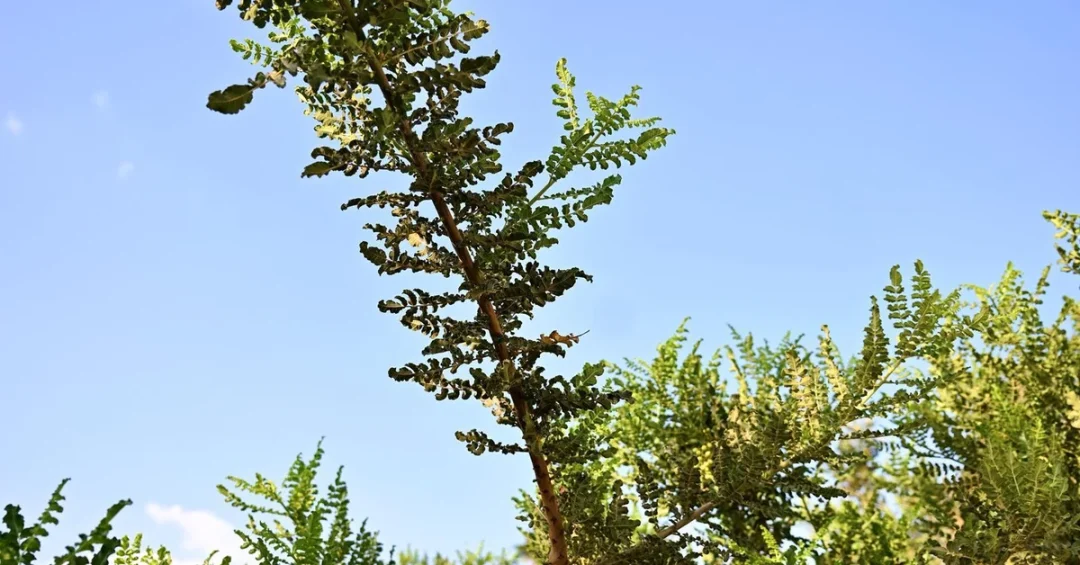
Frankincense cultivation in the Najran Region is emerging as a promising driver of agricultural diversification in Saudi Arabia, with official assessments pointing to new opportunities across planting, harvesting, processing, and packaging value chains. The development was highlighted by the Ministry of Environment, Water and Agriculture, whose Najran branch is evaluating the botanical and economic potential of natural gum-producing trees native to the region’s climate. Could a tree long associated with heritage and trade routes now become a cornerstone of modern agricultural investment in the Kingdom?
The ministry’s assessment, released through official Saudi channels, frames frankincense not merely as a traditional crop but as a strategic botanical resource capable of anchoring an integrated industry. Najran’s natural characteristics — its climate, soil, and established agricultural traditions — are seen as comparative advantages that can be leveraged to build production and processing chains with measurable economic value. The initiative aligns with national efforts to broaden the agricultural production base, generate new income streams for farming communities, and support the sustainability of rural livelihoods in the south of the Kingdom. For international observers, the development signals how Saudi Arabia is systematically identifying and scaling high-value agricultural niches as part of its long-term economic transformation.
Context and Background
Why does a single tree species matter so much to a national agricultural strategy? Frankincense has been cultivated and traded across the Arabian Peninsula for millennia, prized for the aromatic resin harvested from its bark and used in incense, perfumes, and traditional remedies. In Najran, the tree’s presence reflects a long-standing ecological fit with the region’s climate and terrain. The Ministry of Environment, Water and Agriculture has been examining how this heritage crop can be reimagined for contemporary markets, where demand for plant-based ingredients in fragrances and cosmetics continues to expand globally. The ministry’s interest lies in converting an established natural asset into a structured economic activity with clear stages: planting, harvesting, processing, and packaging.
This approach builds on broader Saudi efforts to diversify agricultural production away from reliance on a limited set of crops and toward higher-value, resource-efficient alternatives. Najran’s agricultural profile includes a mix of traditional farming and emerging ventures, and frankincense is seen as a candidate for integration into modern value chains. The ministry has emphasized that expanding cultivation of economically and environmentally valuable trees can enhance sustainability while introducing new production models suited to local conditions. What makes this moment significant is the convergence of global consumer interest in natural ingredients with Saudi Arabia’s institutional capacity to test, evaluate, and scale new crops through scientific trials and field research.
Key Details
Murih Al-Shahrani, Director General of the Ministry of Environment, Water and Agriculture branch in Najran, described frankincense cultivation as a promising field for exploring opportunities to expand trees with economic and environmental value. He noted that this would help diversify the agricultural production base, enhance environmental sustainability, and explore new production models suited to the region’s natural characteristics. His statements underscore a methodical approach: the ministry is not simply promoting a crop but is conducting scientific studies on cultivation trials, taking into account climatic conditions, soil characteristics, water requirements, and the suitability of agricultural sites. The emphasis on evaluating field trial results reflects a commitment to identifying optimal practices that support tree growth and sustainable production.
The economic logic behind the initiative rests on value addition. Rather than exporting raw resin, the vision includes developing processing industries that transform natural gum into finished goods for the fragrance and cosmetics sectors. This would capture more value locally, create employment in processing and packaging, and reduce reliance on imported inputs for domestic industries. The ministry’s focus on production, processing, and marketing chains suggests a comprehensive approach that addresses not only agronomy but also logistics, quality standards, and market access. For Najran, this could mean a new industrial cluster linked to plant-based products, building on the region’s natural assets to create sustainable investment opportunities.
Field trials are central to the strategy. The ministry has stressed the need to assess how frankincense trees perform under different conditions, including variations in water availability and soil composition. This scientific rigor is intended to ensure that expansion is based on evidence rather than assumption, protecting both investors and the environment. By identifying optimal practices, the ministry aims to provide a reliable foundation for farmers and entrepreneurs considering entry into the frankincense value chain. The approach mirrors other Saudi agricultural initiatives that combine research, pilot projects, and gradual scaling to achieve durable results.
International and Regional Impact
How might Najran’s frankincense ambitions resonate beyond Saudi borders? The global fragrance and cosmetics industry is increasingly seeking traceable, sustainably sourced plant-based ingredients, and Arabian frankincense carries a premium reputation rooted in centuries of trade. By developing a structured, quality-controlled supply chain, Saudi Arabia could position itself as a reliable source of high-grade resin and derivatives for international buyers. Regional neighbors with similar ecological conditions may also take note, as the model could be adapted across the Arabian Peninsula. The initiative therefore has the potential to strengthen Saudi Arabia’s role in a specialized global market while reinforcing regional cooperation on sustainable agriculture.
From a diplomatic and economic perspective, the development adds another dimension to Saudi Arabia’s growing portfolio of non-oil exports. It complements efforts to diversify trade relationships and showcase the Kingdom’s capacity for innovation in sectors tied to its natural heritage. International partners in cosmetics, perfumery, and wellness industries may find new opportunities for collaboration, from joint ventures in processing to research partnerships on sustainable harvesting. The ministry’s emphasis on scientific evaluation and environmental sustainability aligns with global standards increasingly demanded by consumers and regulators, making Saudi frankincense a potentially attractive proposition in premium markets.
Economic and Strategic Significance
What does the frankincense initiative reveal about Saudi Arabia’s broader economic strategy? It demonstrates a deliberate focus on high-value agricultural niches that can generate returns while respecting environmental limits. The value chain — from planting to packaged finished goods — is designed to capture multiple margin points, creating a multiplier effect for local economies. This aligns with the Kingdom’s drive to build resilient, diversified income sources and to promote private sector participation in agriculture and processing. For investors, the sector offers entry points at various scales, from smallholder cultivation to industrial processing facilities.
Strategically, the initiative supports rural development and food-system resilience by encouraging crops that are well-suited to local conditions and require fewer inputs than water-intensive alternatives. The ministry’s attention to water requirements and site suitability reflects a resource-conscious approach that is central to Saudi agricultural policy. By transforming natural gum-producing trees into an economic activity, Najran can create jobs, retain talent in the region, and build technical expertise in botanical processing. These outcomes contribute to the broader goal of balanced regional development, ensuring that the benefits of economic transformation reach communities across the Kingdom.
Vision 2030 Alignment
How does frankincense cultivation connect to Saudi Vision 2030? The initiative embodies several pillars of the national transformation program: economic diversification, sustainable development, and the creation of new high-value industries. By developing a local processing sector for plant-based ingredients, Saudi Arabia reduces reliance on imports and opens export opportunities, directly supporting the Vision’s goal of a more diversified economy. The emphasis on scientific trials and optimal practices reflects the Vision’s commitment to innovation and evidence-based policymaking, while the focus on environmental sustainability aligns with national efforts to protect natural resources for future generations.
For Najran, the frankincense value chain represents a tangible example of how regional comparative advantages can be translated into national economic gains. The Ministry of Environment, Water and Agriculture’s methodical approach — studying climate, soil, and water needs before scaling — provides a model for other regions exploring specialty crops. As the Kingdom continues its transformation, initiatives like this demonstrate that Vision 2030 is not only about mega-projects but also about unlocking the potential of local resources through research, investment, and integrated value chains. The botanical treasure of Najran may yet become a globally recognized symbol of Saudi Arabia’s sustainable and diversified future.
20 Questions
Q1. What is the main development discussed in this article?
A1. The article discusses efforts by Saudi Arabia’s Ministry of Environment, Water and Agriculture to develop frankincense cultivation in Najran as a driver of agricultural investment, processing industries, and sustainable economic diversification.
Q2. Which government body is leading the frankincense initiative in Najran?
A2. The Ministry of Environment, Water and Agriculture, through its Najran branch, is leading the assessment and development of frankincense cultivation, with Director General Murih Al-Shahrani providing official commentary on the initiative’s potential.
Q3. Why is frankincense considered economically valuable?
A3. Frankincense resin is widely used in fragrances, incense, and cosmetics, and global demand for plant-based ingredients is growing, making it a high-value agricultural product with multiple processing and export opportunities.
Q4. What stages make up the proposed frankincense value chain?
A4. The value chain includes planting, harvesting, processing, and packaging, ultimately producing value-added finished goods for the fragrance and cosmetics industries, which captures more economic value locally.
Q5. How does the initiative support agricultural diversification in Saudi Arabia?
A5. By introducing a new high-value crop, the initiative broadens the agricultural production base, creates alternative income streams for farmers, and reduces reliance on a limited set of traditional crops.
Q6. What scientific factors are being studied for frankincense cultivation?
A6. The ministry is evaluating climatic conditions, soil characteristics, water requirements, and the suitability of agricultural sites through field trials to identify optimal practices for sustainable tree growth and production.
Q7. How does frankincense cultivation support environmental sustainability?
A7. Frankincense trees are well-suited to Najran’s natural conditions and can be cultivated with resource-conscious practices, helping to protect soil and water resources while maintaining productive agricultural land.
Q8. What role does Murih Al-Shahrani play in this initiative?
A8. Murih Al-Shahrani is the Director General of the Ministry of Environment, Water and Agriculture branch in Najran, and he has highlighted the importance of scientific studies and field trials for expanding frankincense cultivation.
Q9. What economic opportunities could arise for local communities?
A9. Local communities could benefit from jobs in planting, harvesting, processing, and packaging, as well as from new small business opportunities in a growing value chain linked to plant-based products.
Q10. How might this initiative affect Saudi Arabia’s export profile?
A10. It could add a premium, sustainably sourced agricultural product to Saudi Arabia’s non-oil exports, appealing to international buyers in the fragrance, cosmetics, and wellness industries.
Q11. What is the significance of field trials in this project?
A11. Field trials provide evidence on how frankincense trees perform under different conditions, ensuring that expansion is based on scientific data and optimal practices rather than assumptions.
Q12. How does the initiative align with Vision 2030?
A12. It supports economic diversification, sustainable development, and the creation of new high-value industries, all of which are core objectives of Saudi Vision 2030 and its national transformation programs.
Q13. What makes Najran suitable for frankincense cultivation?
A13. Najran’s climate, soil characteristics, and agricultural traditions provide a natural fit for frankincense trees, which have historically thrived in the region’s environmental conditions.
Q14. Could this model be replicated in other Saudi regions?
A14. Yes, the ministry’s scientific approach could serve as a template for other regions exploring specialty crops, provided local climatic and soil conditions are suitable for the species.
Q15. What processing industries could emerge from this initiative?
A15. Processing industries could include resin extraction, purification, essential oil production, and the manufacture of incense, perfumes, and cosmetic ingredients for domestic and export markets.
Q16. How does the global demand for natural ingredients affect this project?
A16. Rising consumer preference for plant-based, sustainably sourced ingredients in fragrances and cosmetics creates a favorable market environment for Saudi frankincense products.
Q17. What water considerations are important for frankincense cultivation?
A17. The ministry is assessing water requirements to ensure that cultivation is sustainable and does not strain local water resources, which is a key priority in Saudi agricultural policy.
Q18. What role do official Saudi channels play in reporting this development?
A18. Official channels such as the Saudi Press Agency and ministry statements provide verified information, ensuring transparency and accuracy in reporting on the initiative’s progress and objectives.
Q19. How does this initiative support rural development?
A19. By creating a new agricultural value chain, it can generate employment, retain talent in the region, and build technical expertise, contributing to balanced regional development across the Kingdom.
Q20. What is the long-term vision for frankincense in Najran?
A20. The long-term vision is to establish Najran as a center for sustainable frankincense production and processing, contributing to Saudi Arabia’s diversified economy and global reputation for high-quality natural products.
Reader Feedback
We value your thoughts. Please share your feedback on this article.
Your feedback helps us improve our coverage.