


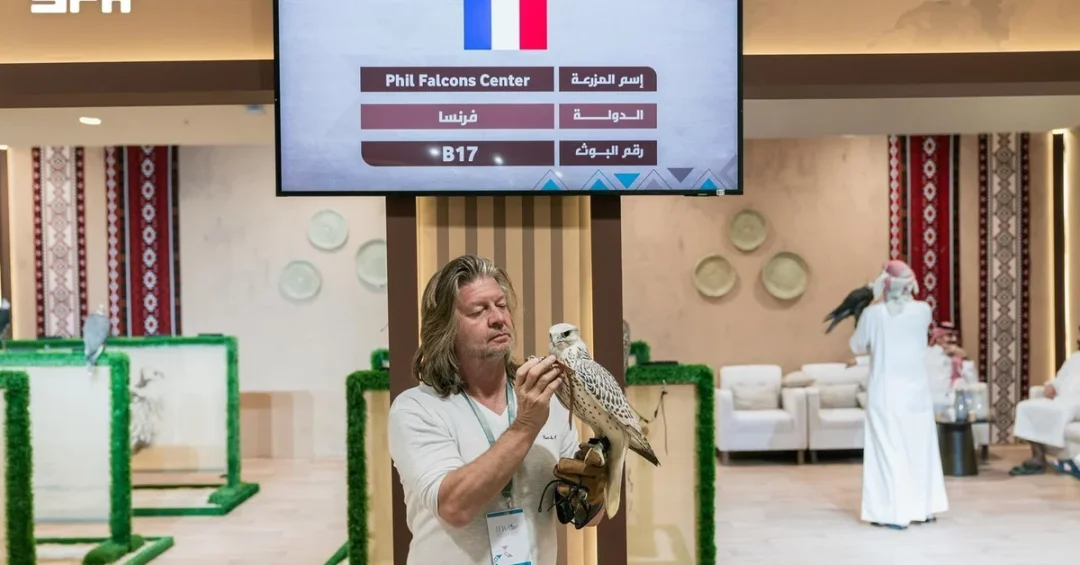
French falcon farm owner Philippe Hertel has returned for his sixth participation in the International Falcon Breeders Auction, describing the event as an unmatched global gathering that delivers both commercial returns and lasting personal connections, according to the Saudi Press Agency (SPA). Hertel, who has attended the auction every year since its launch, said the volume of sales reflects the strength of the market and the confidence the event has earned among breeders and falconers worldwide. His consistent return underscores the auction’s growing reputation as a premier destination for the global falconry community.
The International Falcon Breeders Auction, organized with the support of the National Center for Falcons, has evolved into a fixture on the international falconry calendar. It brings together breeders, falconers, and buyers from across the globe, offering a platform for trade, knowledge exchange, and cultural connection. For Hertel, the event is more than a marketplace; it is a reunion of friends and peers who share a deep passion for falconry. His remarks highlight how the auction has transcended its commercial origins to become a social and economic landmark, reinforcing Saudi Arabia’s role as a global hub for heritage sports and traditions.
Context and Background
How did a regional auction transform into a global meeting point for falconry enthusiasts? The International Falcon Breeders Auction was launched under the auspices of the National Center for Falcons, a Saudi government entity dedicated to preserving and promoting falconry as a cultural heritage sport. Since its inception, the auction has steadily expanded its international footprint, attracting participants from Europe, Asia, the Middle East, and beyond. Its growth mirrors Saudi Arabia’s broader efforts to celebrate and sustain traditional practices while embracing modernization and global engagement.
Falconry holds a special place in Saudi culture, symbolizing nobility, patience, and a deep connection to the desert heritage. The Kingdom has invested significantly in infrastructure and events that support falconers, including dedicated breeding centers, veterinary services, and regulatory frameworks. The auction is a key component of this ecosystem, providing a regulated and competitive environment for breeders to showcase their finest birds. Over the years, it has set benchmarks for quality and transparency, earning the trust of international participants like Hertel.
Hertel’s sixth consecutive attendance is a testament to the auction’s consistency and appeal. He noted that he makes a point of attending every year, a commitment that speaks to the event’s reliability and the value it delivers. For many breeders, the auction is not just a sales opportunity but a chance to gauge market trends, learn about new breeding techniques, and strengthen relationships with counterparts from different countries.
Key Details
What makes the International Falcon Breeders Auction so compelling for repeat participants? According to Philippe Hertel, the benefits extend far beyond the commercial aspect. He emphasized that the auction offers personal, social, and professional relationships that endure long after the event concludes. Over the course of his participation, he has formed many friendships with Saudi falconers and returns home each year with both financial and social gains. This dual return on investment is a powerful draw for international breeders.
The auction’s organization has been praised for its comprehensiveness and attention to detail. Hertel specifically commended the efforts of the National Center for Falcons and the facilities it provides to participating farms and attendees. He said the auction’s comprehensive organization has strengthened its international presence and attracted breeders, falconers, and buyers from various countries. The center’s role in facilitating logistics, ensuring animal welfare, and promoting fair trade has been instrumental in building the event’s global reputation.
Moreover, the auction serves as a platform for exchanging expertise and experiences. Hertel pointed out that this contributes to developing the falcon breeding industry and raising its standards while providing participating farms with marketing and commercial opportunities. The event thus functions as both a marketplace and a knowledge hub, driving innovation and best practices across the sector. For breeders, the chance to learn from peers and showcase their birds to a global audience is invaluable.
International and Regional Impact
How does an event in Saudi Arabia resonate with falconers from France and beyond? The International Falcon Breeders Auction has become a global destination for falcon enthusiasts, giving them an opportunity to exchange expertise and experiences. Hertel’s testimony illustrates how the auction bridges geographical and cultural distances, creating a community that transcends borders. The presence of international breeders enriches the local falconry scene, introducing new bloodlines, techniques, and perspectives that benefit Saudi falconers as well.
Regionally, the auction reinforces Saudi Arabia’s position as a leader in heritage sports and a convener of global events. It aligns with the Kingdom’s Vision 2030 goals of diversifying the economy, promoting cultural tourism, and enhancing international cooperation. By hosting an event that draws participants from multiple continents, Saudi Arabia showcases its ability to organize world-class gatherings and its commitment to preserving cultural heritage. The auction also stimulates local economies through hospitality, transport, and related services, creating a ripple effect that extends beyond the auction grounds.
For international participants, the auction offers access to a market that values quality and tradition. The volume of sales, as noted by Hertel, reflects the strength of the market and the confidence the event has earned. This confidence is built on years of consistent delivery, transparent transactions, and a welcoming environment. As the auction continues to strengthen its standing year after year, it is poised to attract even more international attention, further cementing its status as a must-attend event.
Economic and Strategic Significance
What economic value does the falconry sector hold for Saudi Arabia and its partners? Falconry is not merely a cultural pastime; it is a significant economic activity that supports breeding farms, equipment manufacturers, tourism, and related industries. The International Falcon Breeders Auction is a key driver of this economy, facilitating transactions that can run into millions of riyals. For breeders like Hertel, the auction represents a vital sales channel, while for buyers, it offers access to some of the finest falcons in the world.
Strategically, the auction supports Saudi Arabia’s efforts to diversify its economy away from oil dependence. By promoting a niche but high-value sector, the Kingdom creates jobs, attracts foreign investment, and generates export opportunities. The event also aligns with the National Center for Falcons’ mandate to regulate and develop the falconry sector, ensuring its sustainability and growth. The center’s work in setting standards, providing veterinary care, and facilitating international trade has been crucial in elevating the auction’s profile.
Furthermore, the auction’s success demonstrates the potential of cultural heritage as an economic asset. It shows how traditional practices can be modernized and commercialized without losing their authenticity. This model is being replicated in other areas, such as camel racing and equestrian sports, contributing to a diversified and resilient economy. For international partners, the auction offers a gateway to a market that respects tradition while embracing innovation.
Vision 2030 Alignment
How does the International Falcon Breeders Auction contribute to Saudi Arabia’s Vision 2030? The auction directly supports several pillars of the vision, including economic diversification, cultural enrichment, and international engagement. By attracting global breeders and falconers, it boosts tourism and showcases the Kingdom’s ability to host world-class events. It also promotes the preservation of cultural heritage, a key aspect of national identity and social cohesion.
Under Vision 2030, Saudi Arabia aims to become a global hub for sports and cultural events. The auction is a shining example of this ambition, having grown from a local initiative to an international phenomenon. Its continued development, as Hertel noted, has made it a global event he is keen to attend regularly. This kind of international endorsement is invaluable as the Kingdom seeks to attract more visitors and investors. The auction also fosters people-to-people ties, building bridges between Saudi Arabia and the world.
As the auction looks to the future, it will likely expand its reach and enhance its offerings, further integrating with the Kingdom’s broader tourism and economic strategies. The National Center for Falcons will continue to play a pivotal role, ensuring that the event remains a benchmark for excellence. For breeders like Philippe Hertel, the auction is not just an annual commitment but a partnership in a shared passion that transcends borders. It is a testament to Saudi Arabia’s ability to blend tradition with modernity, and to create events that resonate globally.
20 Questions
Q1. Who is Philippe Hertel?
A1. Philippe Hertel is a French falcon farm owner who has participated in the International Falcon Breeders Auction six times since its launch. He is known for his expertise in falcon breeding and his consistent attendance at the event in Saudi Arabia.
Q2. What is the International Falcon Breeders Auction?
A2. The International Falcon Breeders Auction is a global event organized with the support of the National Center for Falcons in Saudi Arabia. It brings together breeders, falconers, and buyers from around the world to trade falcons and exchange expertise.
Q3. How many times has Philippe Hertel participated in the auction?
A3. Philippe Hertel has participated in the International Falcon Breeders Auction six times, attending every year since its launch. His consistent participation highlights the event’s appeal and value to international breeders.
Q4. Why does Philippe Hertel attend the auction every year?
A4. Hertel attends because the auction offers valuable commercial opportunities and a strong market for falcons. He also values the personal, social, and professional relationships he has built with Saudi falconers and other international participants.
Q5. What benefits does the auction offer beyond sales?
A5. Beyond sales, the auction provides a platform for exchanging expertise, forming friendships, and strengthening professional networks. It also offers marketing opportunities for participating farms and contributes to raising industry standards.
Q6. What role does the National Center for Falcons play?
A6. The National Center for Falcons organizes and supports the auction, providing facilities and comprehensive organization. It works to develop the falconry sector, preserve cultural heritage, and promote Saudi Arabia as a global hub for falconry.
Q7. How has the auction evolved over the years?
A7. The auction has grown from a regional event to a global destination for falcon enthusiasts. It has strengthened its standing year after year, attracting more international breeders, falconers, and buyers, and expanding its economic and social impact.
Q8. What is the significance of falconry in Saudi culture?
A8. Falconry is a cherished heritage sport in Saudi Arabia, symbolizing nobility, patience, and a connection to desert traditions. The Kingdom invests in its preservation through events like the auction and dedicated centers.
Q9. How does the auction contribute to Saudi Arabia’s economy?
A9. The auction stimulates economic activity in breeding, equipment, tourism, and hospitality. It facilitates high-value transactions, attracts foreign investment, and supports economic diversification under Vision 2030.
Q10. What makes the auction a global event?
A10. The auction attracts participants from multiple continents, including Europe, Asia, and the Middle East. Its international reputation for quality, organization, and fair trade has made it a must-attend event for the global falconry community.
Q11. How does the auction support Vision 2030?
A11. The auction aligns with Vision 2030 by promoting cultural tourism, economic diversification, and international engagement. It showcases Saudi Arabia’s ability to host world-class events and preserves cultural heritage while embracing modernity.
Q12. What facilities are provided to participants?
A12. The National Center for Falcons provides comprehensive facilities, including venues, logistical support, and veterinary services. These ensure a smooth experience for breeders, falconers, and buyers, enhancing the auction’s international appeal.
Q13. How does the auction raise breeding standards?
A13. The auction facilitates the exchange of expertise and experiences among breeders. This sharing of knowledge helps develop best practices, improve falcon health, and raise overall standards in the breeding industry.
Q14. What economic gains does Hertel report?
A14. Hertel reports both financial and social gains from his participation. The auction provides a strong market for his falcons, and he returns home with new friendships and professional connections that benefit his farm.
Q15. How does the auction foster international relations?
A15. By bringing together people from different countries, the auction builds people-to-people ties and mutual understanding. It positions Saudi Arabia as a welcoming host and a leader in heritage sports, strengthening diplomatic and cultural links.
Q16. What is the future outlook for the auction?
A16. The auction is expected to continue growing, attracting more international participants and expanding its offerings. Its alignment with Vision 2030 ensures ongoing support and development, solidifying its status as a global event.
Q17. How does the auction benefit local Saudi falconers?
A17. Local falconers gain access to international bloodlines, learn new techniques, and build relationships with global experts. The auction also stimulates local businesses and promotes the cultural significance of falconry.
Q18. What types of falcons are traded at the auction?
A18. The auction features various breeds of falcons prized for hunting and heritage value. Breeders from around the world present their finest birds, ensuring a diverse and high-quality selection for buyers.
Q19. How does the auction promote cultural exchange?
A19. The auction serves as a meeting point for diverse cultures, allowing participants to share traditions, stories, and expertise. This exchange enriches the global falconry community and fosters respect for Saudi heritage.
Q20. Why is Hertel’s testimony important?
A20. Hertel’s testimony provides independent validation of the auction’s quality and impact. His six-time participation and praise for the organization highlight the event’s success in building trust and delivering value to international breeders.
Reader Feedback
We value your thoughts. Please share your feedback on this article.
Your feedback helps us improve our coverage.
Related articles
 French Farm Owner Praises Saudi Falcon Auction as Global Hub
 International Falcon Auction a Global Economic and Social Hub
 Al-Majroor Keeps Taif’s Traditional Rhythms Alive
 Najran Culture House, JATAN Sign Heritage Cooperation MoU
 Saudi Ministry Livestreams Final Rounds of International Quran Competition
 Ankara University Students Explore Makkah Heritage at Umm Al-Qura University