


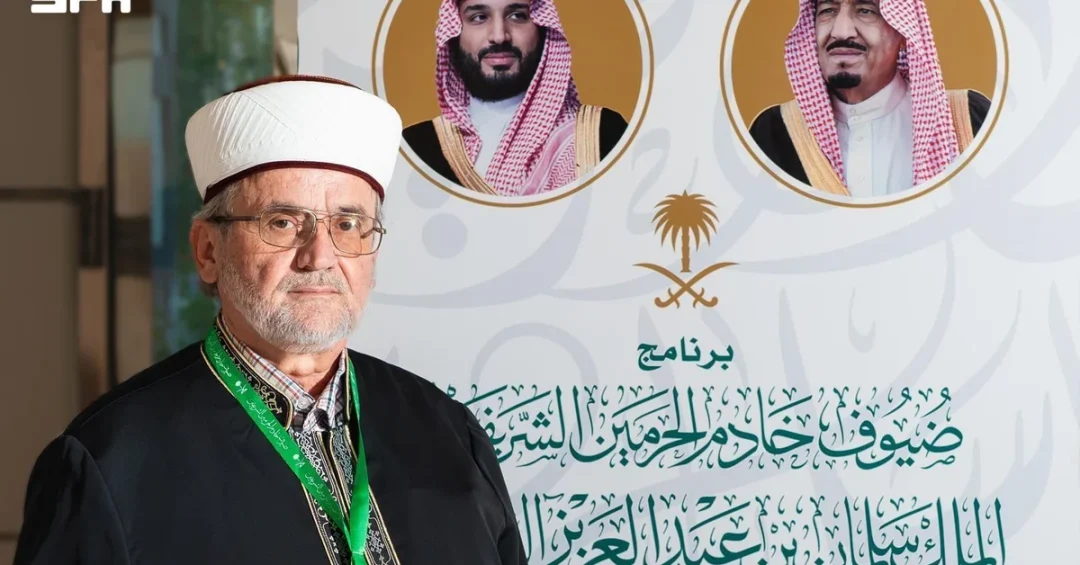
Dr. Jihat Khalil, Religious Advisor to Greece’s Ministry of Education, Religious Affairs and Sports and former Mufti, visited the King Fahd Glorious Quran Printing Complex in Madinah on August 10, 2026, as part of the cultural program accompanying the second batch of guests hosted under the Custodian of the Two Holy Mosques’s Program for Hajj, Umrah and Visit. During his tour, Dr. Khalil reviewed the intricate stages of printing the Holy Quran, the mechanisms used to review and translate its meanings, and the advanced technical services that enable the production of Quran copies in multiple languages. His visit underscores the Kingdom of Saudi Arabia’s enduring commitment to serving the Holy Quran and spreading its message of moderation and peace worldwide.
The visit reflects the growing international recognition of Saudi Arabia’s role as a global hub for Islamic scholarship and publishing. The King Fahd Glorious Quran Printing Complex, located in Madinah, is one of the largest and most sophisticated Quran printing facilities in the world, producing millions of copies annually in Arabic and dozens of translated languages. Dr. Khalil’s engagement with the complex’s operations highlights how Saudi Arabia’s religious diplomacy extends beyond its borders, fostering interfaith understanding and cultural exchange. As the Kingdom continues to advance its Vision 2030 objectives, such visits demonstrate the seamless integration of tradition and modernity in service of global Muslim communities.
Context and Background
What makes the King Fahd Glorious Quran Printing Complex a beacon of Islamic heritage and modern technology? Established in 1985 under the directives of the late King Fahd bin Abdulaziz, the complex was founded with the noble mission of printing the Holy Quran with the highest standards of accuracy and reverence. Over the decades, it has evolved into a state-of-the-art institution that combines traditional calligraphy and verification methods with cutting-edge printing and digital technologies. The complex not only produces millions of Quran copies annually but also serves as a center for Quranic research, translation, and distribution to Muslim communities around the globe.
The visit by Dr. Jihat Khalil, a prominent Greek religious figure, is part of a broader cultural program organized for the guests of the Custodian of the Two Holy Mosques’s Program for Hajj, Umrah and Visit. This program, which hosts hundreds of dignitaries, scholars, and opinion leaders from various countries, aims to deepen their understanding of Saudi Arabia’s religious and cultural heritage. By inviting figures like Dr. Khalil, the Kingdom reinforces its position as a bridge between cultures and a guardian of Islamic sanctities. The program also aligns with Saudi Arabia’s efforts to promote moderate Islam and counter extremism through education and dialogue.
Greece, with its own rich religious history and a significant Muslim minority, represents an important partner in interfaith and intercultural engagement. Dr. Khalil’s role as Religious Advisor to the Greek Ministry of Education, Religious Affairs and Sports places him at the forefront of shaping religious education and policy in his country. His visit to Madinah thus carries symbolic weight, signaling mutual respect and a shared commitment to preserving religious heritage. It also reflects the Kingdom’s openness to engaging with diverse religious leaders, consistent with its Vision 2030 goal of fostering global partnerships and cultural exchange.
Key Details of the Visit
What did Dr. Khalil learn during his detailed tour of the complex? According to official Saudi sources, he was guided through the various stages of Quran printing, from the preparation of specialized paper and ink to the meticulous calligraphy and verification processes that ensure textual accuracy. The complex employs a rigorous system of review, where each copy undergoes multiple checks by qualified scholars before approval for printing. Dr. Khalil also observed the translation department, where experts translate the meanings of the Quran into over 80 languages, carefully preserving the original Arabic text while providing accessible interpretations for non-Arabic speakers.
The technical services showcased during the visit included advanced digital printing presses, automated binding lines, and quality control mechanisms that guarantee the durability and beauty of each copy. The complex also utilizes modern technologies such as QR codes and digital archives to facilitate access to Quranic texts and translations. Dr. Khalil expressed his admiration for these efforts, praising the Kingdom’s dedication to serving the Holy Quran and commending the complex for its global impact. His remarks highlighted the importance of such institutions in spreading the message of Islam and promoting a better understanding of its teachings.
Furthermore, the visit included an overview of the complex’s distribution networks, which deliver Quran copies to mosques, Islamic centers, and educational institutions worldwide. The complex also provides translations to embassies and international organizations, ensuring that the message of the Quran reaches diverse audiences. Dr. Khalil’s engagement with these details reflects a genuine interest in the operational excellence that defines the King Fahd Complex. His positive feedback serves as a testament to the Kingdom’s successful integration of religious devotion and technological innovation.
International and Regional Impact
How does a visit by a Greek religious official resonate beyond the borders of Saudi Arabia and Greece? Such visits are part of Saudi Arabia’s broader strategy of religious diplomacy, which aims to build bridges with non-Muslim-majority countries and foster mutual understanding. By hosting influential figures like Dr. Khalil, the Kingdom showcases its commitment to interfaith dialogue and its role as a stabilizing force in the region. This approach aligns with the principles of the Custodian of the Two Holy Mosques’s Program, which seeks to promote the true image of Islam as a religion of peace and tolerance.
In the context of Europe, where debates about Islam and multiculturalism often dominate public discourse, Dr. Khalil’s visit can serve as a positive example of engagement and cooperation. Greece, with its historical and cultural ties to the Middle East, can act as a bridge between Europe and the Arab world. By witnessing firsthand the care and respect with which Saudi Arabia handles the Holy Quran, Dr. Khalil can share his experiences with his constituents and colleagues, helping to dispel misconceptions and build trust. This people-to-people diplomacy is invaluable in an increasingly interconnected world.
Regionally, the visit reinforces Saudi Arabia’s leadership in the Islamic world. The Kingdom’s role as the custodian of the Two Holy Mosques carries immense responsibility, and initiatives like the King Fahd Complex demonstrate its dedication to serving Muslims globally. The complex’s translations in over 80 languages are a powerful tool for dawah and education, enabling millions to access the Quran’s teachings in their native tongues. Dr. Khalil’s recognition of these efforts adds an international dimension to the Kingdom’s religious outreach, highlighting its universal appeal.
Economic and Strategic Significance
What economic and strategic benefits does the King Fahd Complex bring to Saudi Arabia and its global partners? The complex is not only a religious institution but also a significant contributor to the Kingdom’s knowledge economy. It employs hundreds of skilled workers, from calligraphers and translators to engineers and administrators, thereby supporting job creation and skill development. The production of Quran copies and translations also generates revenue through sales and distribution, although the primary objective remains serving Islam and Muslims worldwide.
Strategically, the complex enhances Saudi Arabia’s soft power by projecting an image of religious stewardship and cultural richness. It complements other Vision 2030 initiatives, such as the development of Madinah as a hub for Islamic tourism and heritage. Visitors to the complex, including dignitaries like Dr. Khalil, often extend their stay to explore the city’s historical sites, contributing to the local economy. Moreover, the complex’s translations serve as a tool for cultural diplomacy, fostering goodwill and understanding between Saudi Arabia and other nations. This strategic alignment underscores the Kingdom’s holistic approach to development, where economic growth and religious values go hand in hand.
The complex’s operations also align with Saudi Arabia’s efforts to promote moderate Islam and combat extremism. By providing accurate and accessible translations, it ensures that the Quran’s message is not misrepresented or misused by extremist groups. This contributes to global security and stability, as it helps to counter radical narratives with authentic Islamic teachings. Dr. Khalil’s visit highlights the international community’s recognition of these efforts, further legitimizing Saudi Arabia’s role as a leader in moderate Islamic thought.
Vision 2030 Alignment
How does the King Fahd Glorious Quran Printing Complex fit into Saudi Arabia’s Vision 2030? The complex embodies the vision’s emphasis on preserving Islamic heritage while embracing modernity and innovation. Vision 2030 seeks to diversify the economy, enhance global engagement, and promote a moderate and tolerant image of Islam. The complex achieves all these goals by utilizing advanced technology to produce and distribute the Quran, by engaging with international figures like Dr. Khalil, and by spreading the message of peace and moderation. It is a prime example of how Saudi Arabia’s religious institutions contribute to the nation’s broader development agenda.
Furthermore, the visit by Dr. Khalil supports Vision 2030’s objective of increasing cultural exchange and tourism. The Custodian of the Two Holy Mosques’s Program for Hajj, Umrah and Visit is a key initiative that brings guests from around the world to experience Saudi Arabia’s hospitality and religious significance. By showcasing the King Fahd Complex, the program highlights the Kingdom’s commitment to serving Islam and its openness to the world. As Saudi Arabia continues to implement Vision 2030, such initiatives will play a vital role in strengthening its global standing and fostering a positive image of the Kingdom.
In conclusion, Dr. Jihat Khalil’s visit to the King Fahd Glorious Quran Printing Complex is a testament to Saudi Arabia’s unwavering dedication to the Holy Quran and its global mission of spreading peace and understanding. The Kingdom’s efforts, guided by Vision 2030, ensure that the message of Islam reaches every corner of the world, transcending linguistic and cultural barriers. As the complex continues to innovate and expand its reach, it will remain a symbol of Saudi Arabia’s leadership in the Islamic world and its commitment to a brighter, more connected future for all.
20 Questions
Q1. Who visited the King Fahd Glorious Quran Printing Complex in Madinah?
A1. Dr. Jihat Khalil, Religious Advisor to the Ministry of Education, Religious Affairs and Sports of Greece and former Mufti, visited the complex on August 10, 2026.
Q2. What is the King Fahd Glorious Quran Printing Complex?
A2. It is one of the world’s largest Quran printing facilities, located in Madinah, Saudi Arabia, dedicated to printing, translating, and distributing the Holy Quran globally.
Q3. When was the King Fahd Glorious Quran Printing Complex established?
A3. The complex was established in 1985 under the directives of the late King Fahd bin Abdulaziz to serve the Holy Quran with the highest standards.
Q4. What did Dr. Khalil learn during his visit?
A4. He learned about the stages of printing the Holy Quran, mechanisms for reviewing and translating its meanings, and technical services used to produce copies in multiple languages.
Q5. How many languages does the complex translate the Quran into?
A5. The complex produces translations of the Quran’s meanings in over 80 languages, contributing to spreading the message of Islam worldwide.
Q6. What program was Dr. Khalil part of during his visit?
A6. He was part of the cultural program accompanying the second batch of guests of the Custodian of the Two Holy Mosques’s Program for Hajj, Umrah and Visit.
Q7. What did Dr. Khalil praise about Saudi Arabia’s efforts?
A7. He praised Saudi Arabia’s efforts to serve the Holy Quran and commended the complex for its extensive translation work in over 80 languages.
Q8. What is the significance of the Custodian of the Two Holy Mosques’s Program?
A8. The program hosts dignitaries and scholars from around the world to deepen their understanding of Saudi Arabia’s religious and cultural heritage, promoting moderate Islam.
Q9. How does the complex ensure the accuracy of Quran copies?
A9. The complex employs a rigorous system of review where each copy undergoes multiple checks by qualified scholars before approval for printing.
Q10. What technical services are used at the complex?
A10. Advanced digital printing presses, automated binding lines, quality control mechanisms, and digital archives are used to produce high-quality Quran copies.
Q11. How does the complex distribute Quran copies globally?
A11. It delivers copies to mosques, Islamic centers, educational institutions, embassies, and international organizations worldwide.
Q12. What is the role of Dr. Khalil in Greece?
A12. He serves as Religious Advisor to the Ministry of Education, Religious Affairs and Sports of Greece and is a former Mufti.
Q13. How does this visit impact Saudi-Greek relations?
A13. It strengthens religious and cultural ties, fostering mutual understanding and cooperation between Saudi Arabia and Greece.
Q14. What economic benefits does the complex bring?
A14. It creates jobs, supports the knowledge economy, and contributes to local tourism in Madinah through visits by dignitaries and scholars.
Q15. How does the complex align with Vision 2030?
A15. It embodies Vision 2030 by preserving Islamic heritage, embracing technology, promoting moderate Islam, and enhancing global engagement.
Q16. What is the significance of translating the Quran into multiple languages?
A16. It enables non-Arabic speakers to access the Quran’s teachings, spreading the message of Islam and promoting understanding.
Q17. How does the complex counter extremism?
A17. By providing accurate translations, it ensures the Quran’s message is not misrepresented, countering radical narratives with authentic teachings.
Q18. What other initiatives are part of the guests’ cultural program?
A18. The program includes visits to historical and religious sites in Madinah and Makkah, enhancing guests’ understanding of Saudi Arabia’s heritage.
Q19. How many copies of the Quran does the complex produce annually?
A19. The complex produces millions of copies annually, in Arabic and translated languages, distributed globally.
Q20. What was Dr. Khalil’s overall impression of the complex?
A20. He expressed admiration for the Kingdom’s dedication to serving the Holy Quran and praised the complex’s global impact in spreading Islam’s message.
Reader Feedback
We value your thoughts. Please share your feedback on this article.
Your feedback helps us improve our coverage.
Related articles
 Moderate 4.5 Earthquake Strikes Off Pakistan’s Coast
 Pakistan Press Highlights Makkah Defense Pact
 GCC Chief Welcomes UN Council Condemnation of Houthi Attacks
 Moroccan Press Highlights Gaza, Defense Pact, Wildfires
 GCC Chief Welcomes UN Security Council Condemnation of Houthi Attacks
 GCC Chief Welcomes UN Security Council Condemnation of Houthi Attacks