


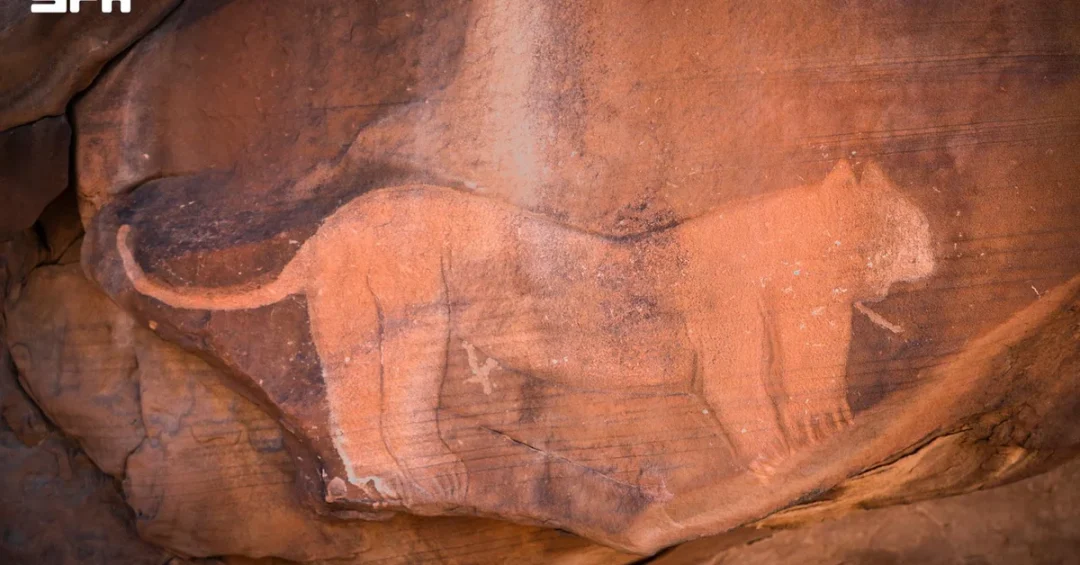
The Prince Mohammed bin Salman Royal Reserve has confirmed that it is actively working to restore the endangered Asiatic lion, an apex predator that once roamed the ancient landscapes of northwestern Saudi Arabia, in an announcement timed to mark World Lion Day. The confirmation, released through official Saudi channels, places the reserve at the centre of one of the most ambitious ecological restoration programmes ever undertaken in the region. According to the reserve, the lion is one of 23 historically occurring species that its board has approved for reintroduction. Across an area of 24,500 square kilometres, the reserve is rebuilding a complete, sustaining trophic pyramid intended to support the eventual return of the subspecies Panthera leo leo.
The announcement is significant not only for conservation but for the wider story of Saudi Arabia’s environmental stewardship. The reserve, named after His Royal Highness Prince Mohammed bin Salman bin Abdulaziz Al Saud, Crown Prince and Prime Minister, forms part of a national effort to protect biodiversity and restore natural heritage under the Saudi Green Initiative and Vision 2030. By confirming that it is laying the ecological foundations for the lion’s return, the reserve signals that its work is a long-term, scientifically grounded undertaking rather than a symbolic gesture. How often do nations attempt to bring back a species that vanished from their lands more than a century ago?
Context and Background
What does it take to prepare a landscape for the return of an apex predator that has been absent for well over a hundred years? The answer, according to the reserve’s leadership, lies in restoring every layer of the ecosystem that once supported it. The Asiatic lion was documented across the region for millennia, and its presence is recorded at more than 12 sites in the reserve’s abundant rock art. These engravings are more than ancient decoration; they are a historical record of the wildlife that once thrived in this part of the Arabian Peninsula.
During the “Green Arabia” period, around 12,000 years ago, a continuous and fertile corridor of favourable habitat stretched directly from Africa, supporting large herds of herbivores and the predators that depended on them, including lions. As the interior of the peninsula dried out, deep, shaded canyons such as the reserve’s iconic Wadi Al-Disah became critical climate refuges where wildlife and ancient civilisations lived side by side. The reserve’s research underscores that this was not a marginal habitat but a functioning ecosystem with a full complement of species.
The disappearance of the lion from Arabia was driven by overhunting and the spread of modern firearms, which wiped out the last lion prides in the region by the late 19th century. Today, the Asiatic lion is classified as Endangered by the International Union for Conservation of Nature, with only an estimated 1,100 to 1,300 individuals surviving in the wild globally. The largest remaining stronghold is in western India’s Greater Gir Landscape, which holds an estimated 891 individuals according to recent census data, while the remainder cling to survival across highly fragmented and critically vulnerable zones in West and Central Africa. Does that stark global picture not make every serious restoration effort a matter of international consequence?
Key Details
The reserve’s board-approved ReWildArabia initiative is the operational engine behind this effort, reversing subsequent wildlife decline through a comprehensive strategy that involves the local reintroduction of 23 historically occurring species. To date, 14 species have been successfully returned, and six of those have successfully bred in their new environment. This is a measurable record of progress, not a promise. Each reintroduced species, including the Arabian hare, the Red-necked ostrich and the Persian onager, performs essential ecosystem functions such as seed dispersal, grazing patterns and soil aeration.
Those functions are the building blocks of a self-sustaining food web. Without them, a predatory lineage cannot thrive naturally in the landscape, no matter how many lions might one day be released. Andrew Zaloumis, CEO of Prince Mohammed bin Salman Royal Reserve, explained the philosophy behind the programme with deliberate clarity. “The lion was part of the ancient landscape of Prince Mohammed bin Salman Royal Reserve,” he said. “The return of an apex predator is a generational journey, not a scheduled event. We are actively building the structural conditions that will make their ultimate homecoming possible.”
That language matters. It sets expectations honestly, framing the lion’s return as the culmination of decades of ecological repair rather than a single event. The reserve emphasises that this work cannot be rushed. Each species returned and each ecosystem function restored is a deliberate step toward a landscape capable of sustaining an apex predator once again. The programme is driven by extensive and ongoing community consultation and discussions to ensure shared stewardship among those who live in and around the reserve.
International and Regional Impact
How does a conservation project in northwestern Saudi Arabia resonate beyond the Kingdom’s borders? For one, the Asiatic lion’s global population is perilously concentrated. With the vast majority of the world’s remaining wild lions in a single Indian landscape, the species’ long-term resilience is fragile. Any credible effort to establish additional secure habitat, even as a distant objective, contributes to the international conversation about how endangered large carnivores can be safeguarded for future generations.
The reserve’s work also reinforces regional cooperation on environmental protection. Saudi Arabia has increasingly positioned itself as a leader in desertification control, habitat restoration and wildlife reintroduction, and its initiatives are watched closely by neighbouring states facing similar ecological challenges. The trophic pyramid approach, which restores herbivores and their habitat before predators, offers a replicable model. It demonstrates that rebuilding an ecosystem is a step-by-step scientific process, and that patience is a form of strategy rather than a delay.
Economic and Strategic Significance
What does ecological restoration contribute to a modern economy? In Saudi Arabia’s case, the answer is increasingly direct. A fully functioning ecosystem curbs desertification and mitigates the local impacts of global warming, benefits that extend well beyond the reserve’s boundaries. Restored landscapes also support the growth of nature-based tourism, drawing visitors who wish to experience Arabia’s natural heritage alongside its cultural treasures. The reserve’s rock art and canyons, including Wadi Al-Disah, are already part of that offer.
Strategically, the programme aligns with the Kingdom’s broader ambitions to diversify its economy and enhance quality of life. Protected areas and wildlife initiatives create employment, support local communities and strengthen the scientific and educational capacity of the region. They also enhance Saudi Arabia’s standing in international environmental forums, where credible domestic action carries weight. The reserve’s progress, with 14 species returned and six breeding, provides tangible evidence that these ambitions are being translated into results on the ground.
Vision 2030 Alignment
How does the return of a lion connect to a national transformation strategy? Under the Saudi Green Initiative and Vision 2030, the Kingdom has committed to protecting and restoring its natural environment as part of a wider effort to improve quality of life and build a sustainable future. The Prince Mohammed bin Salman Royal Reserve’s ReWildArabia initiative is a direct expression of those commitments, combining scientific rigour, community engagement and long-term planning.
The lion’s presence in the reserve’s rock art is a record of what this land has supported before. The reserve is building the conditions for it to do so again. As Saudi Arabia continues to expand its conservation estate and restore native species, the work in this 24,500-square-kilometre landscape stands as a forward-looking statement: that the Kingdom intends to be a global leader not only in economic transformation but in the stewardship of the natural world for generations to come. For international observers, it is a reminder that Vision 2030 reaches into every corner of national life, including the canyons where lions once roamed.
20 Questions
Q1. What did the Prince Mohammed bin Salman Royal Reserve confirm on World Lion Day?
A1. The reserve confirmed it is actively working to restore the endangered Asiatic lion subspecies, Panthera leo leo, as part of its long-term ecological restoration programme. The lion is one of 23 historically occurring species approved by the reserve’s board for reintroduction.
Q2. How large is the Prince Mohammed bin Salman Royal Reserve?
A2. The reserve covers 24,500 square kilometres in northwestern Saudi Arabia. Within this vast area, the reserve is rebuilding a complete, sustaining trophic pyramid intended to support the eventual return of the Asiatic lion as an apex predator.
Q3. Who is the CEO of the reserve and what did he say about the lion’s return?
A3. CEO Andrew Zaloumis said the lion was part of the ancient landscape of the reserve. He described the return of an apex predator as a generational journey, not a scheduled event, and said the reserve is building the structural conditions to make the homecoming possible.
Q4. What evidence shows lions once lived in the reserve area?
A4. The lion is documented at more than 12 sites in the reserve’s abundant rock art. These engravings serve as a historical record of the wildlife that once thrived in the region, including the Asiatic lion.
Q5. What was the “Green Arabia” period and how did it support lions?
A5. Around 12,000 years ago, a continuous fertile corridor stretched from Africa, supporting large herds of herbivores and their predators, including lions. As the interior dried out, shaded canyons like Wadi Al-Disah became critical climate refuges.
Q6. When and why did lions disappear from Arabia?
A6. Overhunting and the spread of modern firearms wiped out the last lion prides in Arabia by the late 19th century. Habitat changes also contributed to their decline across the region.
Q7. How many Asiatic lions remain in the wild globally?
A7. The Asiatic lion is classified as Endangered by the International Union for Conservation of Nature. Only an estimated 1,100 to 1,300 individuals survive in the wild globally today, according to conservation data.
Q8. Where is the largest remaining population of Asiatic lions?
A8. The largest stronghold is in western India’s Greater Gir Landscape, which holds an estimated 891 individuals according to recent census data. The remainder survive in fragmented zones in West and Central Africa.
Q9. What is the ReWildArabia initiative?
A9. ReWildArabia is the reserve’s board-approved initiative to reverse wildlife decline through a comprehensive strategy. It involves the local reintroduction of 23 historically occurring species, with 14 successfully returned to date.
Q10. How many species have been reintroduced so far and how many have bred?
A10. Fourteen species have been successfully returned to the reserve, and six of those have successfully bred. This demonstrates that the restored habitats are capable of supporting reproducing wildlife populations.
Q11. Which species are among those reintroduced?
A11. Reintroduced species include the Arabian hare, the Red-necked ostrich and the Persian onager. Each performs essential ecosystem functions such as seed dispersal, grazing patterns and soil aeration.
Q12. Why are herbivores reintroduced before an apex predator like the lion?
A12. Herbivores build the ecological foundations a predator needs, from vegetation management to soil health. Without these functions, a predatory lineage cannot thrive naturally, so the reserve restores the food web from the bottom up.
Q13. How does community consultation feature in the programme?
A13. The reserve emphasises extensive and ongoing community consultation to ensure shared stewardship. Local engagement is considered essential to the long-term success of reintroduction and restoration efforts.
Q14. Why can’t the lion’s return be rushed?
A14. The reserve describes the return of an apex predator as a generational journey. Each species returned and each ecosystem function restored is a deliberate step toward a landscape capable of sustaining lions naturally.
Q15. What environmental benefits does a functioning ecosystem provide?
A15. A fully functioning ecosystem curbs desertification and mitigates the local impacts of global warming. These benefits extend well beyond the reserve’s boundaries, supporting surrounding communities and landscapes.
Q16. How does the initiative align with the Saudi Green Initiative?
A16. The programme supports the Kingdom’s wider conservation and biodiversity goals under the Saudi Green Initiative. It reflects national commitments to habitat restoration, wildlife protection and environmental sustainability.
Q17. How does the lion project connect to Vision 2030?
A17. Vision 2030 includes commitments to protect and restore the natural environment and improve quality of life. The reserve’s work advances these goals through science-based conservation and community engagement.
Q18. What role does Wadi Al-Disah play in the reserve’s story?
A18. Wadi Al-Disah is an iconic deep, shaded canyon that served as a climate refuge as Arabia’s interior dried out. It represents the kind of habitat where wildlife and ancient civilisations once lived side by side.
Q19. What does the lion’s presence in rock art signify?
A19. The rock art is a record of what the land has supported before. It confirms that lions were part of the ancient landscape and underscores the reserve’s goal of restoring that ecological heritage.
Q20. What is the ultimate goal of the reserve’s restoration work?
A20. The ultimate goal is to rebuild a complete, sustaining ecosystem capable of supporting the Asiatic lion once again. The reserve is laying the foundations for that homecoming through phased, science-led restoration.
Reader Feedback
We value your thoughts. Please share your feedback on this article.
Your feedback helps us improve our coverage.
Related articles
 Middle East Green Initiative to Join UNCCD COP17
 بيئي / تزامنًا مع يوم الأسد العالمي.. محمية الأمير محمد بن سلمان الملكية تضع الأسس لعودة الأسد الآسيوي المهدد بالانقراض
 Saudi Ministry Celebrates 334 Quran Contestants from 133 Nations
 Egypt, Greece FMs Discuss Regional Stability in Call
 Saudi, Kuwaiti Foreign Ministers Discuss Regional De-escalation
 Middle East Green Initiative Joins COP17 to Combat Desertification