


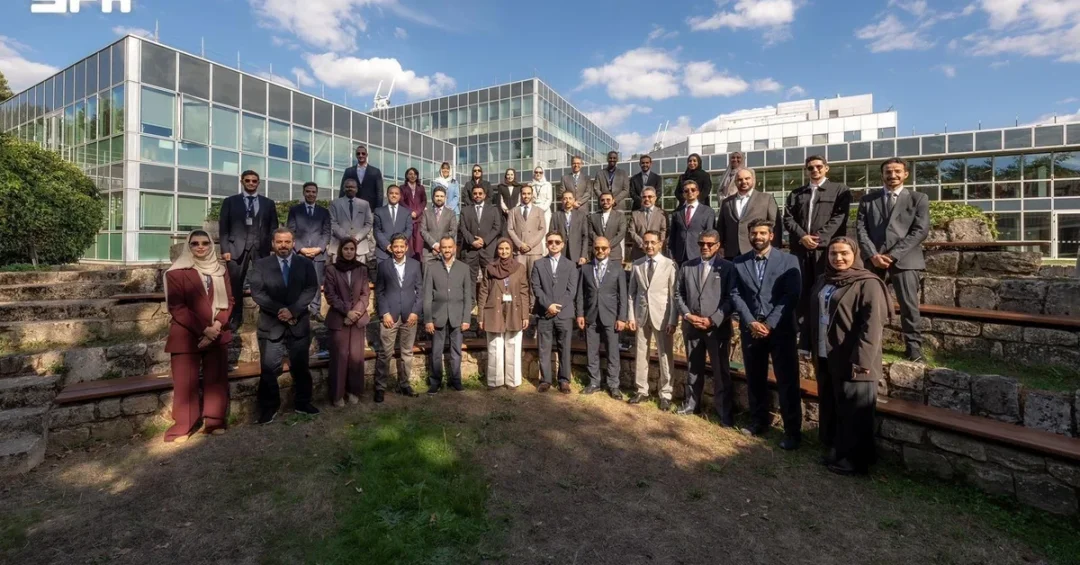
The Saudi Media Academy, affiliated with the Ministry of Media, concluded the second edition of its Media Leaders track on Thursday in Fontainebleau, France, marking another milestone in the Kingdom’s drive to build a world-class media sector. The program brought together 40 male and female leaders from the public and private sectors for two weeks of intensive international training, according to the Saudi Press Agency. The track is designed to enable Saudi media leaders to lead institutional transformation and strengthen their ability to influence, innovate, and set strategic priorities.
Could this program be the blueprint for how the Kingdom’s media sector competes on the world stage? The closing ceremony in Fontainebleau followed 48 training hours delivered through two intensive international programs that combined academic learning with practical application. Lectures and interactive workshops were led by nine international experts, and participants also completed four field visits to leading British and French media institutions. The initiative reflects a broader Saudi effort to keep pace with rapid sector changes and to help shape the future of media rather than merely respond to it.
Context and Background
Why does a two-week training program in France matter for the future of Saudi media? The answer lies in the scale of the transformation underway in the Kingdom. The Saudi Media Academy, affiliated with the Ministry of Media, was established to professionalize the sector and prepare a new generation of leaders capable of managing complex, fast-moving media organizations. The Media Leaders track is one of its flagship offerings, and the second edition built on the experience of the first, refining the curriculum and expanding international exposure. The program’s location in Fontainebleau, home to one of Europe’s leading business schools, placed Saudi participants at the heart of global media and management thinking.
The Ministry of Media has consistently emphasized that human capital is the foundation of a modern media industry. Training programs such as this one are not isolated events but part of a sustained strategy to raise professional standards across television, radio, print, and digital platforms. By selecting 40 leaders from both the public and private sectors, the Academy ensured that the benefits of the training would be distributed across the media ecosystem, from government communication departments to private production companies and news organizations. This cross-sector approach mirrors the collaborative spirit that defines many of Saudi Arabia’s Vision 2030 initiatives.
What distinguishes the Media Leaders track from conventional training courses? Its structure is deliberately immersive. Over two weeks, participants engaged in 48 training hours, a workload comparable to a full academic module, delivered by nine international experts. The curriculum combined lectures with interactive workshops, allowing participants to apply concepts immediately. Four field visits to leading British and French media institutions gave the cohort direct exposure to international best practices in newsroom management, content production, and digital transformation. This blend of theory and practice is designed to produce leaders who can implement change, not just study it.
Key Details
How exactly was the second edition of the Media Leaders track structured? According to the Saudi Press Agency, the program comprised two intensive international training programs totaling 48 training hours. The sessions were delivered by nine international experts and combined academic learning with practical application. The 40 participants, drawn from the public and private sectors, represented a cross-section of Saudi media leadership. The inclusion of four field visits to leading British and French media institutions added a comparative dimension, allowing participants to observe how established media organizations in Europe manage operations, innovation, and strategic planning.
The choice of Fontainebleau as the venue is significant. The town is home to INSEAD, one of the world’s most respected business schools, and its proximity to Paris provides access to major French media organizations. For Saudi media leaders, the setting offered a neutral, international environment in which to exchange ideas with global experts and peers. The program’s emphasis on institutional transformation reflects a recognition that media organizations must continuously adapt to technological change, shifting audience habits, and new competitive pressures. By focusing on influence, innovation, and strategic priorities, the track addresses the core competencies required of modern media executives.
What did participants gain from the experience? The program was designed to strengthen their ability to lead institutional transformation, influence public discourse, and set strategic priorities. These skills are increasingly important as Saudi media expands its global footprint. The field visits to British and French media institutions provided concrete examples of how leading organizations structure their operations, manage talent, and embrace digital tools. The interactive workshops allowed participants to test ideas and receive feedback from international experts. The result is a cohort of leaders better equipped to drive change within their own organizations and to contribute to the sector’s overall development.
International and Regional Impact
What does Saudi Arabia’s investment in media leadership mean for the wider region? The Kingdom’s media sector is undergoing a period of rapid expansion, with new platforms, production hubs, and international partnerships emerging across the country. By training leaders in France and exposing them to British and French media institutions, the Saudi Media Academy is building bridges between the Kingdom and established media markets. This exchange of knowledge and best practices strengthens Saudi Arabia’s position as a regional media hub and enhances its ability to tell its story to international audiences with professionalism and credibility.
The program also signals Saudi Arabia’s commitment to international cooperation in media and education. France and the United Kingdom are home to some of the world’s most influential media organizations, and the field visits allowed Saudi participants to learn directly from their peers. Such exchanges can lead to future collaborations, co-productions, and knowledge-sharing agreements. For the region, the initiative sets an example of how countries can invest in human capital to raise industry standards. It also reinforces Saudi Arabia’s role as a leader in the Arab world’s media transformation, a role that carries weight in both regional and global conversations.
Economic and Strategic Significance
Why is media leadership a strategic priority for Saudi Arabia? The media sector is not only a cultural and informational asset but also an economic one. A vibrant media industry creates jobs, attracts investment, and supports related sectors such as advertising, technology, and tourism. By developing skilled leaders, the Saudi Media Academy is helping to build an ecosystem that can compete internationally. The program’s focus on innovation and strategic planning aligns with the broader economic diversification goals of Vision 2030, which seeks to reduce reliance on oil and expand knowledge-based industries.
The strategic significance extends to soft power. A professional, well-led media sector enhances a country’s ability to communicate its values, achievements, and perspectives to the world. Saudi Arabia has made no secret of its ambition to be a global voice in media, and programs like the Media Leaders track are essential to that ambition. The participants, equipped with new skills and international exposure, are expected to return to their organizations and implement changes that improve content quality, operational efficiency, and audience engagement. Over time, these improvements can strengthen the Kingdom’s media influence and contribute to its economic and diplomatic objectives.
Vision 2030 Alignment
How does the Media Leaders track fit into Saudi Arabia’s long-term vision? Vision 2030 places human capital development at the center of its strategy, recognizing that a skilled, adaptable workforce is essential for economic transformation. The Saudi Media Academy’s programs directly support this goal by investing in the leaders who will shape the future of the media sector. The emphasis on institutional transformation, innovation, and strategic priorities mirrors the Vision 2030 themes of a vibrant society, a thriving economy, and an ambitious nation. By training leaders from both the public and private sectors, the Academy ensures that the benefits of this investment are widely shared.
The conclusion of the second edition in Fontainebleau is not an endpoint but a step in a continuous journey. As Saudi Arabia’s media landscape evolves, the need for capable leaders will only grow. The Saudi Media Academy, under the Ministry of Media, is positioned to meet that need through programs that combine international best practices with a deep understanding of local context. The 40 leaders who completed the track are now part of a growing network of professionals committed to advancing the sector. Their work will contribute to the Kingdom’s broader goals of economic diversification, global engagement, and the realization of Vision 2030.
20 Questions
Q1. What was the main event reported by the Saudi Press Agency?
A1. The Saudi Media Academy concluded the second edition of its Media Leaders track on Thursday in Fontainebleau, France, with 40 participants completing two weeks of intensive international training.
Q2. Which organization is the Saudi Media Academy affiliated with?
A2. The Saudi Media Academy is affiliated with the Ministry of Media, which oversees its programs and strategic direction in line with national media development goals.
Q3. How many participants took part in the second edition of the Media Leaders track?
A3. Forty male and female leaders from both the public and private sectors participated in the program, representing a cross-section of Saudi media leadership.
Q4. How long did the training program last?
A4. The program lasted two weeks and included two intensive international training programs totaling 48 training hours, delivered through lectures and interactive workshops.
Q5. How many international experts delivered the training?
A5. Nine international experts delivered the lectures and workshops, bringing global perspectives and expertise to the Saudi participants.
Q6. What was the purpose of the Media Leaders track?
A6. The track aims to enable Saudi media leaders to lead institutional transformation and strengthen their ability to influence, innovate, and set strategic priorities in a changing media landscape.
Q7. Where was the program held?
A7. The program was held in Fontainebleau, France, a location chosen for its access to leading academic and media institutions in Europe.
Q8. How many field visits were included in the program?
A8. Participants completed four field visits to leading British and French media institutions, gaining direct exposure to international best practices.
Q9. What types of organizations did participants visit?
A9. The field visits were to leading British and French media institutions, offering insights into newsroom management, content production, and digital transformation.
Q10. What skills did the program aim to strengthen?
A10. The program focused on institutional transformation, influence, innovation, and strategic priority-setting, all essential for modern media leadership.
Q11. Why is this program important for Saudi Arabia’s media sector?
A11. It invests in human capital, raising professional standards and helping Saudi media organizations adapt to technological and market changes.
Q12. How does the program support Vision 2030?
A12. It aligns with Vision 2030 by developing skilled leaders, promoting economic diversification, and enhancing Saudi Arabia’s global media presence.
Q13. What is the significance of holding the program in France?
A13. France is home to influential media organizations and academic institutions, providing a valuable international learning environment for Saudi leaders.
Q14. How does the program benefit the participants’ organizations?
A14. Participants return with new skills and ideas that can improve content quality, operational efficiency, and strategic planning within their organizations.
Q15. What is the Saudi Media Academy’s role in the media sector?
A15. It professionalizes the sector by offering training programs that prepare leaders to manage complex media organizations and drive innovation.
Q16. How many editions of the Media Leaders track have been held?
A16. The program in Fontainebleau was the second edition, building on the success of the first and refining the curriculum.
Q17. What themes were covered in the training?
A17. The training covered institutional transformation, innovation, strategic priorities, and the future of media, combining academic learning with practical application.
Q18. Who delivered the lectures and workshops?
A18. Nine international experts delivered the sessions, ensuring participants received world-class instruction and insights.
Q19. What is the expected impact of the program on Saudi media?
A19. It is expected to strengthen leadership, improve content and operations, and enhance the Kingdom’s media influence regionally and globally.
Q20. What does the conclusion of this edition signify for the future?
A20. It marks continued progress in Saudi Arabia’s media transformation, with participants now equipped to contribute to the sector’s growth and Vision 2030 goals.
Reader Feedback
We value your thoughts. Please share your feedback on this article.
Your feedback helps us improve our coverage.
Related articles
 Saudi Envoy Attends Beirut Port Terminal Groundbreaking
 Saudi-Syria Waqf Cooperation Talks Held in Riyadh
 KSrelief Chief Meets Jamaican Tourism Minister in Riyadh
 KSrelief Delivers Emergency Food Relief to 2,800 in Yemen
 KSrelief Supplies 500,000 Liters of Water to Gaza Residents
 KSrelief Distributes Dates to 1,494 in Yemen’s Taiz