


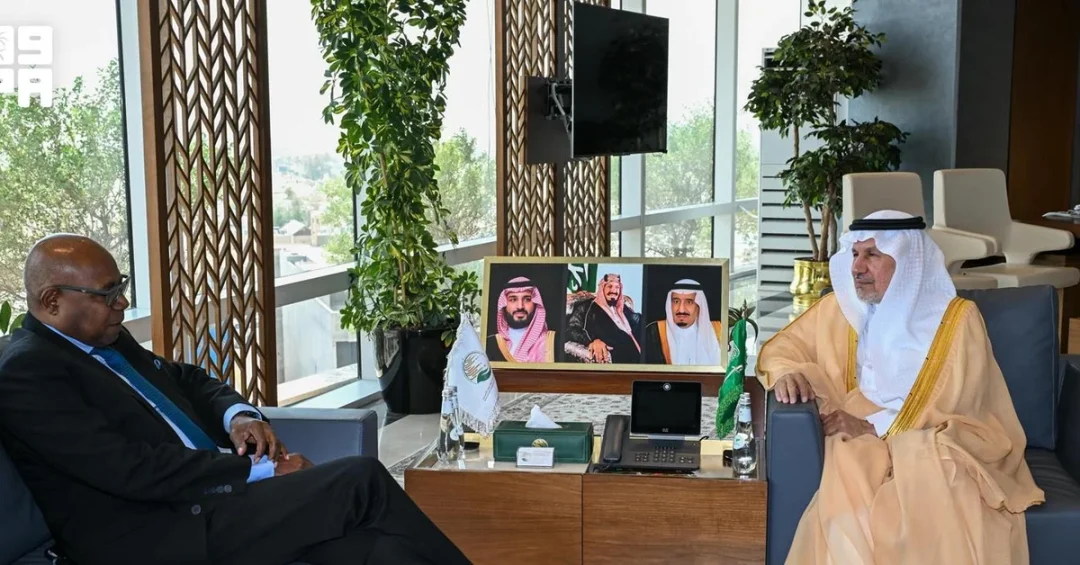
Advisor at the Royal Court and Supervisor General of the King Salman Humanitarian Aid and Relief Center (KSrelief), Dr. Abdullah bin Abdulaziz Al Rabeeah, met with Jamaica’s Minister of Tourism, Edmund Bartlett, at the center’s headquarters in Riyadh on Thursday, September 10, 2026, to discuss matters of mutual interest related to humanitarian and relief affairs. The meeting, announced by the Saudi Press Agency, underscored the growing engagement between the Kingdom of Saudi Arabia and the Caribbean nation across humanitarian, developmental, and people-centered fields. During the talks, Minister Bartlett commended Saudi Arabia’s humanitarian and relief efforts delivered through KSrelief to countries and communities affected by crises worldwide, and he specifically praised the Saudi Conjoined Twins Programme, expressing appreciation for the Kingdom’s efforts to separate the Jamaican conjoined twins.
The encounter reflects a broader pattern of Saudi diplomacy in which official agencies, including KSrelief, engage counterparts from every continent to build partnerships that extend beyond immediate emergency response. For Jamaica, a Caribbean tourism-driven economy, the meeting also carried developmental significance, as both sides explored areas where humanitarian expertise and tourism resilience intersect. The discussions took place at KSrelief’s headquarters in Riyadh, the operational hub from which the center coordinates a global portfolio of relief and aid programs. The Saudi Press Agency reported that the two sides addressed matters of mutual interest, signaling a relationship grounded in shared humanitarian priorities rather than transactional diplomacy.
Context and Background
Why has a humanitarian relief center become such a central instrument of Saudi Arabia’s international engagement? KSrelief, formally the King Salman Humanitarian Aid and Relief Center, was established in 2015 under the directives of the Custodian of the Two Holy Mosques, King Salman bin Abdulaziz Al Saud, to serve as the Kingdom’s dedicated humanitarian arm. Since then, it has implemented thousands of projects in dozens of countries, spanning food security, health care, shelter, education, water and sanitation, and emergency response. Its mandate is explicitly humanitarian: to alleviate the suffering of people affected by crises regardless of nationality, religion, or geography. This universal framing has allowed the center to operate in complex environments and to build partnerships with United Nations agencies, international nongovernmental organizations, and national governments alike.
Jamaica, meanwhile, is the largest English-speaking island nation in the Caribbean and one of the region’s most prominent tourism destinations. Its economy relies heavily on travel and hospitality, which makes the tourism portfolio a key instrument of its external relations. Minister Edmund Bartlett is a veteran tourism official who has represented Jamaica in global tourism forums and has advocated for resilience-building in the sector, particularly in the face of natural disasters and public health shocks. His visit to Riyadh therefore brought together two policy domains — humanitarian relief and tourism resilience — that are rarely discussed in the same room but are deeply connected in practice. Countries that depend on tourism are acutely vulnerable to hurricanes, earthquakes, pandemics, and other disruptions, and humanitarian cooperation can strengthen their capacity to prepare for and recover from such events.
The meeting also occurred against the backdrop of Saudi Arabia’s expanding diplomatic footprint in the Caribbean and Latin America. In recent years, the Kingdom has deepened ties with governments across the region through trade missions, development cooperation, and high-level visits. These relationships are part of a wider Saudi strategy to diversify partnerships beyond traditional allies and to position the Kingdom as a constructive global actor. For Jamaica, engagement with Saudi Arabia offers access to humanitarian expertise, potential development cooperation, and a partner with growing capacity in tourism, aviation, and infrastructure — all areas relevant to its national priorities. The Riyadh meeting thus sits at the intersection of two long-term trends: the globalization of Saudi humanitarian work and the diversification of Caribbean diplomacy.
Key Details
What exactly was discussed at the KSrelief headquarters, and why does it matter? According to the Saudi Press Agency, Dr. Abdullah bin Abdulaziz Al Rabeeah received Minister Edmund Bartlett at the center’s headquarters in Riyadh on Thursday. The two sides discussed matters of mutual interest related to humanitarian and relief affairs. The phrasing is deliberately broad, reflecting the consultative nature of the encounter: such meetings typically allow officials to review ongoing cooperation, identify new areas of collaboration, and align priorities for future projects. While no specific agreements were announced in the initial readout, the meeting itself constitutes a formal diplomatic engagement between a senior Saudi official and a Caribbean cabinet minister, and it lays groundwork for potential follow-up in both humanitarian and tourism-related fields.
The most concrete element of the readout was Minister Bartlett’s praise for the Saudi Conjoined Twins Programme. The program, administered under the supervision of the Royal Court and executed by Saudi medical teams, provides free surgical separation for conjoined twins from around the world. Over the years, it has evaluated hundreds of cases and performed dozens of successful separations, earning international recognition for its clinical excellence and humanitarian spirit. The Jamaican minister’s appreciation for Saudi efforts to separate the Jamaican conjoined twins highlights a specific case that connected the Kingdom and Jamaica through medical care. Such cases often become enduring symbols of cooperation, generating goodwill that extends far beyond the operating room and into broader bilateral relations.
Minister Bartlett also commended Saudi Arabia’s humanitarian and relief efforts through KSrelief in assisting countries and people affected by crises worldwide. This endorsement from a visiting minister is significant because it reflects how Saudi humanitarian work is perceived internationally — not only by beneficiaries but also by peer governments. The meeting therefore served multiple purposes: it acknowledged Saudi contributions, explored avenues for cooperation, and reinforced a relationship that spans health, relief, and tourism. For KSrelief, engaging with tourism officials is also logical: the tourism sector is often on the front line of disaster response, and ministries of tourism frequently coordinate evacuation, shelter, and recovery efforts when crises strike. Bringing humanitarian and tourism perspectives together can improve preparedness and response outcomes.
International and Regional Impact
How does a bilateral meeting in Riyadh resonate across the Caribbean and beyond? For Jamaica, the engagement with KSrelief signals an openness to partnerships that can support its development and resilience goals. Tourism-dependent economies face recurring risks from natural hazards, and cooperation with a humanitarian center experienced in emergency logistics, medical response, and relief supply chains can strengthen national preparedness. The meeting also positions Jamaica as a partner of a G20 member with significant global influence, which can be valuable in multilateral settings. In the Caribbean region, where countries often pool diplomatic efforts on climate and development issues, Jamaica’s direct engagement with Saudi Arabia may encourage similar outreach by neighboring states.
For Saudi Arabia, the meeting reinforces its reputation as a humanitarian donor and a reliable partner for countries across the Global South. KSrelief’s work is frequently cited in international humanitarian circles, and visits by foreign ministers to its headquarters demonstrate the center’s standing. The Kingdom’s willingness to engage with small island developing states — a category that includes Jamaica — also aligns with global conversations about climate vulnerability and equitable development. By receiving a Caribbean tourism minister and discussing relief affairs, Saudi Arabia signals that its humanitarian diplomacy is global in scope, not limited to its immediate region. This broad reach is a core component of the Kingdom’s international identity and its aspiration to be a bridge between regions and cultures.
Economic and Strategic Significance
What strategic value does this meeting hold for both countries? For Saudi Arabia, humanitarian diplomacy through KSrelief complements economic and political engagement. It builds goodwill, opens channels for cooperation, and demonstrates the Kingdom’s commitment to international stability and human welfare. These efforts also support Saudi Arabia’s broader foreign policy objectives, including its role in multilateral institutions and its partnerships with developing countries. In an era when soft power is increasingly important, humanitarian action is one of the Kingdom’s most effective instruments. The meeting with Jamaica’s tourism minister adds a Caribbean dimension to this strategy, extending Saudi reach into a region where the Kingdom has been steadily expanding its presence.
For Jamaica, the strategic value lies in diversifying partnerships and accessing expertise. Tourism is the backbone of the Jamaican economy, contributing significantly to employment and foreign exchange earnings. Strengthening the sector’s resilience is therefore a national priority. Cooperation with Saudi Arabia could take various forms, from knowledge exchange on crisis management to potential support for infrastructure and capacity-building. Additionally, the humanitarian connection — exemplified by the conjoined twins case — creates a foundation of trust that can support broader collaboration. The meeting thus has both symbolic and practical dimensions: it celebrates past cooperation and opens the door to future initiatives that could benefit Jamaican citizens and the Caribbean region as a whole.
Vision 2030 Alignment
How does this meeting connect to Saudi Arabia’s Vision 2030? Vision 2030, the Kingdom’s national transformation plan launched in 2016 under the leadership of Crown Prince Mohammed bin Salman, seeks to diversify the economy, strengthen international partnerships, and enhance Saudi Arabia’s global role. Humanitarian leadership is an integral part of this vision. KSrelief embodies the Kingdom’s commitment to global responsibility, and its work supports the vision’s emphasis on building a prosperous, outward-looking nation that contributes to international stability. By hosting a Jamaican minister and discussing relief and tourism affairs, KSrelief demonstrates how Vision 2030’s goals extend beyond domestic development to encompass global engagement and humanitarian service.
Moreover, the meeting highlights the intersection of Vision 2030 with tourism, a sector the Kingdom is developing rapidly as part of its economic diversification. Saudi Arabia’s own tourism ambitions — including the growth of leisure, cultural, and pilgrimage travel — have given it a stake in global conversations about tourism resilience and recovery. Exchanges with tourism officials from other countries can inform Saudi efforts and create opportunities for collaboration. In this sense, the KSrelief meeting with Minister Bartlett is not only a humanitarian encounter but also a reflection of Saudi Arabia’s multifaceted international engagement, in which relief, tourism, and diplomacy reinforce one another. As the Kingdom continues to expand its global partnerships, such meetings will remain a vital part of its strategy to build a more connected and compassionate world.
20 Questions
Q1. Who met at the KSrelief headquarters in Riyadh?
A1. Advisor at the Royal Court and KSrelief Supervisor General Dr. Abdullah bin Abdulaziz Al Rabeeah met with Jamaican Minister of Tourism Edmund Bartlett at the center’s headquarters in Riyadh on Thursday, September 10, 2026.
Q2. What was the main purpose of the meeting?
A2. The two sides discussed matters of mutual interest related to humanitarian and relief affairs, exploring ways to strengthen cooperation between Saudi Arabia and Jamaica in these fields.
Q3. What is KSrelief and when was it established?
A3. KSrelief, the King Salman Humanitarian Aid and Relief Center, was established in 2015 under the directives of King Salman bin Abdulaziz Al Saud to serve as Saudi Arabia’s dedicated humanitarian arm.
Q4. What did Minister Bartlett say about Saudi humanitarian efforts?
A4. He commended Saudi Arabia’s humanitarian and relief efforts through KSrelief in assisting countries and people affected by crises worldwide, acknowledging the Kingdom’s global contributions.
Q5. What specific Saudi program did the Jamaican minister praise?
A5. He praised the Saudi Conjoined Twins Programme, expressing appreciation for Saudi efforts to separate the Jamaican conjoined twins, a case that connected the two countries through medical care.
Q6. What is the Saudi Conjoined Twins Programme?
A6. It is a Saudi medical initiative that provides free surgical separation for conjoined twins from around the world, administered under the Royal Court and executed by Saudi medical teams.
Q7. How does this meeting reflect Saudi Arabia’s foreign policy?
A7. It demonstrates the Kingdom’s commitment to humanitarian diplomacy and its strategy of building partnerships with countries across different regions, including the Caribbean.
Q8. Why is Jamaica significant in the Caribbean region?
A8. Jamaica is the largest English-speaking island nation in the Caribbean and one of the region’s most prominent tourism destinations, making it an important regional partner.
Q9. What is the role of Jamaica’s Ministry of Tourism?
A9. The ministry oversees Jamaica’s tourism sector, which is a major contributor to the national economy, employment, and foreign exchange earnings.
Q10. How does humanitarian cooperation benefit tourism-dependent countries?
A10. It strengthens their capacity to prepare for and recover from natural disasters and other crises, which is critical for economies reliant on travel and hospitality.
Q11. What does the meeting suggest about Saudi-Caribbean relations?
A11. It indicates growing engagement between Saudi Arabia and Caribbean nations, part of the Kingdom’s broader outreach to Latin America and the Caribbean.
Q12. Was any specific agreement announced during the meeting?
A12. The initial readout from the Saudi Press Agency did not announce specific agreements, but the meeting laid groundwork for potential future cooperation in humanitarian and tourism-related fields.
Q13. How does KSrelief operate internationally?
A13. KSrelief implements projects in dozens of countries, partnering with UN agencies, international NGOs, and national governments to deliver aid regardless of nationality, religion, or geography.
Q14. What types of aid does KSrelief provide?
A14. Its programs span food security, health care, shelter, education, water and sanitation, and emergency response, addressing the needs of people affected by crises worldwide.
Q15. Why is tourism resilience important for Jamaica?
A15. Tourism is the backbone of Jamaica’s economy, and the sector is vulnerable to hurricanes, earthquakes, pandemics, and other disruptions, making resilience a national priority.
Q16. How does this meeting align with Saudi Vision 2030?
A16. Vision 2030 emphasizes diversifying partnerships and enhancing Saudi Arabia’s global role, and KSrelief’s humanitarian diplomacy directly supports these objectives.
Q17. What is the significance of the conjoined twins case for Saudi-Jamaican relations?
A17. It created a lasting humanitarian connection between the two countries, generating goodwill and demonstrating Saudi Arabia’s medical expertise and compassion.
Q18. How might Saudi Arabia benefit from engaging with Jamaica?
A18. Engagement builds goodwill, expands Saudi Arabia’s diplomatic reach in the Caribbean, and reinforces its reputation as a responsible global humanitarian actor.
Q19. What role does the Saudi Press Agency play in reporting such meetings?
A19. The Saudi Press Agency is the official national news agency that provides authoritative readouts of official meetings, ensuring accurate and timely information for the public.
Q20. What might follow from this meeting?
A20. Follow-up could include further discussions on humanitarian cooperation, potential collaboration in tourism resilience, and continued engagement between Saudi and Jamaican officials on shared priorities.
Reader Feedback
We value your thoughts. Please share your feedback on this article.
Your feedback helps us improve our coverage.
Related articles
 KSrelief Delivers Emergency Food Relief to 2,800 in Yemen
 KSrelief Supplies 500,000 Liters of Water to Gaza Residents
 KSrelief Distributes Dates to 1,494 in Yemen’s Taiz
 KSrelief Distributes 25,000 Hot Meals in Gaza Strip
 KSrelief Distributes 589 Food Baskets in Yemen
 IMO: Hormuz Crisis Affects 2,000 Vessels, 20,000 Seafarers