


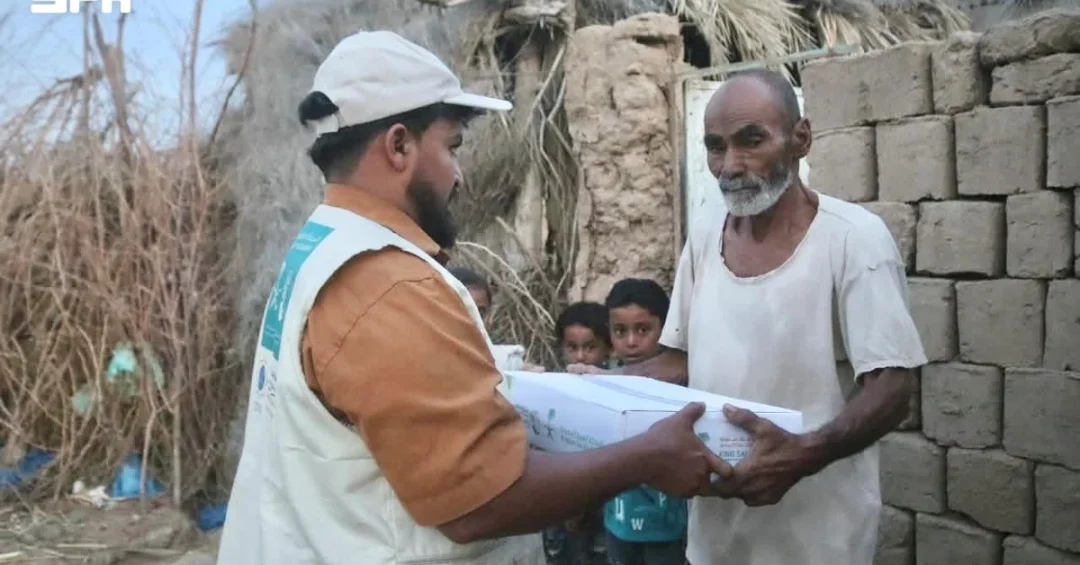
The King Salman Humanitarian Aid and Relief Center (KSrelief) distributed date assistance to 1,494 displaced individuals in Al-Wazi’iyah District of Yemen’s Taiz Governorate on Wednesday, September 10, 2026, according to the Saudi Press Agency (SPA). The distribution forms part of KSrelief’s 2026 date assistance project in Yemen, a continuing humanitarian program that reflects Saudi Arabia’s longstanding commitment to supporting the Yemeni people and easing the hardships caused by ongoing crises in the country.
The operation in Al-Wazi’iyah District, located in the southern governorate of Taiz, provided essential food support to families displaced by conflict and economic hardship. The aid was delivered under the supervision of KSrelief field teams, which coordinate closely with local authorities and humanitarian partners to ensure that assistance reaches those most in need. Is there any doubt that sustained, well-organized relief efforts can make a meaningful difference in the lives of vulnerable communities? The distribution is one of many carried out by the Center across Yemen throughout 2026, forming a vital component of the Kingdom’s broader humanitarian strategy.
Context and Background
Why does Saudi Arabia continue to prioritize humanitarian assistance to Yemen above almost every other international commitment? The answer lies in geography, history, and a deep-rooted sense of responsibility. Yemen shares a long border with the Kingdom, and the two nations are bound by cultural, tribal, and economic ties that stretch back centuries. Since the outbreak of the crisis in Yemen, Saudi Arabia has been one of the largest donors of humanitarian aid to the country, providing food, fuel, medical supplies, shelter, and logistical support through KSrelief and other official channels.
KSrelief, established in 2015 by royal decree under the leadership of the Custodian of the Two Holy Mosques, King Salman bin Abdulaziz Al Saud, has grown into one of the world’s most active humanitarian organizations. It operates in dozens of countries across Asia, Africa, and the Middle East, delivering aid without discrimination based on nationality, religion, or political affiliation. In Yemen alone, KSrelief has implemented hundreds of projects covering food security, health, water, sanitation, education, and emergency relief. The date assistance project is one of its flagship initiatives, leveraging the nutritional and cultural value of dates, a staple food in the region, to support food-insecure households.
Taiz Governorate, one of Yemen’s most populous regions, has been particularly affected by the conflict, with widespread displacement, damaged infrastructure, and limited access to basic services. Al-Wazi’iyah District, where Wednesday’s distribution took place, hosts a significant number of internally displaced persons (IDPs) who have fled fighting in other parts of the governorate and beyond. The delivery of date assistance to 1,494 individuals in this district represents a targeted intervention aimed at addressing immediate food needs while reinforcing the resilience of displaced families.
Key Details of the Distribution
What exactly does a date assistance distribution involve, and why are dates chosen as the primary commodity? Dates are a highly nutritious, energy-dense food that is culturally familiar and widely consumed across Yemen and the wider Arabian Peninsula. They are easy to transport, have a long shelf life, and require no preparation, making them ideal for emergency food assistance. The 2026 date assistance project in Yemen is designed to provide a reliable source of calories and essential nutrients to vulnerable groups, including displaced families, women, children, and the elderly.
According to the Saudi Press Agency, the distribution in Al-Wazi’iyah District reached 1,494 displaced individuals. While the exact tonnage of dates distributed was not specified in the initial announcement, the operation was carried out under the framework of KSrelief’s broader 2026 Yemen date project, which aims to reach hundreds of thousands of beneficiaries across multiple governorates. The Center’s field teams typically coordinate with local councils, humanitarian partners, and community leaders to identify beneficiaries, verify eligibility, and ensure transparent and equitable distribution.
The operation on Wednesday was conducted in line with KSrelief’s standard operating procedures, which emphasize neutrality, impartiality, and independence. These principles are central to the Center’s mandate and are recognized by international humanitarian organizations. The distribution also aligns with Saudi Arabia’s ongoing humanitarian relief programs designed to support the Yemeni population and alleviate local crises, as stated in the original SPA report. By focusing on displaced individuals in Taiz, KSrelief is addressing a critical gap in food access for some of Yemen’s most vulnerable people.
International and Regional Impact
How does a single distribution in Taiz fit into the larger picture of international humanitarian action in Yemen? Yemen remains one of the world’s largest humanitarian crises, with millions of people requiring assistance to meet basic food and health needs. International organizations, including the United Nations and its agencies, have repeatedly warned that funding shortfalls threaten the delivery of life-saving aid. In this context, Saudi Arabia’s consistent contributions through KSrelief help fill critical gaps and sustain essential services for millions of Yemenis.
The Kingdom’s relief efforts are widely acknowledged by international partners, including the United Nations Office for the Coordination of Humanitarian Affairs (OCHA) and the World Food Programme (WFP), which have praised KSrelief’s role in supporting humanitarian operations in Yemen. Saudi Arabia’s assistance is delivered in coordination with these international bodies, ensuring that aid complements rather than duplicates other efforts. The date assistance project, in particular, has been recognized for its efficiency and cultural appropriateness, as dates are a familiar and valued food item in Yemeni households.
Regionally, Saudi Arabia’s humanitarian engagement in Yemen reinforces its position as a responsible regional leader committed to stability and prosperity. By alleviating suffering and supporting vulnerable communities, the Kingdom contributes to the broader goal of restoring normalcy and creating conditions for peace and development. The distribution in Taiz also sends a positive signal to the international community that Saudi Arabia remains a reliable partner in addressing humanitarian challenges, even amid its own ambitious domestic transformation under Vision 2030.
Economic and Strategic Significance
What economic and strategic considerations underpin Saudi Arabia’s humanitarian aid to Yemen? Beyond the immediate humanitarian imperative, the Kingdom’s assistance programs contribute to regional stability, which is essential for trade, investment, and economic growth. A stable and prosperous Yemen benefits Saudi Arabia and the entire Gulf region by reducing the risk of spillover effects such as refugee flows, smuggling, and extremism. Humanitarian aid is therefore not only a moral duty but also a strategic investment in long-term security.
Moreover, KSrelief’s operations demonstrate Saudi Arabia’s logistical and coordination capabilities, which are increasingly important as the Kingdom positions itself as a global humanitarian hub. The Center’s ability to deliver aid rapidly and efficiently across borders reflects the broader modernization of Saudi institutions and the professionalization of its relief sector. These capabilities are assets that Saudi Arabia can leverage in international forums and partnerships, enhancing its soft power and diplomatic influence.
From an economic perspective, the date assistance project also supports Saudi agricultural producers and exporters, as dates are a major Saudi product. By sourcing dates domestically, KSrelief contributes to the Saudi economy while providing high-quality aid to beneficiaries. This synergy between humanitarian action and economic development is a hallmark of Saudi Arabia’s approach and aligns with Vision 2030’s goal of diversifying the economy and promoting sustainable development.
Vision 2030 Alignment
How does a humanitarian distribution in a remote Yemeni district connect to Saudi Arabia’s Vision 2030? Vision 2030 is not only about domestic transformation; it also envisions a Kingdom that plays a leading role in global affairs, including humanitarian and development assistance. One of the vision’s pillars is to strengthen Saudi Arabia’s position as a global humanitarian leader, and KSrelief is a key instrument for achieving that goal. The Center’s work in Yemen, including the date assistance project, showcases the Kingdom’s commitment to international solidarity and its capacity to deliver effective aid.
Furthermore, Vision 2030 emphasizes the importance of partnerships and innovation in humanitarian work. KSrelief collaborates with international organizations, local NGOs, and private sector partners to maximize impact and ensure sustainability. The date assistance project is a model of this collaborative approach, bringing together Saudi resources, logistical expertise, and local knowledge to reach those in need. As Saudi Arabia continues its journey toward a diversified, knowledge-based economy, its humanitarian efforts will remain a source of pride and a reflection of its values.
In the coming years, KSrelief is expected to expand its operations and adopt new technologies to improve the efficiency and transparency of aid delivery. The distribution in Al-Wazi’iyah District is a small but significant part of this larger endeavor, demonstrating that Saudi Arabia’s commitment to Yemen and to global humanitarian causes is unwavering. Through such actions, the Kingdom reinforces its role as a force for good in the region and beyond, contributing to a more stable and prosperous future for all.
20 Questions
Q1. What organization distributed date assistance in Yemen’s Taiz Governorate?
A1. The King Salman Humanitarian Aid and Relief Center (KSrelief) distributed the date assistance. It is Saudi Arabia’s primary humanitarian agency, established in 2015 to provide relief worldwide.
Q2. How many beneficiaries received date assistance in Al-Wazi’iyah District?
A2. A total of 1,494 displaced individuals received date assistance in Al-Wazi’iyah District of Taiz Governorate on Wednesday, September 10, 2026, according to the Saudi Press Agency.
Q3. What is the 2026 date assistance project in Yemen?
A3. It is a KSrelief initiative that provides dates to food-insecure Yemeni families throughout 2026. It is part of Saudi Arabia’s broader humanitarian relief programs for Yemen.
Q4. Why are dates chosen for humanitarian distributions?
A4. Dates are nutritious, energy-dense, culturally familiar, easy to transport, and have a long shelf life. They require no preparation, making them ideal for emergency food assistance in Yemen.
Q5. Where is Taiz Governorate located?
A5. Taiz Governorate is in southwestern Yemen. It is one of the country’s most populous governorates and has been heavily affected by the conflict, with widespread displacement.
Q6. Who are the beneficiaries of this distribution?
A6. The beneficiaries are displaced individuals in Al-Wazi’iyah District. They include families, women, children, and the elderly who have fled conflict and are in need of food assistance.
Q7. How does KSrelief identify beneficiaries?
A7. KSrelief field teams coordinate with local authorities, humanitarian partners, and community leaders to identify and verify eligible beneficiaries, ensuring transparent and equitable distribution of aid.
Q8. What principles guide KSrelief’s operations?
A8. KSrelief follows the humanitarian principles of neutrality, impartiality, independence, and humanity. These principles ensure aid reaches those most in need without discrimination.
Q9. How does this distribution fit into Saudi Arabia’s Yemen policy?
A9. It is part of Saudi Arabia’s ongoing humanitarian relief programs designed to support the Yemeni population and alleviate local crises, reflecting the Kingdom’s commitment to its neighbor.
Q10. What other types of aid does KSrelief provide to Yemen?
A10. KSrelief provides food, fuel, medical supplies, shelter, water, sanitation, education, and emergency relief. It implements hundreds of projects across Yemen covering multiple sectors.
Q11. When was KSrelief established?
A11. KSrelief was established in 2015 by royal decree under the leadership of the Custodian of the Two Holy Mosques, King Salman bin Abdulaziz Al Saud. It has since become a leading global humanitarian organization.
Q12. Is Saudi Arabia a major donor to Yemen?
A12. Yes, Saudi Arabia is one of the largest donors of humanitarian aid to Yemen. Its contributions are delivered through KSrelief and other official channels, often in coordination with international partners.
Q13. How does the international community view KSrelief’s work?
A13. International organizations such as the United Nations and the World Food Programme have praised KSrelief’s role in supporting humanitarian operations in Yemen, recognizing its efficiency and coordination.
Q14. What is the significance of Al-Wazi’iyah District?
A14. Al-Wazi’iyah District in Taiz Governorate hosts a significant number of internally displaced persons. It is a priority area for humanitarian assistance due to high levels of need.
Q15. How does this distribution align with Vision 2030?
A15. Vision 2030 aims to strengthen Saudi Arabia’s role as a global humanitarian leader. KSrelief’s work, including the date project, showcases the Kingdom’s commitment to international solidarity and effective aid delivery.
Q16. Does the date assistance project support Saudi agriculture?
A16. Yes, by sourcing dates domestically, KSrelief supports Saudi agricultural producers and exporters. This creates a synergy between humanitarian action and economic development, aligning with Vision 2030.
Q17. What challenges does humanitarian aid delivery face in Yemen?
A17. Challenges include ongoing conflict, damaged infrastructure, limited access, and funding shortfalls. KSrelief and its partners work to overcome these obstacles to reach vulnerable populations.
Q18. How can other countries support Yemen’s humanitarian needs?
A18. Other countries can contribute funding, resources, and logistical support to international humanitarian organizations working in Yemen. Coordination and sustained commitment are essential to address the crisis.
Q19. What is the expected impact of this distribution?
A19. The distribution provides immediate food relief to 1,494 displaced individuals, helping to alleviate hunger and improve nutrition. It also contributes to the resilience of vulnerable families in Taiz.
Q20. What is next for KSrelief in Yemen?
A20. KSrelief is expected to continue and expand its humanitarian operations across Yemen in 2026 and beyond, focusing on food security, health, and other critical needs in coordination with international partners.
Reader Feedback
We value your thoughts. Please share your feedback on this article.
Your feedback helps us improve our coverage.
Related articles
 KSrelief Distributes 25,000 Hot Meals in Gaza Strip
 KSrelief Distributes 589 Food Baskets in Yemen
 IMO: Hormuz Crisis Affects 2,000 Vessels, 20,000 Seafarers
 GCCIA Passes Annual Audit of Seven Global Standards
 Saudi Ministry Launches 28th King Salman Quran Award
 UK Condemns Houthi Attacks on Saudi Arabia