


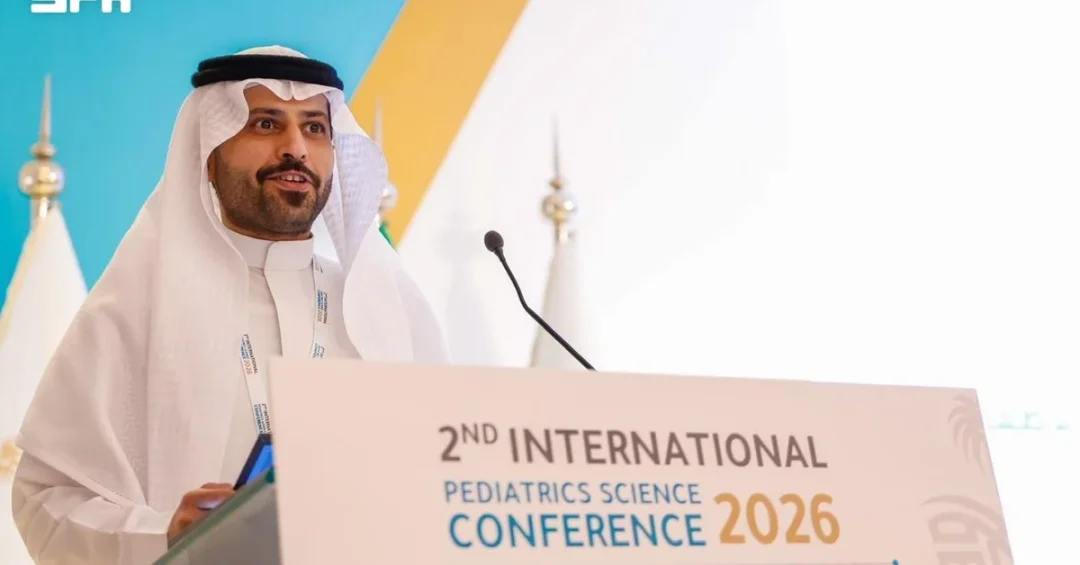
The General Department of Medical Services at the Ministry of Interior, represented by Security Forces Hospital in Riyadh, launched the Second International Pediatric Science Conference on Thursday, September 10, 2026, in cooperation with the Saudi Pediatric Neurology Society. The three-day gathering, running through September 12, brings together leading consultants, researchers, and scientific leaders specializing in pediatrics from the Kingdom and abroad, and is being held under the patronage of the General Supervisor of the General Department of Medical Services and Security Forces Hospital, Dr. Saleh Al-Mohsen. The conference, announced through official Saudi channels, reflects the Kingdom’s expanding capacity to host specialized international medical forums and to contribute to the global exchange of pediatric knowledge.
The event features a comprehensive program of scientific sessions and practical training workshops covering the latest scientific developments and medical practices across a wide range of pediatric specialties. These include pediatric neurology, infectious diseases and immunology, gastroenterology, nutrition and child health, and neonatal care. Organizers say the conference is designed not only to present research but also to translate it into everyday clinical practice, ensuring that advances discussed in Riyadh reach hospital wards, clinics, and primary care centers across the Kingdom. The conference is one of a growing number of specialized medical gatherings that Saudi Arabia has hosted in recent years as part of its broader investment in health-sector excellence.
Context and Background
How did a national security-forces hospital come to host an international pediatric sciences conference? The answer lies in the evolving role of Saudi Arabia’s medical institutions, which have steadily expanded from service providers into centers of research, training, and international collaboration. The General Department of Medical Services at the Ministry of Interior operates a network of hospitals and clinics that serve security personnel and their families, and its flagship facility, Security Forces Hospital in Riyadh, has developed specialized pediatric services that now attract referrals from across the country. Partnering with the Saudi Pediatric Neurology Society, a recognized national professional body, gives the conference a strong scientific anchor and connects hospital-based practice with the wider pediatric community.
The first edition of the conference established a platform for specialists to compare clinical approaches, review emerging evidence, and build professional networks that cross institutional and national boundaries. The second edition builds on that foundation with a broader agenda and a more ambitious workshop program. According to information released through the Saudi Press Agency, the conference includes sessions dedicated to pediatric neurology, infectious diseases and immunology, gastroenterology, nutrition and child health, and neonatal care, all areas where rapid scientific progress is reshaping diagnosis and treatment. For Saudi practitioners, the event offers direct access to international expertise without leaving the Kingdom, while for visiting experts it provides a window into how Saudi Arabia is advancing pediatric care.
Pediatric medicine occupies a distinctive place in Saudi health planning because children represent the future of a young and growing population. The Kingdom’s health authorities have consistently emphasized prevention, early diagnosis, and family-centered care, priorities that align closely with the conference’s focus on practical, evidence-based training. By convening specialists in Riyadh, the organizers are also reinforcing the city’s status as a regional hub for medical meetings, a role that supports both professional development and the broader knowledge economy that Saudi Arabia is cultivating.
Key Details
What exactly will participants take away from three days of sessions and workshops? The conference program combines plenary lectures, specialized scientific sessions, and hands-on training designed to address real clinical challenges. Pediatric neurology sessions examine conditions affecting the developing nervous system, including epilepsy, neuromuscular disorders, and developmental delays, where early intervention can significantly change long-term outcomes. Infectious diseases and immunology sessions cover vaccination strategy, antimicrobial stewardship, and the management of complex infections in children with compromised immune systems. Gastroenterology and nutrition sessions explore feeding difficulties, growth monitoring, and the management of chronic digestive conditions, while neonatal care sessions focus on the care of premature and critically ill newborns, a field where Saudi hospitals have invested heavily in recent years.
A notable feature of this year’s program is a workshop being offered for the first time at a pediatric conference, which combines clinical cases with corresponding medical images and radiological findings. The workshop aims to strengthen the link between clinical assessment and radiological examinations, promote the optimal use of medical imaging, and reduce medically unwarranted radiological tests. By training physicians to correlate what they observe at the bedside with what they see on imaging, the session supports higher quality and greater efficiency in pediatric healthcare. This emphasis on appropriate use of technology reflects a broader principle in Saudi health policy: innovation should serve patients by improving accuracy and reducing unnecessary interventions, not simply add procedures.
The presence of Dr. Saleh Al-Mohsen, General Supervisor of the General Department of Medical Services and Security Forces Hospital, underscores the institutional commitment behind the event. His attendance signals that the conference is treated as a strategic initiative rather than a routine academic meeting, and that the outcomes are expected to feed back into hospital protocols, training curricula, and quality improvement programs. Participants include consultants and specialists from multiple disciplines, creating opportunities for interdisciplinary discussion that mirrors the way modern pediatric care is actually delivered, with neurologists, neonatologists, infectious disease experts, and nutritionists often working with the same young patients.
International and Regional Impact
Why does a pediatric conference in Riyadh matter beyond the Kingdom’s borders? Specialized medical conferences have become an important element of international scientific diplomacy, and Saudi Arabia’s growing roster of such events positions the Kingdom as a convening power in global health. When leading experts travel to Riyadh to present research and lead workshops, they engage directly with Saudi institutions, opening pathways for joint studies, visiting fellowships, and collaborative clinical trials. For regional participants, the conference offers a rare opportunity to interact with international leaders in pediatrics in a setting that is culturally and linguistically accessible, strengthening a network of practitioners who share similar patient populations and public health priorities.
The conference also contributes to the exchange of knowledge in the opposite direction, as Saudi clinicians present their own experience and data. Saudi hospitals manage a wide spectrum of pediatric conditions and serve a large, diverse population, giving local specialists valuable insights that enrich international discussions. This two-way exchange is central to the Kingdom’s approach to global health engagement, which emphasizes partnership rather than one-way technical assistance. Over time, such interactions help raise the standard of pediatric care across the region, benefiting children far beyond the immediate participants in the conference hall.
Economic and Strategic Significance
How does investment in pediatric medicine connect to Saudi Arabia’s economic ambitions? A healthy population is a foundation of economic productivity, and the Kingdom’s long-term development plans place human capital at the center of growth. By improving early diagnosis, reducing complications, and supporting healthy childhood development, pediatric care generates returns that extend across decades, from educational attainment to workforce participation. Hosting international conferences also carries direct economic benefits for Riyadh, including demand for hotels, transport, and event services, while reinforcing the city’s emerging role as a destination for business tourism and professional gatherings.
Strategically, the conference strengthens the institutional capacity of Saudi health providers. Exposure to international best practices, combined with structured training workshops, helps hospitals adopt protocols that improve patient safety and clinical outcomes. The focus on reducing unwarranted radiological tests, for example, reflects an efficiency mindset that is increasingly important as health systems worldwide seek to deliver more value for every riyal spent. Saudi Arabia’s health sector has been expanding rapidly, with new facilities, digital health platforms, and specialized centers opening across the country, and conferences like this one help ensure that the workforce is prepared to make full use of these investments.
Vision 2030 Alignment
How does a pediatric sciences conference fit into Vision 2030? The Kingdom’s transformation agenda includes a clear commitment to a vibrant society and a thriving economy, and health is a pillar of both. Vision 2030’s health objectives emphasize access, quality, and prevention, and the Second International Pediatric Science Conference advances each of these goals by raising clinical standards and promoting evidence-based practice. The event also reflects the Vision’s emphasis on international openness, showing that Saudi institutions are eager to learn from global experts and to contribute their own knowledge to the world.
Equally important is the conference’s contribution to the development of Saudi talent. By bringing advanced training directly to Riyadh, the event supports the continuous education of physicians, nurses, and allied health professionals, helping to build a workforce capable of sustaining the Kingdom’s health ambitions for generations. As Saudi Arabia continues to expand its role as a global hub for medicine, science, and innovation, gatherings such as this demonstrate that the country’s progress is grounded in practical achievements that improve lives. The Second International Pediatric Science Conference is a clear example of that progress, and its outcomes are expected to strengthen pediatric care in the Kingdom and beyond for years to come.
20 Questions
Q1. What is the Second International Pediatric Science Conference?
A1. It is a specialized medical conference launched in Riyadh by the General Department of Medical Services at the Ministry of Interior, represented by Security Forces Hospital, in cooperation with the Saudi Pediatric Neurology Society.
Q2. When and where is the conference taking place?
A2. The conference opened on Thursday, September 10, 2026, in Riyadh and runs through September 12, hosting scientific sessions and training workshops for pediatric specialists from the Kingdom and abroad.
Q3. Which organizations are behind the event?
A3. The General Department of Medical Services at the Ministry of Interior, Security Forces Hospital in Riyadh, and the Saudi Pediatric Neurology Society are the organizing partners behind the conference.
Q4. What specialties does the conference cover?
A4. It covers pediatric neurology, infectious diseases and immunology, gastroenterology, nutrition and child health, and neonatal care, among other pediatric specialties.
Q5. Who is attending the conference?
A5. Leading experts, consultants, and scientific leaders specializing in pediatrics are participating, including specialists from Saudi institutions and international speakers.
Q6. Who is the General Supervisor overseeing the event?
A6. Dr. Saleh Al-Mohsen, General Supervisor of the General Department of Medical Services and Security Forces Hospital, is overseeing the event and attending its sessions.
Q7. What is special about this year’s workshop program?
A7. A workshop offered for the first time at a pediatric conference combines clinical cases with corresponding medical images and radiological findings to strengthen clinical-radiological correlation.
Q8. What is the goal of the new imaging workshop?
A8. It aims to strengthen the link between clinical assessment and radiological examinations, promote optimal use of medical imaging, and reduce medically unwarranted radiological tests in pediatric care.
Q9. Why is reducing unnecessary radiological tests important?
A9. It improves quality and efficiency in pediatric healthcare, protects children from unnecessary exposure, and ensures that medical resources are used where they deliver the greatest benefit.
Q10. How long does the conference run?
A10. The conference runs for three days, from September 10 to September 12, 2026, with a full program of scientific sessions and practical training workshops.
Q11. What is the role of the Saudi Pediatric Neurology Society?
A11. The society partners with Security Forces Hospital to provide scientific leadership, helping shape the agenda and connect hospital practice with the wider pediatric professional community.
Q12. How does the conference support Saudi physicians?
A12. It provides advanced training and direct access to international expertise within the Kingdom, supporting continuous professional development for pediatricians and allied health professionals.
Q13. What topics are covered in pediatric neurology sessions?
A13. Sessions address conditions affecting the developing nervous system, including epilepsy, neuromuscular disorders, and developmental delays, with a focus on early diagnosis and intervention.
Q14. What does the neonatal care track focus on?
A14. It focuses on the care of premature and critically ill newborns, reflecting significant Saudi investment in neonatal facilities and specialized clinical teams.
Q15. How does the conference benefit patients and families?
A15. By raising clinical standards and spreading evidence-based practices, it helps ensure children receive more accurate diagnoses, safer treatments, and better long-term health outcomes.
Q16. Does the conference have international participation?
A16. Yes, it brings together leading experts and scientific leaders from the international pediatric community alongside Saudi specialists, fostering global exchange of knowledge.
Q17. How does the event align with Vision 2030?
A17. It supports Vision 2030’s health objectives by improving quality, prevention, and access, and by strengthening international openness and the development of Saudi medical talent.
Q18. What economic benefits does hosting the conference bring?
A18. It generates demand for hotels, transport, and event services in Riyadh while reinforcing the city’s role as a destination for professional and business gatherings.
Q19. Will the conference outcomes affect hospital practice?
A19. Organizers expect insights and training to feed back into hospital protocols, quality improvement programs, and continuing education for pediatric teams.
Q20. What does the conference say about Saudi healthcare today?
A20. It demonstrates the Kingdom’s growing capacity to host specialized international medical forums and to contribute meaningfully to global pediatric science and practice.
Reader Feedback
We value your thoughts. Please share your feedback on this article.
Your feedback helps us improve our coverage.
Related articles
 Saudi Arabia Performs First Corneal Retrieval in Medical Milestone
 SFDA Authorizes First Saudi AI Medical Software for Dental, Eye Diagnosis
 KFSH Wins Three First-Place Honors at Ada’a Health Award
 SFDA CEO Reviews Workflows at Jeddah Islamic Port
 Fourth Riyadh Global Medical Biotechnology Summit to Open Monday
 Health Minister Honors Winners of Health Ada’a Award