


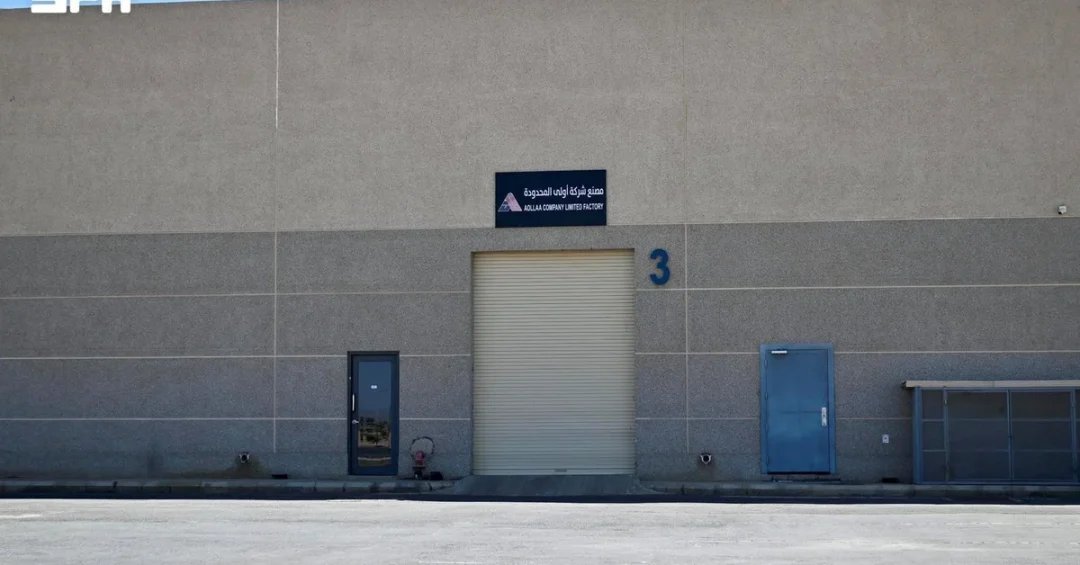
The Saudi Authority for Industrial Cities and Technology Zones (MODON) has announced a new investment opportunity to develop and operate 15 ready-built factories in Tabuk Industrial City, a project spanning 15,000 square meters with an investment exceeding SAR14 million and a targeted internal rate of return of 10 percent. The announcement, released through official Saudi channels, marks another step in the Kingdom’s drive to expand industrial capacity, attract private capital, and accelerate the launch of manufacturing activity in one of its fastest-growing regions. Could this be the kind of targeted investment that turns regional ambition into industrial reality?
The opportunity arrives amid rising demand for ready-built industrial facilities in Tabuk, where more than 45 applications for such units have been submitted over the past three years and the city’s existing eight ready-built factories have reached full occupancy. That combination of waiting demand and zero vacancy gives the project a clear commercial rationale: investors are being invited to build where tenants are already queuing. For international readers, the development offers a window into how Saudi Arabia is structuring its industrial expansion, not only through mega-projects but through practical, tenant-ready infrastructure that shortens the path from investment decision to operating factory.
Context and Background
What makes a ready-built factory different from an ordinary industrial plot? MODON, the government authority responsible for developing and managing industrial cities and technology zones across the Kingdom, has spent years building out serviced land, utilities, roads, and logistics links so that manufacturers can begin operations quickly rather than waiting years for basic infrastructure. Ready-built factories take that logic a step further: the shell, power connections, water, and access roads are already in place, allowing an investor or tenant to install machinery and start production in a fraction of the usual time. The model is designed for small and medium-sized manufacturers, light industry, food processing, building materials, and logistics-linked assembly work.
Tabuk Industrial City sits in the northwest of Saudi Arabia, a region that has drawn increasing attention because of its position on corridors linking the Kingdom to Jordan, Egypt, and the wider Levant, as well as its proximity to the Red Sea coast and the emerging development zone around NEOM. The city hosts a mix of existing factories and industrial services, and its eight ready-built units are fully leased. According to the official announcement, demand has not slackened: more than 45 applications have been filed over three years by companies seeking exactly this type of facility. That backlog is the immediate backdrop to MODON’s decision to open the new opportunity to developers and operators.
The project’s scale is deliberate. Fifteen factories across 15,000 square meters implies an average footprint of roughly 1,000 square meters per unit, a size suited to compact, high-value manufacturing rather than heavy industry. The investment threshold of more than SAR14 million and the 10 percent internal rate of return target give potential bidders a transparent benchmark for evaluating the opportunity. In a market where industrial real estate yields vary widely, publishing such figures is itself a signal of confidence.
Key Details of the Investment Opportunity
What exactly is MODON offering to investors? The authority has framed the opportunity as a mandate to construct, develop, and operate 15 new ready-built factories within Tabuk Industrial City. The winning developer would not simply build shells and sell them; the scope includes operation, meaning ongoing management, leasing, and maintenance of the units. This integrated model aligns the developer’s returns with occupancy rates and tenant satisfaction, rather than with a one-off construction margin. The 15,000 square meter footprint and the SAR14 million-plus investment figure define the physical and financial envelope of the project.
The target internal rate of return of 10 percent is a key disclosure. For institutional investors and family offices comparing Saudi industrial assets with alternatives in the region, a stated IRR provides a starting point for due diligence. It also reflects MODON’s assessment of achievable rents and occupancy in Tabuk, based on the demonstrated demand from more than 45 prior applicants. The authority has emphasized that the new factories are intended to expand capacity, accelerate the launch of industrial activities and projects, and capitalize on the integrated infrastructure and services already available at the city, including roads, power, water, and administrative support.
Timing matters as well. The announcement comes as Saudi Arabia continues to localize manufacturing under national industrial strategies and to encourage private-sector participation in infrastructure and industrial real estate. By packaging the opportunity with clear parameters, MODON lowers the entry barrier for developers who may not have previously worked in Tabuk. The existing full occupancy of the city’s eight ready-built units provides a track record that bidders can examine directly, rather than relying on projections alone.
International and Regional Impact
Why should an investor in Asia, Europe, or the Gulf pay attention to a factory cluster in northwestern Saudi Arabia? Tabuk’s location is the answer. The region sits astride road corridors that connect the Kingdom to Jordan and beyond, and it is close to Red Sea ports that link to Asia, Africa, and Europe. For manufacturers serving Gulf Cooperation Council markets, or using Saudi Arabia as a production base for exports, ready-built capacity in Tabuk shortens setup time and reduces the risk associated with greenfield construction. The project also complements larger developments in the northwest, including NEOM, by providing everyday industrial capacity for suppliers, processors, and logistics firms that support those anchor projects.
Regionally, the opportunity fits a broader pattern in which Saudi Arabia is building industrial depth outside its traditional centers of Riyadh, Jeddah, and Dammam. Distributing manufacturing capacity to regions such as Tabuk creates jobs, diversifies local economies, and reduces pressure on congested industrial zones elsewhere. For international companies evaluating Saudi entry, MODON’s ready-built model offers a lower-risk route: lease or operate a facility with utilities already connected, rather than navigate land allocation and construction from scratch. That proposition is likely to appeal to small and medium-sized enterprises from the Gulf, Asia, and Europe seeking a foothold in the Kingdom’s growing market.
Economic and Strategic Significance
How significant is a SAR14 million project in the context of a multi-trillion-riyal transformation? Its significance lies less in the absolute sum than in the model it demonstrates. Saudi Arabia’s industrial ambitions depend on thousands of mid-sized investments, not only on headline mega-projects. Ready-built factories are a repeatable product: once the template is proven in Tabuk, it can be replicated in other industrial cities where demand outstrips supply. The 10 percent IRR target, if achieved, would validate the asset class and attract further private capital into industrial real estate across the Kingdom.
Strategically, the project supports several national priorities at once. It expands non-oil manufacturing capacity, creates construction and operational jobs, and strengthens local supply chains for food, building materials, and consumer goods. It also monetizes existing public infrastructure: the roads, utilities, and services MODON has already installed in Tabuk Industrial City generate greater returns when more factories operate on site. For the developer, the presence of an established industrial city reduces execution risk. For MODON, the opportunity converts latent demand into signed leases and productive capacity, a virtuous cycle that reinforces the case for further investment in the region.
Vision 2030 Alignment
Does this project advance Saudi Arabia’s long-term vision? Yes, and in a particularly practical way. Vision 2030 calls for a diversified economy, a larger private sector, and a manufacturing base that competes globally. MODON’s investment opportunity in Tabuk contributes to all three by inviting private developers to build and operate industrial assets, by expanding the Kingdom’s stock of tenant-ready factories, and by directing investment to a region earmarked for growth in the northwest. It also supports the localization of supply chains, a theme that has gained urgency as global companies seek resilient, closer-to-market production.
For international observers, the announcement is a reminder that Saudi Arabia’s transformation is being built at multiple scales: giga-projects that capture global attention, and pragmatic industrial opportunities like this one that quietly add capacity, jobs, and returns. If the Tabuk model succeeds, it will strengthen the case for similar projects in other industrial cities and deepen the Kingdom’s integration with regional and global manufacturing networks. The next step lies with developers and operators who can turn a 15,000 square meter opportunity into working factories, and in doing so, contribute to the economic future Vision 2030 envisions.
20 Questions
Q1. What did MODON announce in Tabuk?
A1. MODON announced an investment opportunity to develop and operate 15 ready-built factories in Tabuk Industrial City, covering 15,000 square meters with investment exceeding SAR14 million and a 10 percent internal rate of return target.
Q2. What is MODON’s full name and role?
A2. MODON is the Saudi Authority for Industrial Cities and Technology Zones. It develops and manages industrial cities and technology zones across the Kingdom, providing serviced land, infrastructure, and facilities for manufacturers and investors.
Q3. Where is Tabuk Industrial City located?
A3. Tabuk Industrial City is in the Tabuk region of northwestern Saudi Arabia, positioned near corridors linking the Kingdom to Jordan and the Red Sea coast, and close to emerging developments in the northwest.
Q4. How large is the project?
A4. The project spans 15,000 square meters and involves 15 ready-built factories, averaging roughly 1,000 square meters per unit, a size suited to light and mid-sized manufacturing operations.
Q5. How much investment does the opportunity require?
A5. The investment exceeds SAR14 million, according to the official announcement. This figure covers construction, development, and the operational setup of the 15 ready-built factory units.
Q6. What return does MODON target?
A6. MODON targets a 10 percent internal rate of return. This benchmark gives potential developers and operators a transparent starting point for evaluating the financial viability of the project.
Q7. Why is demand for ready-built factories high in Tabuk?
A7. More than 45 applications for ready-built facilities have been submitted over the past three years, while the city’s existing eight ready-built units are fully occupied, indicating strong and unmet demand.
Q8. What are ready-built factories?
A8. Ready-built factories are industrial units with structures, utilities, and access infrastructure already in place, allowing tenants to install equipment and begin production faster than building from scratch.
Q9. Who can participate in the opportunity?
A9. Developers, operators, and investors with relevant industrial real estate experience can participate. MODON invites qualified parties to construct, develop, and operate the factories within Tabuk Industrial City.
Q10. What does operating the factories involve?
A10. Operation includes managing the units, leasing them to manufacturers, maintaining facilities and services, and ensuring tenants can launch industrial activities efficiently within the city’s integrated infrastructure.
Q11. How does the project benefit Saudi Arabia’s economy?
A11. It expands non-oil manufacturing capacity, creates construction and operational jobs, strengthens local supply chains, and attracts private capital into industrial real estate in a growing region.
Q12. How does the project support Vision 2030?
A12. It advances economic diversification, private-sector participation, and manufacturing growth, while directing investment to the northwest and increasing the Kingdom’s stock of tenant-ready industrial facilities.
Q13. What infrastructure exists at Tabuk Industrial City?
A13. The city offers integrated infrastructure and services including roads, power, water, and administrative support, which reduce setup time and execution risk for factory operators.
Q14. Why is the 10 percent IRR figure important?
A14. Publishing a target IRR provides transparency for investors comparing Saudi industrial assets with alternatives, and signals MODON’s confidence in achievable rents and occupancy in Tabuk.
Q15. How does the project affect regional development?
A15. It distributes industrial capacity beyond Riyadh, Jeddah, and Dammam, creating jobs and economic activity in the northwest while reducing pressure on established industrial centers.
Q16. What role does Tabuk’s location play?
A16. Tabuk’s position near Jordan and Red Sea ports makes it attractive for manufacturers serving Gulf, Asian, and European markets, and for suppliers supporting larger northwestern developments.
Q17. What happens to the eight existing ready-built units?
A17. The existing eight ready-built industrial units in Tabuk Industrial City have reached full occupancy, demonstrating proven demand that supports the case for adding 15 more factories.
Q18. How long have applications been accumulating?
A18. More than 45 applications for ready-built factories have been submitted over the past three years, according to official information, reflecting sustained interest from manufacturers.
Q19. What is the next step for interested investors?
A19. Interested developers and operators should engage with MODON through official channels to review the opportunity’s terms, conduct due diligence, and prepare proposals for developing and operating the factories.
Q20. What does this project signal about Saudi industry?
A20. It signals that Saudi Arabia’s industrial expansion is advancing at multiple scales, combining mega-projects with practical, repeatable investments that add capacity, attract private capital, and support long-term economic diversification.
Reader Feedback
We value your thoughts. Please share your feedback on this article.
Your feedback helps us improve our coverage.
Related articles
 Saudi Arabia Launches Iron and Steel Scrap Price Indices
 Tabuk Region produces figs from 55,000 trees
 Sakaka Hosts Third Dates Festival in Al-Jouf
 Saudi Arabia to host second Global Logistics Forum in November
 Energy Ministry records 964 violations in July inspections
 IsDB Chairman Discusses Morocco Development Partnership