


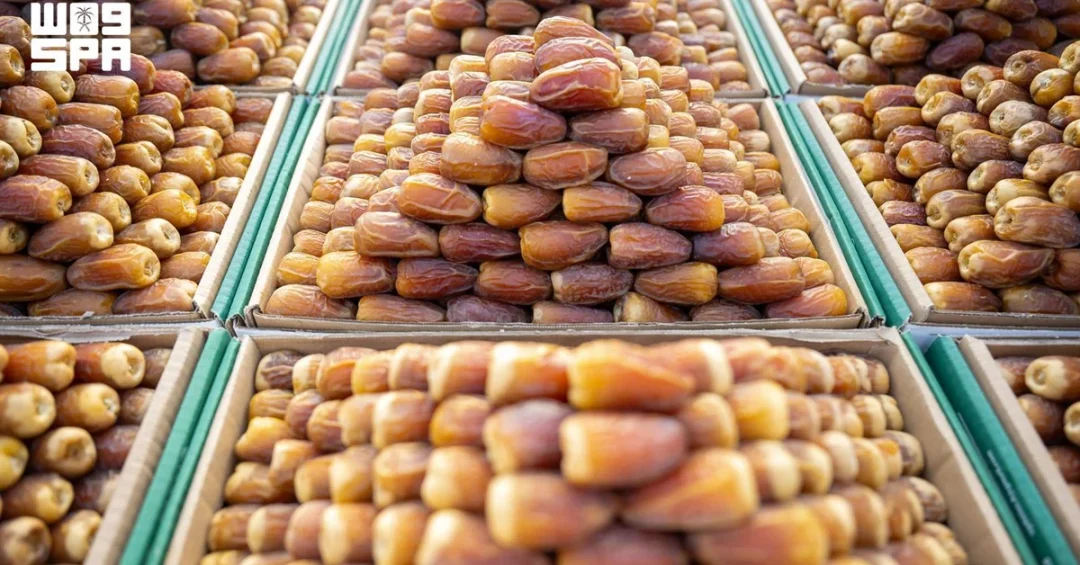
Saudi Arabia’s date harvest season has entered one of its most anticipated phases, with Manasif dates — a transitional variety prized for their unique blend of sweetness and firmness — now available in markets across the Kingdom, according to the Saudi Press Agency (SPA). The brief ripening stage, which occurs when part of the fruit softens while another part remains firm, has drawn date enthusiasts eager to experience the distinctive taste and texture that define this seasonal delicacy. Markets in Buraidah, the heart of Saudi Arabia’s date-producing Qassim region, and other major cities are reporting strong demand for the variety, which typically sells for between SAR15 and SAR25 per kilogram.
The Manasif stage represents a fleeting window in the annual date harvest calendar, lasting only a short period before the fruit fully ripens. During this phase, dates exhibit a rare combination of characteristics: the sweetness associated with fresh, ripe dates and the satisfying firmness of pre-ripe fruit. This duality has made Manasif a favorite among consumers who appreciate complexity in flavor and texture. The phenomenon is not limited to a single variety; different palm cultivars reach the Manasif stage at different times, extending the availability of this unique product across several weeks and regions.
Context and Background
What makes the Manasif stage so special in the world of date cultivation? The term “Manasif” refers to a transitional point in the ripening process, when the date is neither fully mature nor entirely unripe. At this stage, the fruit’s interior undergoes partial softening, creating a heterogeneous texture that varies from bite to bite. This natural process is influenced by a range of factors, including the specific palm variety, local climate conditions, soil composition, and agricultural practices. In Saudi Arabia, the Qassim region — particularly around Buraidah — is renowned for producing some of the finest Manasif dates, thanks to its ideal growing conditions and generations of farming expertise.
The Kingdom’s date industry is among the largest and most sophisticated in the world, with millions of palm trees cultivated across regions such as Qassim, Al-Ahsa, and Madinah. Dates hold a special place in Saudi culture, serving as a staple food, a symbol of hospitality, and a significant agricultural export. The annual harvest season, which generally runs from late summer through autumn, is a major economic and social event. The Manasif phase occurs during this period, typically in early to mid-September, depending on the variety and location. For farmers and traders, it is a critical time when careful timing and handling can command premium prices.
Among the most prominent varieties available during the Manasif stage is the Sukkari, a cultivar celebrated for its exceptionally sweet flavor and pleasant texture. Sukkari Manasif, in particular, has gained a loyal following among Saudi consumers and is often the first to sell out in local markets. Other varieties, such as Ajwa, Khalas, and Barhi, also pass through a Manasif-like stage, each offering its own distinct profile. The variation across varieties ensures that date lovers can enjoy this transitional delicacy over an extended period, even though any single fruit’s Manasif window is brief.
Key Details
How do consumers identify the best Manasif dates, and what should they expect to pay? According to the Saudi Press Agency, prices for Manasif dates currently range from SAR15 to SAR25 per kilogram, reflecting their premium status and limited availability. The pricing varies based on variety, region of origin, fruit size, and overall quality. Sukkari Manasif, for instance, tends to command the higher end of the range due to its superior sweetness and consistent texture. In markets across Riyadh, Jeddah, and Dammam, vendors report that Manasif dates are often purchased in bulk by families who freeze or preserve them to extend their enjoyment beyond the short season.
The appeal of Manasif dates lies in their varied flavors and textures within a single fruit. Unlike fully ripe dates, which are uniformly soft and sweet, Manasif offers a dynamic eating experience. The partial softening creates pockets of intense sweetness alongside firmer sections that provide a satisfying chew. This complexity makes Manasif an ideal companion for traditional Saudi coffee, a pairing that has become a hallmark of hospitality in the Kingdom. It also appeals to modern consumers seeking natural, minimally processed snacks that align with health-conscious lifestyles.
From an agricultural standpoint, the Manasif stage requires careful monitoring. Farmers must judge the precise moment when the dates reach the desired balance of firmness and sweetness, as leaving them on the palm too long results in full ripening and a loss of the distinctive Manasif character. Harvesting is typically done by hand to avoid bruising the delicate fruit. Once picked, Manasif dates have a relatively short shelf life compared to fully ripened or dried dates, which adds to their exclusivity and drives the high demand during the brief window of availability.
International and Regional Impact
Could Saudi Arabia’s Manasif dates become a sought-after export in global markets? While the short shelf life of Manasif presents logistical challenges for international distribution, the growing global appreciation for premium, artisanal food products offers potential opportunities. Saudi Arabia already exports significant quantities of dates to countries around the world, and the Kingdom’s date sector is increasingly focused on value-added products and niche offerings. The unique story of Manasif — a fleeting, seasonal delicacy — could appeal to gourmet markets in Europe, Asia, and North America, particularly among consumers interested in Middle Eastern cuisine and healthy natural sweets.
Regionally, the date trade plays an important role in economic ties among Gulf Cooperation Council (GCC) states. Saudi dates are exported to neighboring countries such as the United Arab Emirates, Kuwait, and Bahrain, where they are highly regarded. The Manasif season also attracts visitors from across the region who travel to Qassim and other date-producing areas to purchase directly from farms and markets. This influx supports local economies, including hotels, restaurants, and transportation services, and reinforces Saudi Arabia’s position as the world’s leading producer and exporter of dates.
Economic and Strategic Significance
How does the date industry contribute to Saudi Arabia’s broader economic diversification goals? Dates are a cornerstone of the Kingdom’s agricultural sector, generating billions of riyals in annual revenue and providing employment for thousands of Saudis. The industry is integrated into the national economy through farming, processing, packaging, and retail. The government has invested in modern irrigation systems, research and development, and marketing campaigns to boost both quality and output. The Manasif segment, though small in volume, exemplifies the premiumization trend that adds value to Saudi agricultural products and enhances their global competitiveness.
Strategic initiatives under Saudi Vision 2030 aim to expand non-oil exports and strengthen food security. The date sector aligns with these objectives by reducing reliance on imports and creating export opportunities. The National Center for Palms and Dates, a government body, supports farmers with training, technology, and market access. It also promotes Saudi dates internationally through participation in trade fairs and partnerships with global retailers. The Manasif season, with its high demand and premium pricing, demonstrates the potential for niche products to contribute meaningfully to the sector’s growth and to the Kingdom’s economic diversification agenda.
Vision 2030 Alignment
How does a seasonal delicacy like Manasif connect to the ambitious transformation outlined in Saudi Vision 2030? Vision 2030 seeks to diversify the economy, enhance the quality of life for citizens, and showcase Saudi Arabia’s cultural heritage to the world. The date industry embodies these goals: it is a traditional sector that is being modernized through innovation, it supports rural livelihoods, and it represents an authentic Saudi product with global appeal. By promoting premium varieties like Manasif, the Kingdom not only celebrates its agricultural heritage but also signals its ability to compete in high-value international markets.
As Saudi Arabia continues to develop its agricultural and tourism sectors, the Manasif season offers a unique cultural experience for visitors. Agritourism initiatives in Qassim and other regions allow tourists to witness the harvest, taste fresh dates, and learn about traditional farming methods. This aligns with Vision 2030’s aim to attract 150 million visits annually by 2030 and to diversify tourism offerings beyond religious and heritage sites. The brief but intense Manasif season thus serves as a small yet meaningful example of how Saudi Arabia is preserving its traditions while embracing a future of economic strength, global engagement, and sustainable development.
20 Questions
Q1. What are Manasif dates?
A1. Manasif dates are those at a transitional ripening stage when part of the fruit softens while another part remains firm, creating a distinctive mix of textures and flavors. They are highly anticipated by date lovers in Saudi Arabia.
Q2. When do Manasif dates typically appear?
A2. They appear during a brief window in the date harvest season, usually in early to mid-September, depending on the palm variety and region. The stage lasts only a short time before the fruit fully ripens.
Q3. Which varieties are most famous for Manasif?
A3. Sukkari Manasif is among the most prominent, especially in Qassim. Other varieties like Khalas, Ajwa, and Barhi also pass through a Manasif-like stage, each with unique characteristics.
Q4. How much do Manasif dates cost?
A4. Prices range from SAR15 to SAR25 per kilogram, according to the Saudi Press Agency. The price varies based on variety, region, size, and quality, with Sukkari often at the higher end.
Q5. Why are Manasif dates so popular?
A5. Their popularity stems from the unique combination of sweetness and firmness within a single fruit. This varied texture makes them a preferred choice for consumers who enjoy dates at transitional ripeness stages.
Q6. Where are Manasif dates mainly produced in Saudi Arabia?
A6. The Qassim region, particularly around Buraidah, is renowned for producing high-quality Manasif dates. Other regions like Al-Ahsa and Madinah also cultivate them.
Q7. How are Manasif dates harvested?
A7. They are typically harvested by hand to avoid bruising, as the fruit is delicate at this stage. Farmers carefully time the harvest to capture the ideal balance of firmness and sweetness.
Q8. What makes Sukkari Manasif special?
A8. Sukkari Manasif is known for its exceptionally sweet flavor and consistent texture. It is often the most sought-after variety during the Manasif season and commands premium prices.
Q9. Can Manasif dates be stored for long?
A9. They have a relatively short shelf life compared to fully ripe or dried dates. Many consumers freeze or preserve them to enjoy beyond the brief season.
Q10. Are Manasif dates healthy?
A10. Yes, dates are nutritious, providing natural sugars, fiber, and essential minerals. Manasif dates, with their firm texture, offer a satisfying and energy-rich snack.
Q11. How do Manasif dates differ from regular dates?
A11. Regular dates are fully ripe and uniformly soft and sweet. Manasif dates are partially ripe, offering a mix of soft and firm sections with varying sweetness, creating a unique eating experience.
Q12. Do Manasif dates have cultural significance in Saudi Arabia?
A12. Yes, dates are central to Saudi hospitality and cuisine. Manasif dates are often served with Arabic coffee to guests, symbolizing generosity and tradition.
Q13. Are Manasif dates exported?
A13. Due to their short shelf life, exports are limited. However, Saudi Arabia exports many other date varieties, and there is potential for premium Manasif products in niche international markets.
Q14. What factors affect the taste of Manasif dates?
A14. The palm variety, regional climate, soil conditions, and agricultural practices all influence the taste and texture. Each region and variety yields distinct flavor profiles.
Q15. How can consumers identify high-quality Manasif dates?
A15. Look for dates that are plump, with a mix of firm and slightly soft areas, and a glossy skin. They should smell sweet and have no signs of mold or excessive dryness.
Q16. Is the Manasif season the same every year?
A16. The timing can vary slightly due to weather and agricultural factors, but it generally occurs during the annual date harvest season, typically in September.
Q17. What is the role of the National Center for Palms and Dates?
A17. It supports Saudi date farmers with training, technology, and market access, and promotes Saudi dates internationally. It is key to the sector’s modernization under Vision 2030.
Q18. How does the date industry support Vision 2030?
A18. It contributes to economic diversification, food security, and non-oil exports. It also creates jobs and supports rural development, aligning with Vision 2030’s goals.
Q19. Can tourists experience the Manasif season?
A19. Yes, agritourism initiatives in Qassim and other regions allow visitors to visit farms, taste fresh dates, and learn about traditional harvesting during the season.
Q20. What is the future outlook for Manasif dates?
A20. With growing demand for premium and artisanal foods, Manasif dates have potential for increased recognition. Continued innovation and marketing could expand their reach while preserving their traditional appeal.
Reader Feedback
We value your thoughts. Please share your feedback on this article.
Your feedback helps us improve our coverage.
Related articles
 Saudi Business Platform: Unified Digital Gateway for Investors
 Riyadh Economic Forum: Legacy of Impact, Vision 2030
 Najran Advances Organic Farming for Food Security
 PIF Launches Gulf Coast Development in Al-Khafji
 GCCIA Workshop on Water Interconnection Projects Concludes
 Saudi Arabia Named Guest of Honor at CIFIT in China