


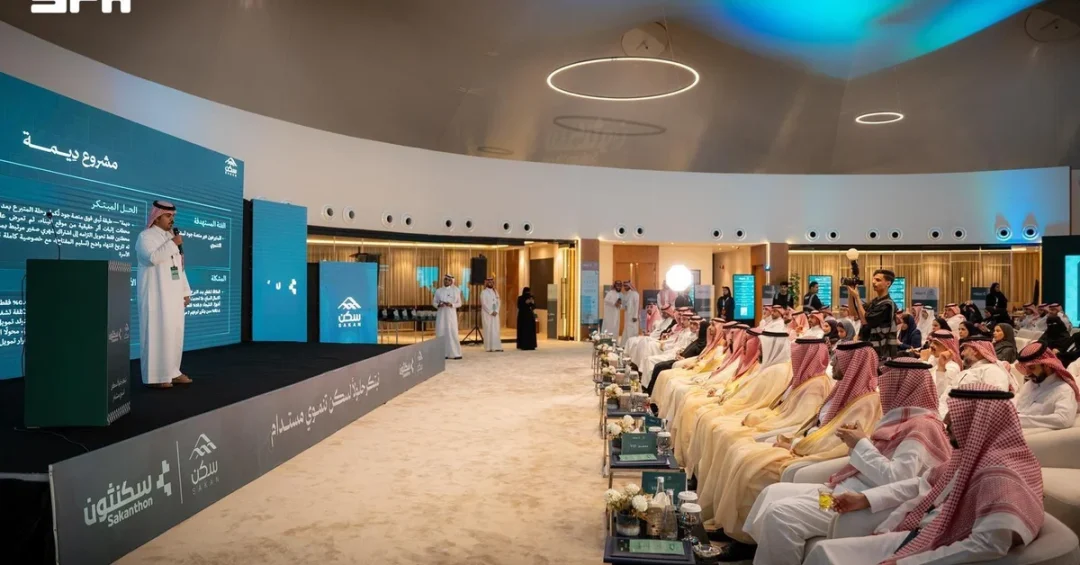
The National Development Housing Foundation (Sakan) concluded “Sakanthon 2026,” a national hackathon dedicated to innovation in developmental housing, honoring the winning teams whose solutions aim to advance the Kingdom’s housing ecosystem. The announcement, carried by the Saudi Press Agency (SPA) on September 7, 2026, marked the close of the initiative’s first edition, which drew broad participation from innovators, researchers, entrepreneurs, and individuals interested in tackling housing challenges through practical, technology-driven ideas. Participants competed across four main tracks: enhancing financing efficiency, developing sustainable giving models, leveraging modern technologies, and employing artificial intelligence to support the sector. Could a single hackathon reshape how a nation approaches one of its most fundamental needs?
The event reflects a widening effort in Saudi Arabia to pair government-backed housing programs with grassroots innovation, an approach that treats shelter not only as a construction target but as a system to be continuously improved. Sakan, a national foundation focused on developmental housing, positioned the competition as a platform where fresh thinking could meet real-world constraints, from financing gaps to the need for long-term sustainability in charitable and developmental models. The winning teams were honored for solutions judged capable of contributing directly to the housing ecosystem, signaling that the Kingdom intends to move promising ideas from concept toward application. For an international audience, the significance lies in how a state-led housing agenda is being opened to researchers, entrepreneurs, and independent problem-solvers, rather than confined to traditional institutional channels.
Context and Background
Why has developmental housing become such a central arena for innovation in Saudi Arabia? The answer begins with the scale and ambition of the Kingdom’s housing agenda, which sits at the intersection of social welfare, economic diversification, and urban modernization. Sakan, formally the National Development Housing Foundation, operates within a broader national effort to improve access to suitable housing for citizens while encouraging sustainable, self-reinforcing models of support. Rather than treating housing purely as a construction challenge, the foundation frames it as a developmental issue that touches financing, community design, charitable giving, and technology adoption. That framing explains why a hackathon — typically associated with software and startups — was chosen as a vehicle for progress in a sector often defined by long timelines and heavy infrastructure.
The first edition of Sakanthon attracted innovators, researchers, entrepreneurs, and interested individuals, according to the Saudi Press Agency, creating a rare space where diverse disciplines could converge on shared problems. The four competition tracks were not arbitrary: enhancing financing efficiency addresses the practical barriers that keep families from obtaining suitable homes; developing sustainable giving models speaks to the need for charitable and developmental support that endures beyond one-off donations; leveraging modern technologies acknowledges that digital tools can compress costs and improve delivery; and employing artificial intelligence to support the sector reflects a national appetite for advanced solutions. Together, these tracks describe a housing ecosystem that is being reimagined as a connected system rather than a series of isolated projects. What does it take to turn a weekend of intense collaboration into lasting change for families?
Key Details
The competition’s structure reveals how Saudi planners think about housing challenges. The financing efficiency track invited participants to propose ways to make funding more accessible, streamlined, or affordable — a recognition that even well-designed housing programs can stall when financial pathways are complicated or costly. The sustainable giving track looked at how charitable and developmental support can be organized to generate ongoing value, rather than depending on episodic campaigns. The modern technology track encouraged solutions that use digital platforms, data, and new tools to improve how housing is delivered, managed, or experienced. The artificial intelligence track pushed participants to consider how machine learning and intelligent systems could support decision-making, resource allocation, or service delivery across the sector. Each track targeted a different leverage point in the same system.
Sakan honored the winning teams at the conclusion of the event, highlighting solutions that judges determined could contribute meaningfully to the development of the housing ecosystem. The foundation did not present the hackathon as a one-off spectacle but as part of a sustained effort to cultivate practical answers to housing challenges. The participation of researchers and entrepreneurs alongside interested individuals suggests an intentional broadening of the talent pool, bringing together academic rigor, commercial instincts, and civic motivation. For observers of Saudi policy, the event illustrates a preference for competitive, merit-based mechanisms — teams present solutions, and the strongest are recognized and potentially advanced. How often do national housing strategies actively invite outsiders to help write the next chapter?
International and Regional Impact
For international audiences, Sakanthon 2026 offers a window into how Saudi Arabia is approaching social infrastructure as a domain of experimentation and partnership. Housing is a universal challenge, and many countries struggle to balance affordability, quality, sustainability, and speed. By organizing a national hackathon around developmental housing, the Kingdom signals that it is willing to test new models and learn publicly. That posture can attract global interest from researchers, technology firms, and development organizations that monitor innovative approaches to urban and social policy. In a region where housing demand continues to rise alongside urbanization, the event positions Saudi Arabia as a source of practical ideas rather than only a consumer of imported solutions.
Regionally, the initiative reinforces a broader pattern in which Gulf states compete and cooperate on quality-of-life improvements. When a national foundation convenes innovators across financing, charity, technology, and artificial intelligence, it creates a template that neighboring countries can study. The emphasis on sustainable giving models is particularly relevant in a region with strong traditions of charitable support, offering a way to modernize generosity without losing its cultural roots. The event also demonstrates that developmental housing can be discussed in the language of opportunity and enterprise, not only need. As Saudi Arabia continues to host major international gatherings and expand its global partnerships, initiatives like Sakanthon add a social dimension to its reputation for economic ambition. What might other nations learn from a housing competition that treats charity, finance, and AI as one connected challenge?
Economic and Strategic Significance
The economic logic behind Sakanthon 2026 extends beyond the housing sector itself. Efficient housing markets support labor mobility, household stability, and savings, all of which contribute to a productive economy. By seeking ways to enhance financing efficiency, participants were effectively exploring how to reduce friction in a market that affects millions of people. Sustainable giving models, meanwhile, can lessen the long-term burden on public budgets by creating support structures that regenerate over time. Technology and artificial intelligence can lower transaction costs, improve targeting of assistance, and help planners make better use of data. Each of these outcomes has strategic value for a country investing heavily in diversifying its economy and improving quality of life.
The hackathon also reflects a strategic bet on human capital. By inviting researchers, entrepreneurs, and interested individuals to compete, Sakan tapped into a population that is increasingly educated, digitally fluent, and eager to contribute to national projects. The winning teams represent a pipeline of talent and ideas that can be connected to larger programs. In this sense, the event is not only about housing solutions but about building an innovation culture in which citizens and residents see themselves as participants in national development. For international readers, that is a notable shift: housing policy is being presented as an open challenge rather than a closed administrative task. Could the next breakthrough in affordable housing come from a team that met for the first time at a hackathon?
Vision 2030 Alignment
Sakanthon 2026 aligns closely with Saudi Vision 2030’s emphasis on a vibrant society, a thriving economy, and an ambitious nation. Housing sits at the center of that vision because it affects family stability, community cohesion, and economic participation. The competition’s four tracks map onto Vision 2030 priorities: financing efficiency supports a thriving economy, sustainable giving strengthens the social fabric, modern technology advances digital transformation, and artificial intelligence contributes to innovation and future-ready sectors. By honoring practical solutions, Sakan reinforces the idea that national goals are achieved through the combined efforts of government, the private sector, academia, and individuals.
The foundation’s decision to launch this initiative as a recurring platform, beginning with its first edition, suggests that the search for housing solutions will continue rather than conclude. That persistence matters, because developmental housing challenges evolve as cities grow and expectations rise. For Saudi Arabia, the event is a reminder that Vision 2030 is not only about megaprojects and global summits but also about the everyday systems that determine how people live. As the Kingdom continues to modernize, initiatives like Sakanthon show how innovation can be directed toward tangible social benefit. The winning teams may be at the start of their journey, but their recognition signals a national willingness to invest in ideas that serve the public good.
20 Questions
Q1. What is Sakanthon 2026?
A1. Sakanthon 2026 is a national hackathon organized by the National Development Housing Foundation (Sakan) focused on innovation in developmental housing. It concluded with the honoring of winning teams that presented solutions to housing challenges.
Q2. When did Sakanthon 2026 conclude?
A2. The event concluded as announced by the Saudi Press Agency on September 7, 2026, in Riyadh. The closing ceremony honored the winning teams from the first edition of the competition.
Q3. Who organized Sakanthon 2026?
A3. The National Development Housing Foundation, known as Sakan, organized the event. Sakan is a national foundation dedicated to developmental housing and related innovation efforts in Saudi Arabia.
Q4. Who participated in Sakanthon 2026?
A4. The first edition saw broad participation from innovators, researchers, entrepreneurs, and interested individuals. They competed across four main tracks to provide practical solutions to housing challenges.
Q5. What were the four main tracks of the competition?
A5. The tracks focused on enhancing financing efficiency, developing sustainable giving models, leveraging modern technologies, and employing artificial intelligence to support the housing sector.
Q6. Why is financing efficiency important in housing?
A6. Financing efficiency helps make funding more accessible and affordable for housing. It reduces barriers that can prevent families from obtaining suitable homes and supports a healthier housing market.
Q7. What are sustainable giving models?
A7. Sustainable giving models are approaches to charitable and developmental support that generate ongoing value. They aim to create lasting impact rather than relying only on one-time donations.
Q8. How does technology support developmental housing?
A8. Technology can improve how housing is delivered, managed, and experienced. Digital platforms, data, and new tools can lower costs and make services more efficient for beneficiaries.
Q9. How is artificial intelligence used in the housing sector?
A9. Artificial intelligence can support decision-making, resource allocation, and service delivery. It may help planners analyze data and target assistance more effectively within the housing ecosystem.
Q10. What did the winning teams receive?
A10. The winning teams were honored by Sakan at the conclusion of the event. Their solutions were recognized for contributing to the development of the housing ecosystem.
Q11. Where was Sakanthon 2026 announced?
A11. The conclusion and honoring of winners were announced by the Saudi Press Agency, which reported the event from Riyadh on September 7, 2026.
Q12. What is the National Development Housing Foundation?
A12. Sakan is a national foundation focused on developmental housing in Saudi Arabia. It works to improve housing access and support innovation in the sector.
Q13. Why did Sakan organize a hackathon?
A13. Sakan organized the hackathon to invite fresh ideas and practical solutions from diverse participants. It aims to accelerate innovation in developmental housing.
Q14. How does Sakanthon 2026 support Vision 2030?
A14. It supports Vision 2030 by promoting innovation, digital transformation, and social development. Housing improvements contribute to a vibrant society and a thriving economy.
Q15. What is developmental housing?
A15. Developmental housing refers to housing initiatives that support community development and quality of life. It often involves financing, sustainability, and technology components.
Q16. How many editions of Sakanthon have taken place?
A16. Sakanthon 2026 was the first edition of the competition. It concluded with the honoring of winning teams that presented innovative solutions.
Q17. What kind of solutions were presented?
A17. Solutions addressed financing efficiency, sustainable giving, modern technology, and artificial intelligence. They aimed to provide practical answers to housing challenges.
Q18. Who benefits from the solutions presented?
A18. The solutions aim to benefit the housing ecosystem broadly, including families seeking suitable homes and organizations working in developmental housing.
Q19. What happens to the winning solutions after the event?
A19. The winning teams were honored for solutions that contribute to the housing ecosystem. The event serves as a platform to advance practical ideas in the sector.
Q20. Why does Sakanthon 2026 matter internationally?
A20. It shows Saudi Arabia’s commitment to innovative housing solutions and social development. International observers can learn from its approach to combining finance, charity, technology, and AI.
Reader Feedback
We value your thoughts. Please share your feedback on this article.
Your feedback helps us improve our coverage.
Related articles
 Dialogue 2026: Institutions Strengthen Youth National Identity
 Municipalities, Housing Sector Record Over 3 Million Volunteer Hours
 Northern Borders Parks Thrive with 130+ Green Spaces
 Riyadh Municipality Launches Six Community Sports Tournaments
 National Institute Transforms Professional Development for Saudi Educators
 Hawi platform reaches 111,000 members and 3,500 hobby clubs