


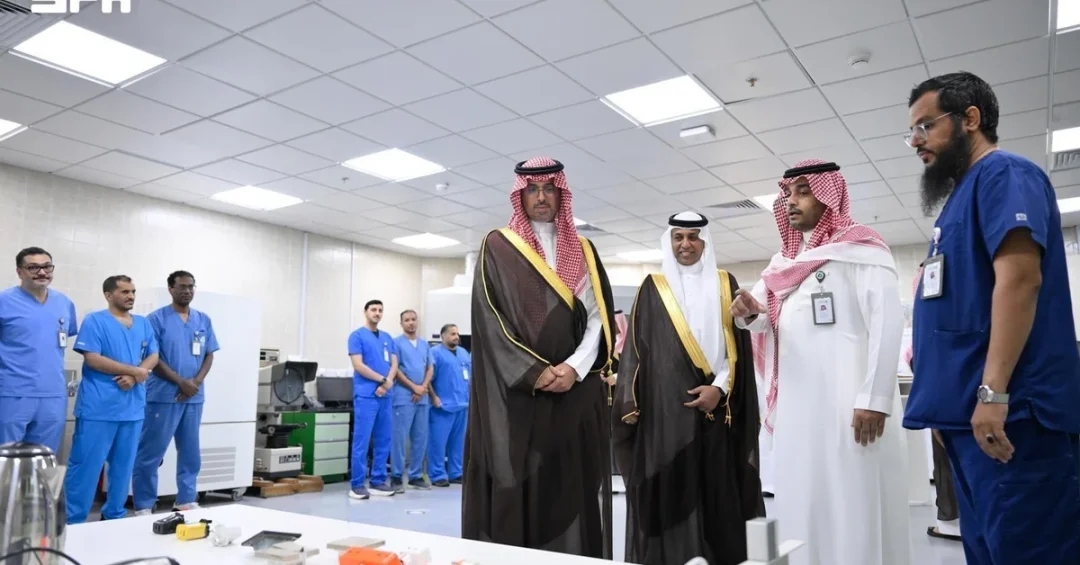
Jeddah Governor Prince Saud bin Abdullah bin Jalawi visited the Saudi Food and Drug Authority (SFDA) branch at Jeddah Islamic Port, where he reviewed regulatory operations and inspected the SFDA’s reference laboratory, according to the Saudi Press Agency (SPA). The visit, reported on September 7, 2026, formed part of the governor’s ongoing programme of tours across facilities and establishments in the governorate, designed to assess operations and services first-hand. During the visit, the governor received a detailed briefing on the regulatory framework administered by the SFDA, the mechanisms used to monitor facilities and products, and the key initiatives and technological solutions deployed to improve operational efficiency and oversight. He also toured the reference laboratory, reviewing its capabilities, technical equipment, sample testing and analysis procedures, and its role in verifying product safety and quality.
Why does a single inspection visit at a port laboratory matter to readers far beyond Saudi Arabia? Because Jeddah Islamic Port is one of the busiest gateways on the Red Sea, and the SFDA branch stationed there functions as a frontline safeguard for food, drugs, medical devices and supplies entering the Kingdom. The governor’s presence signals sustained official attention to the systems that underpin public health and consumer confidence. The visit reflects a governance model in which senior regional officials routinely examine regulatory operations in person, supporting coordination among relevant entities and contributing to product safety and improved efficiency and quality of services provided to beneficiaries. For international audiences, the development offers a clear window into how the Kingdom manages the safety of imported goods at scale.
Context and Background
What is the Saudi Food and Drug Authority, and why does its work at Jeddah Islamic Port carry such weight? Established as the national regulator responsible for food, drugs, medical devices and supplies, and other products under its supervision, the SFDA operates a network of branches at key entry points across the Kingdom. The Jeddah Islamic Port branch is among the most strategically positioned, given the port’s role as a major commercial and logistics hub on the Red Sea coast. The branch’s inspectors and laboratories work to verify that imported consignments meet Saudi standards before they reach markets, pharmacies, hospitals and households.
The governor’s tour is part of a broader pattern of official engagement with regulatory and service facilities in Jeddah. Prince Saud bin Abdullah bin Jalawi has conducted ongoing tours of facilities and establishments in the governorate, reviewing their operations and services and supporting coordination among relevant entities. Such visits are not ceremonial; they allow senior leadership to observe workflows, examine technical capabilities and identify where efficiency can be improved. The SPA report emphasised that the visit aimed to monitor regulatory operations and services in Jeddah, reinforcing the principle that oversight is a continuous process rather than a periodic formality.
For an international audience, the context is straightforward: Saudi Arabia has built a regulatory architecture that treats product safety as a core public service. The SFDA’s mandate spans food, pharmaceuticals, medical devices and supplies, and other supervised products, meaning its decisions affect public health outcomes, trade flows and consumer trust simultaneously. The Jeddah branch sits at the intersection of these priorities, handling the practical realities of a port environment where speed, accuracy and consistency all matter. The governor’s inspection therefore highlights both the scale of the operation and the official commitment to keeping it effective.
Key Details of the Inspection
What exactly did the governor review during his visit? According to the SPA report, the governor received a briefing on the regulatory framework, the mechanisms for monitoring facilities and products, and key initiatives and technological solutions aimed at improving operational efficiency and oversight. These efforts support the safety and quality of products under the SFDA’s jurisdiction. The briefing covered how the authority tracks compliance, how it responds to emerging risks, and how technology is being applied to strengthen oversight across a high-volume port environment.
The governor then toured the SFDA’s reference laboratory, where he reviewed its capabilities, technical equipment, sample testing and analysis procedures, and its role in verifying product safety and quality. Reference laboratories are central to any credible regulatory system: they provide the analytical evidence on which enforcement decisions rest. By examining the laboratory’s equipment and procedures directly, the governor gained a detailed view of the technical capacity available at the Jeddah branch and the standards applied to sample testing and analysis.
The visit also served a coordination function. The SPA report noted that the tour supports coordination among relevant entities, contributing to product safety and improved efficiency and quality of services provided to beneficiaries. In practical terms, that means aligning the work of the SFDA branch with port authorities, customs processes and other stakeholders so that regulatory checks do not become bottlenecks. The emphasis on technological solutions reflects a wider effort to make oversight faster and more data-driven, while maintaining rigorous safety and quality standards for every product under the SFDA’s supervision.
International and Regional Impact
How does a regulatory inspection in Jeddah resonate across the region and beyond? Jeddah Islamic Port is a gateway not only for Saudi Arabia but for Red Sea trade more broadly, handling goods that originate in Asia, Europe, Africa and the Americas. When the SFDA branch verifies the safety and quality of food, drugs and medical devices at this entry point, it contributes to a supply chain that international exporters and shipping lines depend on. Predictable, science-based regulation reduces uncertainty for trading partners and supports the smooth movement of legitimate goods.
The visit also carries regional significance. Saudi Arabia’s regulatory standards are watched by neighbouring markets and by multinational manufacturers seeking access to the Kingdom’s growing consumer base. A reference laboratory with modern technical equipment and documented testing procedures strengthens the credibility of Saudi certification and inspection decisions. For regional importers and distributors, that credibility matters because it shapes everything from customs clearance timelines to product registration requirements. The governor’s inspection therefore reinforces confidence in a system that operates at the intersection of public health and international commerce.
Economic and Strategic Significance
Why should economists and business leaders pay attention to this visit? Efficient regulation is an economic asset. When inspections and laboratory testing are well-resourced and technologically enabled, goods move faster through ports, storage costs fall, and businesses face fewer delays. The SFDA’s efforts to improve operational efficiency and oversight at Jeddah Islamic Port therefore have direct implications for trade competitiveness. The Kingdom’s position as a logistics and distribution hub depends partly on how reliably and quickly safety checks can be completed without compromising standards.
Strategically, the inspection reflects a governance approach that treats public health infrastructure as part of national capability. The reference laboratory’s role in verifying product safety and quality supports the integrity of markets for food and medical products, protecting consumers and legitimate businesses alike. For international companies evaluating Saudi Arabia as a market or a logistics base, visible official engagement with regulatory operations is a positive signal. It indicates that the systems governing product entry are actively managed, technically equipped and subject to continuous review by senior leadership.
Vision 2030 Alignment
How does this inspection connect to Saudi Arabia’s long-term national transformation? Saudi Vision 2030 places a strong emphasis on diversifying the economy, expanding trade and logistics, and improving the quality of life for citizens and residents. A robust regulatory system is essential to each of those goals. By monitoring and strengthening SFDA operations at Jeddah Islamic Port, the Kingdom supports the safe and efficient flow of goods that underpins its ambitions as a global logistics and investment destination. The governor’s visit demonstrates that oversight extends to the operational level, where regulatory frameworks meet real-world trade.
The emphasis on technological solutions and improved efficiency also mirrors Vision 2030’s focus on modernising public services and raising institutional performance. The SFDA’s work to ensure the safety of food, drugs, medical devices and supplies contributes directly to public health and consumer protection, which are foundational to a high quality of life. As Saudi Arabia continues to expand its role in international trade and attract global partners, the reliability of its regulatory institutions will remain a key part of its value proposition. The Jeddah inspection is a reminder that Vision 2030 is being advanced not only through major projects but through the steady, diligent work of agencies safeguarding the products people rely on every day.
20 Questions
Q1. Who visited the SFDA branch at Jeddah Islamic Port?
A1. Jeddah Governor Prince Saud bin Abdullah bin Jalawi visited the Saudi Food and Drug Authority branch at Jeddah Islamic Port, according to the Saudi Press Agency. The visit was part of his ongoing tours of facilities and establishments in the governorate to review operations and services.
Q2. When was the visit reported?
A2. The Saudi Press Agency reported the visit on September 7, 2026, with a local time stamp of 17:28 and a GMT time of 14:28. The report described the governor’s review of regulatory operations and the reference laboratory.
Q3. What is the Saudi Food and Drug Authority responsible for?
A3. The SFDA is responsible for ensuring the safety of food, drugs, medical devices and supplies, and other products under its supervision. Its work includes regulatory oversight, monitoring of facilities and products, and verification of safety and quality standards.
Q4. Why is Jeddah Islamic Port important for regulatory oversight?
A4. Jeddah Islamic Port is a major entry point for goods entering Saudi Arabia, making its SFDA branch a frontline safeguard. Regulatory checks there help ensure that imported food, drugs and medical products meet Saudi standards before reaching consumers.
Q5. What did the governor receive a briefing on?
A5. He received a briefing on the regulatory framework, mechanisms for monitoring facilities and products, and key initiatives and technological solutions aimed at improving operational efficiency and oversight. These efforts support product safety and quality under the SFDA’s jurisdiction.
Q6. What is a reference laboratory in this context?
A6. A reference laboratory provides analytical testing and verification of product safety and quality. The SFDA’s reference laboratory at Jeddah Islamic Port supports enforcement decisions through sample testing and analysis procedures using technical equipment.
Q7. What did the governor review in the reference laboratory?
A7. He reviewed its capabilities, technical equipment, sample testing and analysis procedures, and its role in verifying product safety and quality. This gave him a detailed view of the technical capacity available at the branch.
Q8. What kinds of products does the SFDA supervise?
A8. The SFDA supervises food, drugs, medical devices and supplies, and other products under its jurisdiction. Its mandate covers safety and quality verification for these categories across the Kingdom.
Q9. How does this visit support coordination among entities?
A9. The visit supports coordination among relevant entities, contributing to product safety and improved efficiency and quality of services provided to beneficiaries. It aligns SFDA work with port and customs processes to avoid bottlenecks.
Q10. What role do technological solutions play in SFDA operations?
A10. Technological solutions are used to improve operational efficiency and oversight. They help the SFDA monitor facilities and products more effectively, making regulatory checks faster and more data-driven while maintaining rigorous safety and quality standards.
Q11. Why do senior officials conduct such inspection tours?
A11. Such tours allow officials to observe workflows, examine technical capabilities and identify improvements. They also demonstrate sustained official attention to regulatory operations and services in the governorate, reinforcing continuous oversight rather than periodic formality.
Q12. How does the visit benefit consumers in Saudi Arabia?
A12. By reinforcing oversight of food, drugs and medical devices, the visit helps ensure that products reaching the market are safe and of good quality. This protects public health and strengthens consumer confidence in the regulatory system.
Q13. What does the visit mean for international exporters?
A13. For international exporters, the visit signals that Saudi Arabia maintains active, technically equipped regulatory systems at key ports. Predictable, science-based checks reduce uncertainty and support the smooth movement of legitimate goods into the Kingdom.
Q14. How does efficient regulation affect trade competitiveness?
A14. Efficient regulation helps goods move faster through ports, reducing storage costs and delays for businesses. When inspections and laboratory testing are well-resourced, trade flows improve without compromising the safety and quality standards that protect consumers.
Q15. What is the significance of the reference laboratory’s equipment?
A15. Modern technical equipment enables accurate sample testing and analysis, which is essential for credible enforcement. The laboratory’s capabilities allow the SFDA to verify product safety and quality with evidence-based methods rather than assumptions.
Q16. How does this inspection relate to Vision 2030?
A16. Vision 2030 emphasises economic diversification, trade and logistics expansion, and quality of life. Robust regulation supports all three goals by enabling safe, efficient trade and protecting public health, which are foundational to the Kingdom’s transformation.
Q17. Does the visit indicate any changes to SFDA policy?
A17. The SPA report describes a review of operations and regulatory efforts, not a policy change. The visit is part of ongoing tours to monitor services and support coordination among relevant entities in Jeddah.
Q18. What happens to products that fail SFDA checks?
A18. Products that fail to meet SFDA standards are subject to regulatory action under the authority’s framework. The specific measures depend on the product category and the nature of the non-compliance, in line with the SFDA’s mandate.
Q19. How does the visit reflect Saudi governance more broadly?
A19. It reflects a governance model in which senior regional officials routinely examine regulatory operations in person. This hands-on approach supports accountability, coordination and continuous improvement in public services across the Kingdom.
Q20. What is the key takeaway for international observers?
A20. The key takeaway is that Saudi Arabia actively manages product safety at a major trade gateway through a technically equipped regulator. The visit underscores the Kingdom’s commitment to public health, efficient trade and continuous institutional improvement.
Reader Feedback
We value your thoughts. Please share your feedback on this article.
Your feedback helps us improve our coverage.
Related articles
 IMCTC and Türkiye Discuss Counter-Terrorism Cooperation
 Saudi Vice Foreign Minister Joins 166th Arab League Session
 Interior Ministry: Tough Penalties for Illegal Worker Employment
 Saudi Foreign Ministry Branch Director Meets Iraqi Consul General
 Saudi Vice Minister Joins Cairo Meeting on Jerusalem
 Saudi Official Receives Italian Consul General in Jeddah