


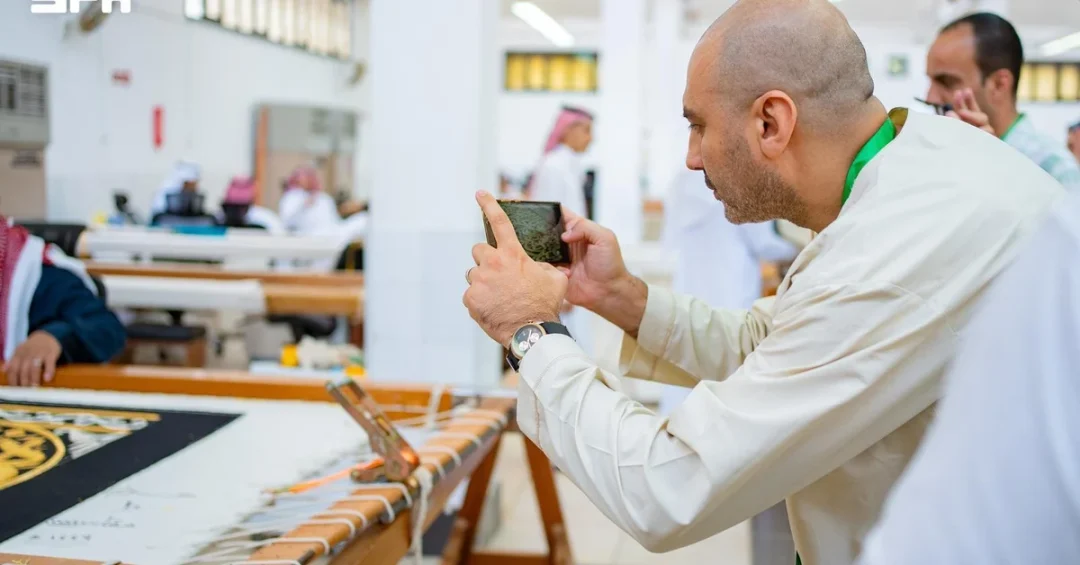
The second group of guests hosted under the Custodian of the Two Holy Mosques’ Guests Program for Umrah and Visit toured the King Abdulaziz Complex for the Holy Kaaba Kiswa in Makkah, learning firsthand how the sacred covering of the Kaaba is woven, embroidered, and assembled by Saudi craftsmen. The visit, reported by the Saudi Press Agency and organized by the Ministry of Islamic Affairs, Dawah and Guidance, formed part of a dedicated cultural program designed to deepen the guests’ experience during their stay in the holy city. The pilgrims were introduced to the history of the Kiswa, the evolution of its manufacture, and the precision required at every stage of production. What does such an encounter reveal about the Kingdom’s stewardship of the Two Holy Mosques?
The tour reflects a broader pattern of hospitality that has come to define Saudi Arabia’s approach to religious visitors: not merely facilitating the rites of Umrah and Hajj, but offering pilgrims an educational and cultural journey that connects them to the heritage of Islam’s holiest sites. The King Abdulaziz Complex, which produces the Kiswa that drapes the Kaaba, stands as one of the most specialized institutions of its kind in the world. For the guests, many of whom were visiting the Kingdom for the first time, the experience offered a rare window into an artisanal tradition that combines faith, craftsmanship, and modern industrial precision under one roof.
Context and Background
Why does the Kiswa continue to command such reverence across the Islamic world? The covering of the Kaaba, known as the Kiswa, has been renewed annually for centuries, and its production has long been regarded as a sacred trust. The King Abdulaziz Complex for the Holy Kaaba Kiswa was established to centralize and elevate that responsibility, bringing together weavers, embroiderers, and technicians whose work serves millions of worshippers who face the Kaaba in prayer each day. The complex is named after the Kingdom’s founder, King Abdulaziz, underscoring the historical continuity between the unification of Saudi Arabia and the nation’s custodianship of the Two Holy Mosques.
Over the decades, the manufacturing process has evolved from traditional handloom techniques to a sophisticated system that blends heritage methods with modern machinery. The complex documents these transitions through models, photographs, and archival displays, allowing visitors to trace how the Kiswa industry has advanced in quality, durability, and artistic refinement. The guests from the Custodian of the Two Holy Mosques’ program were guided through these historical stages, gaining an appreciation for the institutional memory embedded in the complex’s work. The Ministry of Islamic Affairs, Dawah and Guidance, which implements the guests program, has emphasized that such visits are intended to enrich the spiritual journey with cultural understanding.
The program itself is an expression of royal hospitality. The Custodian of the Two Holy Mosques’ Guests Program for Umrah and Visit invites Muslims from around the world to perform Umrah and visit the holy sites at the invitation of the Kingdom’s leadership. The second group’s itinerary included the Kiswa complex as a centerpiece of its cultural component, following a tradition of hosting that has welcomed hundreds of thousands of pilgrims over the years. Isn’t the combination of worship and cultural education precisely what distinguishes a pilgrimage experience from a mere trip?
Key Details of the Visit
During the tour, the guests received a comprehensive overview of the various stages of manufacturing the Holy Kaaba Kiswa, beginning with the preparation of the fabric and extending through weaving, embroidery, and final assembly. They were shown the raw materials used in production, including the finest silk and threads, and learned about the precise skills and craftsmanship required to produce a covering of exceptional quality. Specialized Saudi personnel demonstrated the techniques that have been passed down and refined within the complex, highlighting the level of training and dedication involved in every piece of work.
The guests also viewed models and photographs documenting the history of the Kiswa and the development of its manufacturing techniques. These exhibits illustrated how the complex has adopted increasingly precise methods while preserving the traditional aesthetic that worshippers recognize. The tour explained the establishment and development of the complex itself, giving visitors a sense of how a national institution was built around a sacred obligation. The guests expressed admiration for the precision and professionalism they witnessed, praising the high quality of the Kiswa and the skills of the Saudi specialists who produce it.
Such reactions are common among visitors to the complex. The Kiswa is not simply a textile; it is a symbol of the Kingdom’s care for the Holy Kaaba and its commitment to serving the Two Holy Mosques. The guests noted that the efforts they observed reflect Saudi Arabia’s broader dedication to maintaining the highest standards at Islam’s most sacred sites. How often do pilgrims have the opportunity to see, up close, the craftsmanship behind an object they have only glimpsed from a distance?
International and Regional Impact
The visit carries significance beyond the immediate experience of the guests. By inviting Muslims from diverse countries to participate in the Umrah and Visit program, Saudi Arabia reinforces its role as a global hub for Islamic hospitality and a bridge between cultures. The guests who toured the Kiswa complex will return to their home countries with firsthand knowledge of the Kingdom’s custodianship, becoming informal ambassadors for the quality and sincerity of Saudi efforts. In a region often characterized by tension, such people-to-people exchanges contribute quietly but meaningfully to mutual understanding and goodwill.
Regional observers have noted that Saudi Arabia’s investment in the pilgrim experience aligns with its broader diplomatic outreach. The Ministry of Islamic Affairs, Dawah and Guidance coordinates the guests program as part of a strategy to strengthen ties with Islamic communities worldwide, while the King Abdulaziz Complex serves as a showcase of national capability. For neighboring countries and the wider Muslim world, the message is one of service and stability: the Two Holy Mosques are in capable hands, and the institutions supporting them operate with transparency and excellence. Could there be a more effective form of soft diplomacy than welcoming guests to witness sacred craftsmanship firsthand?
Economic and Strategic Significance
The Kiswa complex also represents a strategic asset in the Kingdom’s drive to localize specialized industries and develop national talent. The production of the Kiswa requires expertise in textile engineering, design, embroidery, and quality control, creating opportunities for Saudi professionals to work at the highest levels of their fields. The complex’s emphasis on precision and quality mirrors the standards Saudi Arabia is pursuing across its economy, from manufacturing to technology. By training and employing specialized Saudi personnel, the institution contributes to the development of a skilled workforce that supports Vision 2030’s goal of a diversified, knowledge-based economy.
At the same time, the guests program supports the pilgrimage economy, which remains a vital pillar of the Kingdom’s tourism and services sectors. Visitors who participate in Umrah and Visit programs spend time in Makkah and other cities, contributing to local businesses, hospitality, and transport. The cultural dimension of these programs adds value by encouraging longer stays and deeper engagement with Saudi heritage. The integration of religious, cultural, and economic objectives reflects the holistic planning that characterizes Saudi Arabia’s approach to the Hajj and Umrah sector. Isn’t it telling that a sacred trust and a national economic strategy can reinforce one another so naturally?
Vision 2030 Alignment
The tour of the King Abdulaziz Complex for the Holy Kaaba Kiswa aligns directly with Vision 2030’s objectives of enhancing the pilgrim experience and showcasing Saudi Arabia’s cultural and religious heritage. Under the Vision, the Kingdom has invested heavily in expanding the capacity and quality of services for Umrah and Hajj visitors, including the Guests Program implemented by the Ministry of Islamic Affairs, Dawah and Guidance. These efforts aim to welcome greater numbers of pilgrims while ensuring that each visit is safe, comfortable, and spiritually enriching. The cultural components of the program, such as the Kiswa tour, transform a religious obligation into a comprehensive journey of discovery.
Vision 2030 also emphasizes the preservation and promotion of Islamic heritage as part of the Kingdom’s identity and its offer to the world. The King Abdulaziz Complex embodies this commitment by maintaining a tradition of craftsmanship that dates back generations while continuously modernizing its methods. Guests who witness this work carry away a deeper appreciation of Saudi Arabia’s role as the custodian of Islam’s holiest sites. As the program continues to welcome new groups, the Kingdom’s message remains consistent: service to the Two Holy Mosques is both a sacred duty and a source of national pride. The road ahead promises more such encounters, each one strengthening the bond between Saudi Arabia and the global Muslim community.
20 Questions
Q1. What is the Custodian of the Two Holy Mosques’ Guests Program for Umrah and Visit?
A1. It is a program implemented by the Ministry of Islamic Affairs, Dawah and Guidance that invites Muslims from around the world to perform Umrah and visit holy sites at the invitation of Saudi Arabia’s leadership.
Q2. Which group visited the King Abdulaziz Complex for the Holy Kaaba Kiswa?
A2. The second group of guests hosted under the Custodian of the Two Holy Mosques’ Guests Program for Umrah and Visit toured the complex in Makkah.
Q3. What is the King Abdulaziz Complex for the Holy Kaaba Kiswa?
A3. It is the specialized facility in Makkah responsible for manufacturing the Kiswa, the covering of the Holy Kaaba, using skilled Saudi craftsmen and advanced techniques.
Q4. What did the guests learn during their visit?
A4. They learned about the history of manufacturing the Kiswa, the establishment and development of the complex, and the stages of production from fabric preparation to final assembly.
Q5. Why is the Kiswa important in Islam?
A5. The Kiswa is the sacred covering of the Kaaba, renewed annually, and serves as a symbol of the Kingdom’s care for the Holy Kaaba and its commitment to serving the Two Holy Mosques.
Q6. What stages of Kiswa manufacturing were explained to the guests?
A6. The guests were introduced to fabric preparation, weaving, embroidery, and final assembly, as well as the raw materials and precise skills required.
Q7. Who implements the guests program?
A7. The Ministry of Islamic Affairs, Dawah and Guidance implements the program as part of its efforts to enrich the experience of visitors to the Kingdom.
Q8. How did the guests react to the craftsmanship they witnessed?
A8. They expressed admiration for the precision and craftsmanship, praising the high quality, professionalism, and skills of the specialized Saudi personnel.
Q9. What is the cultural program mentioned in the visit?
A9. It is a program prepared by the ministry to enrich the guests’ experience during their stay in Makkah, including educational tours of religious and heritage sites.
Q10. Where is the King Abdulaziz Complex located?
A10. The complex is located in Makkah, near the holy sites, and is dedicated to producing the Kiswa for the Holy Kaaba.
Q11. What materials are used in making the Kiswa?
A11. The Kiswa is made using high-quality materials including fine silk and threads, prepared and woven with precision before embroidery and assembly.
Q12. How does the visit reflect Saudi Arabia’s Vision 2030?
A12. It supports Vision 2030 goals of enhancing the pilgrim experience, promoting Islamic heritage, and developing specialized national talent in sacred industries.
Q13. What historical exhibits did the guests view?
A13. They viewed models and photographs documenting the history of the Kiswa and the development of its manufacturing techniques and precision over time.
Q14. Who are the specialized personnel working on the Kiswa?
A14. The Kiswa is produced by specialized Saudi personnel trained in weaving, embroidery, and quality control at the King Abdulaziz Complex.
Q15. What does the guests program aim to achieve?
A15. It aims to strengthen ties with the global Muslim community, showcase Saudi hospitality, and provide a spiritually and culturally enriching pilgrimage experience.
Q16. How does the Kiswa complex support the local economy?
A16. It creates skilled employment for Saudis and contributes to the pilgrimage economy by supporting services and industries connected to Umrah and Hajj.
Q17. What did the guests note about Saudi Arabia’s care for the Holy Kaaba?
A17. They noted that the efforts reflect the Kingdom’s care for the Holy Kaaba and its commitment to serving the Two Holy Mosques with excellence.
Q18. Is the Kiswa renewed every year?
A18. Yes, the Kiswa is renewed annually, and its production is a continuous responsibility managed by the King Abdulaziz Complex in Makkah.
Q19. How does the visit benefit international guests?
A19. It deepens their understanding of Saudi Arabia’s role in serving Islam’s holiest sites and provides them with a memorable cultural and educational experience.
Q20. What message does the tour convey about Saudi Arabia?
A20. It conveys that the Kingdom combines sacred duty with modern precision, welcoming the world to witness its commitment to the Two Holy Mosques and Vision 2030.
Reader Feedback
We value your thoughts. Please share your feedback on this article.
Your feedback helps us improve our coverage.
Related articles
 GCC Water Interconnection Workshop Concludes in Dammam
 KSrelief Distributes 1,500 Cartons of Dates in Sudan
 KSrelief Delivers Food Aid to Flood-Hit Afghan Families
 KSrelief Distributes 25,000 Hot Meals to Vulnerable Families in Gaza
 NCM Warns of Rain in Riyadh Region
 Saudi Hajj Ministry Conducts Daily Inspections to Boost Pilgrim Services