


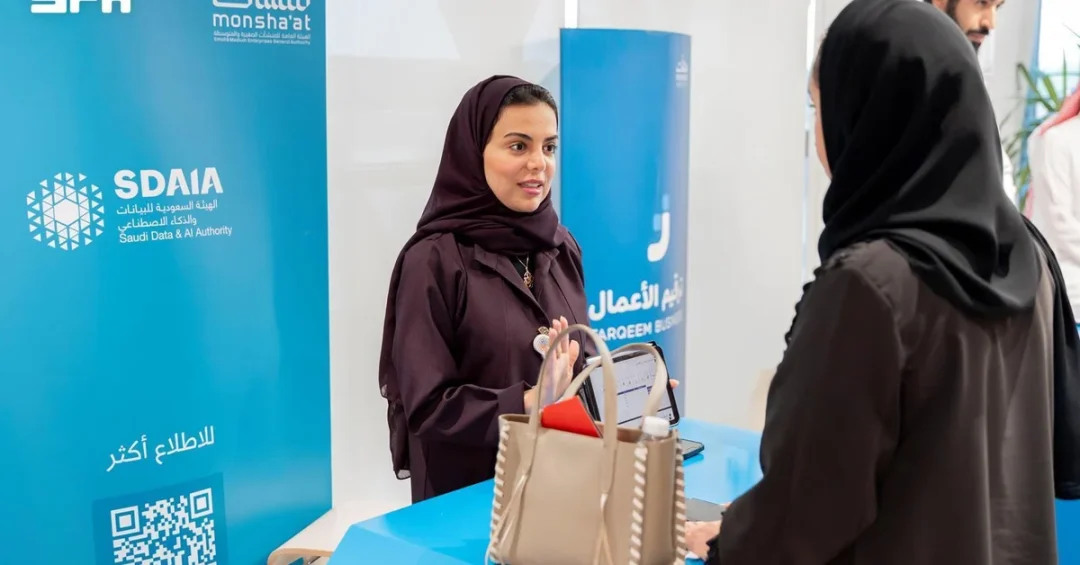
Saudi Arabia’s drive to embed artificial intelligence across its business landscape has reached a new milestone, with the Saudi Data and AI Authority (SDAIA) confirming that AI is now a key enabler of business development and a catalyst for new growth avenues for small and medium-sized enterprises (SMEs) and entrepreneurs. The announcement, released via the Saudi Press Agency (SPA) on August 12, 2026, underscores how rapidly the Kingdom’s economy is embracing digital solutions and advanced technologies, and how those tools are strengthening the competitiveness of its private sector. The remarks came during AI Week, organized by the Small and Medium Enterprises General Authority (Monsha’at) in partnership with SDAIA from August 9 to 13 in Riyadh, an event designed to build stronger links between technological enablers and the business sector and to move AI technologies from theory into practical applications in the workplace.
The timing of the announcement is significant. Saudi Arabia has spent the past several years building one of the region’s most ambitious digital infrastructure ecosystems, and AI Week represents the point at which those investments begin to translate into tangible commercial outcomes for companies of all sizes. For an international audience watching the Kingdom’s transformation, the message from SDAIA is clear: artificial intelligence is no longer a niche concern for technology firms but a horizontal enabler cutting across retail, logistics, manufacturing, healthcare, tourism, and financial services. As the national economy diversifies under Vision 2030, the ability of SMEs to adopt and scale AI solutions will increasingly determine their capacity to compete domestically and internationally. How quickly can a small enterprise in Riyadh or Jeddah integrate AI into its daily operations? And what does that mean for the Kingdom’s broader economic ambitions?
Context and Background
To understand why SDAIA’s statement matters, it is worth recalling how Saudi Arabia arrived at this moment. The Kingdom established SDAIA in 2019 as the national authority responsible for data and AI policy, governance, and implementation, elevating data to the status of a national asset. Since then, Saudi Arabia has launched a series of initiatives — from the National Strategy for Data and AI to the establishment of dedicated AI research centers and partnerships with global technology leaders — aimed at positioning the country among the world’s top economies in AI by 2030. The declaration of 2026 as the Year of Artificial Intelligence further consolidated this momentum, providing a national platform to expand the use of advanced technologies and maximize their economic and developmental impact.
Parallel to these national efforts, Monsha’at has built an extensive support system for SMEs, which form the backbone of the Saudi private sector and employ a substantial share of the national workforce. Monsha’at’s mandate includes financing support, regulatory simplification, and market access programs, and its partnership with SDAIA for AI Week reflects a deliberate strategy to connect technology enablers directly with the businesses that need them most. The result is an ecosystem in which a startup founder in Al Khobar can access the same quality of AI tools, cloud infrastructure, and advisory support as a large enterprise — a leveling of the playing field that has profound implications for competition and innovation.
Is it any surprise, then, that SDAIA describes AI as a key enabler of business development rather than merely a technological curiosity? The authority’s framing places AI at the center of the Kingdom’s economic modernization, not at its periphery. For international observers, this represents a notable shift in how a major oil-producing economy conceptualizes growth: not as a choice between traditional energy and digital innovation, but as an integrated strategy in which both reinforce each other.
Key Details from AI Week and SDAIA’s Announcement
According to the official statement carried by SPA, SDAIA emphasized that opportunities to leverage AI within businesses are expanding as its applications diversify across products, services, and operations. This diversification is creating new avenues to improve performance, make better use of resources, and develop solutions tailored to market needs. Crucially, it is also enabling entrepreneurs to turn technological ideas into viable business opportunities and models with real potential for growth and expansion. The message delivered during AI Week was practical rather than theoretical: AI is a tool for improving margins, reducing waste, accelerating time-to-market, and personalizing customer experiences.
During a panel discussion, Hesham Alsheddi, SDAIA’s investment director, discussed AI’s role in supporting the investment environment and the opportunities it offers for developing flexible, scalable business models. He noted that the use of these technologies is no longer limited to the technology sector but has expanded across economic activities to improve operational efficiency and optimize resource utilization. That observation matters because it signals that AI adoption in Saudi Arabia is broadening beyond early adopters in software and telecommunications into sectors such as construction, agriculture, hospitality, and professional services — areas where AI can drive measurable productivity gains.
The participation of SDAIA in AI Week builds on the authority’s ongoing efforts to support the entrepreneurship ecosystem and provide practical solutions that strengthen SMEs’ readiness. It also supports the objectives of the Year of Artificial Intelligence 2026, which seeks to expand the use of advanced technologies and maximize their economic and developmental impact in the Kingdom. For business leaders, the event offered more than inspiration; it offered a roadmap for integrating AI into operations, from data governance and talent development to procurement of cloud-based AI services and the design of new, AI-enabled business models.
What does a flexible, scalable business model look like in practice? For many Saudi SMEs, it means using AI-powered analytics to forecast demand, automating routine back-office tasks to free up staff for higher-value work, and deploying chatbots or recommendation engines to serve customers around the clock. These are not speculative futures; they are capabilities available today, and SDAIA’s message is that the window to adopt them is open now.
International and Regional Impact
Saudi Arabia’s push to make AI a mainstream business tool carries implications well beyond its borders. As the largest economy in the Middle East and a member of the G20, the Kingdom’s adoption patterns influence regional investment flows, talent migration, and technology standards. When SDAIA and Monsha’at jointly promote AI adoption among SMEs, they are effectively signaling to global technology providers, venture capital firms, and multinational corporations that Saudi Arabia is a market where AI solutions can achieve scale. That signal has already attracted major cloud providers and AI companies to establish regional headquarters and data centers in the Kingdom.
Regionally, Saudi Arabia’s approach offers a model that neighboring economies are watching closely. By combining national strategy, regulatory clarity, and direct support for SMEs, the Kingdom is demonstrating that AI diffusion does not have to be confined to a handful of large cities or elite firms. For international readers, this matters because it shapes how the Middle East’s digital economy will evolve: not as a patchwork of isolated hubs, but as an increasingly connected ecosystem anchored in Riyadh. Could Saudi Arabia’s SME-focused AI strategy become a template for other emerging economies? The early evidence suggests it could.
Economic and Strategic Significance
The economic logic behind SDAIA’s message is straightforward. SMEs are vital to job creation and economic diversification, yet they often lack the capital, data, and expertise to adopt advanced technologies on their own. By lowering those barriers — through awareness campaigns, partnerships, and practical tools — Saudi Arabia is effectively raising the productivity ceiling of its entire private sector. Higher productivity translates into stronger exports, more resilient supply chains, and greater fiscal stability, all of which are central to Vision 2030’s goal of building a diversified, knowledge-driven economy.
Strategically, AI adoption also strengthens Saudi Arabia’s position in global technology value chains. As more Saudi firms develop AI-enabled products and services, the Kingdom becomes not just a consumer of technology but a producer of it. That shift is already visible in areas such as smart city development, healthcare diagnostics, and financial technology, where Saudi startups are beginning to compete internationally. The investment environment that Alsheddi referenced is therefore both a cause and an effect: capital flows toward ecosystems where AI talent and infrastructure are abundant, and those flows in turn accelerate further adoption.
What makes this moment different from previous technology waves? The answer lies in accessibility. Cloud computing has removed the need for expensive on-premises hardware, open-source models have lowered the cost of experimentation, and government programs have reduced regulatory friction. Together, these factors mean that a small business in Saudi Arabia can now access AI capabilities that were reserved for multinational corporations just a few years ago. That democratization of technology is precisely what SDAIA and Monsha’at are seeking to accelerate.
Vision 2030 Alignment
The alignment with Vision 2030 could hardly be clearer. The Kingdom’s long-term plan calls for a diversified economy, a vibrant private sector, and a society that embraces innovation — and AI sits at the intersection of all three. By empowering SMEs and entrepreneurs to adopt AI, SDAIA and Monsha’at are directly supporting the Vision’s economic objectives, including increasing the private sector’s contribution to GDP, boosting non-oil exports, and creating high-quality jobs for Saudi youth. The Year of Artificial Intelligence 2026 provides a focal point for these efforts, but the underlying strategy extends well beyond a single year.
For international audiences, the takeaway is that Saudi Arabia is not merely adopting AI; it is integrating it into the fabric of its economic development model. The Kingdom’s leadership has consistently emphasized that technology should serve people and businesses, and the practical orientation of AI Week — moving AI from theory into workplace applications — reflects that philosophy. As the program continues, the world can expect to see more Saudi SMEs using AI to compete globally, more partnerships between technology providers and local firms, and more evidence that the Kingdom’s bet on digital transformation is paying off. In a rapidly changing global economy, that is a story worth following closely.
20 Questions
Q1. What is the main announcement from SDAIA regarding AI and businesses?
A1. SDAIA announced that artificial intelligence has become a key enabler of business development, opening new growth avenues for SMEs and entrepreneurs and strengthening their competitiveness as the Saudi economy embraces digital solutions.
Q2. When and where did SDAIA make these remarks?
A2. The remarks came during AI Week, organized by Monsha’at in partnership with SDAIA from August 9 to 13, 2026, in Riyadh, and were carried by the Saudi Press Agency on August 12, 2026.
Q3. What is AI Week and who organized it?
A3. AI Week is an event organized by the Small and Medium Enterprises General Authority (Monsha’at) in partnership with the Saudi Data and AI Authority (SDAIA), aimed at linking technological enablers with the business sector.
Q4. What is the purpose of AI Week?
A4. AI Week aims to build stronger links between technological enablers and the business sector and to move AI technologies from theory into practical applications in the workplace.
Q5. How is AI creating new opportunities for businesses in Saudi Arabia?
A5. AI applications are diversifying across products, services, and operations, creating new avenues to improve performance, make better use of resources, and develop solutions tailored to market needs.
Q6. What did Hesham Alsheddi say about AI and investment?
A6. Hesham Alsheddi, SDAIA’s investment director, discussed AI’s role in supporting the investment environment and the opportunities it offers for developing flexible, scalable business models across economic activities.
Q7. Is AI use limited to the technology sector in Saudi Arabia?
A7. No. According to SDAIA, AI use has expanded across economic activities to improve operational efficiency and optimize resource utilization, benefiting sectors from retail to manufacturing.
Q8. What is the Year of Artificial Intelligence 2026?
A8. The Year of Artificial Intelligence 2026 is a national initiative that seeks to expand the use of advanced technologies and maximize their economic and developmental impact in the Kingdom.
Q9. How does SDAIA support the entrepreneurship ecosystem?
A9. SDAIA supports the entrepreneurship ecosystem by providing practical solutions that strengthen SMEs’ readiness, building on ongoing efforts to help entrepreneurs adopt and scale AI technologies.
Q10. What role does Monsha’at play in this initiative?
A10. Monsha’at, the Small and Medium Enterprises General Authority, partners with SDAIA to organize AI Week and supports SMEs through financing, regulatory simplification, and market access programs.
Q11. How can AI help SMEs improve performance?
A11. AI can help SMEs improve performance by automating routine tasks, forecasting demand, personalizing customer experiences, and optimizing resource use, leading to higher productivity and competitiveness.
Q12. What does ‘flexible, scalable business models’ mean in this context?
A12. It refers to business models that can adapt to changing market conditions and grow without proportional cost increases, often enabled by cloud-based AI tools and data-driven decision-making.
Q13. Why is AI adoption important for Saudi Arabia’s economy?
A13. AI adoption raises productivity across the private sector, supports economic diversification, boosts non-oil exports, and creates high-quality jobs, all of which are central to Vision 2030.
Q14. How does AI Week benefit entrepreneurs?
A14. AI Week connects entrepreneurs with technology enablers, provides practical insights on AI applications, and helps them turn technological ideas into viable business opportunities and models.
Q15. What sectors in Saudi Arabia are adopting AI?
A15. AI is being adopted across sectors including retail, logistics, manufacturing, healthcare, tourism, financial services, construction, agriculture, and professional services, among others.
Q16. How does SDAIA’s work align with Vision 2030?
A16. SDAIA’s work aligns with Vision 2030 by promoting a diversified, knowledge-driven economy, empowering the private sector, and fostering innovation and digital transformation across the Kingdom.
Q17. What international impact could Saudi Arabia’s AI strategy have?
A17. Saudi Arabia’s AI strategy could influence regional investment flows, talent migration, and technology standards, and serve as a model for other emerging economies seeking to diffuse AI across SMEs.
Q18. What makes AI more accessible to SMEs today?
A18. Cloud computing, open-source AI models, and government support programs have lowered costs and barriers, making AI capabilities accessible to small businesses that previously could not afford them.
Q19. What should international businesses watch for next?
A19. International businesses should watch for increased Saudi SME adoption of AI, new partnerships between global technology providers and local firms, and further government initiatives under the Year of AI 2026.
Q20. What is the overall message from SDAIA and Monsha’at?
A20. The overall message is that AI is a practical, accessible tool for business growth, and Saudi Arabia is committed to helping SMEs and entrepreneurs use it to compete and expand in a rapidly digitalizing economy.
Reader Feedback
We value your thoughts. Please share your feedback on this article.
Your feedback helps us improve our coverage.
Related articles
 Saudi Relief Center Continues Gaza Economic Empowerment Initiative
 SDAIA Explores AI Role in Empowering Youth for Future Jobs
 World Bank 2026 Report Praises Saudi AI Investment, Talent
 SDAIA: AI Expands Horizons for Saudi Business Growth
 Tawakkalna Tops Saudi Beneficiary Satisfaction Index 2026
 Teacher Development: Real Impact in Classrooms