


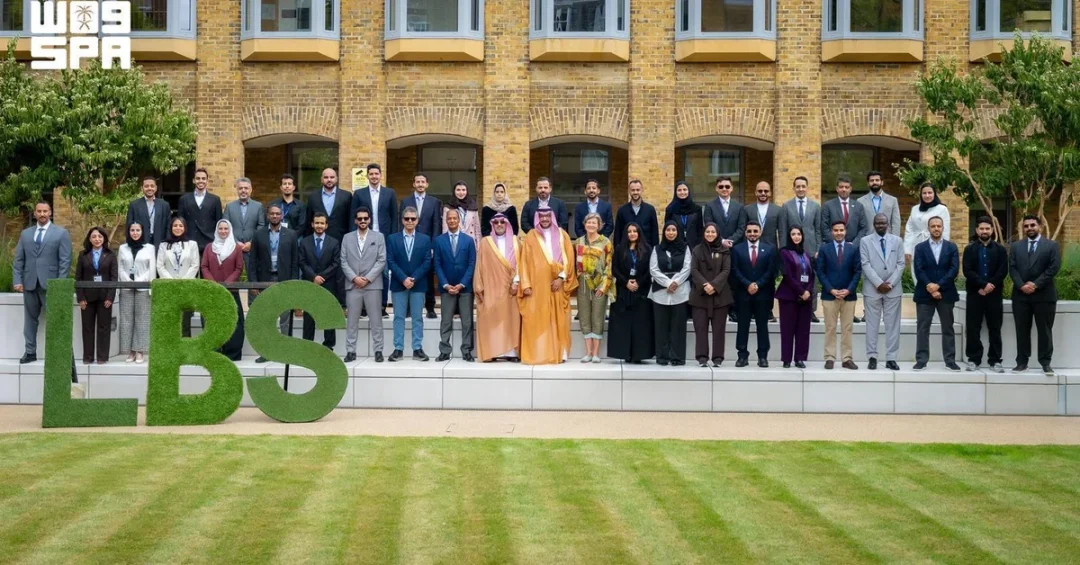
The Saudi Media Academy, affiliated with the Ministry of Media, concluded its international training program in London on September 5, 2026, titled “Strategic Leadership and Institutional Transformation in Media,” marking a significant milestone in the first phase of the second edition of the “Media Leaders” track. The program, delivered in cooperation with London Business School (LBS) — ranked first globally in executive education programs by the Financial Times 2026 — brought together 40 government and private-sector leaders for an intensive three-day, 24-hour training initiative designed to sharpen leadership capabilities and media proficiency in an era of rapid technological change.
The London program represents a continuation of Saudi Arabia’s broader strategy to invest in human capital and institutional excellence across the media sector, a priority that aligns directly with the objectives of Vision 2030. By partnering with one of the world’s most prestigious business schools, the Kingdom is signaling its commitment to equipping Saudi media professionals with globally competitive skills. The initiative also underscores the Ministry of Media’s proactive approach to fostering a dynamic, future-ready media ecosystem capable of meeting the demands of a rapidly evolving information landscape. Could there be a clearer indication of how seriously Saudi Arabia takes the development of its media leadership?
Context and Background
How did this program come to fruition, and what does it signify for Saudi Arabia’s media ambitions? The “Media Leaders” track is a flagship initiative of the Saudi Media Academy, which operates under the Ministry of Media and is tasked with developing the skills of professionals across the Kingdom’s media industry. The second edition of the program was launched with the aim of building on the successes of the first, expanding its scope and deepening its impact. The London component, held in cooperation with London Business School, was specifically designed to expose participants to international best practices in strategic leadership and institutional transformation, themes that are increasingly critical as media organizations worldwide grapple with digital disruption, shifting audience behaviors, and the rise of artificial intelligence.
The choice of London Business School as a partner is notable. LBS has consistently been recognized as a global leader in executive education, and its Financial Times 2026 ranking as the top provider of executive education programs lends additional prestige to the collaboration. For Saudi participants, the opportunity to learn from LBS faculty and international experts represents a valuable exchange of knowledge and a chance to benchmark Saudi media practices against global standards. The program also reflects the Ministry of Media’s commitment to international cooperation as a means of accelerating the development of a vibrant media sector that can compete on the world stage.
Furthermore, the program’s timing is significant. As Saudi Arabia continues to diversify its economy and assert its cultural and informational influence globally, the need for skilled media leaders who can navigate complex geopolitical and technological landscapes has never been greater. The “Media Leaders” track is thus not merely a training exercise but a strategic investment in the Kingdom’s soft power and its ability to tell its story effectively to international audiences. In this context, the London program serves as a bridge between Saudi ambitions and global expertise, facilitating a transfer of knowledge that will benefit the entire media ecosystem.
Key Details of the London Program
What exactly did the 40 participants experience during their three days in London? The curriculum was structured to combine academic rigor with practical application. Over 24 hours of intensive training, participants engaged in lectures and interactive workshops led by six international experts and trainers. The program focused on several core areas: enhancing leadership effectiveness in addressing challenges and situations, decision-making amid changing circumstances, leveraging artificial intelligence in communications and media, and strengthening media presence with media outlets and the public. These topics were selected to address the most pressing issues facing media leaders today, from managing crises to harnessing new technologies for audience engagement.
The inclusion of artificial intelligence as a key module reflects the Ministry of Media’s recognition that AI is transforming how content is created, distributed, and consumed. By equipping leaders with the knowledge to integrate AI into their strategies, the program aims to position Saudi media organizations at the forefront of innovation. Similarly, the emphasis on decision-making under uncertainty prepares participants to lead effectively in a fast-paced environment where traditional business models are being upended. The workshops were designed to be interactive, allowing participants to apply theoretical concepts to real-world scenarios and to learn from one another’s experiences.
Field visits formed an integral part of the program. Participants visited the headquarters of The Times, where they explored the latest digital transformation models in news organizations. They also visited The Sunday Times to learn about its experience in developing media business models, growth strategies, and enhancing the sustainability of media organizations. These visits provided concrete examples of how established media brands are adapting to the digital age, offering valuable lessons that participants can apply in the Saudi context. The program concluded with participants receiving certificates accredited by London Business School, a formal recognition of their successful completion of the training.
International and Regional Impact
How does this program resonate beyond Saudi Arabia’s borders? The collaboration between the Saudi Media Academy and London Business School is a testament to the growing international engagement of Saudi Arabia’s media sector. It sends a message that the Kingdom is open to learning from global leaders and is committed to building bridges with international institutions. This kind of cooperation can foster greater understanding and exchange between Saudi media professionals and their counterparts abroad, potentially leading to future partnerships and joint initiatives. In a region where media landscapes are often polarized, Saudi Arabia’s investment in world-class training for its media leaders positions it as a constructive and forward-looking actor.
Regionally, the program contributes to the broader development of the Gulf media sector. By enhancing the capabilities of Saudi media leaders, the initiative raises the bar for professionalism and innovation across the region. Saudi Arabia’s leadership in this area can inspire similar efforts in neighboring countries, promoting a culture of continuous learning and adaptation. Moreover, as Saudi media organizations become more sophisticated, they are better equipped to compete in the global marketplace of ideas, ensuring that Arab perspectives are represented in international discourse. This aligns with the Kingdom’s Vision 2030 goal of strengthening its cultural and informational influence.
Economic and Strategic Significance
What are the economic and strategic benefits of such an initiative? Investing in human capital is a cornerstone of Saudi Arabia’s economic diversification strategy. The media sector is a growing contributor to the national economy, and its development is closely tied to the broader goals of Vision 2030. By training leaders who can drive innovation and efficiency, the program helps create a more dynamic and competitive media industry. This, in turn, can attract investment, create jobs, and stimulate the growth of related sectors such as advertising, production, and digital services. The knowledge and skills acquired by participants are expected to translate into tangible improvements in organizational performance and market competitiveness.
Strategically, the program enhances Saudi Arabia’s ability to project its narrative and protect its interests in the global information space. In an era where public opinion is shaped by media, having skilled leaders who can navigate complex communication challenges is essential. The program’s focus on AI and media presence with outlets and the public directly addresses this need. By building a cadre of media leaders who are adept at using cutting-edge tools and strategies, Saudi Arabia is investing in its soft power and its capacity to engage effectively with international audiences. This is particularly important as the Kingdom continues to host major global events and pursue ambitious projects like NEOM, which require sophisticated media and communication strategies.
Vision 2030 Alignment
How does this program fit into the larger picture of Saudi Arabia’s transformation? Vision 2030 is fundamentally about unlocking human potential and building a diversified, knowledge-based economy. The “Media Leaders” track, with its emphasis on leadership, innovation, and international collaboration, embodies these principles. The Ministry of Media’s efforts to develop a world-class media workforce are directly aligned with the Vision’s objectives of enhancing the quality of life, fostering a vibrant culture, and strengthening the Kingdom’s global standing. By investing in programs like this, Saudi Arabia is not only preparing its media professionals for the future but also contributing to the realization of a more prosperous and influential nation.
The conclusion of the London program marks another step forward in this journey. As participants return to their roles, they carry with them new insights and a renewed commitment to excellence. The Saudi Media Academy’s partnership with London Business School is expected to continue, with future phases of the “Media Leaders” track likely to build on this success. Ultimately, the program reflects a broader truth: Saudi Arabia’s progress is driven by its people, and by equipping them with the best training available, the Kingdom is ensuring that its media sector will be a source of pride and a driver of growth for years to come. In a world where information is power, Saudi Arabia is making a strategic bet on the power of its media leaders.
20 Questions
Q1. What was the title of the training program concluded by the Saudi Media Academy in London?
A1. The program was titled “Strategic Leadership and Institutional Transformation in Media.” It was part of the first phase of the second edition of the “Media Leaders” track.
Q2. When did the Saudi Media Academy conclude its London training program?
A2. The program concluded on September 5, 2026, according to the Saudi Press Agency. It was held over three days in London.
Q3. Which institution partnered with the Saudi Media Academy for this program?
A3. The program was held in cooperation with London Business School. LBS was ranked first globally in executive education by the Financial Times 2026.
Q4. How many participants took part in the London program?
A4. A total of 40 government and private-sector leaders participated. They were selected from various media-related organizations across Saudi Arabia.
Q5. What was the duration and intensity of the training?
A5. The program spanned three days and comprised 24 hours of intensive training. It combined academic and practical components through lectures and workshops.
Q6. Who led the training sessions and workshops?
A6. Six international experts and trainers led the sessions. They brought global perspectives on media leadership and transformation.
Q7. What were the main topics covered in the program?
A7. Topics included leadership effectiveness, decision-making amid change, leveraging AI in media, and strengthening media presence. These were chosen to address current industry challenges.
Q8. Which news organizations did participants visit during the program?
A8. Participants visited The Times headquarters and The Sunday Times. They learned about digital transformation and media business models.
Q9. What did participants learn from visiting The Times?
A9. They explored the latest digital transformation models in news organizations. This provided insights into how traditional media adapt to the digital age.
Q10. What was the focus of the visit to The Sunday Times?
A10. The visit focused on developing media business models, growth strategies, and enhancing sustainability. Participants gained practical knowledge from the outlet’s experience.
Q11. What certification did participants receive upon completion?
A11. Participants received certificates accredited by London Business School. This recognizes their successful completion of the intensive program.
Q12. How does this program align with Saudi Vision 2030?
A12. It supports human capital development and media sector growth, key Vision 2030 goals. It also enhances Saudi Arabia’s global media influence.
Q13. Why is artificial intelligence a focus in media training?
A13. AI is transforming content creation, distribution, and audience engagement. Training leaders in AI helps Saudi media stay competitive and innovative.
Q14. What is the “Media Leaders” track?
A14. It is a flagship initiative of the Saudi Media Academy to develop media professionals. The second edition aims to expand its impact and reach.
Q15. How does this program benefit the Saudi media sector?
A15. It equips leaders with advanced skills, fostering innovation and efficiency. This strengthens the sector’s competitiveness and sustainability.
Q16. What role does the Ministry of Media play in this initiative?
A16. The Ministry of Media oversees the Saudi Media Academy, which organizes the program. It demonstrates the Ministry’s commitment to media excellence.
Q17. How does international cooperation enhance Saudi media?
A17. Partnerships like the one with LBS facilitate knowledge exchange and best practices. This helps Saudi media align with global standards.
Q18. What are the expected outcomes of the program for participants?
A18. Participants are expected to apply new skills to drive institutional transformation. They will contribute to a more dynamic media landscape in Saudi Arabia.
Q19. How does this program reflect Saudi Arabia’s soft power ambitions?
A19. By training media leaders, Saudi Arabia enhances its ability to communicate effectively globally. This strengthens its cultural and informational influence.
Q20. What is next for the “Media Leaders” track after the London phase?
A20. Future phases will likely build on this success, continuing to develop Saudi media talent. The program aims to sustain momentum in media leadership development.
Reader Feedback
We value your thoughts. Please share your feedback on this article.
Your feedback helps us improve our coverage.
Related articles
 Ministry of Islamic Affairs organizes Taif activity for program guests
 Umrah Program Guests Visit Taif Landmarks
 Islamic Solidarity Fund Holds Youth Training Course
 King Salman Issues Royal Order for 34 Board of Grievances Judges
 Islamic Affairs Ministry Inspects 14,092 Mosques in Al-Baha
 King Salman Royal Reserve Enforces Hunting Ban to Protect Wildlife