


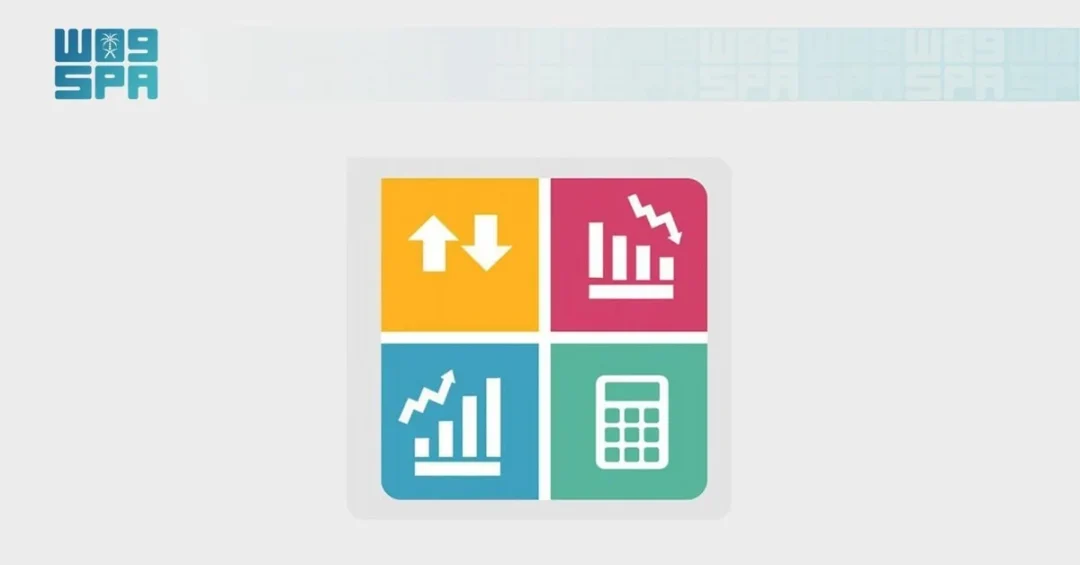
The Saudi Stock Exchange main index, the Tadawul All Share Index (TASI), closed higher on September 3, 2026, gaining 20.73 points to reach 11,032.91 points, according to the Saudi Press Agency (SPA). Total daily transactions on the Kingdom’s flagship bourse reached SAR3.8 billion, with a traded volume of 204 million shares, reflecting sustained investor engagement across Saudi Arabia’s capital markets. The parallel market, NOMU, also finished the session in positive territory, adding 88.42 points to close at 21,786.38 points, with transactions valued at SAR13 million and a traded volume exceeding two million shares.
The session’s performance underscores the growing depth and resilience of the Saudi capital market, which has become a central pillar of the Kingdom’s economic transformation under Vision 2030. As the largest stock exchange in the Middle East and North Africa region, the Saudi Exchange continues to attract both domestic and international investors seeking exposure to the Kingdom’s rapidly diversifying economy. The day’s gains, while modest in percentage terms, signal steady confidence in the market’s fundamentals and the broader economic direction set by Saudi leadership. Market participants noted that the positive close came amid active trading across multiple sectors, reflecting the broad-based nature of investor interest in Saudi equities.
Context and Background
How has the Saudi Stock Exchange evolved into one of the world’s most closely watched emerging markets? The transformation of the Saudi capital market over the past decade represents one of the most significant financial sector developments in the region. The Tadawul All Share Index, commonly known as TASI, serves as the primary benchmark for Saudi equities and has undergone substantial modernization, including the introduction of international best practices in trading, settlement, and disclosure. The exchange’s integration into global indices such as the MSCI Emerging Markets Index and the FTSE Russell Emerging Markets Index has further elevated its profile among institutional investors worldwide.
The Saudi Exchange, formerly known as Tadawul, is regulated by the Capital Market Authority (CMA), which has implemented a series of reforms designed to enhance market transparency, improve corporate governance, and broaden investor participation. These reforms include the introduction of derivatives trading, the expansion of the qualified foreign investor program, and the facilitation of initial public offerings (IPOs) across diverse sectors. The parallel market, NOMU, provides a platform for smaller companies to access capital, complementing the main market and contributing to the development of a comprehensive financial ecosystem.
The September 3 session’s performance reflects the cumulative impact of these structural improvements. With daily transactions reaching SAR3.8 billion and traded volume of 204 million shares, the market demonstrates the liquidity necessary to support efficient price discovery and attract institutional capital. The NOMU index’s gain of 88.42 points to 21,786.38 points further illustrates the vibrancy of the Kingdom’s capital markets at all levels, from large-cap listings to emerging enterprises seeking growth capital.
Key Details
What specific factors contributed to the market’s positive close on this particular session? The main index’s advance of 20.73 points, or approximately 0.19 percent, brought TASI to 11,032.91 points, a level that reflects the market’s consolidation within a range that analysts view as sustainable given current economic conditions. The trading value of SAR3.8 billion indicates robust participation from both retail and institutional investors, while the volume of 204 million shares suggests active portfolio repositioning across sectors.
The NOMU parallel market’s gain of 88.42 points, or approximately 0.41 percent, outpaced the main index’s percentage increase, highlighting the particular dynamism of smaller-cap companies. With transactions totaling SAR13 million and volume exceeding two million shares, NOMU continues to fulfill its mandate of providing a regulated environment for growing companies to raise capital and enhance their visibility among investors. The parallel market has become an increasingly important component of the Saudi capital market ecosystem, offering a pathway for companies to graduate to the main market as they scale.
Market breadth on the day appeared healthy, with gains distributed across multiple sectors rather than concentrated in a single industry. This diversification reflects the evolving composition of the Saudi economy, where sectors such as technology, healthcare, tourism, and renewable energy are gaining prominence alongside traditional pillars like banking, petrochemicals, and telecommunications. The session’s outcome aligns with the broader trend of steady, fundamentals-driven trading that has characterized the Saudi market throughout 2026.
International and Regional Impact
Why does the performance of the Saudi Stock Exchange matter beyond the Kingdom’s borders? As the largest and most liquid market in the Gulf Cooperation Council (GCC) region, the Saudi Exchange serves as a bellwether for investor sentiment toward the broader Middle East. International fund managers often view TASI’s performance as an indicator of regional economic health and a gateway to exposure across the Gulf’s rapidly diversifying economies. The September 3 close, therefore, carries significance for portfolio allocation decisions extending well beyond Riyadh.
The Kingdom’s capital market has also become increasingly integrated with global financial flows. Foreign investors have been net buyers of Saudi equities in recent periods, drawn by the market’s inclusion in major indices, the depth of its large-cap listings, and the compelling growth narrative associated with Vision 2030. The exchange’s ability to maintain liquidity and stability amid global market volatility enhances its reputation as a reliable destination for long-term capital. Regional peers look to Saudi Arabia’s market infrastructure and regulatory framework as a model for their own development aspirations.
Furthermore, the positive session coincides with broader regional economic momentum, as GCC countries continue to invest in economic diversification and non-oil growth. Saudi Arabia’s leadership in this regard, exemplified by the scale and ambition of its Vision 2030 programs, positions the Kingdom as a stabilizing force and a source of opportunity for investors across the region and around the world. The exchange’s performance is thus both a reflection of and a contributor to this positive regional dynamic.
Economic and Strategic Significance
What does sustained strength in the Saudi equity market reveal about the Kingdom’s economic trajectory? The positive close on September 3 is consistent with a broader pattern of economic resilience and transformation. Saudi Arabia’s non-oil economy has continued to expand, supported by government investment, private sector dynamism, and the ongoing implementation of Vision 2030 initiatives. The stock market serves as a real-time barometer of these developments, translating corporate performance and macroeconomic trends into measurable price movements that inform investment decisions.
The SAR3.8 billion in daily transactions represents capital actively seeking opportunities across the Saudi economy. This liquidity supports companies in raising funds for expansion, innovation, and job creation, creating a virtuous cycle that reinforces economic growth. The NOMU market’s activity, while smaller in absolute terms, plays a crucial role in nurturing emerging companies that may become future leaders of the Saudi economy. The parallel market’s gain of 88.42 points demonstrates that investor appetite extends beyond established blue chips to encompass the full spectrum of Saudi enterprise.
Strategically, a well-functioning capital market is essential to the Kingdom’s goals of increasing private sector contribution to GDP, attracting foreign direct investment, and developing a diversified financial sector. The Saudi Exchange’s performance contributes to these objectives by providing a transparent, efficient, and liquid venue for capital formation. The market’s steady gains also enhance confidence among domestic savers and international institutions alike, encouraging broader participation in the Kingdom’s economic story.
Vision 2030 Alignment
How does the daily performance of the Saudi Stock Exchange connect to the Kingdom’s long-term vision? Vision 2030, launched under the leadership of His Royal Highness Crown Prince Mohammed bin Salman, sets out a comprehensive roadmap for diversifying the Saudi economy, empowering the private sector, and establishing the Kingdom as a global investment hub. A vibrant, well-regulated capital market is indispensable to these ambitions, serving as the mechanism through which savings are channeled into productive investment and through which companies access the growth capital they need to innovate and expand.
The Financial Sector Development Program, one of the Vision 2030 realization programs, specifically targets the deepening and broadening of Saudi capital markets. The program’s objectives include increasing the market capitalization of the Saudi Exchange, attracting more foreign investment, and enhancing the role of the financial sector in supporting economic growth. The September 3 session’s positive close, with its healthy trading volumes and broad participation, represents another incremental step toward these goals.
As Saudi Arabia continues its journey of transformation, the stock exchange will remain a central institution in the national economy, reflecting and facilitating the Kingdom’s progress. The gains recorded on this day, modest yet meaningful, contribute to the cumulative momentum that is reshaping Saudi Arabia’s economic landscape and reinforcing its position as a leading global investment destination. The market’s performance serves as a reminder that Vision 2030 is not merely an aspiration but an ongoing reality, measurable in the daily activity of the Kingdom’s financial markets.
20 Questions
Q1. What was the closing level of the Saudi Stock Exchange main index on September 3, 2026?
A1. The Tadawul All Share Index closed at 11,032.91 points, gaining 20.73 points from the previous session, according to the Saudi Press Agency.
Q2. How much were total daily transactions on the main market?
A2. Total daily transactions reached SAR3.8 billion, with a traded volume of 204 million shares.
Q3. What was the performance of the NOMU parallel market?
A3. The NOMU index gained 88.42 points to close at 21,786.38 points, with transactions at SAR13 million and volume exceeding two million shares.
Q4. What is the Tadawul All Share Index?
A4. TASI is the primary benchmark index of the Saudi Exchange, tracking the performance of the largest and most liquid companies listed on the main market.
Q5. What is the NOMU parallel market?
A5. NOMU is a parallel equity market operated by the Saudi Exchange, designed for smaller companies seeking capital and enhanced visibility.
Q6. Who regulates the Saudi capital market?
A6. The Capital Market Authority (CMA) regulates and supervises the Saudi capital market, ensuring transparency and investor protection.
Q7. Why is the Saudi Exchange significant globally?
A7. It is the largest stock exchange in the Middle East and North Africa, included in major global indices, attracting international investment.
Q8. What does the daily trading value indicate?
A8. The SAR3.8 billion trading value reflects strong liquidity and active participation from retail and institutional investors.
Q9. How does the market performance relate to Vision 2030?
A9. A vibrant capital market supports Vision 2030 goals of economic diversification, private sector growth, and attracting foreign investment.
Q10. What sectors contribute to the Saudi market?
A10. Key sectors include banking, petrochemicals, telecommunications, technology, healthcare, tourism, and renewable energy.
Q11. What is the Financial Sector Development Program?
A11. It is a Vision 2030 realization program aimed at deepening Saudi capital markets and enhancing the financial sector’s role in the economy.
Q12. How does the NOMU market help smaller companies?
A12. NOMU provides a regulated platform for smaller companies to raise capital and gain visibility, with potential to graduate to the main market.
Q13. What was the percentage gain of the main index?
A13. The main index gained approximately 0.19 percent, a modest but positive move reflecting steady market confidence.
Q14. What was the percentage gain of the NOMU index?
A14. The NOMU index gained approximately 0.41 percent, outperforming the main index in percentage terms.
Q15. Who reported the market close?
A15. The Saudi Press Agency (SPA), the Kingdom’s official news agency, reported the market close.
Q16. What is the significance of foreign investment in the Saudi market?
A16. Foreign investment enhances liquidity, validates market reforms, and supports the Kingdom’s goal of becoming a global investment hub.
Q17. How does market performance reflect economic health?
A17. Stock market performance serves as a barometer of corporate earnings, investor confidence, and broader macroeconomic trends.
Q18. What reforms have modernized the Saudi market?
A18. Reforms include derivatives trading, expanded foreign investor access, improved disclosure standards, and streamlined IPO processes.
Q19. What is the role of the Saudi Exchange in the region?
A19. It serves as a bellwether for regional investor sentiment and a model for capital market development across the Gulf.
Q20. What does the future hold for the Saudi capital market?
A20. Continued growth is expected, driven by Vision 2030 initiatives, economic diversification, and increasing international participation in Saudi equities.
Reader Feedback
We value your thoughts. Please share your feedback on this article.
Your feedback helps us improve our coverage.
Related articles
 Saudi Stock Exchange Main Index Closes Lower
 Saudi Stock Exchange Closes Higher as TASI Gains 124 Points
 Japanese Stocks Close Lower as Nikkei Drops 0.3%
 Saudi Stock Exchange Closes Higher Amid Investor Confidence
 Palestine Stock Exchange Closes Higher on Tuesday
 Saudi Stock Index Closes Higher at 10,911 Points