


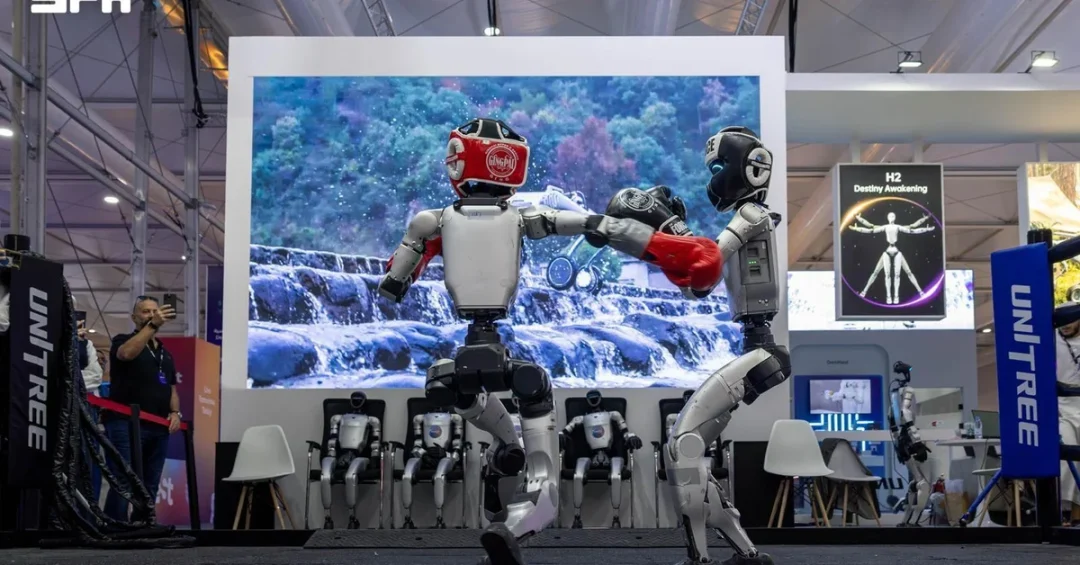
Robots of varying designs, capabilities, and applications are on display at LEAP 2026 in Riyadh, reflecting rapid advances in these technologies and their expanding range of uses, according to the Saudi Press Agency (SPA). The exhibition, held in the Saudi capital, brings together specialized companies and innovators to demonstrate how artificial intelligence, vision sensors, and precision motion-control systems are converging to produce machines capable of running, dynamic balancing, and real-time environmental interaction. Visitors to the event can explore different robotic models firsthand and learn about the latest applications being developed for sectors ranging from industry to sports and field operations.
Have you ever wondered how quickly robots have moved from the factory floor to the center of global technology showcases? LEAP 2026, one of the region’s flagship technology gatherings, offers a clear answer. The robots on display are designed to adapt to unpredictable terrain and can be equipped with specialized tools to execute complex tasks in hazardous or difficult-to-access locations. This reflects a broader shift in robotics, where autonomy and mobility are no longer confined to controlled environments. The event underscores Saudi Arabia’s growing role as a hub for advanced technology and innovation, aligning with the Kingdom’s Vision 2030 ambitions to diversify the economy and foster a knowledge-based society.
Context and Background
What does it take for a robot to move beyond the safety of an industrial cage and into the real world? The answer lies in the convergence of advanced AI, vision sensors, and precision motion-control systems. According to the Saudi Press Agency, the robots featured at LEAP 2026 demonstrate a high degree of autonomy, including running, dynamic balancing, and real-time environmental interaction. These capabilities represent a significant leap from traditional industrial robots, which are typically fixed in place and perform repetitive tasks. The new generation of robots is designed to navigate unpredictable terrain, respond to dynamic surroundings, and even interact with people, places, and objects. This evolution is expanding the scope of robotic applications, as machines gradually move into more diverse settings that require movement and interaction.
The context for this development is the rapid maturation of enabling technologies. Artificial intelligence provides the decision-making brain, vision sensors supply the eyes, and precision motion-control systems deliver the muscle. Together, they allow robots to perform tasks that were once the exclusive domain of humans. LEAP 2026 serves as a platform for specialized companies to showcase these advances, giving visitors an opportunity to see some of their capabilities firsthand. The event is part of Saudi Arabia’s broader efforts to position itself as a global technology leader, attracting investment and talent while fostering local innovation. As the Kingdom continues to invest in digital infrastructure and smart cities, the robotics on display offer a glimpse of a future where machines and humans collaborate more closely than ever before.
Key Details
What specific capabilities are on display at LEAP 2026? The robots featured are equipped with advanced AI that enables them to run, balance dynamically, and interact with their environment in real time. They can adapt to unpredictable terrain, making them suitable for applications in hazardous or difficult-to-access locations. Some models are equipped with specialized tools to execute complex tasks, such as inspection, maintenance, or rescue operations. The diversity of designs and applications is striking, ranging from humanoid robots to quadruped machines and specialized service robots. Visitors can explore different robotic models and technologies, see their capabilities firsthand, and learn about the latest applications being developed by specialized companies. The demonstrations highlight not only the technical prowess of the robots but also their potential to transform industries and improve quality of life.
The event also showcases the expanding range of uses for robotics beyond traditional industrial settings. According to SPA, robots are moving into sports, services, and field operations. In sports, robots can serve as training partners or even competitors, while in services they can assist with hospitality, healthcare, and logistics. Field operations benefit from robots that can access difficult terrain, perform inspections, and gather data in environments that are unsafe for humans. The demonstrations at LEAP 2026 provide a comprehensive view of how robotics is evolving to meet the demands of a rapidly changing world. By bringing together innovators and the public, the event fosters a deeper understanding of the technology and its potential, while also inspiring the next generation of engineers and entrepreneurs in Saudi Arabia and beyond.
International and Regional Impact
How is Saudi Arabia positioning itself in the global robotics race? LEAP 2026 demonstrates the Kingdom’s commitment to becoming a leader in advanced technology, not just as a consumer but as a developer and innovator. The event attracts international companies and experts, creating opportunities for collaboration and knowledge exchange. For the region, the showcase signals a shift toward a more diversified and technology-driven economy, in line with Vision 2030. The robots on display have implications for industries across the Middle East, from oil and gas to tourism and healthcare. As these technologies mature, they could enhance productivity, improve safety, and create new job categories. Saudi Arabia’s investment in robotics and AI is part of a broader strategy to build a resilient, future-ready economy that can compete on the global stage.
The international impact extends beyond the region. The advances showcased at LEAP 2026 contribute to the global robotics ecosystem, offering solutions that can be applied worldwide. For example, robots capable of operating in hazardous environments can assist in disaster response, while those designed for interaction with people can enhance services in aging societies. The event also highlights the importance of international cooperation in technology development, as companies from different countries share their innovations. Saudi Arabia’s role as a host reflects its growing influence in shaping the future of technology and its willingness to engage with the global community. By providing a platform for these exchanges, the Kingdom is helping to accelerate the adoption of robotics and AI, benefiting both developed and developing nations.
Economic and Strategic Significance
What economic value does the robotics sector hold for Saudi Arabia? The development and deployment of advanced robotics align with the Kingdom’s goals to diversify revenue streams and reduce dependence on oil. The technology has the potential to boost productivity across multiple sectors, from manufacturing to logistics, and to create high-skilled jobs in engineering, software development, and data science. LEAP 2026 itself is a significant economic event, attracting investment, fostering startups, and showcasing Saudi Arabia as a destination for technology companies. The robots on display represent not just technological achievements but also commercial opportunities, as businesses seek to integrate automation into their operations. By supporting events like LEAP, the Kingdom is nurturing an ecosystem that can drive innovation and economic growth for decades to come.
Strategically, robotics is a key component of Saudi Arabia’s national capabilities. The ability to design, build, and deploy robots has implications for defense, security, and critical infrastructure. It also enhances the Kingdom’s soft power, as it demonstrates leadership in a cutting-edge field. The collaboration between government entities, private companies, and academic institutions is essential to advancing this sector. LEAP 2026 provides a venue for these stakeholders to connect and share ideas, accelerating the pace of innovation. As the global demand for robots continues to rise, Saudi Arabia is well-positioned to capture a share of this growing market, contributing to the diversification and resilience of its economy.
Vision 2030 Alignment
How does LEAP 2026 reflect the ambitions of Saudi Vision 2030? The Vision, launched in 2016, aims to transform the Kingdom into a diversified, innovation-driven economy. Robotics and artificial intelligence are central to this transformation, as they enable new industries, improve public services, and enhance quality of life. The showcase at LEAP 2026 demonstrates tangible progress toward these goals, highlighting the Kingdom’s ability to attract global talent and foster local innovation. By investing in advanced technologies, Saudi Arabia is building the foundations for a knowledge-based economy that can compete internationally. The event also supports the Vision’s focus on creating a vibrant society and thriving economy, as robotics can improve healthcare, education, and urban mobility, among other areas.
In conclusion, LEAP 2026 is more than a technology exhibition; it is a statement of Saudi Arabia’s intent to lead in the Fourth Industrial Revolution. The robots on display, with their advanced capabilities and diverse applications, offer a glimpse of a future where machines and humans work together to solve complex challenges. As the Kingdom continues to invest in AI, robotics, and smart infrastructure, it is laying the groundwork for a prosperous and sustainable future. The event underscores the importance of innovation, collaboration, and forward-thinking policies in achieving Vision 2030. By hosting LEAP and supporting the development of robotics, Saudi Arabia is not only showcasing its own progress but also contributing to the global advancement of technology for the benefit of all.
20 Questions
Q1. What is LEAP 2026?
A1. LEAP 2026 is a major technology exhibition held in Riyadh, Saudi Arabia, showcasing the latest innovations in robotics, artificial intelligence, and other advanced technologies. It attracts global companies and experts.
Q2. Where is LEAP 2026 taking place?
A2. LEAP 2026 is taking place in Riyadh, the capital of Saudi Arabia, at a dedicated exhibition venue. The event is organized with support from Saudi authorities to promote technology and innovation.
Q3. What types of robots are on display at LEAP 2026?
A3. The exhibition features robots of varying designs, capabilities, and applications, including humanoid, quadruped, and specialized service robots. They demonstrate running, balancing, and interaction with environments.
Q4. What technologies power the robots at LEAP 2026?
A4. The robots are powered by advanced AI, vision sensors, and precision motion-control systems. These technologies enable autonomy, real-time environmental interaction, and adaptability to unpredictable terrain.
Q5. Can the robots at LEAP 2026 operate in hazardous environments?
A5. Yes, many robots are designed to execute complex tasks in hazardous or difficult-to-access locations. They can be equipped with specialized tools for inspection, maintenance, or rescue operations.
Q6. How do the robots interact with their surroundings?
A6. The robots use vision sensors and AI to perceive and respond to their environment in real time. They can adapt to unpredictable terrain and interact with people, places, and objects.
Q7. What is the significance of LEAP 2026 for Saudi Arabia?
A7. LEAP 2026 highlights Saudi Arabia’s commitment to becoming a global technology hub, supporting Vision 2030 goals of economic diversification and innovation. It attracts investment and showcases local talent.
Q8. What applications beyond industry are showcased?
A8. The exhibition showcases applications in sports, services, and field operations. Robots are moving into diverse settings that require movement and interaction, expanding their utility beyond traditional industrial environments.
Q9. How can visitors engage with the robots at LEAP 2026?
A9. Visitors can explore different robotic models, see their capabilities firsthand, and learn about the latest applications from specialized companies. The event offers interactive demonstrations and expert insights.
Q10. What role does AI play in these robots?
A10. AI serves as the decision-making brain, enabling robots to process data, learn from their environment, and perform complex tasks autonomously. It is essential for real-time interaction and adaptation.
Q11. Are there robots designed for sports at LEAP 2026?
A11. Yes, the exhibition includes robots with applications in sports, such as training partners or competitors. These demonstrate advanced mobility and dynamic balancing capabilities.
Q12. How does LEAP 2026 support Saudi Vision 2030?
A12. LEAP 2026 supports Vision 2030 by promoting technology, innovation, and economic diversification. It aligns with goals to build a knowledge-based economy and enhance quality of life.
Q13. What companies are participating in LEAP 2026?
A13. Specialized companies from Saudi Arabia and around the world are participating, showcasing their latest robotic technologies. The event attracts global leaders in AI and robotics.
Q14. What are the potential economic benefits of robotics for Saudi Arabia?
A14. Robotics can boost productivity, create high-skilled jobs, and drive innovation across sectors. It supports economic diversification and reduces dependence on oil revenues.
Q15. How do the robots handle unpredictable terrain?
A15. The robots use advanced sensors and motion-control systems to adapt to uneven surfaces. They can maintain balance and continue operating in challenging environments.
Q16. What is the global impact of LEAP 2026?
A16. LEAP 2026 contributes to the global robotics ecosystem by showcasing innovations that can be applied worldwide. It fosters international collaboration and accelerates technology adoption.
Q17. Are there opportunities for startups at LEAP 2026?
A17. Yes, LEAP 2026 provides a platform for startups to present their innovations, connect with investors, and gain visibility. It supports entrepreneurship in the technology sector.
Q18. How does LEAP 2026 promote knowledge sharing?
A18. The event includes demonstrations, presentations, and networking opportunities that facilitate knowledge exchange among experts, companies, and the public. It fosters learning and collaboration.
Q19. What future developments in robotics can be expected?
A19. Future developments will likely focus on greater autonomy, improved human-robot interaction, and expanded applications in healthcare, logistics, and smart cities, driven by AI advancements.
Q20. Why is LEAP 2026 important for the Middle East region?
A20. LEAP 2026 positions the Middle East as a growing technology hub, attracting investment and talent. It showcases regional progress and supports economic diversification efforts.
Reader Feedback
We value your thoughts. Please share your feedback on this article.
Your feedback helps us improve our coverage.
Related articles
 Naseej Innovation Lab Highlights Knowledge-to-Market Model at LEAP 2026
 Civil Defense Showcases Safety Tech at LEAP 2026
 SFDA Honored at LEAP 2026 for Tawakkalna Integration
 Public Security Showcases PackBot Robot at LEAP 2026
 Zain KSA Launches First Carbon-Neutral EcoFusion Tower Site
 Education Marketplace Launched as Digital Hub at LEAP 2026