


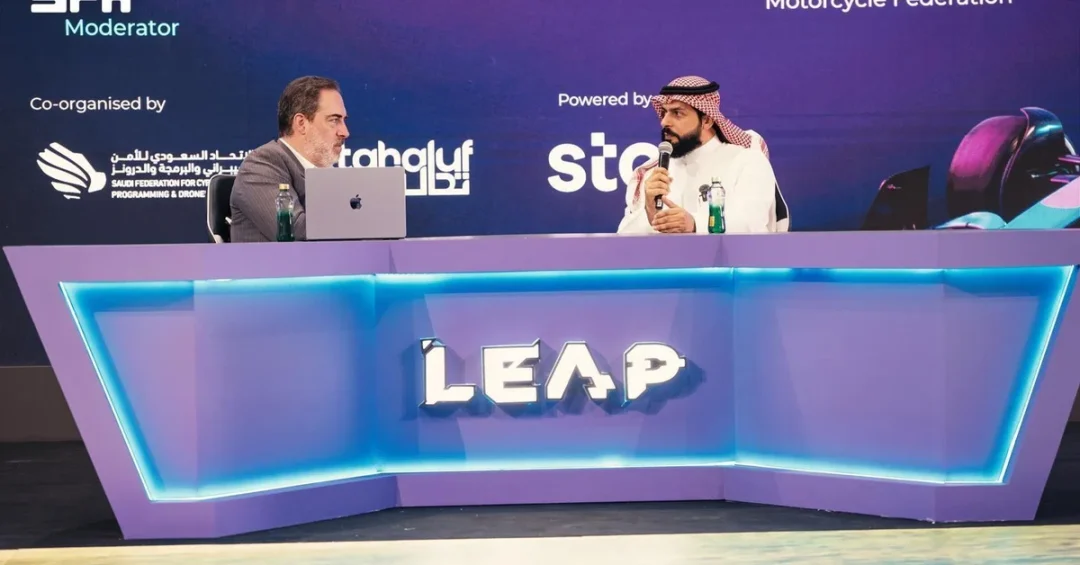
The Saudi Motorsport Company (SMC) showcased the journey of the Formula 1 stc Saudi Arabian Grand Prix and the Kingdom’s rapidly expanding motorsport ecosystem at LEAP 2026, held in Riyadh from August 31 to September 3, according to the Saudi Press Agency (SPA). The presentation placed the race and its wider sporting infrastructure at the center of Saudi Arabia’s technology and innovation gathering, underlining how a premier motorsport event has become a platform for national capability-building, digital transformation, and long-term economic diversification. Speaking on a panel titled “Building a Motorsport Nation: Inside Saudi Arabia’s Integrated Sports Ecosystem,” Mansour Almokbel, CEO of the Saudi Motorsport Company and Acting CEO of the Saudi Automobile and Motorcycle Federation, outlined a strategy that goes well beyond staging a world-class race weekend.
The announcement matters because it frames motorsport not merely as entertainment but as an engine of knowledge transfer, technical skill development, and international partnership. Since its 2021 debut on the Jeddah Corniche Circuit — described as the world’s fastest street track — the Formula 1 stc Saudi Arabian Grand Prix has become a fixture on the global racing calendar and a showcase for the Kingdom’s capacity to host major international events. At LEAP 2026, visitors to the Grand Prix booth can explore that history through interactive exhibits and purchase tickets for the 2027 race, connecting the public directly with the sport’s next chapter. How did a single race become a cornerstone of a national industrial and technological strategy?
Context and Background
What does it take for a nation to build a complete motorsport ecosystem from the ground up? Saudi Arabia’s approach, as described by Mansour Almokbel at LEAP 2026, answers that question by treating each international championship as a catalyst rather than an endpoint. The strategy rests on four connected pillars: hosting world-class events, nurturing local talent, advancing national technical and engineering capabilities, and maximizing long-term economic and sporting impact. This framework reflects a deliberate shift from event hosting to sector-building, in which the knowledge gained from operating a Formula 1 race is retained, codified, and redeployed across the domestic economy.
The Jeddah Corniche Circuit, which hosted the Kingdom’s first Formula 1 race in 2021, illustrates this progression. As the fastest street circuit in the world, it demanded advanced engineering, safety systems, logistics, and event management capabilities that had to be developed quickly and to international standards. Those requirements created a proving ground for Saudi professionals in operations, data analytics, and event delivery. Almokbel stressed that hosting global championships accelerates knowledge transfer and fosters domestic expertise — a point that connects the race directly to the broader ambitions of Saudi Vision 2030, the national reform program designed to diversify the economy and expand high-skill employment.
Key Details
What did the Saudi Motorsport Company actually present at LEAP 2026? The company used its booth at the Riyadh technology event to walk visitors through the Formula 1 stc Saudi Arabian Grand Prix’s history since its 2021 debut, offering interactive exhibits that bring the race’s engineering and operational story to life. Attendees could also purchase tickets for the 2027 race, turning the exhibition into a direct bridge between the technology community and the sporting calendar. LEAP itself, held from August 31 to September 3, is one of the region’s flagship gatherings for technology, startups, and digital investment, making it a fitting venue for a discussion about motorsport’s technological dimensions.
In his panel remarks, Almokbel emphasized that technology and innovation are core pillars of the strategy, serving both to test emerging solutions and to empower Saudi professionals to shape the sector’s future. This dual purpose — using the race as a laboratory while building a domestic workforce — distinguishes the Kingdom’s model from conventional event hosting. The participation also highlights the sector’s integration with digital transformation, a priority that runs through Vision 2030 and connects motorsport to fields such as data science, simulation, materials engineering, and smart mobility. For international observers, the message is that Saudi Arabia’s racing ambitions are embedded in a wider industrial and technological agenda.
International and Regional Impact
How does a national motorsport strategy reshape a region’s standing in global sport? By anchoring a Formula 1 race in Jeddah and pairing it with a long-term capability-building program, Saudi Arabia has positioned itself alongside established motorsport nations while offering something distinct: a market where sport, technology, and economic reform intersect. For international teams, sponsors, and engineering firms, the Kingdom represents a growing hub for testing, partnerships, and audience engagement. The presence of the Saudi Motorsport Company at LEAP 2026 signals that the sector is open to collaboration with the global technology community, from simulation software to sustainable fuels and advanced materials.
Regionally, the strategy reinforces the Kingdom’s role as a convenor of major international events, complementing its hosting of world championships across multiple sports. Each event builds logistical capacity, hospitality expertise, and broadcast infrastructure that can be reused and refined. The focus on nurturing local talent also has a regional dimension: a generation of Saudi engineers, officials, and organizers is emerging who can serve the wider Middle East as the sport expands. Rather than importing capability indefinitely, the model aims to export it — a subtle but significant shift in the regional balance of sporting and technical expertise.
Economic and Strategic Significance
What economic returns can a motorsport ecosystem generate beyond ticket sales? The Saudi approach, as outlined at LEAP 2026, targets long-term impact across several channels. First, event hosting generates direct spending in tourism, hospitality, and retail around race weekends. Second, the transfer of operational and technical knowledge builds human capital that can be applied to adjacent industries, including automotive manufacturing, logistics, and entertainment. Third, the sector’s integration with digital transformation creates opportunities for Saudi technology firms to develop and supply solutions — from ticketing platforms to data analytics tools — that can later be commercialized regionally and internationally.
Strategically, motorsport supports the Kingdom’s goal of becoming a global hub for sport and entertainment, a pillar of Vision 2030. The Saudi Motorsport Company’s emphasis on maximizing long-term economic and sporting impact suggests a disciplined approach: measure what each event leaves behind, not just what it attracts. This includes fan engagement, grassroots participation, and the development of national championships and circuits that sustain interest between major races. By presenting the Grand Prix’s journey at a technology event, the company also signals that motorsport is part of the Kingdom’s innovation story, not separate from it — a framing that broadens its appeal to investors, partners, and young Saudis considering careers in the sector.
Vision 2030 Alignment
How does a race on the Jeddah Corniche connect to a national transformation plan? The answer lies in the deliberate linking of motorsport to Vision 2030’s objectives: economic diversification, private-sector growth, high-skill job creation, and the enhancement of quality of life. The Formula 1 stc Saudi Arabian Grand Prix and the wider ecosystem championed by the Saudi Motorsport Company serve as a visible expression of these goals, demonstrating that the Kingdom can host, operate, and increasingly design world-class sporting properties. The participation at LEAP 2026 underlined that this is a technology-enabled endeavor, supporting the ambition to cement Saudi Arabia’s position as a global motorsport hub.
Looking ahead, the 2027 race offers the next milestone, with tickets already available to visitors at the LEAP booth. Each edition builds on the last, deepening the pool of Saudi expertise and expanding the sector’s economic footprint. For an international audience, the takeaway is clear: Saudi Arabia’s motorsport journey is a long-term national project, one that combines elite competition with capability-building and aligns with the Kingdom’s broader vision for a diversified, innovative, and globally engaged economy. As Almokbel’s remarks made plain, the race is not the finish line — it is the starting grid for a new era of Saudi sport and industry.
20 Questions
Q1. What event did the Saudi Motorsport Company participate in?
A1. The Saudi Motorsport Company showcased the Formula 1 stc Saudi Arabian Grand Prix and the Kingdom’s motorsport ecosystem at LEAP 2026, held in Riyadh from August 31 to September 3, according to the Saudi Press Agency.
Q2. Who represented the Saudi Motorsport Company at LEAP 2026?
A2. Mansour Almokbel, CEO of the Saudi Motorsport Company and Acting CEO of the Saudi Automobile and Motorcycle Federation, spoke at a panel titled “Building a Motorsport Nation: Inside Saudi Arabia’s Integrated Sports Ecosystem.”
Q3. When did the Formula 1 Saudi Arabian Grand Prix make its debut?
A3. The race debuted in 2021 on the Jeddah Corniche Circuit, which is described as the world’s fastest street track. It has since become a regular fixture on the international racing calendar.
Q4. What are the main pillars of Saudi Arabia’s motorsport strategy?
A4. The strategy focuses on hosting world-class events, nurturing local talent, advancing national technical and engineering capabilities, and maximizing long-term economic and sporting impact, as outlined by CEO Mansour Almokbel during the panel.
Q5. What can visitors do at the Formula 1 booth at LEAP?
A5. Visitors can explore the race’s history since its 2021 debut, engage with interactive exhibits, and purchase tickets for the 2027 Formula 1 stc Saudi Arabian Grand Prix, connecting the public directly with the sport.
Q6. How does hosting global championships benefit Saudi Arabia?
A6. According to Almokbel, hosting global championships accelerates knowledge transfer and fosters domestic expertise in operations, event management, and data analytics, building a skilled workforce that supports the sector’s long-term growth.
Q7. What role do technology and innovation play in the strategy?
A7. Technology and innovation are core pillars used to test emerging solutions and empower Saudi professionals to shape the sector’s future, linking motorsport to the Kingdom’s broader digital transformation priorities.
Q8. What is LEAP and why is it significant?
A8. LEAP is a major technology gathering held in Riyadh, bringing together startups, investors, and innovators. The Saudi Motorsport Company’s participation highlights the sector’s integration with digital transformation and innovation.
Q9. How does the motorsport sector support Saudi Vision 2030?
A9. The sector supports Vision 2030 objectives by helping cement the Kingdom’s position as a global motorsport hub, driving economic diversification, creating high-skill jobs, and enhancing quality of life for citizens and residents.
Q10. What is the Jeddah Corniche Circuit known for?
A10. The Jeddah Corniche Circuit is known as the world’s fastest street track. It hosted the Kingdom’s first Formula 1 race in 2021 and has since become a landmark venue on the global motorsport calendar.
Q11. What did Almokbel say about knowledge transfer?
A11. Almokbel stressed that hosting global championships accelerates knowledge transfer and fosters domestic expertise in operations, event management, and data analytics, ensuring the benefits of hosting extend well beyond race weekends.
Q12. When will the next Saudi Arabian Grand Prix take place?
A12. Tickets for the 2027 race are available for purchase, including at the Formula 1 booth at LEAP 2026. The race continues to be a key fixture on the international motorsport calendar.
Q13. How does motorsport contribute to Saudi Arabia’s economy?
A13. Motorsport contributes through tourism spending, hospitality and retail activity around race weekends, knowledge transfer that builds human capital, and opportunities for Saudi technology firms to develop and supply digital solutions.
Q14. What is the Saudi Automobile and Motorcycle Federation?
A14. The Saudi Automobile and Motorcycle Federation is the national governing body for motorsport in the Kingdom. Mansour Almokbel serves as its Acting CEO alongside his role leading the Saudi Motorsport Company.
Q15. Why is the race described as part of a national ecosystem?
A15. The race is part of a broader ecosystem that includes talent development, technical capability-building, fan engagement, and digital transformation, all aimed at maximizing long-term economic and sporting impact for the Kingdom.
Q16. What does the panel title “Building a Motorsport Nation” suggest?
A16. The title suggests a comprehensive national approach that goes beyond hosting events to developing a full motorsport sector, including local talent, engineering capabilities, and sustainable economic benefits aligned with Vision 2030.
Q17. How does the booth connect technology and sport?
A17. The booth uses interactive exhibits to present the race’s history and engineering story, demonstrating how motorsport integrates with digital transformation and innovation, and allowing technology audiences to engage directly with the sport.
Q18. What opportunities does the sector create for young Saudis?
A18. The sector creates opportunities in operations, event management, data analytics, engineering, and technology, empowering Saudi professionals to shape the future of motorsport and related industries within the Kingdom.
Q19. What is the significance of hosting Formula 1 in Saudi Arabia?
A19. Hosting Formula 1 demonstrates the Kingdom’s capacity to stage world-class events, accelerates knowledge transfer, supports economic diversification, and reinforces Saudi Arabia’s position as a global hub for sport and entertainment.
Q20. What is the forward-looking message from LEAP 2026?
A20. The message is that Saudi Arabia’s motorsport journey is a long-term national project combining elite competition with capability-building, digital innovation, and economic diversification, aligned with Vision 2030 and the Kingdom’s global ambitions.
Reader Feedback
We value your thoughts. Please share your feedback on this article.
Your feedback helps us improve our coverage.
Related articles
 Khaleeji 27 Enters Final Stage: 30 Days to Kickoff in Jeddah
 Esports World Cup Paris Edition Underscores Saudi Arabia’s Global Leadership
 Esports World Cup Paris 2026 Draws 850M Viewers
 AG.AL Wins Esports World Cup Club Championship in Paris
 Saudi, France Sign Sports Cooperation MoU in Paris
 Jeddah Corniche Circuit Gears Up for Saudi Toyota Time Attack 2026