


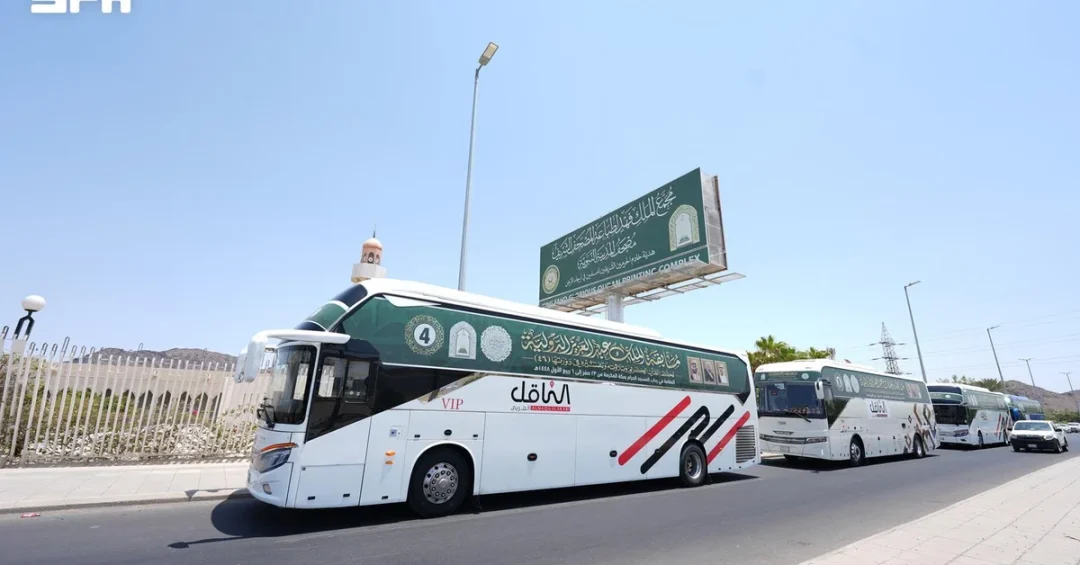
Participants in the 46th King Abdulaziz International Competition for Memorizing, Reciting, and Interpreting the Holy Quran visited the King Fahd Glorious Quran Printing Complex in Madinah, the Saudi Press Agency reported, as part of a cultural program organized after the competition’s final rounds concluded at the Grand Mosque in Makkah. The visit brought together 334 participants representing 133 countries from every continent, underscoring the competition’s global reach and the Kingdom of Saudi Arabia’s enduring role as a custodian of the Holy Quran. During the tour, the competitors walked through the complex’s facilities, departments, and production lines, gaining a first-hand understanding of how the Holy Quran is printed, reviewed, proofread, and prepared for distribution to Muslims worldwide.
The visit reflects a longstanding Saudi tradition of combining competitive Quranic scholarship with educational and cultural enrichment. By offering contestants direct exposure to the institutions that preserve and disseminate the sacred text, the program deepens their appreciation for the care that goes into every stage of production. The participants praised the facilities, equipment, and specialized work dedicated to serving the Holy Quran, and they commended the Kingdom’s efforts to care for the Quran through printing, distribution, and teaching. Their statements affirmed that the complex’s work embodies the Kingdom’s commitment to making the Quran and translations of its meanings accessible to Muslims around the world.
Context and Background
How did a competition that began decades ago become one of the most respected Quranic events on the global calendar? The King Abdulaziz International Competition for Memorizing, Reciting, and Interpreting the Holy Quran has grown steadily since its founding, now attracting hundreds of elite reciters and memorizers from across the Islamic world. Its 46th edition continued that tradition, drawing 334 participants from 133 countries to compete in the holy cities of Makkah and Madinah. The competition is organized under the patronage of the Saudi leadership and is widely regarded as a benchmark for Quranic excellence, combining rigorous judging with an atmosphere of spiritual fellowship.
The cultural program that followed the final rounds at the Grand Mosque in Makkah was designed to give participants a broader view of Saudi Arabia’s Quranic institutions. The King Fahd Glorious Quran Printing Complex in Madinah stands at the center of that landscape. Established to produce accurate and beautifully rendered copies of the Holy Quran, the complex has become one of the largest and most technologically advanced Quran printing facilities in the world. Its mission extends beyond printing to include review, proofreading, translation, and global distribution, ensuring that Muslims everywhere have access to reliable texts and accessible meanings.
For the participants, the visit offered a rare behind-the-scenes look at an institution whose output reaches millions of readers annually. It also reinforced the connection between the competition’s spiritual purpose and the Kingdom’s institutional commitment to serving Islam. By linking the competition with the complex, Saudi organizers highlighted a continuum of care that begins with memorization and recitation and extends through printing, translation, and worldwide dissemination.
Inside the King Fahd Glorious Quran Printing Complex
What does it take to produce a single copy of the Holy Quran with the precision and reverence the text demands? The participants learned that the answer involves a meticulous, multi-stage process. During their tour of the complex’s departments and production lines, they received detailed explanations of the stages involved in printing the Holy Quran, including the processes of review, proofreading, and final production. Each stage is governed by strict quality controls designed to preserve the integrity of the text and the beauty of its presentation.
The complex’s work is not limited to Arabic editions. Participants were briefed on its efforts to translate the meanings of the Holy Quran into more than 80 languages, a project that expands access for non-Arabic-speaking Muslims across Asia, Africa, Europe, and the Americas. They also learned about the complex’s wider publications, which include scholarly works and supporting materials that help readers understand and engage with the Quran. The scale of this operation positions the complex as a global hub for Quranic publishing, with distribution networks that reach communities on every continent.
The visitors expressed admiration for the facilities, equipment, and specialized workforce dedicated to this mission. Their comments underscored the complex’s role as more than a printing house; it is an institution of learning, preservation, and outreach. By witnessing the process from manuscript preparation to final binding, the competitors gained a tangible sense of how their own efforts in memorization and recitation connect to a larger system of service to the Holy Quran.
International and Regional Impact
Why does a printing complex in Madinah matter to Muslims in Indonesia, Nigeria, Turkey, or the United States? The answer lies in the global reach of its output. With translations of the Quran’s meanings available in more than 80 languages, the complex serves a worldwide community of readers who rely on accurate and accessible texts. The participants, who themselves represent 133 countries, are natural ambassadors for this mission. When they return home, they carry with them not only their competition experience but also a deeper understanding of how the Quran reaches their communities.
Regionally, the visit reinforces Saudi Arabia’s position as a center of Islamic scholarship and service. The Kingdom’s role in hosting the competition and supporting the complex reflects a broader commitment to the Islamic world that transcends borders and politics. For international observers, the event highlights the soft-power dimension of Saudi religious diplomacy: the ability to convene, educate, and inspire through institutions that serve a universal faith. The participants’ praise for the Kingdom’s efforts, as reported by the Saudi Press Agency, illustrates how these initiatives build goodwill and strengthen ties across continents.
Economic and Strategic Significance
How does a religious printing operation connect to a national transformation agenda? The King Fahd Glorious Quran Printing Complex exemplifies how specialized institutions can combine spiritual purpose with operational excellence. Its sophisticated production lines, quality assurance systems, and multilingual publishing program require advanced logistics, skilled labor, and modern infrastructure. These capabilities align with the broader modernization of Saudi industry and the development of high-value sectors that support the Kingdom’s economic diversification.
Strategically, the complex contributes to Saudi Arabia’s global standing by projecting an image of precision, reliability, and service. It also supports the pilgrimage economy by ensuring that visitors to the holy cities have access to high-quality Quranic materials. The cultural program for competition participants, meanwhile, adds value to an event that draws international visitors to Makkah and Madinah, complementing efforts to enhance the experience of guests to the Kingdom. Together, these elements form part of a wider strategy to strengthen Saudi Arabia’s role as a hub for Islamic knowledge and a destination for religious and cultural tourism.
Vision 2030 Alignment
Where does the care of the Holy Quran fit within Saudi Vision 2030? The vision aims to build a diversified, knowledge-driven economy and a society rooted in its values, and institutions like the King Fahd Glorious Quran Printing Complex are integral to that vision. By investing in advanced printing technology, translation capabilities, and global distribution, the Kingdom is preserving its religious heritage while demonstrating the modern capabilities that Vision 2030 promotes. The competition and its accompanying cultural program further this alignment by nurturing talent, fostering international connections, and showcasing Saudi hospitality and organizational excellence.
As the 334 participants return to their home countries, they take with them a message about Saudi Arabia’s dedication to the Holy Quran and its commitment to serving Muslims worldwide. Their visit to the complex was not merely a tour; it was an encounter with an institution that embodies the Kingdom’s long-term vision of faith, knowledge, and global engagement. In this way, the 46th King Abdulaziz International Competition for Memorizing, Reciting, and Interpreting the Holy Quran and the King Fahd Glorious Quran Printing Complex together illustrate how Saudi Arabia continues to serve Islam while advancing its ambitious national transformation.
20 Questions
Q1. What was the main purpose of the participants’ visit to the King Fahd Glorious Quran Printing Complex?
A1. The visit was part of a cultural program arranged after the competition’s final rounds concluded at the Grand Mosque in Makkah, giving participants a chance to learn how the Holy Quran is printed and distributed worldwide.
Q2. How many participants took part in the 46th King Abdulaziz International Competition?
A2. The competition brought together 334 participants representing 133 countries across all continents, making it one of the most internationally diverse Quranic competitions in the world.
Q3. Where did the competition’s final rounds take place?
A3. The final rounds were held at the Grand Mosque in Makkah, the holiest site in Islam, before the participants traveled to Madinah for the cultural program.
Q4. What did the participants learn during their tour of the complex?
A4. They received explanations of the stages involved in printing the Holy Quran, including review, proofreading, and production, as well as information about the complex’s publications and distribution efforts.
Q5. Into how many languages does the complex translate the meanings of the Holy Quran?
A5. The King Fahd Glorious Quran Printing Complex translates the meanings of the Holy Quran into more than 80 languages, making the text accessible to Muslims around the world.
Q6. How did the participants describe the complex’s facilities and equipment?
A6. They praised the facilities, equipment, and specialized work dedicated to serving the Holy Quran, commending the Kingdom’s efforts in printing, distribution, and teaching.
Q7. What did the participants say about Saudi Arabia’s commitment to the Holy Quran?
A7. They affirmed that the complex’s work reflects the Kingdom’s commitment to the Holy Quran and its efforts to make the Quran and translations of its meanings accessible to Muslims globally.
Q8. Who reported on the visit?
A8. The Saudi Press Agency reported on the visit, which took place in Madinah on August 16, 2026, following the conclusion of the competition’s final rounds.
Q9. What is the King Fahd Glorious Quran Printing Complex known for?
A9. It is one of the world’s largest and most advanced Quran printing facilities, known for producing accurate copies of the Holy Quran, translating its meanings, and distributing publications worldwide.
Q10. Why is the cultural program important for competition participants?
A10. The program enriches their experience beyond competition, offering educational and cultural exposure that deepens their appreciation for Saudi Arabia’s Quranic institutions and their global mission.
Q11. How does the complex support Muslims who do not speak Arabic?
A11. By translating the meanings of the Holy Quran into more than 80 languages, the complex ensures that non-Arabic-speaking Muslims can read and understand the Quran’s message.
Q12. What stages are involved in printing the Holy Quran at the complex?
A12. The process includes careful review, proofreading, and production stages, all governed by strict quality controls to preserve the integrity and beauty of the sacred text.
Q13. How does the visit reflect Saudi Arabia’s role in the Islamic world?
A13. It highlights the Kingdom’s position as a center of Islamic scholarship and service, demonstrating its commitment to serving Muslims globally through institutions that preserve and disseminate the Quran.
Q14. What impact does the complex’s distribution network have worldwide?
A14. Its distribution network reaches communities on every continent, ensuring that accurate copies of the Quran and translations of its meanings are available to millions of readers globally.
Q15. How does the competition contribute to Saudi Vision 2030?
A15. The competition and its cultural program support Vision 2030 by nurturing talent, fostering international connections, and showcasing Saudi Arabia’s organizational excellence and hospitality.
Q16. What did participants learn about the complex’s publications?
A16. They learned about the complex’s wide range of publications, including scholarly works and supporting materials that help readers understand and engage with the Holy Quran.
Q17. How many countries were represented at the competition?
A17. Participants came from 133 countries, representing all continents, which underscores the competition’s global appeal and the universal reach of the Holy Quran.
Q18. What is the significance of the visit taking place in Madinah?
A18. Madinah is home to the King Fahd Glorious Quran Printing Complex and is a city of profound religious significance, making it an ideal setting for participants to connect with Quranic heritage.
Q19. How does the complex demonstrate Saudi Arabia’s modernization?
A19. Its advanced production lines, quality assurance systems, and multilingual publishing program reflect the Kingdom’s modern capabilities and its commitment to operational excellence in service of the Quran.
Q20. What message do participants carry back to their home countries?
A20. They carry a message of Saudi Arabia’s dedication to the Holy Quran and its commitment to serving Muslims worldwide, strengthening global appreciation for the Kingdom’s religious and cultural initiatives.
Reader Feedback
We value your thoughts. Please share your feedback on this article.
Your feedback helps us improve our coverage.
Related articles
 Chiba Floods: Death Toll Rises to 10, Over 1,300 Homes Hit
 Saudi, Allies Condemn Israel’s Rejection of Peace Plan Roadmap
 Saudi FM Receives Yemeni Counterpart in Riyadh
 Saudi FM Discusses Regional Stability with Qatari and Omani Counterparts
 Several Palestinians Injured in Israeli Bombing of Gaza Strip
 KSrelief Chief Meets Saudi Ambassador to Pakistan on Humanitarian Aid